

What if the difference between a stagnant paycheck and a six-figure salary isn't how many miles you drive, but the specific cargo you carry? Many drivers feel stuck in entry-level regional roles where wages haven't kept pace with rising operational costs. You've likely noticed that simply holding a license isn't enough to guarantee the financial security you were promised when you started. True class A CDL career growth requires a shift from being a generalist to becoming a specialized professional.
We understand that the path to high-value OTR roles can feel cluttered with conflicting advice about which endorsements actually matter. This guide provides a clear, strategic roadmap to transform your standard CDL into a lucrative career in 2026. You'll discover how to leverage Hazmat and Reefer niches, master the latest HOS regulations, and position yourself as a priority partner for elite carriers. By the end of this article, you'll have a multi-year plan built on precision, safety, and specialized expertise.
Key Takeaways
- Focusing on specialization, safety, and stability is the most effective way to secure high-value roles in a volatile market.
- Securing Hazmat and Tanker endorsements unlocks access to the most profitable and secure niches in the current industry.
- Strategic class A CDL career growth is built on the foundation of nationwide OTR experience and a clean driving record.
- A clear multi-year roadmap helps you transition from hauling commodity freight to managing sensitive, temperature-controlled, and hazardous cargo.
- Choosing a carrier that focuses on Reefer and Hazmat transport ensures you are positioned in the most resilient sectors of the economy.
Beyond the License: Defining Class A CDL Career Growth in 2026
In 2026, holding a license is merely the entry fee. True class A CDL career growth is defined by the transition from hauling basic commodities to managing high-value, specialized logistics. While many drivers start with megacarriers hauling dry van loads, these roles often face the brunt of economic shifts. For example, the Freight Transportation Services Index fell 1.7% between June 2025 and 2026, yet the demand for specialized transport remains resilient. To build a future-proof career, you must focus on three essential pillars: specialized endorsements, nationwide experience, and unwavering reliability. This combination creates a professional profile that is both rare and highly sought after by elite fleets.
Understanding the federal Commercial Driver's License (CDL) regulations is the first step toward this professional evolution. These rules set the standard for safety and compliance, but your personal strategy determines your financial ceiling. While megacarriers focus on high-volume, low-margin freight, specialized fleets prioritize precision and partnership. Choosing the latter path requires a commitment to continuous learning and a shift in mindset from being a driver to being a logistics professional.
The Shift from General to Specialized Freight
Dry van freight is a reliable starting point, but it's rarely the destination for high earners. Specialization in Hazmat freight service or Reefer transport offers a significant layer of career insulation. These niches require higher precision, stricter safety protocols, and advanced technical knowledge. By moving into these specialized fields, you distance yourself from the volatility of general freight and align with industries that prioritize steady, high-value delivery. You don't just move cargo; you manage sensitive supply chains that the economy relies on regardless of market fluctuations.
Setting Realistic Milestones for the First 36 Months
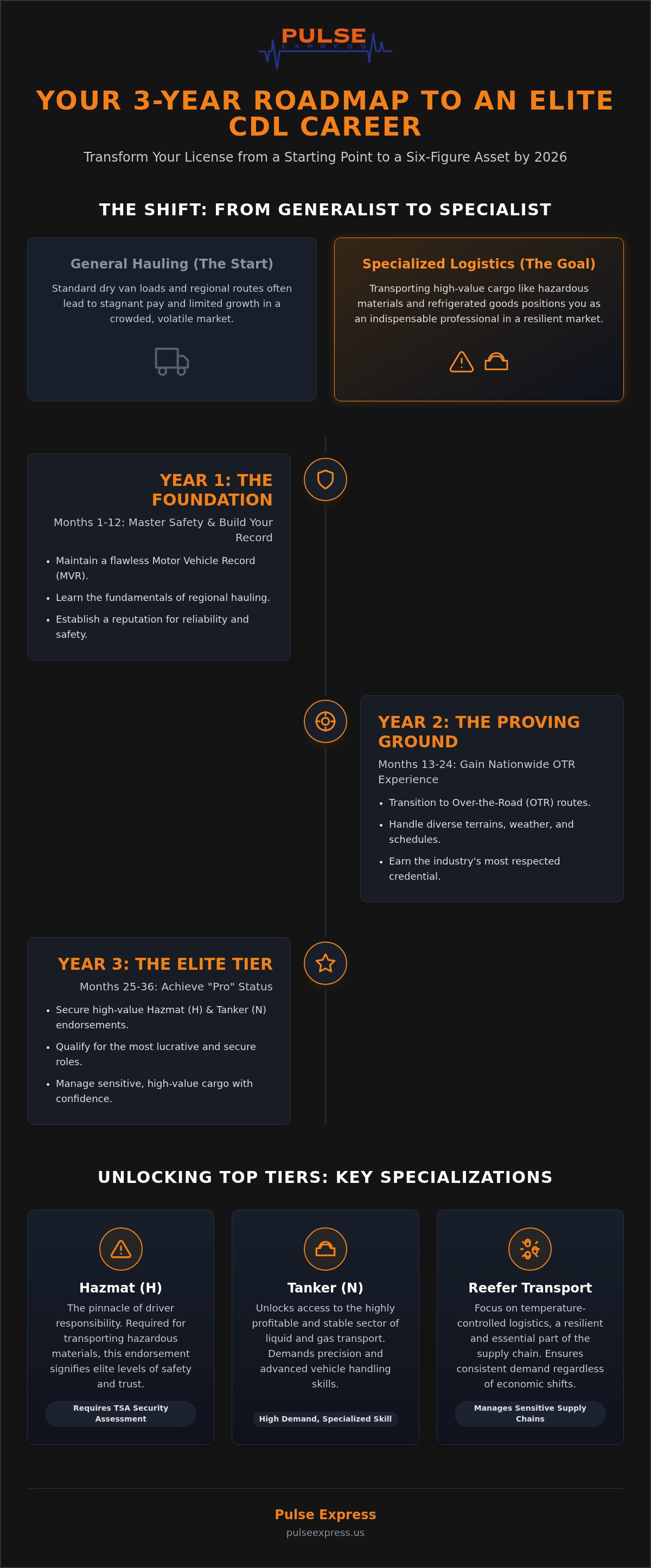
A successful career isn't built overnight. It's a methodical process that requires patience and a clean record. You'll need to hit specific benchmarks to unlock the best opportunities in the industry.
- The First 12 Months: Focus on safety. Your priority is maintaining a flawless Motor Vehicle Record (MVR) while learning the basics of regional hauling. This foundation is non-negotiable for future class A CDL career growth.
- Months 13 to 24: Transition to over-the-road (OTR) routes. This period acts as an experience multiplier. Nationwide driving is the most respected credential in the industry because it proves you can handle diverse terrains and complex schedules.
- Year Three: Pursue high-value endorsements. This is when you achieve "Pro" status. By securing Hazmat and Tanker endorsements, you become eligible for the most lucrative roles in temperature-controlled and hazardous logistics.
The Specialization Roadmap: High-Value Endorsements and Niches
Scaling your income requires more than just years behind the wheel. It demands a deliberate strategy to acquire endorsements that act as a security clearance for the industry's most profitable freight. According to official employment projections for truck drivers, the demand for skilled operators remains steady, but the highest pay scales are reserved for those who can handle complexity. Hazmat (H) and Tanker (N) endorsements are the primary tools for class A CDL career growth. They signal to carriers that you possess the discipline, technical knowledge, and safety record required to manage sensitive cargo.
While dry van hauling provides a solid foundation, adding specialized endorsements expands your load options and increases your per-mile value. Double and triple endorsements further enhance your efficiency in long-haul operations by allowing you to move more freight in a single trip. These credentials don't just add letters to your license. They build a professional reputation rooted in stability, precision, and trust. If you're looking for a carrier that values these high-level skills, consider exploring specialized opportunities for OTR driver for Reefer and dry Van roles.
Mastering Hazmat: The Pinnacle of Driver Responsibility
Becoming a Hazmat-endorsed professional is a rigorous process that involves a TSA security threat assessment, which costs $86.50 in 2026. This endorsement requires a deep commitment to safety protocols and a thorough understanding of DOT compliance. Drivers who hold this credential are held to a higher standard of accountability and are often the first choice for high-priority logistics. The Hazmat endorsement serves as the highest tier of cargo security in the trucking industry. It transforms your role from a standard driver into a certified specialist capable of handling the most critical materials in the national supply chain.
Reefer Technology: More Than Just Driving
Temperature-controlled logistics, or Reefer transport, introduces a technical skill gap that sets elite drivers apart. Managing the cold chain for pharmaceuticals, fresh produce, and sensitive perishables requires constant monitoring and equipment expertise. You aren't just hauling a trailer; you're acting as a technician who ensures the integrity of the cargo from pickup to delivery. This specialization offers incredible career longevity because the demand for food and medicine is constant. By mastering Reefer technology, you ensure your skills remain relevant and high-value, regardless of broader economic trends.
Regional vs. OTR: Why Long-Haul is the Engine of Advancement
A common myth in the trucking industry suggests that over-the-road (OTR) driving is merely a lifestyle choice for those without local ties. In reality, OTR experience is the most respected credential a driver can possess. It serves as a powerful engine for class A CDL career growth because it demonstrates a level of professional maturity that regional roles rarely demand. Leading carriers view OTR miles as an "experience multiplier." One year spent navigating the complexities of nationwide routes often carries the same weight as two years of local or regional driving. This perception exists because long-haul drivers must master a wider range of terrains, weather patterns, and logistical challenges.
The Federal Motor Carrier Safety Administration (FMCSA) emphasizes safety and regulatory compliance as the backbone of the industry. OTR drivers live at the center of these regulations, managing their hours of service across multiple states and time zones. This constant exposure to diverse DOT inspection standards and interstate laws builds a level of discipline that is essential for high-level logistics management. You aren't just driving; you're managing a mobile business unit with precision, safety, and efficiency.
The Skills Only OTR Can Teach
OTR driving forces you to develop advanced trip planning skills that go far beyond following a GPS. You must account for mountain passes in the West, lake-effect snow in the Midwest, and tight urban corridors in the Northeast. This variety builds a versatile skill set that makes you an asset to any fleet. Additionally, managing your own schedule for weeks at a time fosters an "owner-operator mindset." You learn to prioritize fuel efficiency, equipment maintenance, and time management, which are the hallmarks of a true professional. These skills are critical for those aiming to move into elite roles within specialized fleets.
Salary Trajectories: Regional Cap vs. OTR Potential
While regional roles often pay by the hour or a flat daily rate, OTR positions typically offer mileage-based pay that rewards efficiency and distance. According to 2026 data, the average annual pay for an OTR CDL driver is $81,820, significantly higher than many entry-level regional positions. Beyond the base rate, OTR drivers gain access to specialized pay structures such as layover and detention pay, which compensate you for time spent waiting at shippers or receivers. This makes the financial ceiling for long-haul roles much higher. If you're ready to maximize your earnings, look for a partner like Pulse Express that specializes in over the road CDL Class A driver hiring to help you reach your full potential.
Strategic Career Mapping: From Entry-Level to Elite Status
Achieving elite status in the trucking industry isn't accidental. It's the result of a deliberate, multi-year strategy. While many see the license as the finish line, it's actually the starting blocks for class A CDL career growth. To reach the top-tier pay scales and secure roles in specialized logistics, you need a plan that prioritizes safety, experience, and technical mastery. This roadmap moves you beyond the "commodity driver" phase and into the role of a high-value logistics professional.
- Step 1: Flawless Safety. Secure your license and protect it. Your first year is about proving you can handle the equipment without incidents.
- Step 2: OTR Foundation. Accumulate 12 to 24 months of clean OTR experience. This nationwide exposure is the most respected credential in the industry.
- Step 3: Endorsement Mastery. Obtain Hazmat and Tanker endorsements. These credentials unlock access to sensitive freight and higher-paying contracts.
- Step 4: Strategic Transition. Move to a specialized carrier that values expertise. Look for fleets that focus on Reefer and Hazmat logistics.
- Step 5: Tech Integration. Master the tools of the trade. This includes proficient use of ELDs, Reefer monitoring systems, and advanced logistics apps.
Building Your Professional Portfolio
In this industry, your Motor Vehicle Record (MVR) is your resume. Elite carriers look for precision, reliability, and safety. Maintaining longevity at a single carrier is a strong signal of stability that recruiters value highly. It's also vital to document your experience with specialized cargo. If you've managed temperature-sensitive pharmaceuticals or high-value Hazmat loads, keep a record of these successful deliveries. This portfolio proves you're capable of handling the responsibility that comes with top-tier OTR roles.
Networking and Industry Reputation
Your reputation extends beyond the cab of your truck. Engaging with specialized driver communities and maintaining professional relationships with dispatchers can lead to better load opportunities. Clean roadside inspections are another critical component of your personal brand. They demonstrate a commitment to detail and operational excellence. A driver with zero violations is more valuable than one with 20 years of experience but frequent citations. This focus on compliance ensures you're always the first choice for the most lucrative routes. If you're ready to take the next step in your career, explore our opportunities for OTR driver for Reefer and dry Van positions.
Your Growth Partner: Why Pulse Express is the Destination
Pulse Express has maintained a legacy of specialized OTR excellence since 2000. We don't just hire drivers; we cultivate long-term partnerships with ambitious professionals who are ready to lead. This environment is specifically designed to facilitate class A CDL career growth by providing the tools, routes, and specialized cargo necessary to reach elite status. Our focus on Hazmat and Reefer logistics ensures that our team members remain at the forefront of the industry's most resilient and high-value sectors.
Our culture is rooted in the belief that driver success and company success are inseparable. CEO Adelina Pavlov emphasizes a solution-focused approach that balances professional authority with a close-knit, service-oriented feel. We provide the stability of an established entity with the personal attention of a dedicated partner. This creates a sense of reliability that allows you to focus on what you do best: delivering sensitive cargo safely and efficiently. We value precision, customization, and safety in every mile we drive.
Opportunities in Hazmat and Temperature-Controlled Freight
Joining our team means becoming an elite specialist in Reefer Hazmat Transport and Dry Freight Hazmat Transport. We prioritize safety and compliance above all else to provide total reassurance for our drivers and our clients. Our nationwide OTR routes offer the variety and mileage needed to maximize your experience while maintaining the security of an industry leader. You'll have access to high-value freight that demands a high level of care, ensuring your skills remain in constant demand regardless of market fluctuations.
We support our drivers through specialized training and a commitment to operational excellence. By focusing on niches like temperature-controlled logistics, we provide a career path that is both financially rewarding and professionally stable. Our fleet is equipped with the technology you need to manage complex loads with confidence and ease. We believe in providing a supportive environment where your expertise is respected and your contributions to the supply chain are recognized.
Join the Pulse Express Fleet Today
We look for dedicated professionals during our over the road CDL Class A driver hiring process. We value drivers who possess a clean safety record, a commitment to reliability, and a desire to master specialized logistics. Working with a solution-focused partner means you have the support you need to navigate the challenges of the road while pursuing your long-term goals. Your class A CDL career growth is our priority, and we provide the nationwide platform to make it happen.
Apply now to join the Pulse Express OTR team and take the next step in your professional journey. We invite you to align your career with a carrier that respects your discipline and is deeply committed to your success. Experience the difference of working with a trusted expert partner that treats every driver as a vital part of our operational excellence.
Accelerate Your Professional Journey
Achieving sustainable class A CDL career growth requires more than just accumulating miles. It demands a commitment to specialization, a focus on safety, and a strategic choice of partners. By mastering Hazmat and Reefer niches and leveraging the experience multiplier of nationwide OTR routes, you position yourself as an elite asset in the logistics industry. This path transforms you from a commodity driver into a high-value professional with long-term security and significant earning potential. You've learned that the right endorsements and a clean record are the keys to unlocking this future.
Pulse Express has been a trusted leader in specialized transport since 2000. We focus on Hazmat and Reefer transport across the lower 48 states, providing the stability, routes, and support you need to thrive. Our team is dedicated to operational precision, driver safety, and mutual success. We don't just offer jobs; we provide a platform for professional excellence. The road ahead is filled with opportunity for those ready to lead. Join a fleet that invests in your career; apply to Pulse Express today. Your future in specialized logistics starts with a single, strategic step.
Frequently Asked Questions
What is the fastest way to increase my Class A CDL salary?
The fastest way to increase your earnings is through specialized endorsements, nationwide OTR experience, and a commitment to safety. Securing Hazmat and Tanker credentials allows you to access high-value freight that general carriers cannot handle. This shift from commodity hauling to specialized logistics is the most effective driver for class A CDL career growth. By mastering complex equipment like refrigerated units, you become a high-demand professional capable of commanding top-tier mileage rates in any market.
Are Hazmat endorsements worth it for OTR drivers in 2026?
Yes, Hazmat endorsements are essential for drivers seeking the highest pay scales in 2026. This credential acts as a professional security clearance, unlocking access to sensitive, high-priority, and profitable cargo. While it requires a TSA background check and testing, the investment pays off through increased load options and stable contracts. Specialized carriers prioritize Hazmat-certified professionals because they demonstrate the discipline and safety focus required to manage the industry's most critical and sensitive supply chains.
How much OTR experience do I need before applying to specialized fleets?
Most specialized fleets look for a minimum of 12 to 24 months of clean over-the-road experience. This timeframe proves you have mastered diverse terrains, managed long-haul schedules, and maintained a flawless safety record. Nationwide driving is considered an experience multiplier in the industry, showing that you can handle the logistical complexities of interstate transport. This foundation is necessary before transitioning into high-value niches like temperature-controlled logistics, dry van specialized loads, or hazardous material transport.
What is the difference between regional and long-haul career growth?
Regional career growth often focuses on home time and predictable routes, but it typically has a lower salary ceiling. Long-haul OTR roles offer a more aggressive path for class A CDL career growth by providing higher mileage rates and specialized pay structures. OTR experience is more widely respected by elite carriers because it demonstrates a driver's ability to operate independently across multiple states. This nationwide exposure builds a more versatile professional profile that leads to higher-paying specialized opportunities.
Can I move into management or owner-operator roles from an OTR career?
Transitioning into management or owner-operator roles is a common progression for seasoned OTR drivers. Long-haul experience fosters an owner-operator mindset by teaching you to manage fuel efficiency, equipment maintenance, and complex trip planning. Many professional drivers leverage their specialized knowledge in Hazmat or Reefer transport to start their own businesses or move into fleet safety management. The discipline required for successful OTR operations provides the perfect foundation for these high-level, leadership-focused, and profitable positions.
How does a clean MVR impact my long-term career growth in trucking?
Your Motor Vehicle Record (MVR) is your most valuable professional asset. A clean record with zero violations is often more important to elite carriers than decades of experience with frequent citations. Safety, reliability, and precision are the primary metrics for success in specialized logistics. Maintaining a flawless MVR ensures you remain eligible for the best routes, highest pay scales, and most respected carriers. It is the bedrock of a stable, long-term, and successful career in trucking.
Is reefer transport harder to learn than dry van for new drivers?
Reefer transport involves a steeper learning curve than dry van because it requires managing cold chain integrity. You must learn to monitor temperature settings, perform pre-trip inspections on cooling units, and handle sensitive cargo like pharmaceuticals. This technical skill gap is exactly why Reefer drivers earn more. While it requires more attention to detail, the specialized knowledge you gain makes you a more valuable asset to carriers that prioritize precision, safety, and operational excellence.
What technical skills are most important for CDL drivers in 2026?
In 2026, technical proficiency is just as important as driving skill. You must master Electronic Logging Devices (ELDs), advanced GPS navigation systems, and mobile logistics apps used for tracking. For specialized drivers, understanding Reefer monitoring systems and remote temperature sensors is also critical. These tools allow you to operate with greater efficiency, maintain strict DOT compliance, and provide the real-time data that modern carriers, shippers, and clients expect from top-tier professional operators.


