

Does your shipment need a standard dry van, or does its cargo call for temperature-controlled transport? Choosing the wrong fit can create avoidable complications, so it helps to understand what Standard freight trucking services include before planning a move.
Start with the shipment’s requirements, not just the label “standard freight.” General freight may suit many commercial shipments, while cargo with temperature-control or hazardous-material needs calls for a more specialized transport approach.
This guide explains what standard freight trucking covers, how dry van and refrigerated transport differ, and what shipment details to prepare before discussing the move with a carrier. Pulse Express provides over-the-road transportation across the United States for general freight, dry van, refrigerated freight, and hazmat cargo. Gather your cargo description, packaging, weight, dimensions, route, and pickup and delivery conditions to have a more productive discussion about equipment and handling.
Key Takeaways
- Standard freight trucking services move commercial goods, but the right setup depends on the cargo, equipment, route, and shipment requirements.
- Match equipment to cargo conditions: dry van and reefer transport serve different needs, and not every shipment requires temperature control.
- Plan specialized or hazmat cargo around its specific handling and transport requirements rather than assuming a standard setup will fit.
- Prepare cargo details, origin and destination, requested timing, dimensions, and handling needs to make your shipment request clear.
- Pulse Express provides over-the-road general freight transportation across the United States, with dry van and refrigerated options for different shipment conditions.
What Do Standard Freight Trucking Services Include?
Standard freight trucking is the transportation of commercial goods by truck between shipping and receiving locations. The phrase describes a broad category, not one fixed package of equipment or handling. The scope of Standard freight trucking services depends on the cargo, equipment, route, and shipment requirements.
Freight transportation is the physical movement of goods. Warehousing focuses on storing them, while brokerage generally arranges transportation between a shipper and a carrier. These services can work together in a supply chain, but they are distinct activities. A carrier’s freight service focuses on the truck movement itself. For a general overview of how goods move through supply chains, see Freight transport.
To define the shipment’s scope, clarify the details that shape the move:
- Cargo: What is being shipped? Does it have special handling or environmental requirements?
- Equipment: What type of truck or trailer fits the cargo’s needs?
- Route: Where does the freight originate, and where must it go?
- Shipment requirements: What timing, access, or coordination details matter at pickup and delivery?
What cargo commonly moves as standard freight?
Standard freight can include commercial goods in a range of categories, packaging formats, and shipment sizes. The cargo’s characteristics help determine how it should travel. Dimensions, packaging, temperature sensitivity, and handling needs can all affect the appropriate equipment and shipment plan.
General freight is different from shipments with specific environmental or safety requirements. Temperature-sensitive goods may call for refrigerated transport, while hazardous materials need planning around the material and its handling requirements. Pulse Express provides general freight, dry van, refrigerated, and hazmat transportation to address different cargo needs.
What does over-the-road freight mean?
Over-the-road, or OTR, freight means transporting goods by truck over a longer distance between locations. An OTR shipment may travel across state lines, while local delivery generally covers a shorter movement within a nearby area. The distinction matters because a long-distance route has a different journey and planning scope from a local trip.
Pulse Express provides OTR transportation across the United States. For more context on the considerations involved in a longer route, see this long-distance freight transportation guide.
In short, “standard” doesn’t mean every load follows the same plan. Clear cargo and route information help define the service a shipment needs, including whether general freight, dry van, refrigerated, or hazmat transport is the appropriate fit.
How Dry Van and Reefer Equipment Change the Freight Plan
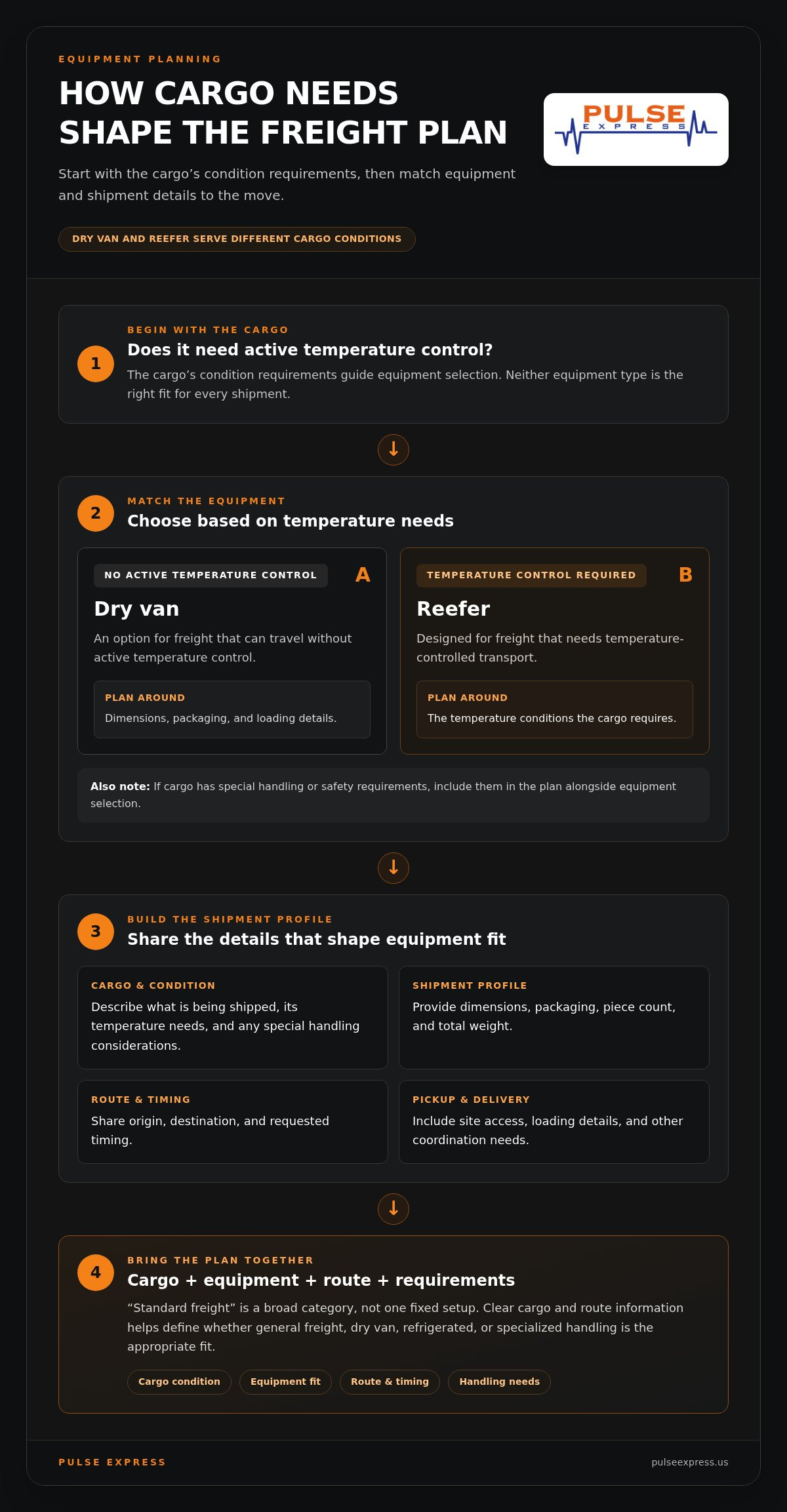
Equipment selection starts with the cargo’s condition requirements. A dry van is an option for freight that doesn’t need active temperature control; a reefer is designed for freight that does. Neither is the right fit for every shipment. Let the cargo, route, and operating plan guide the choice so the equipment meets the shipment’s needs without adding unnecessary requirements.
Use this comparison to frame the discussion about Standard freight trucking services and equipment:
| Cargo condition | Equipment type | Planning question |
|---|---|---|
| Does not require active temperature control | Dry van | What are the shipment’s dimensions, packaging, and loading details? |
| Requires temperature-controlled transport | Reefer | What temperature conditions does the cargo require? |
The table is a starting point, not a substitute for shipment details. If cargo also has special handling or safety requirements, include them in the plan alongside equipment selection.
When is dry van freight a practical fit?
Dry van transport may suit commercial freight that can travel without active temperature control. Before planning, describe the load’s dimensions and packaging, including how the pieces are arranged and prepared for loading. These details help establish the shipment’s needs and support a clear discussion about equipment fit. Don’t assume the cargo category tells the whole story: packaging and loading requirements matter, too.
When should a shipper consider reefer transport?
Consider refrigerated transport when cargo is temperature-sensitive and its condition depends on a controlled environment during transit. Include the required temperature conditions in the shipment details so they can inform planning. Pulse Express provides refrigerated transportation for temperature-sensitive freight. For more on temperature-controlled planning, see this cold chain logistics guide.
For either equipment type, include the route in the decision. Share the origin, destination, requested timing, and any pickup or delivery constraints alongside the cargo requirements. This gives the carrier a fuller picture of the operating plan and helps surface details that could affect shipment preparation.
Before submitting a request, organize the information that shapes equipment fit:
- Cargo condition: State whether the goods need temperature control or have other handling considerations.
- Shipment profile: Provide dimensions, packaging, piece count, and total weight.
- Route and timing: Share pickup and delivery locations, requested timing, and site access details.
Matching these details to dry van or reefer transport gives the discussion a practical starting point. For general freight shipments, see Pulse Express transportation services.
Is Standard Freight Enough for Specialized or Hazmat Cargo?
One freight setup doesn’t fit every shipment. “Standard” describes a broad transportation category, but it doesn’t tell a carrier everything needed to plan a particular load. Cargo condition, safety considerations, packaging, and handling needs can change the equipment and service approach. The label alone isn’t enough to determine whether general freight transportation is suitable.
Consider specialized transportation whenever a shipment’s condition, safety, or handling needs call for more than a general freight plan. That doesn’t mean every load requires specialized equipment. It means the service should be selected according to the shipment’s actual requirements, rather than assuming one standard setup will cover every type of cargo.
Temperature-sensitive goods and hazardous materials call for particular attention. A shipment that needs temperature-controlled transport has different planning considerations from general cargo. Hazmat loads also need a cargo-specific approach. Share accurate details early so the transportation plan can reflect the material and its handling needs.
How do cargo requirements affect carrier fit?
Start with a clear description of the cargo, its condition, and any handling considerations. Include relevant shipment documentation and explain what the freight needs during loading, transit, and delivery. Accurate information helps shape the service discussion and reduces the risk of planning around an incomplete picture. Avoid relying on a broad product label if it leaves out a relevant safety, temperature, or handling requirement.
Useful details include:
- Cargo identity and condition: Describe what is being shipped and whether temperature or other conditions matter.
- Handling considerations: Note special instructions relevant to preparing or moving the freight.
- Shipment records: Provide documentation that describes the cargo and its requirements.
- Route and timing: Share pickup and delivery locations and requested timing so the plan reflects the full move.
These details support an informed discussion about whether general freight is appropriate or whether a specialized transport approach better fits the load. They also help distinguish equipment selection from cargo requirements: choosing a trailer type does not, by itself, define what the cargo needs.
When does freight need a hazmat-focused approach?
Use a hazmat-focused approach when cargo is hazardous and its transportation needs depend on the material’s specific handling and shipment requirements. Don’t assume an ordinary freight plan is sufficient just because the goods can physically fit into a trailer. Communicate the cargo details and relevant documentation clearly so the shipment can be planned around its particular needs.
Pulse Express handles hazardous materials in dry and temperature-controlled freight. Dry freight hazmat and reefer hazmat transport address different cargo conditions. For further planning context, see the specialized hazmat logistics guide.
The practical takeaway is simple: describe the shipment before settling on a service label. Clear cargo information helps align the transportation plan with the load, whether it calls for general freight, temperature-controlled transport, or hazmat handling. This turns a broad request into a requirements-led discussion.
How to Prepare a Standard Freight Shipment Request
A clear shipment request helps a carrier understand the cargo, route, and conditions the move requires. Before requesting Standard freight trucking services, gather reliable details and organize them in the order they’ll be discussed. Separate confirmed measurements from estimates, and label estimates clearly. If information changes, update the request and supporting documents so the shipment details stay consistent.
What information should shippers gather first?
Begin with the freight, then add the route and site requirements. Describe the cargo plainly and include its dimensions, total weight, piece count, and packaging. Flag temperature needs, hazardous-material status, or other handling considerations where applicable. Accurate details help shape a service discussion without relying on assumptions about the load.
Use this ordered checklist to prepare the request:
- Describe the cargo. Identify what is being shipped and note its condition or any relevant handling needs.
- Record the shipment size. Provide dimensions, total weight, and piece count. Mark any figures that are estimates rather than confirmed measurements.
- Explain the packaging. Describe how the freight is packaged and prepared for loading.
- Flag special requirements. State whether temperature control is needed or the cargo is hazardous. Include relevant documentation with the request.
- Give the origin and destination. Provide complete pickup and delivery addresses, along with site contacts and operating hours.
- Share timing and access details. State requested pickup and delivery timing, appointment needs, and whether each location has a dock or forklift.
- Confirm next steps. Review the shipment details with the carrier, clarify open questions, and align on the service approach and follow-up needed for planning.
How can shippers make service discussions more productive?
Keep information consistent across the request, cargo description, and supporting documents. If dimensions or weight are estimates, say so rather than presenting them as final specifications. This gives the carrier a clearer basis for discussing the shipment and highlights which details may need updating as planning continues.
Use the conversation to connect the cargo’s needs with the service type and equipment. For example, state the required temperature conditions if the freight is temperature-sensitive, or identify hazmat status when relevant. Specific, straightforward information keeps the discussion focused on fit rather than guesswork.
A carrier needs a clear cargo description, accurate or clearly labeled estimated measurements, origin and destination, requested timing, and any handling or access requirements to assess a shipment. This information supports planning, but it doesn’t establish a delivery date or guarantee a particular outcome. Those details depend on the shipment-specific discussion and confirmed next steps.
Once your shipment information is organized, share your freight request with Pulse Express to discuss an approach that fits your cargo and route.
How Pulse Express Supports Standard Freight Shipments
Pulse Express provides over-the-road freight transportation across the United States, including general freight, dry van, and refrigerated transport. The service discussion can start with the cargo’s actual needs: what it is, how it must travel, and where it needs to go. The right category depends on the shipment, not simply on calling it “standard.”
General freight may suit commercial cargo that doesn’t require specialized conditions. Dry van and reefer transport address different shipment requirements, while hazmat transportation is relevant when the cargo calls for a hazmat-focused approach. These distinctions help turn a broad request for Standard freight trucking services into a specific discussion about the move.
Which Pulse Express service category fits the shipment?
Start with cargo condition. General freight can suit shipments without temperature-control needs or other specialized cargo requirements. Dry van transport may fit freight that doesn’t need active temperature control, while refrigerated transport is relevant for temperature-sensitive cargo. These options aren’t interchangeable: the cargo’s needs should guide the discussion about transport and equipment.
If the shipment contains hazardous materials, include that information from the outset. Pulse Express handles hazmat cargo in dry and temperature-controlled freight. Sharing the cargo description and relevant shipment information helps focus the service discussion on the appropriate category without assuming one setup fits every load.
What happens after a shipper defines the requirements?
Once you’ve identified the cargo and its conditions, share the route, requested timing, dimensions, weight, packaging, and handling needs with Pulse Express. Include pickup and delivery details and relevant site access information. If a figure is an estimate, label it clearly. Consistent details in the request and supporting documents give the discussion a practical starting point.
This information helps connect the shipment’s needs to general freight, dry van, refrigerated, or hazmat transportation. It also gives both sides a clearer basis for discussing the service category and next steps. A useful request describes the load accurately, including requirements that could affect equipment or handling, rather than relying on a general label alone.
Pulse Express has provided over-the-road transportation since 2000. If you’ve gathered the cargo, route, timing, and handling details, discuss a freight shipment with Pulse Express.
Make Your Next Freight Move a Clear One
Build a simple, repeatable process for planning each shipment. Keep cargo details, route information, and handling notes together, and update them when the load changes. A current, consistent shipment brief gives everyone involved a shared reference and helps keep decisions grounded in the freight’s actual needs.
That habit can make future discussions about Standard freight trucking services more focused, whether you’re planning a one-time move or coordinating shipments over time. Start with the information you have, mark estimates clearly, and identify questions that still need resolution. Thoughtful preparation creates a stronger foundation for choosing a transport approach and discussing practical next steps.
Pulse Express can help with your freight transportation needs. Discuss your shipment with Pulse Express and take the next step with a clear picture of your cargo and route.
Frequently Asked Questions
What are standard freight trucking services?
Standard freight trucking services move commercial cargo by truck, with the transportation plan shaped around the shipment’s needs. The practical question is whether the goods can travel as general freight or need a particular equipment type or handling approach. Packaging, condition, dimensions, and route all help determine what information to include in a service request.
What is the difference between dry van and reefer freight?
Dry van freight is intended for cargo that doesn’t require active temperature control, while reefer transport is used for temperature-sensitive freight. For example, if goods must stay within specified temperature conditions, identify those conditions in the request rather than treating the load as ordinary dry freight. Equipment selection should reflect the cargo, not just the commodity name.
Can standard freight trucking carry temperature-sensitive goods?
Yes. Temperature-sensitive goods can move by truck when the shipment is planned for refrigerated transport. Provide the required temperature conditions and relevant cargo information before planning begins. This helps distinguish a reefer shipment from freight that doesn’t need active temperature control. Treat these details as shipment requirements, not as an automatic assurance about conditions or delivery outcomes.
How do I choose the right freight trucking service?
Choose by matching the cargo’s condition and handling needs to the transport category. First identify whether it needs temperature control, has hazmat status, or can travel as general freight. Then consider the route, requested timing, packaging, and site access. If a requirement is uncertain, flag it in the request so it can be addressed during the service discussion.
What information does a carrier need for a freight quote or shipment review?
Provide a cargo description, packaging, piece count, dimensions, weight, origin, destination, and requested timing. Add relevant handling instructions, temperature conditions, hazmat status, site contacts, operating hours, and appointment needs. Note whether pickup and delivery locations have a dock or forklift. Mark estimated measurements clearly, and keep the request consistent with supporting documents so the carrier can review the same shipment information.
When should I use specialized hazmat freight transportation?
Use a hazmat-focused transport approach when the shipment contains hazardous materials and its cargo-specific requirements call for specialized planning. Clearly identify the material and include relevant shipment documentation rather than describing it only as general freight. Pulse Express handles hazmat cargo in dry and temperature-controlled freight. The appropriate category depends on both the material and the shipment’s condition requirements.
Does standard freight trucking include long-distance transportation?
It can. Standard freight trucking may involve a long-distance, over-the-road move, including transportation between locations in different states. The route is a key part of the shipment request because it helps define the scope of the move alongside cargo and timing details. Pulse Express provides OTR freight transportation across the United States for general and specialized cargo needs.


