

What if the right carrier for your shipment isn’t the one with the broadest coverage claim, but the one equipped for your freight? Shippers comparing OTR trucking companies need more than a map of service areas. The fit also depends on cargo type, equipment, and handling needs. To choose well, start by matching the shipment to the transportation service it requires.
This guide explains what over-the-road shipping means for shippers and how to match general freight, dry van, refrigerated, or hazardous materials with relevant transportation capabilities. You’ll also learn what to consider beyond geographic reach, so you can make a more informed choice.
Founded in 2000, Pulse Express provides OTR transportation across the United States for general freight, dry van, reefer, and hazmat cargo, including refrigerated and dry freight hazmat transport. The sections ahead explain these freight needs and how to prepare a clear request for transportation.
Key Takeaways
- Compare OTR trucking companies by how their capabilities fit your shipment, not by nationwide coverage claims alone.
- Freight type and handling needs guide the equipment discussion, from general freight and dry van to reefer and hazmat transport.
- A clear freight request includes the origin, destination, cargo type, handling needs, and desired shipping window.
- Pulse Express, founded in 2000, provides OTR transportation across the United States for general and specialized freight needs.
What OTR trucking companies do, and when nationwide freight needs one
Over-the-road (OTR) trucking is long-distance freight transportation, often across state lines. Unlike local or regional delivery, which serves a smaller geographic area, OTR moves goods between distant markets and can require coordination across longer routes. The term describes the distance and scope of a transportation movement, not a specific trailer or cargo type.
That distinction matters when comparing OTR trucking companies. A long route may call for dry van, refrigerated, or hazmat transportation, depending on the shipment. Distance alone doesn’t determine equipment, shipment size, or handling needs. A cross-country load may be general freight, while a shorter trip may still require specific handling because of its cargo.
How OTR freight differs from local and regional trucking
OTR routes connect locations across broad areas and may cross several states. For longer movements, shippers need to coordinate pickup and delivery locations, shipment details, and the requested shipping window. Local and regional freight typically follows a more limited route, but the same essentials apply: what is moving, where it needs to go, and how it should be handled.
For example, a manufacturer shipping goods from Iowa to a distributor in Arizona has a long-haul movement. If the distributor has additional delivery locations, those destinations also shape the route. The distance alone doesn’t determine whether the freight needs a dry van or reefer, or how much trailer space it requires. Cargo characteristics and shipment details help establish those needs.
Which shippers may need an OTR trucking company?
Manufacturers, distributors, and other businesses moving freight between distant U.S. markets may need OTR transportation. It can suit shipments traveling from a production site to a distribution point or goods moving between facilities in different parts of the country. For multiple destinations, organize the shipment details around each delivery point rather than treating the load as a single origin-to-destination move.
Cargo sensitivity and destination help clarify transportation needs. General freight may have no special temperature requirements, while temperature-sensitive goods call for refrigerated transportation. Hazmat freight also has distinct handling considerations. Describe the cargo and its handling needs before focusing on route length. Pulse Express provides OTR transportation across the United States for general and specialized freight, including dry van, reefer, and hazmat transport.
How OTR trucking companies match freight with dry van, reefer, and hazmat capabilities
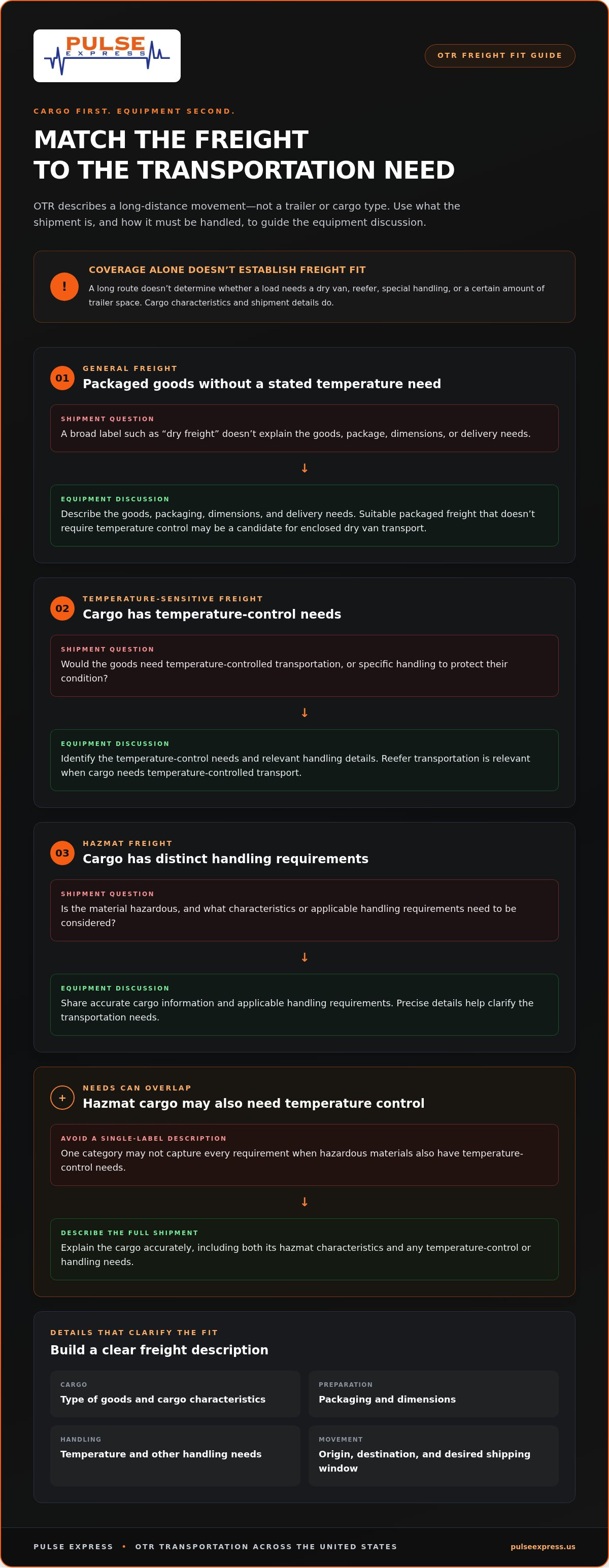
Start the equipment discussion with the freight, not a carrier’s broad service label. Cargo type, packaging, dimensions, handling needs, and destination all help determine the fit. General freight may suit dry van transport, while temperature-sensitive goods or hazardous materials call for more specialized consideration.
| Freight category | Key shipment considerations |
|---|---|
| General freight | Describe the goods, packaging, dimensions, and delivery needs. |
| Dry van | Consider whether packaged freight suits enclosed trailer transport. |
| Reefer | Identify temperature-control needs and relevant handling details. |
| Hazmat | Share accurate cargo information and applicable handling requirements. |
When general freight or dry van transport may fit
Dry van is an enclosed trailer category used for suitable general freight. Packaged goods that don’t require temperature control may be candidates, but dimensions and preparation still matter. Share those details to make the equipment discussion more specific. Pulse Express provides general freight and dry van transportation for long-haul cargo.
For example, boxed products moving from a manufacturer to a distribution point may fit general freight transportation. Packaging, dimensions, and delivery locations help clarify the movement. A broad label such as “dry freight” alone doesn’t give enough detail to assess the shipment’s needs.
When reefer or hazmat capabilities matter
Reefer transportation is relevant when cargo needs temperature-controlled transport. Reefer service supports temperature-sensitive freight by providing transportation suited to its temperature-control needs. Fresh food or other sensitive goods may call for this option, depending on their handling requirements. For more context on temperature-sensitive shipments, explore this cold chain logistics guide.
Hazmat freight requires careful attention to the cargo’s characteristics, handling needs, and applicable compliance considerations. Provide precise information about the material and shipment so its transportation needs are clear. Pulse Express offers hazmat freight service, including reefer hazmat transport and dry freight hazmat transport. The specialized hazmat logistics guide offers a deeper look at this freight category.
These categories can overlap: hazardous materials may also have temperature-control needs. Describe the cargo accurately rather than relying on a single label. To discuss a general, dry, refrigerated, or hazmat shipment, share your freight needs with Pulse Express.
How to compare OTR trucking companies beyond nationwide coverage
A nationwide service area tells you where a carrier may operate, but not whether its services fit a particular load. A useful comparison connects the shipment’s requirements to the carrier’s freight capabilities, equipment category, route scope, and coordination needs. Focus on what matters for the actual movement rather than on a broad coverage statement.
Use these four points to frame the comparison:
- Freight fit: Identify whether the cargo is general freight, temperature-sensitive, hazardous, or a combination of needs.
- Equipment category: Consider whether the shipment aligns with dry van or reefer transportation.
- Route scope: Share the origin, destination, and any additional delivery points.
- Coordination needs: Note handling instructions and the requested shipping window, especially if the cargo requires particular care.
These details help distinguish geographic reach from a carrier’s relevance to your freight. Packaged general goods have different considerations from temperature-controlled cargo. Hazmat freight also has distinct handling and applicable compliance considerations, so a general freight description alone won’t communicate the full need.
Start with the shipment, not the carrier slogan
Before comparing service descriptions, define the cargo type, origin, destination, and handling requirements. Add relevant details such as packaging, dimensions, temperature needs, or the nature of hazardous materials. This gives the transportation discussion a practical starting point and keeps it specific to your load. Route information also clarifies whether the shipment serves one destination or several.
For example, a distributor moving packaged goods between two U.S. markets has different transportation considerations from a business shipping refrigerated products to multiple destinations. Both may need long-haul service, but their cargo and coordination needs are not interchangeable.
Match the freight need to Pulse Express services
Pulse Express provides OTR transportation across the United States for general freight and dry van shipments. For cargo that needs temperature-controlled transportation, its reefer service is a relevant option. Businesses moving hazardous materials can use Pulse Express hazmat freight service, including dry freight hazmat transport and reefer hazmat transport. These categories give shippers a clear starting point for describing cargo and handling needs.
This cargo-first approach helps you assess OTR trucking companies: connect what’s being shipped to the relevant service, then consider the route and coordination details. Clear shipment information supports a focused discussion about the transportation fit.
If your freight needs align with general, dry van, reefer, or hazmat transportation, discuss your freight needs with Pulse Express.
How to prepare a clear freight request for an OTR trucking company
A well-prepared freight request gives the carrier a clear picture of the shipment before the service discussion begins. Include where the freight is moving, what it contains, how it needs to be handled, and your requested shipping window. These details focus the conversation on relevant transportation options instead of assumptions based on a broad cargo label.
Complete shipment information connects the cargo’s needs with the route, timing, and service category under discussion. Use this checklist to organize the essentials.
Shipment details to assemble before the discussion
Gather information that describes the shipment from pickup through delivery. Be specific where possible, and note details that affect handling. For hazardous materials, assemble the applicable shipment documentation and classification details so the freight can be described accurately.
- Origin and destination: Provide pickup and delivery locations, including any additional stops or destinations.
- Freight description: Identify the cargo as general freight, dry freight, temperature-sensitive goods, or hazardous materials, as applicable.
- Shipment size and packaging: Share available details about how the goods are packaged and their dimensions. This helps frame the equipment discussion.
- Handling requirements: Describe any specific care the cargo needs. For temperature-sensitive freight, include the handling requirements supplied for the shipment.
- Hazmat information: For hazardous materials, gather the applicable documentation and classification details that describe the freight.
- Desired shipping window: State when the shipment is ready for pickup and the delivery window you are working toward.
Accurate information is especially useful when a load has more than one consideration. For instance, explain both that goods are temperature-sensitive and that the route includes several delivery points. This keeps the discussion grounded in the shipment as a whole.
Turn requirements into a practical service conversation
Once you’ve assembled the shipment details, connect them to the service category that fits the cargo. General freight and dry freight relate to general freight and dry van transportation. Temperature-sensitive cargo points to reefer transport. A shipment involving hazardous materials relates to hazmat freight service, including dry freight hazmat transport or reefer hazmat transport when temperature control is also a consideration.
Pulse Express provides OTR transportation across the United States for general and specialized freight. Sharing the route, cargo description, handling needs, and requested shipping window gives the discussion a useful starting point and helps clarify the service that fits the shipment.
Ready to discuss your shipment? Share your freight requirements with Pulse Express.
Why Pulse Express belongs on your shortlist of OTR trucking companies
A useful shortlist is built around freight fit, not broad promises. Pulse Express provides OTR transportation across the United States and offers services for general freight, dry van, reefer, and hazmat shipments. That range gives shippers with standard or specialized cargo a clear starting point for discussing transportation. Founded in 2000, Pulse Express brings an established company history to that conversation.
The right service depends on the shipment. General freight, temperature-controlled cargo, and hazardous materials have different considerations, so let the cargo description and handling needs guide the discussion. For more context on how distance shapes freight movements, see this long-distance freight transportation guide.
A service range for different freight requirements
Pulse Express’s service categories align with distinct freight needs. General freight service can suit shipments without special temperature requirements. Dry van transport is an option for suitable dry freight. Reefer service addresses cargo requiring temperature-controlled transportation, while hazmat freight service supports shipments involving hazardous materials. These categories are related, but they aren’t interchangeable; the cargo and its handling requirements shape the conversation.
For example, a shipper moving packaged goods may discuss general freight or dry van needs, while a shipper with temperature-sensitive cargo should describe the relevant handling requirements for reefer transport. A hazardous-material shipment calls for clear information about its freight characteristics. Some loads may combine needs, such as temperature control and hazardous-material handling. Sharing the route and cargo details helps identify which Pulse Express service is relevant.
For longer routes, consider how distance, destinations, and shipment requirements fit together. Nationwide OTR service is useful context, but route scope is only one part of choosing a transportation partner. Freight type and handling needs complete the picture.
The next step for shippers
To start a practical discussion, bring together three essentials: freight type, route, and handling needs. Include the origin and destination, note additional delivery points, and describe considerations such as temperature control or hazardous-material handling. A concise, accurate description helps connect your shipment with Pulse Express’s general, dry van, reefer, or hazmat transportation services.
Pulse Express is ready to discuss your freight requirements. Talk with Pulse Express about your freight.
Move Your Next Freight Plan Forward
Choosing among OTR trucking companies is more than selecting a name for one load. As your freight patterns change, keep a concise record of recurring routes, cargo characteristics, and handling instructions. This reference can help shipping and receiving teams communicate consistently and plan future movements with greater clarity.
Bring the people who know the cargo and delivery needs into the planning conversation early. A clear starting point makes it easier to discuss transportation options, surface special considerations, and align on what the shipment requires.
Pulse Express is ready to discuss the requirements behind your next move. Discuss your OTR freight requirements with Pulse Express.
Frequently Asked Questions
Are OTR trucking companies the same as freight brokers?
No. An OTR trucking company transports freight, while a freight broker arranges transportation by connecting shippers with carriers. The roles differ in who operates the equipment and coordinates the move. Pulse Express provides OTR freight transportation using its trucking fleet. Knowing whether a business handles transportation directly or arranges it through carriers clarifies who is involved in the freight movement and communication.
Does OTR trucking mean a shipment must cross state lines?
No. OTR describes long-distance transportation, but a route can be long without crossing a state border. A shipment traveling from one end of a large state to another may still involve an extended haul. State lines alone don’t determine whether freight is OTR. Consider the route’s overall distance and transportation scope, and provide the pickup and delivery locations so the movement is clear.
Can an OTR trucking company transport less than a full truckload?
OTR describes the distance of a shipment, not how much trailer space it occupies. Less-than-truckload freight generally refers to shipments that share trailer space with other freight, while a full truckload uses the trailer for one shipment. These are different service arrangements. Pulse Express provides OTR transportation for general and specialized freight, and a shipment description should include its size and packaging as well as its cargo type.
How long does OTR freight shipping take?
There isn’t one standard transit time for every OTR shipment. Distance, route, pickup readiness, delivery arrangements, and additional stops can all affect the schedule. Special handling needs may also shape coordination. A load with multiple delivery points, for example, involves different planning from one moving directly between two locations. Set the requested shipping window around the shipment’s actual route and readiness rather than relying on a general estimate.
Can OTR trucking companies handle international cross-border freight?
Some OTR transportation movements cross national borders, but the term OTR by itself doesn’t establish whether a route is domestic or international. Cross-border movements involve planning beyond a domestic route, including relevant shipment information and border-related coordination. Pulse Express provides OTR freight transportation across the United States. For a domestic shipment, specify each U.S. origin and destination; an international route has a different scope.
What details should I include in an OTR freight request?
Include the cargo description, pickup and delivery locations, desired shipping window, and handling needs. Add shipment size and packaging details, plus delivery appointments or site-access information that could affect pickup or drop-off. For temperature-sensitive or hazardous freight, describe the relevant requirements and provide applicable shipment documentation. These details help clarify whether the shipment needs particular coordination and make the request easier to assess.


