

The right long-distance freight shipping plan starts with the cargo, not just the miles. A load’s size, handling needs, and delivery window all help determine the equipment and service that fit. To make the shipment discussion more useful, be ready to describe what you’re shipping, where it’s going, and when it needs to arrive.
Delays, damage, and special handling are reasonable concerns when freight is traveling across the country. Careful planning helps reduce uncertainty: identify the cargo, explain how it needs to be handled, and confirm when it will be ready for pickup. This guide covers how to organize those details and prepare freight for transport.
You’ll learn how cargo requirements inform equipment choices, what shipment information supports a focused transportation discussion, and how to get freight ready. Pulse Express provides OTR transportation across the United States for general freight, dry van, reefer, and hazmat loads. A clear shipment plan helps match the freight with an appropriate OTR service.
Key Takeaways
- Distance is only one factor in long distance freight shipping; cargo type and handling needs help shape the plan.
- Compare general freight, dry van, reefer, and hazmat options against your cargo requirements before choosing an approach.
- Balance requested timing with cargo fit, pickup readiness, delivery needs, and shipment coordination.
- Gather origin, destination, cargo description, known dimensions or weight, and requested timing for a focused shipment discussion.
- Pulse Express provides OTR transportation for general, dry van, reefer, and hazmat freight across the United States.
What Long-Distance Freight Shipping Involves for U.S. Shippers
Long-distance freight shipping moves business cargo between distant locations in the United States by truck. Planning involves more than calculating the miles between pickup and delivery. Cargo type, load size, handling requirements, pickup readiness, and requested delivery timing all help determine how to organize a shipment. A useful plan accounts for the freight as well as the route.
How OTR freight differs from parcel and local delivery
Over-the-road (OTR) transportation moves freight by truck along longer routes, often between cities or regions. Local delivery serves shorter routes, while parcel delivery is generally designed for small packages moving through a parcel network. A business shipping palletized goods across several states has different planning needs from someone sending a box across town.
Freight arrangements also vary. Truckload planning organizes a shipment around a truck’s capacity, while shared-load arrangements combine freight from multiple shippers. These are distinct concepts, not interchangeable labels. This guide focuses on OTR truck transportation and the shipment details that shape its planning. For a broader perspective on how freight moves through different modes, see the Freight Transport Overview.
Which shipment details shape the plan?
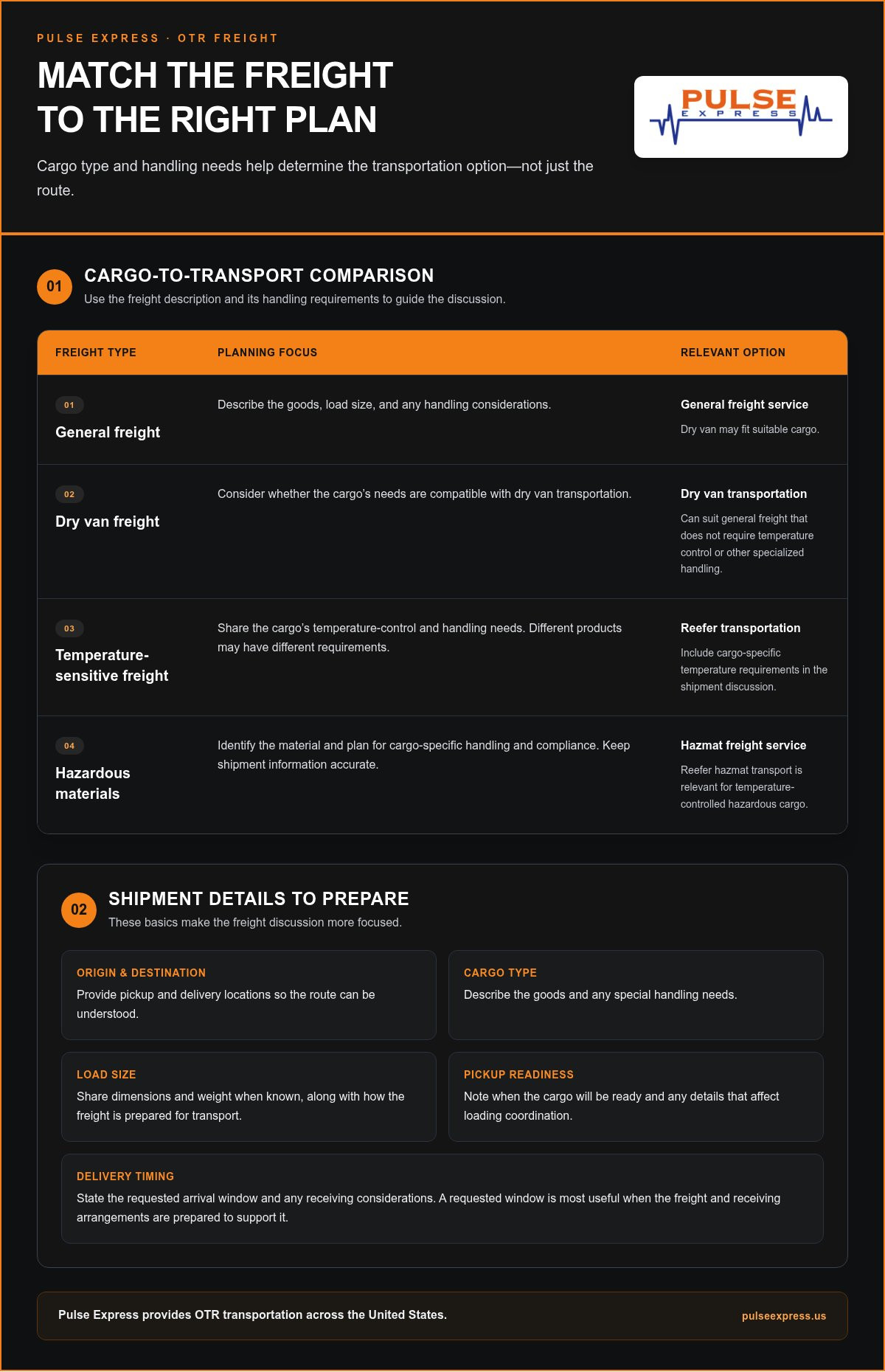
Start with the basic facts about the load and its journey. Origin and destination establish the route; cargo type and load size describe what is moving. Handling needs can affect the service approach, particularly for temperature-sensitive goods or hazardous materials. Pickup readiness and delivery timing matter, too. A requested window is most useful when the freight and receiving arrangements are prepared to support it.
- Origin and destination: Provide pickup and delivery locations so the route can be understood.
- Cargo type: Describe the goods and any special handling needs.
- Load size: Share dimensions and weight when known, along with how the freight is prepared for transport.
- Pickup readiness: Note when the cargo will be ready and any details that affect loading coordination.
- Delivery timing: State the requested arrival window and any receiving considerations.
These details make the initial shipment discussion more focused. General freight and temperature-sensitive cargo, for example, need different handling considerations even on the same route. Pulse Express provides OTR transportation across the United States for general freight, dry van, reefer, and hazmat shipments. The long-distance freight transportation guide offers broader context, while the sections ahead explain how to match cargo needs with a practical freight plan.
Match Long-Distance Freight to the Right Cargo and Equipment
Choose equipment according to the freight’s needs. General freight may suit dry van transportation, while cargo requiring temperature control needs a reefer plan. Hazardous materials call for cargo-specific handling and compliance planning. Matching the service to the load keeps the plan focused on what the cargo needs, not just the route.
Use this comparison as a starting point for long distance freight shipping. Cargo descriptions can vary, so include the specific product and its handling requirements in the planning discussion.
| Freight type | Planning focus | Relevant transportation option |
|---|---|---|
| General freight | Describe the goods, load size, and any handling considerations. | General freight service; dry van may fit suitable cargo. |
| Dry van freight | Consider whether the cargo’s needs are compatible with dry van transportation. | Dry van transportation. |
| Temperature-sensitive freight | Share the cargo’s temperature-control and handling needs. | Reefer transportation. |
| Hazardous materials | Identify the material and plan for cargo-specific handling and compliance. | Hazmat freight service; reefer hazmat transport for temperature-controlled hazardous cargo. |
When dry van or reefer transportation fits
Dry van transportation can suit general freight when the goods don’t require temperature control or other specialized handling. The cargo description still matters. Explain what the freight is, how it is prepared for transport, and any characteristics that could affect handling so the plan reflects the actual load.
Reefer transportation is relevant for goods that require temperature control. Include the cargo’s handling needs in the shipment discussion rather than treating it as ordinary general freight. Different temperature-sensitive products may have different requirements, so clear, cargo-specific information helps shape the plan. Pulse Express provides reefer transportation, including for temperature-controlled hazardous cargo. The cold chain logistics guide explores temperature-controlled freight in greater depth.
Planning for hazardous materials freight
Hazardous materials need more than a basic cargo label. Include the type of material and its handling needs in the initial planning conversation, alongside the route and requested timing. Compliance planning is cargo-specific, so avoid assumptions or treating all hazmat loads alike. Keep shipment information accurate and organized to support a careful discussion.
Pulse Express handles hazmat freight, including dry freight hazmat transport and reefer hazmat transport. For more detail on specialized handling and compliance planning, see the specialized hazmat logistics guide. Shippers planning general or specialized cargo can discuss OTR freight needs with Pulse Express using details that accurately describe the load.
Compare Long-Distance Freight Plans by Timing, Handling, and Coordination
A useful freight comparison looks beyond the requested delivery date. Consider whether the plan fits the cargo, what equipment and handling it needs, whether pickup can happen as scheduled, and how delivery will be coordinated. These factors work together. A plan that appears fast may not suit cargo requiring temperature control or specialized hazmat handling.
Use the same questions to assess each proposed plan. Consistent shipment details make it easier to compare options and see where a plan may need adjustment.
- Cargo fit: Does the plan reflect the type of goods and any special handling needs?
- Equipment needs: Is the transportation approach suited to the cargo, including temperature-control needs where applicable?
- Pickup readiness: Will the freight be prepared and accessible at the stated pickup time?
- Delivery requirements: Are the requested date, receiving hours, and any appointment constraints clear?
- Communication: Are the shipper, transportation partner, and receiving contact aligned on essential shipment details?
Incomplete information can make planning less precise and quote comparisons harder. For example, comparing plans without sharing the cargo type or handling needs may hide an important difference. A useful comparison depends on accurate, consistent shipment information, not just a route and requested date.
Balance delivery timing with cargo requirements
State the required delivery date or window, and note scheduling constraints at pickup and destination. Treat urgency as one planning factor, not the only one. Temperature-sensitive freight and hazardous materials have handling needs that must inform the transportation plan. Requested timing is a planning detail, not a guaranteed service commitment; actual timing depends on the shipment and route.
What clear freight coordination should cover
Coordination starts with accurate pickup details, cargo information, and delivery instructions shared by the relevant contacts. Prepare shipper and receiving contacts, location details, and scheduling notes before transportation. This gives the OTR transportation partner a clearer picture of the handoffs involved. The shipper provides complete information and readiness updates, while the transportation partner uses those details to support an organized plan.
For long distance freight shipping, a practical plan balances cargo fit, timing, and communication. If details change, such as pickup readiness or receiving arrangements, share the update promptly so everyone is working from the same information. This cannot remove every variable on a long route, but it can reduce avoidable uncertainty and make the shipment discussion more focused.
Prepare a Long-Distance Freight Shipment Before Requesting Service
A focused shipment discussion begins with accurate details. Before requesting long distance freight shipping, gather information about the cargo, route, and conditions at pickup and delivery. You don’t need every measurement finalized to start, but clearly distinguish what is known from what still needs confirmation.
Gather accurate cargo and route information
Describe the freight in specific, plain language, then note where it will be collected and delivered. Include dimensions or weight when known, plus loading, unloading, access, and receiving instructions that could affect coordination. Accurate details help Pulse Express understand the shipment and plan around its requirements.
- Record the origin and destination. Include the pickup and delivery locations, along with relevant site or receiving details.
- Describe the cargo. Use a clear product description and note how the freight is prepared for transport.
- Share load size information. Provide dimensions and weight when available. If you’re still confirming them, identify the figures as estimates rather than presenting them as final.
- Set out pickup and delivery timing. Give the requested dates or windows, loading readiness, receiving hours, and any known scheduling constraints.
- Note site instructions. Include useful information about access, loading or unloading arrangements, and delivery contacts.
- Identify special handling needs. Describe temperature-control needs or other cargo-specific considerations relevant to the shipment.
Prepare cargo-specific handling instructions
For refrigerated freight, communicate the cargo’s temperature requirements and any handling instructions that shape the shipment plan. For hazardous materials, identify the material and share relevant shipment information to support cargo-specific compliance planning. Requirements can depend on the cargo, so avoid assumptions and keep information current.
Specific instructions reduce avoidable clarification. “Refrigerated goods” alone, for example, leaves out the temperature requirement; including that information gives the transportation discussion a clearer starting point. Similarly, naming a hazardous material precisely is more useful than giving only a broad category. Keep supporting cargo information organized so the details are easy to reference.
Before the discussion, check for gaps or inconsistencies. Confirm that pickup and delivery locations match the requested timing, dimensions and weight are labeled accurately, and special handling needs are stated plainly. If something is unknown, flag it rather than guessing. This gives the OTR planning conversation a reliable foundation and helps align the shipper and transportation partner around the same shipment facts.
With these details ready, discuss your freight shipment with Pulse Express and bring your cargo, route, timing, and handling information into the conversation.
Arrange Long-Distance Freight Shipping with Pulse Express
A well-prepared shipment brief gives the transportation discussion a practical starting point. Cargo type, route, timing, and handling needs help clarify which OTR freight service fits the load. Pulse Express provides transportation across the United States for general and specialized freight, helping shippers plan the next steps for a shipment.
How Pulse Express supports different freight needs
Pulse Express handles general freight and dry van freight, as well as reefer transportation for temperature-sensitive cargo. Its hazmat services include dry freight hazmat transport and reefer hazmat transport for temperature-controlled hazardous cargo. Each service addresses different cargo needs, so a precise description of the goods and their handling requirements helps keep the discussion focused.
- General freight: Share what the shipment contains and any handling considerations.
- Dry van: Describe the freight and its requirements to support planning for suitable cargo.
- Reefer: Include the cargo’s temperature-control needs and relevant handling information.
- Hazmat: Identify the material and provide shipment details that support cargo-specific planning.
Pulse Express was founded in 2000. Each shipment discussion centers on the cargo and route in front of the team, keeping the planning conversation grounded in the freight’s specific requirements rather than assumptions based on its category alone.
The next step for your shipment
Bring together the origin, destination, cargo description, known dimensions or weight, requested timing, and any special handling or receiving-site instructions. If a detail is still being finalized, make that clear. A straightforward brief establishes what is known, what affects transport planning, and which service discussion is relevant to the load.
Identify the pickup contact and the person receiving the freight, along with location or scheduling notes that could affect coordination. These details give the shipper and transportation partner a shared starting point. From there, the conversation can stay focused on the route, cargo needs, and requested delivery requirements.
Every shipment has its own considerations. General freight, temperature-sensitive goods, and hazardous materials may call for different service discussions, even when each is moving over a long route. Clear information helps Pulse Express understand the shipment and discuss the OTR transportation approach that aligns with its cargo and handling needs.
When you’re ready, Discuss your long-distance freight shipment with Pulse Express. Bring the key details together and start a focused conversation about your freight needs.
Make Your Next Freight Move with Confidence
A useful shipment plan gives everyone a clear starting point and room to respond to the cargo’s actual needs. Keep the shipment brief current and promptly share changes to pickup readiness, delivery arrangements, or handling requirements. Clear communication helps keep planning focused as details develop.
For long distance freight shipping, the next step can be straightforward. Bring the route and cargo information you have, including any special handling considerations, and start a practical conversation about your shipment with Pulse Express. The team can discuss an OTR transportation approach suited to the freight and its requirements.
Discuss your long-distance freight shipment and take the next step with a clear plan. With the right details in hand, you can move forward with greater confidence.
Frequently Asked Questions
How far in advance should I plan a long-distance freight shipment?
Start coordinating once you know the shipment details. The planning window depends on the route, cargo, handling needs, and requested pickup or delivery timing. A shipment with special handling or a narrow receiving window may need different coordination than a flexible load. Before discussing it, gather accurate pickup and delivery locations, describe the cargo, and note timing constraints. This gives Pulse Express a useful basis for discussing your shipment.
What information should I have ready before requesting a freight quote?
Prepare the origin and destination, a clear cargo description, and dimensions or weight if available. Include pickup and delivery requirements, such as requested dates, receiving hours, and site instructions that could affect access. Describe special handling needs as well. For reefer or hazmat freight, cargo-specific handling details are especially relevant, and applicable requirements should be verified for the shipment. Complete information supports a more focused transportation discussion.
Can one long-distance freight shipment include both general and temperature-sensitive cargo?
Whether different cargo can travel together depends on compatibility and handling requirements, so don’t assume it will work based on the shipment description alone. Explain which goods need temperature control, how they’re packaged, and any other characteristics that may affect handling. A load containing both ordinary freight and temperature-sensitive products, for example, needs a plan that accounts for both. Share the full cargo details with Pulse Express to discuss an appropriate transportation plan.
Does long-distance freight shipping include pickup and delivery at a business location?
Pickup and delivery arrangements depend on the shipment locations and their site requirements. Provide accurate addresses, access information, operating hours, and receiving instructions during the initial discussion. Note whether the receiving location has set hours or requires delivery coordination rather than assuming the site can accept freight at any time. Clear location details help Pulse Express discuss how the pickup and delivery arrangements fit the shipment plan.
What can cause a long-distance freight shipment to take longer than expected?
Route conditions, weather, scheduling, cargo handling needs, and incomplete shipment information can all affect transportation planning. These factors don’t produce a predictable delay in every case, so avoid treating any one of them as a certain cause or relying on an estimate without shipment and route details. Share timing needs early, and keep pickup readiness and receiving instructions accurate. That gives the transportation discussion a clearer basis without implying a guaranteed arrival time.
Can hazardous materials be shipped long distance in a refrigerated truck?
Some hazardous materials may need both temperature control and specialized handling, but the material’s specific requirements determine the transportation plan. Don’t assume every hazmat shipment is suitable for refrigerated transport. Provide accurate cargo information, temperature needs, and handling details, and verify applicable requirements for that specific shipment. Pulse Express handles temperature-controlled hazardous cargo. For additional planning context, consult the specialized hazmat logistics guide.


