

A single compliance oversight in 2026 can now cost your business over $102,000 in civil penalties per violation. You understand that long-haul transit is far more than just moving cargo; it's a high-stakes discipline requiring precision, specialized hardware, and elite driver expertise. Managing nationwide hazmat logistics across state lines brings unique pressures, especially when you're balancing the need for reefer capacity with the strict safety standards required for sensitive industrial or pharmaceutical goods.
This guide is designed to help you master these complexities with confidence and ease. We'll provide a clear framework for evaluating carrier safety, an updated look at OTR equipment types, and a deep dive into the intersection of cold chain and hazardous materials. You will learn how to leverage new PHMSA regulatory changes, such as electronic documentation and updated lithium battery allowances, to streamline your operations. Our goal is to provide the clarity, stability, and professional guidance you need to build a more resilient supply chain. We're here to ensure your freight moves safely, legally, and efficiently every mile of the way.
Key Takeaways
- Learn how to match cargo requirements to specific trailer configurations, ensuring maximum security for both dry and temperature-controlled freight.
- Identify the critical safety protocols and FMCSA metrics that distinguish elite carriers in the competitive long-haul market.
- Master the complexities of nationwide hazmat logistics to safeguard high-stakes cargo while maintaining strict regulatory compliance across state lines.
- Develop a clear framework for evaluating carrier capacity and reach to build a more resilient, scalable supply chain.
- Understand the value of partnering with seasoned experts who combine decades of experience with modern logistics technology for precise execution.
Understanding Long Distance Freight Transportation in 2026
Long-distance freight, commonly known as over-the-road (OTR) transportation, defines any interstate transport exceeding 250 miles. It serves as the essential backbone of the US supply chain. It maintains the vital flow of goods between production hubs and consumer markets. In 2026, market trends favor specialized, high-value cargo. This transition requires a move away from generic hauling toward precise, nationwide hazmat logistics solutions that prioritize stability, consistency, and reach.
There's a clear distinction between regional hauling and nationwide long-haul logistics. Regional routes focus on local density and frequent stops. In contrast, nationwide logistics demands a robust network, specialized equipment, and a deep understanding of varying state regulations. Shippers now look for partners who can bridge the gap between complex industrial requirements and the practical realities of the open road. Success in this environment requires three things: precision, customization, and safety.
The Evolution of OTR Logistics
The industry has transformed from simple dry van transport into a sophisticated, tech-enabled ecosystem. Modern "just-in-time" delivery models don't leave room for error. They require higher reliability and real-time visibility from every carrier. In 2026, advancements in infrastructure and fuel technology are helping to maintain consistent transit times. These innovations support a more resilient supply chain by reducing the impact of traditional bottlenecks. Integrated logistics now prioritize efficiency, transparency, and safety.
Key Stakeholders: Shippers, Carriers, and Drivers
Successful freight execution relies on a collaborative partnership. Shippers must provide accurate data, including proper Dangerous Goods Classification, to ensure every load is handled correctly. Carriers then provide the specialized hardware, such as temperature-controlled units for reefer hazmat transport. Pulse Express acts as the steady bridge in this relationship. We combine 25+ years of experience with 2026 logistics technology to move sensitive freight safely across the country.
The most critical stakeholder remains the driver. We focus on hiring professional Class A CDL drivers because their expertise is the primary safeguard for your cargo. Driver-centric carriers produce better results. When drivers are supported and well-trained, they manage the complexities of nationwide hazmat logistics with greater care. This commitment to excellence ensures that high-value industrial and pharmaceutical goods arrive exactly as intended, every single time.
Specialized Equipment: Beyond the Standard Dry Van
A standard 53-foot trailer is the industry workhorse, but sensitive freight requires a higher level of technical precision. Matching your cargo requirements to the right trailer configuration is essential for maximum security. We prioritize late-model equipment because it significantly reduces the risk of roadside breakdowns. This commitment to modern hardware ensures your timeline remains intact and your cargo stays protected. High-stakes shipments simply demand more than a basic trailer can provide.
Refrigerated (Reefer) Transport for Sensitive Cargo
Long-haul routes for pharmaceuticals, food, and sensitive chemicals depend on temperature controlled trucking services. These units don't just keep things cold; they maintain precise thermal integrity through every climate zone. Modern telematics provide real-time monitoring and reporting. This gives you peace of mind that your cargo stays within its required range. It's about maintaining stability, ensuring safety, and delivering quality.
Dry Van Solutions for General and High-Value Freight
Dry vans offer immense versatility for non-perishable industrial goods. For high-value loads, we implement strict lock-and-seal protocols and GPS tracking. This ensures your cargo is protected from environmental factors and security threats during cross-country transit. If you need reliable capacity and professional handling, you can partner with our experienced team for your next shipment. Our drivers treat every load with the care it deserves.
The Intersection of Reefer and Hazmat
Managing nationwide hazmat logistics becomes even more complex when materials are temperature-sensitive. Many chemicals require constant cooling to remain stable and safe during transit. Transporting these goods requires adherence to strict Federal Hazmat Regulations. Pulse Express manages this dual complexity by using specialized reefer hazmat transport units. We provide the care, the equipment, and the compliance expertise needed for these high-stakes shipments. Our nationwide hazmat logistics network is built on safe handling, technical precision, and operational excellence.
Safety and Compliance: The Backbone of Long-Haul Logistics
Strict adherence to DOT and FMCSA regulations is the only way to ensure the long-term stability of your supply chain. In the high-stakes world of long-distance transport, safety protocols serve as the primary differentiator between average carriers and elite partners. Elite providers prioritize three key areas: rigorous equipment maintenance, advanced driver training, and comprehensive risk mitigation. By addressing potential hazards before they reach the road, these carriers significantly reduce insurance claims and protect your brand’s reputation. Federal law now mandates between $1 million and $5 million in public liability coverage for hazmat carriers, depending on the specific materials hauled. Maintaining these high standards isn't just about avoiding fines; it's about providing the reassurance you need to operate without interruption.
Risk mitigation strategies must account for varying terrains and unpredictable climates across the country. Long-haul routes through mountain passes or extreme weather zones require drivers who are prepared for every scenario. A focus on safe handling ensures that sensitive industrial goods remain secure, regardless of the external conditions. This proactive approach to safety creates a culture of reliability that benefits every stakeholder in the logistics chain.
Hazmat Freight Handling and Placarding
Transporting hazardous materials requires a specialized understanding of chemical classifications and transport rules. Every shipment must have compliant documentation and emergency response information present at all times. As of late 2026, PHMSA has transitioned to the MOTUS system for all hazmat registrations, requiring an online-only approach to payments and record-keeping. This digital shift streamlines compliance but demands a partner who stays current with technological updates. Managing nationwide hazmat logistics effectively means ensuring every placard is correct and every endorsement is valid. Many professionals seek out hazmat OTR driver jobs because these roles require a higher level of expertise and offer a path to handling high-value, sensitive cargo with precision.
Driver Safety and HOS Compliance
Driver well-being is a direct factor in cargo safety. Electronic Logging Devices (ELDs) have transformed long-distance scheduling by ensuring strict adherence to Hours of Service (HOS) rules. These devices prevent fatigue by mandating necessary rest periods, which reduces the risk of accidents during cross-country transit. Our training programs go far beyond basic CDL requirements, focusing on defensive driving and specialized handling for nationwide hazmat logistics. When drivers are supported, well-rested, and highly trained, they perform their duties with a level of care that ensures your freight arrives safely and on time. We believe that a driver-centric approach is the most effective way to maintain operational excellence and protect your most valuable assets.
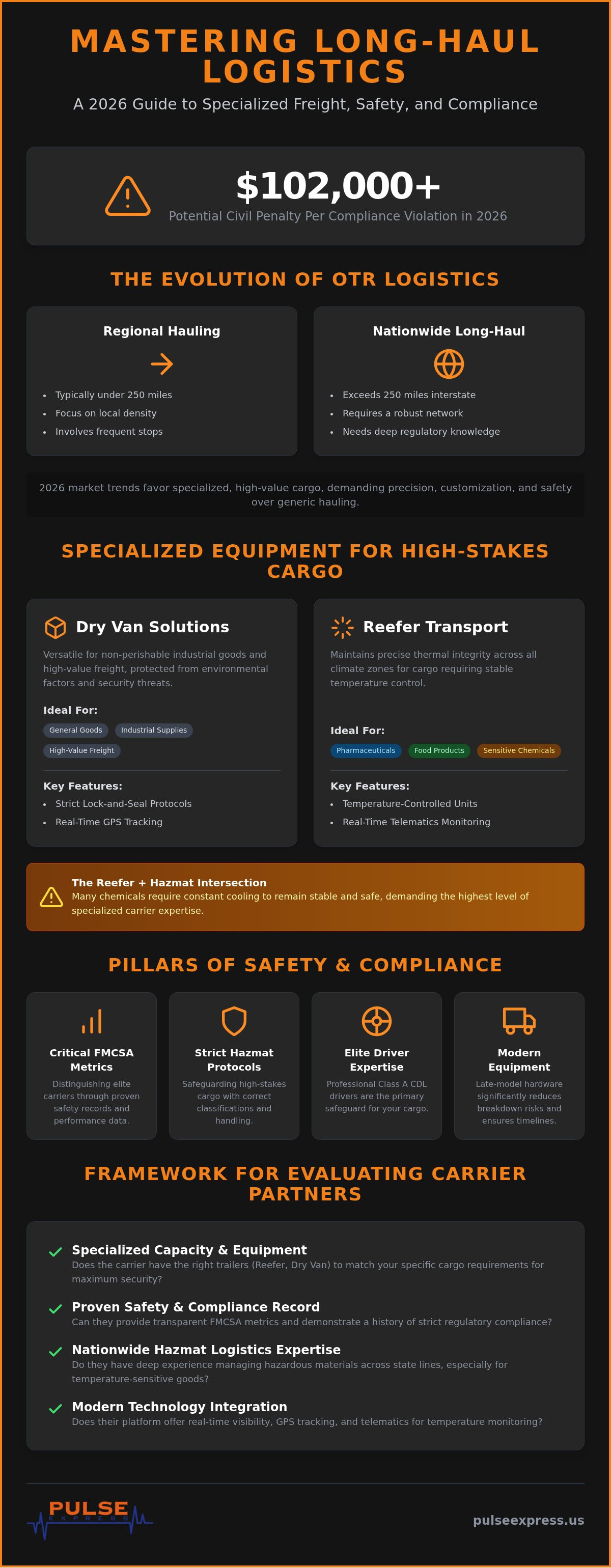
Key Factors to Evaluate When Selecting a Long-Distance Carrier
Selecting a partner for nationwide hazmat logistics requires a methodical evaluation of both operational capability and safety history. You need a carrier with the geographical reach to handle consistent nationwide lanes and the capacity to scale as your business grows. Start by reviewing public FMCSA data to assess safety ratings, inspection results, and compliance patterns. A carrier's commitment to safety is often reflected in their specialized certifications, including Hazmat endorsements, temperature-controlled expertise, and Bonded status. Sustainability also plays a growing role in 2026. Look for providers who maintain fuel-efficient fleets and use smart routing to minimize environmental impact while maximizing efficiency. These factors combine to create a foundation of reliability and trust.
Technology and Transparency
Real-time GPS visibility is now a non-negotiable requirement for long-distance freight. You deserve to know exactly where your high-value cargo is at every stage of the journey. Modern technology also facilitates automated document management and digital BOLs, which reduce administrative errors and speed up processing times. Automated systems ensure that emergency response information is always accessible, reflecting the 2026 PHMSA shift toward electronic documentation. Data analytics help optimize long-haul routes, allowing carriers to bypass congestion and reduce overall transit costs. These tools provide the transparency needed to build a truly collaborative partnership based on shared data and mutual trust.
Financial Stability and Social Proof
Verify that your carrier maintains the necessary insurance limits to protect your specific cargo types. Federal law requires $1 million to $5 million in public liability coverage for hazmat, but you should also confirm their specific cargo coverage limits to ensure they match your shipment value. Beyond the numbers, look at social proof. Read driver reviews and customer testimonials to understand the carrier's reputation from the inside out. A carrier’s consistent focus on hiring CDL drivers with high levels of expertise is a strong indicator of long-term stability and service quality. When a company invests in its people, it's better equipped to manage the complexities of nationwide hazmat logistics with care. This investment in human capital directly translates to better safety outcomes for your freight.
If you're ready to secure a more resilient supply chain with a partner you can trust, contact our logistics team today for a customized transportation plan. We provide the stability, precision, and care your sensitive freight requires.
The Pulse Express Difference: Precision in OTR Freight
Pulse Express provides more than just transportation; we provide a foundation of reliability and stability. With over 25 years of experience in the industry, we've seen the evolution of long-haul freight firsthand. In 2026, we've integrated advanced logistics technology to enhance our nationwide hazmat logistics capabilities. This blend of experience and innovation ensures that your sensitive industrial and pharmaceutical goods are handled with the highest level of care. We maintain a fleet of modern dry vans and temperature-controlled units, but the real difference lies in our people. Our commitment to excellence is rooted in precision, customization, and safety.
Our approach to driver recruitment is built on finding the most capable Class A CDL professionals in the market. We believe that elite drivers are the backbone of a successful supply chain. By offering high-value OTR careers, we attract experts who are personally invested in the success of every delivery. This synergy between specialized equipment and professional expertise creates a higher level of reliability for our shippers. You aren't just booking a truck; you're partnering with a team that understands the road reality of high-stakes freight. This human element is the ultimate safeguard for your cargo.
A Partner-First Approach to Logistics
We reject the idea that shipping should be a generic commodity. Every load has unique requirements, especially when it involves hazardous materials or temperature-sensitive goods. Our "white-glove" mindset ensures that we treat your cargo with the attention to detail it deserves. Owning our fleet gives us the control needed to maintain safety standards that generic marketplaces can't match. This partner-first approach emphasizes mutual growth and long-term stability, making us a trusted expert partner for your most sensitive freight. We act as a protective, efficient, and deeply committed guide for your logistics needs.
Ready to Move Your Freight?
Getting started with Pulse Express is a straightforward, supportive process. We've streamlined our onboarding to remove administrative friction, allowing you to focus on your core business. From the moment of pickup to the final mile, we maintain a methodical and purposeful rhythm that ensures timely execution. Our commitment to operational excellence means we handle the regulatory hurdles and technical challenges so you don't have to. You can rely on our established reliability to instill confidence in your operations. Contact Pulse Express today for a consultation on your long-distance needs and discover how we can strengthen your supply chain.
Securing Your Logistics Future
Success in long-distance transportation depends on three core pillars: technical precision, rigorous compliance, and elite driver expertise. You've seen how matching the right equipment to your cargo and maintaining strict safety standards creates a more resilient supply chain. Managing nationwide hazmat logistics requires a partner who understands the high stakes of sensitive industrial and pharmaceutical goods. It isn't just about moving freight; it's about providing the stability and care your business needs to grow.
Pulse Express offers the established reliability you can trust. With over 25 years of OTR expertise, specialized Hazmat and Reefer endorsements, and Class A CDL driver-led operations, we ensure your cargo arrives safely and on time. We provide the professional guidance and operational excellence required for today's complex market. Don't leave your high-value shipments to chance. Partner with Pulse Express for Secure Long-Distance Freight Solutions and experience the difference that a dedicated logistics partner makes. We're ready to help you navigate the road ahead with confidence and ease.
Frequently Asked Questions
What is considered long-distance freight in the trucking industry?
Long-distance freight, or over-the-road (OTR) transport, typically refers to any interstate shipment that exceeds 250 miles. These routes are the essential link between production centers and distant consumer markets. Pulse Express specializes in these long-haul lanes, focusing on the safe and efficient delivery of both general and sensitive cargo. Understanding this definition helps shippers better evaluate their logistics needs and select partners with the right equipment for these demanding distances.
How do carriers ensure the safety of hazardous materials during long-haul trips?
Carriers maintain safety by adhering to strict federal regulations and implementing specialized training programs. This includes proper placarding, secure cargo bracing, and the use of modern telematics to monitor vehicle health. Maintaining compliant documentation is essential, especially with the 2026 shift toward electronic emergency response information. These safety protocols are the primary differentiator between average and elite carriers in the competitive nationwide hazmat logistics sector.
What is the difference between dry van and reefer transport for long-distance routes?
Dry van trailers are versatile units designed for non-perishable industrial goods that require protection from the elements but not temperature control. Reefer transport uses specialized, insulated trailers with cooling units to maintain specific thermal ranges. This is critical for pharmaceuticals, food products, and sensitive chemicals. Both options offer GPS tracking and security features, but reefers provide the added layer of thermal stability required for sensitive shipments across multiple climate zones.
Can hazardous materials be transported in refrigerated trailers?
Yes, hazardous materials can be transported in refrigerated trailers when they are temperature-sensitive. This specialized service, known as reefer hazmat transport, is a core part of our logistics solutions. It requires a high level of technical precision and strict adherence to federal safety standards. Pulse Express utilizes a modern fleet of temperature-controlled units to ensure these materials stay within their required thermal range throughout the entire long-haul journey.
Why is driver experience so critical for nationwide OTR freight?
Driver experience is the ultimate safeguard for your cargo. Professional Class A CDL drivers have the expertise needed to handle the dual complexities of temperature control and hazardous material safety. They're trained to manage varying terrains and unpredictable weather while maintaining strict compliance with safety protocols. This high level of skill is essential for successful nationwide hazmat logistics, as it directly reduces the risk of cargo damage and insurance claims.
What technologies are used to track long-distance shipments in real-time?
Modern logistics providers use a suite of technologies to provide full transparency. This includes real-time GPS visibility for location tracking and telematics for monitoring engine health and trailer temperatures. Electronic Logging Devices (ELDs) ensure hours-of-service compliance, while digital Bills of Lading (BOLs) streamline administrative tasks. These tools allow for automated document management, ensuring that emergency response information is always accessible and reliable during transit, matching the latest 2026 regulatory standards.
How does Pulse Express maintain temperature integrity for pharmaceutical freight?
We ensure pharmaceutical integrity by combining late-model reefer equipment with real-time telematics. These systems provide constant updates on the trailer's internal climate, alerting our team to any deviations immediately. Our professional drivers are trained specifically in cold chain precision, ensuring that the cooling units operate correctly through every mile. This methodical approach provides the stability and reassurance needed for transporting high-value pharmaceutical goods that require strict thermal control.
What certifications should I look for in a long-distance hazmat carrier?
You should look for a carrier with a valid FMCSA hazmat registration and a strong safety rating. Drivers must possess specific hazmat endorsements on their Class A CDL licenses. It's also wise to verify their public liability coverage, which federal law mandates at $1 million to $5 million for hazmat carriers. Checking for specialized certifications and Bonded status can provide additional confidence that the carrier is fully equipped to handle high-stakes industrial freight.


