

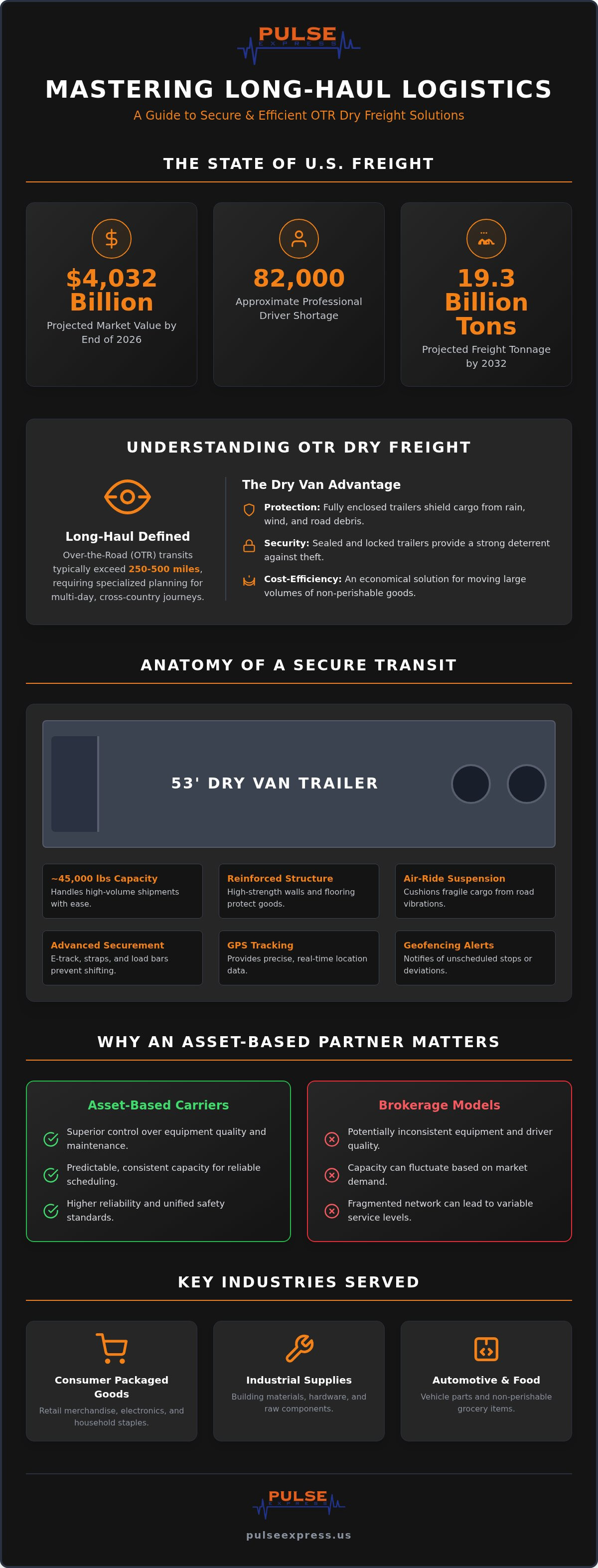
By the end of 2026, the U.S. freight trucking market is projected to reach a value of $4,032 billion, yet the industry continues to struggle with a shortage of approximately 82,000 professional drivers. This gap often leaves shippers searching for reliable long haul dry freight solutions that don't compromise on safety or security. You likely understand the stress of watching high-value cargo head out on a multi-day transit with limited visibility or concerns about driver quality. It's a challenge to find a partner who values your delivery schedule, your inventory, and your peace of mind.
This guide helps you solve these logistics hurdles by identifying the most effective OTR strategies for your nationwide operations. You'll discover how to optimize your supply chain with approaches focused on secure transport, efficient routing, and full regulatory compliance. We'll examine the critical role of asset-backed fleets, the impact of recent FMCSA electronic documentation updates, and how specialized driver recruitment ensures your goods arrive without damage or delay. By focusing on precision, safety, and professional excellence, you can transform your long-haul transport from a source of worry into a stable, strategic advantage for your business.
Key Takeaways
- Understand the scale of OTR transport and why transits exceeding 500 miles require a specialized approach to logistics management.
- Discover the essential load securement protocols and trailer dimensions necessary to maintain the integrity of high-value cargo during long transits.
- Learn why partnering with asset-based carriers offers superior equipment control, predictable capacity, and higher reliability compared to brokerage models.
- Navigate the strict regulatory requirements for dry freight hazmat transport to ensure your sensitive industrial shipments remain safe and compliant.
- Optimize your supply chain by implementing long haul dry freight solutions that prioritize safety, precision, and professional excellence.
Understanding Long Haul Dry Freight Solutions in the Modern Supply Chain
Long-haul transport is defined by distance and dedication. In the logistics sector, long-haul (also known as Over-the-Road or OTR) typically refers to transits that exceed 250 to 500 miles. These routes require specialized planning and seasoned drivers to ensure cargo remains safe across state lines. Effective long haul dry freight solutions serve as the vital link in the American economy, moving goods through a vast network of highways. To understand what is truckload shipping, one must look at the dry van trailer. It's a fully enclosed box that protects non-perishable inventory from rain, wind, and road debris.
Dry freight is remarkably versatile. It's the standard for almost any product that doesn't require temperature control. This mode offers three primary advantages: protection from environmental factors, enhanced security against theft, and superior cost-efficiency for large volumes. Because the trailer is sealed and locked, it provides a layer of stability that open-deck transport cannot match. With total freight tonnage projected to grow to 19.3 billion tons by 2032 according to the ATA, the demand for reliable OTR capacity has never been higher.
The Scope of Nationwide Dry Van Transport
Nationwide transport bridges the gap between distant production facilities and regional distribution centers. While regional lanes might cover a few hundred miles, OTR routes often span coast-to-coast. This scale demands consistent capacity, especially when market volumes fluctuate. Managing these lanes requires a deep understanding of transit times, driver rest requirements, and fuel management. A shipment moving across the country involves multiple days of continuous movement across diverse terrain.
Reliable carriers maintain asset-backed fleets to provide this stability. They ensure that manufacturers don't face bottlenecks when moving high volumes across long distances. It's about creating a predictable flow that keeps shelves stocked and production lines moving. This commitment to operational excellence allows businesses to scale their reach without the risks associated with fragmented logistics networks.
Key Industries Relying on Dry Freight Solutions
Several sectors depend on the reliability of long haul dry freight solutions to maintain their daily operations. These include:
- Consumer Packaged Goods: Retail merchandise, electronics, and household staples.
- Industrial Supplies: Building materials, hardware, and raw components.
- Automotive and Food: Vehicle parts and non-perishable grocery items.
Each industry requires a carrier that understands the specific handling needs of their cargo. Whether it's high-value retail goods or heavy industrial parts, the dry van remains the most trusted tool for long-distance transport. By prioritizing precision, safety, and professional excellence, carriers help these industries thrive in a competitive market.
The Mechanics of Secure OTR Dry Van Transport
The physical integrity of your cargo depends on the equipment that carries it. Standard 53-foot dry van trailers provide the most reliable environment for OTR transport, offering a weight capacity of approximately 45,000 pounds. These trailers are built for durability, featuring reinforced flooring, high-strength walls, and secure rear doors. To prevent damage during multi-day transits, professional carriers implement rigorous load securement protocols. This includes the use of E-track systems, heavy-duty straps, and adjustable load bars to eliminate shifting. For sensitive or fragile shipments, air-ride suspension technology is a critical component. It cushions the cargo from road vibrations, ensuring that goods arrive in the same condition they left the warehouse.
Modern long haul dry freight solutions also integrate real-time visibility tools. Shippers don't have to wonder where their freight is located during a three-day transit. GPS tracking provides precise location data, while geofencing alerts notify managers of any unscheduled stops. This level of transparency builds trust, improves communication, and allows for better planning at the receiving dock.
Cargo Protection and Physical Security
Hard-sided trailers offer a level of security that curtain-side or flatbed options cannot match. They provide a rigid barrier against both the elements and unauthorized access. Weatherproofing is essential when moving goods across different climate zones. A shipment might encounter heavy rain in the Southeast and freezing temperatures in the Midwest within the same journey. To combat theft, carriers use high-security seals, tractor-trailer GPS synchronization, and strict yard protocols. These layers of protection are vital for maintaining the safety of high-value dry goods.
Maximizing Efficiency in Long Haul Logistics
Efficiency in OTR transport is a balance of speed, safety, and sustainability. Drop-and-hook programs allow drivers to swap trailers quickly, which reduces wait times and keeps freight moving. Carriers also focus on optimizing fuel consumption through aerodynamic equipment and strategic routing. Managing transit times requires a thorough understanding of Federal Motor Carrier Safety Administration (FMCSA) regulations. These rules govern driver Hours of Service (HOS) to ensure safety on the road while meeting delivery deadlines. If you're looking to streamline your operations, consider partnering with a carrier that offers reliable transport options tailored to your specific volume needs. By choosing professional long haul dry freight solutions, you ensure your logistics remains both compliant and cost-effective.
Evaluating Asset-Based vs. Brokerage Dry Freight Logistics
Choosing between an asset-based carrier and a freight broker is a pivotal decision for any logistics manager. Asset-based carriers own their trucks, maintain their trailers, and directly employ their drivers. This ownership model creates a foundation of accountability that brokers simply can't replicate. When you utilize long haul dry freight solutions from an asset-backed provider, you're securing a direct line to the equipment moving your goods. This control leads to higher reliability on long-haul routes, where mechanical issues or driver inconsistency can quickly derail a schedule.
One of the most significant risks in dry van logistics is the "double-brokering" trap. This occurs when a broker unknowingly or intentionally hands off a load to another entity, stripping the shipper of visibility and control. By working with an asset-based fleet, you eliminate this risk entirely. You also gain cost transparency. Without the middleman, you avoid hidden brokerage fees and surcharges that often inflate spot market rates. High levels of global supply chain reliability depend on these direct links, as they ensure that the person promising the delivery is the one actually performing it.
The Advantage of Direct Carrier Relationships
Direct relationships simplify communication. Instead of playing "phone tag" through multiple layers of brokers, you have a clear channel between your team and the driver. This clarity is essential during multi-day transits across the country. You also benefit from consistent equipment standards. Asset-based carriers follow strict maintenance schedules to protect their investments, which reduces the chance of roadside breakdowns. During peak seasonal surges, these carriers prioritize their long-term partners, providing reliable capacity when the spot market becomes volatile.
Financial Stability and Liability Coverage
Asset ownership is a strong indicator of long-term stability. A company that has invested in a physical fleet since 2000 demonstrates a commitment to the industry that a digital brokerage might lack. This stability translates into better protection for your cargo. Asset-based carriers typically carry robust insurance policies specifically tailored for high-value dry freight. If an incident does occur, the claims process is significantly simplified. You deal directly with the fleet owner rather than navigating a complex web of third-party liability and sub-contractor agreements. This direct accountability provides the reassurance needed to move sensitive industrial goods or high-value retail merchandise with confidence.
Safety and Compliance: Managing Hazmat and High-Value Dry Goods
Transporting hazardous materials requires a level of precision that goes beyond standard logistics. When long haul dry freight solutions involve chemicals or industrial components, compliance becomes the top priority. These shipments aren't just loads; they are responsibilities that demand specialized knowledge. Drivers with hazmat endorsements are considered elite OTR professionals because they undergo rigorous background checks and continuous training. Their expertise ensures that sensitive cargo moves safely across state lines without incident. This commitment to safety protects the driver, the public, and your high-value inventory.
Compliant Hazardous Material Transport
Compliance starts with proper documentation and physical identification. Effective September 3, 2026, PHMSA regulations allow for emergency response information and registration documents to be carried in reliable electronic formats. This digitalization streamlines roadside inspections and improves response times during long-haul transits. Drivers must also manage strict segregation rules, which dictate what materials can and cannot share space in a dry van trailer. For instance, lithium battery shipments under the MOT exception now have an increased aggregate gross vehicle weight limit of 500 kg. Proper placarding is non-negotiable. It provides immediate visual cues for emergency responders. Our drivers follow standardized protocols for every hazmat load, ensuring that all paperwork is current and every placard is clearly visible.
Handling Sensitive and High-Value Cargo
High-value goods like electronics, pharmaceuticals, and precision machinery require more than just a locked door. They need specialized protocols to mitigate risk during multi-day transits. White-glove dry van services provide an extra layer of care for boutique industrial items or fragile components. This includes GPS-monitored transits, secure yard protocols, and zero-stop mandates for high-risk segments of the route. By focusing on these details, carriers protect the shipper's reputation and bottom line. Learn about Essential Requirements for Hazmat Endorsed Driver Hiring to see how we vet our team for these critical roles. If you're looking for a partner that prioritizes safety, you can secure your hazmat transport with our asset-based fleet today. These long haul dry freight solutions are designed to provide the stability and precision your supply chain demands.
Why Pulse Express is the Trusted Partner for Long-Distance Dry Freight
Pulse Express has provided stability and professional authority in the OTR logistics market since 2000. We understand that your supply chain requires more than just a truck; it needs a committed partner invested in your growth. Our long haul dry freight solutions are built on a foundation of operational excellence and established reliability. We manage every shipment with the care of a close-knit partner while maintaining the reach of a national carrier. This balance allows us to offer customized logistics strategies that meet the specific needs of industrial and retail sectors alike.
Our approach to hiring CDL drivers is a direct benefit to our clients. We recognize that the driver is the most critical link in the safety chain. By recruiting elite Class A CDL professionals and providing them with high-paying OTR careers, we ensure your freight is in expert hands. This focus on driver quality translates into lower risk, higher security, and zero-loss delivery for your most sensitive goods. By choosing our long haul dry freight solutions, you gain the peace of mind that comes with over two decades of industry leadership.
A Fleet Built for Reliability
We maintain a modern, asset-backed fleet to ensure predictable capacity for our partners. Our investment in late-model dry van equipment and rigorous maintenance schedules minimizes the risk of roadside delays. We provide nationwide coverage that remains responsive to your unique requirements. Shippers also benefit from direct access to our leadership team. This allows for rapid problem-solving and streamlined decision-making for complex logistics challenges. We prioritize precision, customization, and safety in every lane we serve.
The Pulse Express Driver Advantage
The correlation between driver satisfaction and cargo safety is a cornerstone of our business model. Our Class A CDL OTR drivers are among the highest-paid in the industry, which fosters a culture of professionalism and accountability. Satisfied drivers are more attentive to load securement, more vigilant regarding security, and more committed to maintaining delivery schedules. Our strict recruitment standards result in significantly lower turnover compared to industry averages. This stability ensures that your freight is moved by seasoned professionals who understand the nuances of long-distance transport. When you choose Pulse Express, you're partnering with a team that values your success as much as our own.
Securing Your Supply Chain for the Long Haul
Optimizing your logistics strategy requires more than finding the lowest rate; it demands a partnership built on stability, precision, and trust. By prioritizing asset-based carriers and specialized driver expertise, you ensure that your high-value cargo remains protected throughout its journey. We've explored how professional long haul dry freight solutions balance regulatory compliance with operational efficiency to keep your supply chain moving. Whether you're navigating complex hazmat requirements or seeking predictable capacity for retail merchandise, the right carrier provides the necessary foundation for growth.
Pulse Express offers the established reliability your business deserves. With an asset-based fleet for guaranteed capacity, specialized hazmat certification for sensitive dry goods, and over 25 years of OTR excellence, we provide the protection your inventory requires. It's time to move beyond the uncertainty of the spot market and embrace a solution-focused partnership. Partner with Pulse Express for your next long-haul dry freight shipment and experience the confidence of working with a seasoned industry leader. We look forward to helping you achieve zero-loss delivery and streamlined operations across every mile.
Frequently Asked Questions
What is the difference between dry van and general freight?
Dry van refers to the specific type of enclosed, non-temperature-controlled trailer used for transport. General freight is a broader category that describes the non-perishable goods carried inside these trailers. While general freight can be moved via various methods, dry van is the most common for retail and industrial products. It provides a secure, weatherproof environment for items that don't need refrigeration but require protection from the elements during transit.
How much weight can a standard long-haul dry van trailer carry?
A standard 53-foot dry van trailer typically carries a maximum payload of approximately 45,000 pounds. This limit is dictated by federal gross vehicle weight regulations, which cap the total weight of the tractor, trailer, and cargo at 80,000 pounds. Shippers must carefully calculate pallet weights to ensure the load remains compliant. Distribution of weight across the axles is also critical for safety and meeting legal requirements during long-haul transits.
Can hazardous materials be shipped in a standard dry van?
Yes, hazardous materials can be transported in a dry van provided the carrier and driver meet specific regulatory standards. The trailer must be correctly placarded, and the driver must hold a Class A CDL with a hazmat endorsement. Effective September 3, 2026, PHMSA allows for electronic documentation, which simplifies compliance for these sensitive loads. It's essential to partner with a carrier that specializes in dry freight hazmat transport to ensure all safety protocols are followed.
What are the benefits of using an asset-based carrier for long-haul routes?
Using an asset-based carrier provides direct accountability and predictable capacity because the company owns the trucks and employs the drivers. Unlike brokers, asset-based providers maintain their own equipment to strict standards, which reduces the risk of mechanical delays. This model eliminates the "double-brokering" trap and offers clearer communication. For businesses seeking long haul dry freight solutions, this direct relationship translates to higher reliability, consistent scheduling, and simplified liability coverage.
How does Pulse Express ensure the safety of high-value dry freight?
Pulse Express prioritizes safety through a combination of elite driver recruitment and advanced equipment. We hire experienced Class A CDL professionals and provide them with high-paying OTR careers, which results in better cargo handling and lower turnover. Our asset-backed fleet consists of late-model trailers equipped with air-ride suspension and GPS tracking. These tools allow for real-time visibility and protect fragile items from road vibrations, ensuring your high-value inventory arrives in pristine condition.
What industries benefit most from OTR dry van transport?
Industries such as retail, consumer packaged goods (CPG), and automotive manufacturing rely heavily on OTR dry van transport. It's the standard choice for moving non-perishable food, electronics, and building materials across the country. Because dry vans are versatile and secure, they're also ideal for industrial chemicals and precision machinery. Any sector that requires large-volume, weatherproof transport for goods that don't need temperature control will find these long haul dry freight solutions essential for their operations.
How do transit times work for cross-country dry freight delivery?
Transit times for cross-country deliveries are determined by total mileage and Federal Motor Carrier Safety Administration (FMCSA) Hours of Service regulations. A solo driver typically covers about 500 to 600 miles per day while remaining compliant with mandatory rest breaks. For a coast-to-coast journey, shippers should generally plan for four to six days in transit. Factors like weather conditions, traffic congestion, and loading efficiency at the origin can also influence the final delivery schedule.
What certifications should I look for in a dry freight logistics partner?
You should look for a partner with a strong safety rating from the FMCSA and drivers who hold Class A CDL licenses. Key indicators of quality include:
- Hazmat certifications for sensitive industrial loads
- A proven history of operational stability since 2000
- Asset-backed equipment with modern safety features


