

In the high-stakes world of hazardous materials, your choice of trailer is much more than a logistical preference; it's a critical safety barrier that determines the stability of your entire supply chain. Selecting the wrong equipment doesn't just risk a delayed delivery. It puts your cargo, your reputation, and your compliance record on the line.
You likely understand the pressure of managing volatile shipments where a single degree of temperature change or a minor documentation error can lead to severe penalties. With the PHMSA updates effective September 3, 2026, the margin for error has become even smaller for every shipper. This guide clarifies the nuances of Dry Van vs Reefer for hazmat shipping to help you maintain cargo integrity, ensure 100% DOT compliance, and optimize your transportation spend. We'll examine the technical requirements for chemical stability, the latest regulatory shifts for the 2026-2027 cycle, and the specific cost factors that influence trailer selection. By focusing on precision, safety, and reliability, you can transform your hazmat logistics from a source of stress into a streamlined, secure operation.
Key Takeaways
- Identify why trailer selection is legally mandated based on the chemical stability and hazard classification of your specific hazardous materials.
- Leverage dry van transport for stable Class 3 and Class 9 materials to achieve cost-effective shipping without compromising on safety or security.
- Evaluate the critical differences between Dry Van vs Reefer for hazmat shipping when transporting volatile substances, such as Class 5.2 organic peroxides, that require precise temperature regulation.
- Account for the Hazmat Premium and additional operational expenses like fuel and specialized equipment maintenance to accurately forecast your 2026 logistics budget.
- Select a trusted partner with a modern, dual-threat fleet and expert OTR drivers to ensure your cargo remains stable, compliant, and secure throughout its journey.
Understanding Hazmat Trailer Selection: Dry Van vs Reefer
Choosing between Dry Van vs Reefer for hazmat shipping is a fundamental safety decision. A dry van offers a simple, enclosed environment for stable goods. In contrast, a reefer provides thick insulation, active airflow, and precise temperature regulation. This distinction is vital because the Pipeline and Hazardous Materials Safety Administration (PHMSA) sets strict equipment standards to prevent catastrophic failures during transit. Pulse Express specializes in this complex landscape, providing the technical expertise needed to manage these high-risk variables effectively. We serve as a trusted partner, ensuring your equipment matches your cargo's specific needs.
The Role of Temperature in Chemical Stability
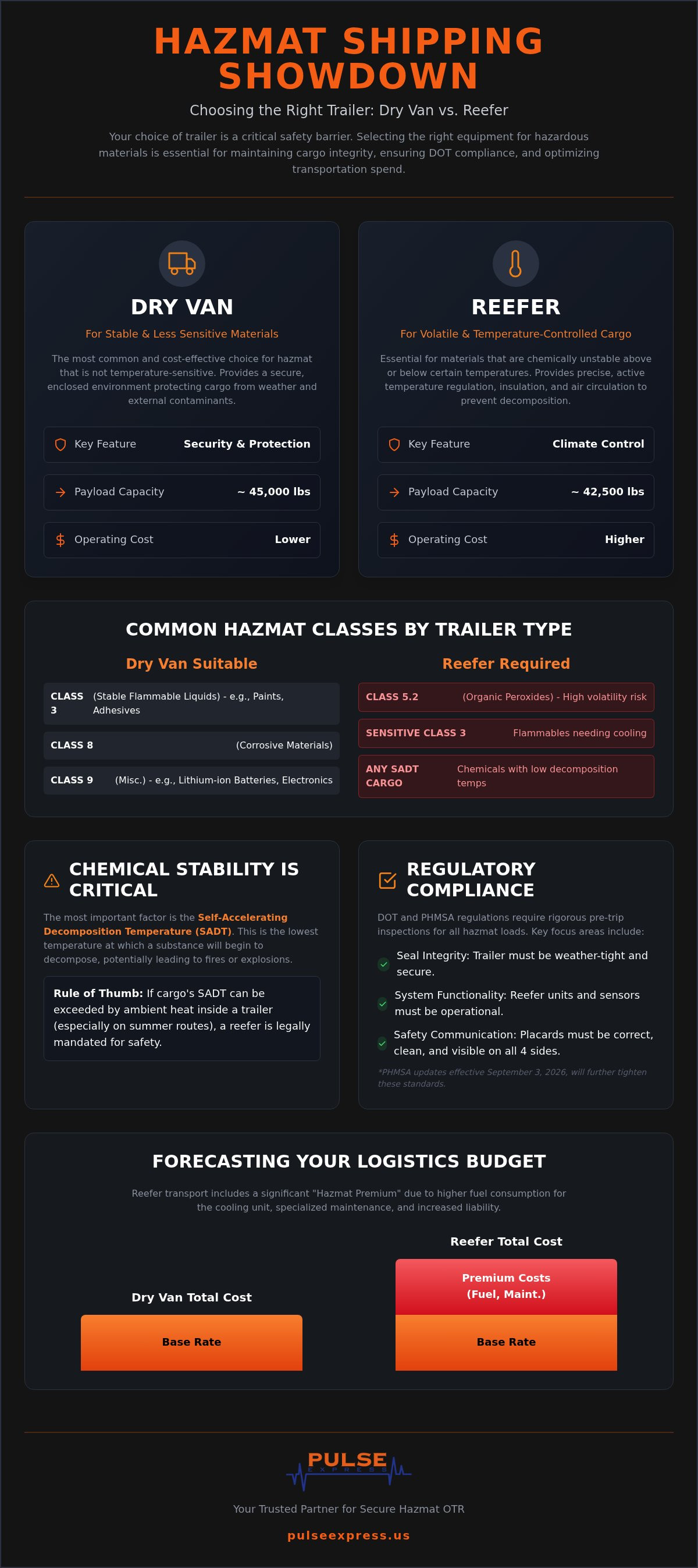
Many industrial chemicals have a Self-Accelerating Decomposition Temperature (SADT). This is the lowest temperature at which a substance in a typical shipping container will undergo self-accelerating decomposition. If the ambient heat inside a dry van exceeds this threshold, the cargo can become unstable. This instability can lead to rapid gas release, fires, or even explosions. Shippers must consult standardized hazardous materials classifications to determine if their specific product requires active cooling. While a dry van is suitable for many Class 3 flammables, more volatile substances require the constant, monitored environment of a refrigerated unit to remain secure. Even "dry" chemicals can be sensitive to the extreme heat found in a trailer during a summer cross-country route.
Regulatory Compliance and Equipment Standards
Compliance starts with the trailer's physical condition. DOT regulations require hazmat-ready units to meet specific structural and safety criteria. Before any long-haul OTR transit, drivers must perform rigorous inspections focusing on three key areas:
- Seal Integrity: Ensuring the trailer is weather-tight and secure.
- System Functionality: Verifying that reefer units and airflow sensors are operational.
- Safety Communication: Confirming that all placards are clean, correct, and visible.
Placarding is non-negotiable. Both dry vans and reefers must clearly display the correct identifiers on all four sides. Pulse Express maintains a modern fleet that exceeds these baseline standards. We bridge the gap between general freight and specialized logistics by pairing high-spec equipment with elite Class A CDL drivers who understand the weight of their responsibility. Our commitment to operational excellence ensures that your cargo remains stable, compliant, and secure from the first mile to the last.
Dry Van Hazmat Shipping: Efficiency for Stable Materials
For many shippers, the decision between Dry Van vs Reefer for hazmat shipping comes down to the chemical profile of the cargo. If your materials are thermally stable, the dry van is the most logical and efficient choice. It serves as the baseline for nationwide freight due to its widespread availability and lower operating costs. You gain a reliable, enclosed solution that protects your investment without the added expense of active refrigeration.
Payload efficiency is another major driver for choosing dry vans. These trailers are significantly lighter than refrigerated units, which often allows for a maximum payload of approximately 45,000 pounds. This extra capacity helps you optimize your shipping budget by moving more volume in fewer trips. Additionally, the non-vented nature of a standard dry van offers enhanced security for sensitive or high-value hazmat. It keeps your cargo hidden, dry, and shielded from external contaminants throughout the route.
Common Hazmat Commodities for Dry Van
Dry vans are ideal for a variety of hazardous goods that don't require strict temperature maintenance. Common commodities include industrial paints, heavy-duty adhesives, and various consumer-packaged chemicals. They're also the preferred choice for shipping lithium-ion batteries and electronic components that require protection from rain and snow. Class 8 corrosive materials are frequently shipped via dry van because many of these substances are chemically stable across a wide temperature range and primarily require leak-proof packaging rather than active cooling.
Managing Risks in Non-Climate Controlled Trailers
While "stable" materials are less volatile, they still require diligent risk management during transit. Shippers must adhere to the U.S. Hazardous Materials Regulations (HMR) to ensure that packaging can withstand the physical stresses of the road. Seasonal considerations are also vital. Extreme summer heat or deep winter freezes can cause some chemicals to expand or contract, potentially compromising the integrity of the containers.
Proper securement is the final line of defense against spills. We emphasize three key pillars of safe dry van transport: robust dunnage, strategic bracing, and professional load planning. These steps prevent shifting and impact during long-haul OTR transit. Pulse Express optimizes lanes by matching your specific cargo with drivers who prioritize safety and precision. If you are looking for a partner for Dry Freight Hazmat Transport, our modern fleet is ready to deliver your goods securely and on time.
Reefer Hazmat Transport: Controlling Volatile Cargo
When the discussion shifts to Dry Van vs Reefer for hazmat shipping, the refrigerated unit emerges as the essential choice for cargo with thermal instability. It's not simply a matter of convenience. It's a requirement for safety. Class 5.2 organic peroxides and other self-reactive substances can undergo violent decomposition if they aren't kept within a strict temperature range. A reefer provides the active climate control necessary to keep these materials stable throughout the entire OTR journey.
The mechanics of a reefer trailer also offer unique benefits for chemical vapor management. Constant airflow prevents the accumulation of dangerous gases and ensures that hot spots don't develop within the palletized load. This level of environmental control requires specialized OTR driver training. Drivers must be able to monitor temperature logs, manage reefer fuel levels, and respond instantly to any equipment alarms. This isn't just general freight. It's a high-precision operation that demands elite expertise and constant vigilance.
Temperature-Sensitive Hazmat Classes
Many substances in Class 4.1, such as flammable solids, require constant cooling to stay below their self-accelerating decomposition temperature. Similarly, pharmaceutical-grade hazmat often involves medical chemicals that are part of a strict cold chain. These products can lose their efficacy or become dangerous if the temperature fluctuates even slightly. The "Control Temperature" is the maximum temperature for safe long-term transport, while the "Emergency Temperature" is the point where immediate intervention is required to prevent a hazardous event. Utilizing a reefer also allows for "protect from freezing" services during winter months. This keeps water-based chemicals or sensitive industrial liquids from crystallizing while traversing northern routes.
Operational Challenges of Reefer Hazmat
Operating a refrigerated unit for hazardous materials introduces several logistical complexities. Fuel management is a top priority. A reefer unit consumes significant fuel to maintain a steady climate, especially on cross-country hauls through varying weather patterns. Drivers must also be prepared for the risk of mechanical failure. To mitigate these risks, carriers must strictly comply with federal hazmat regulations regarding vehicle inspections and safety permits. Pulse Express addresses these challenges by maintaining a modern fleet of advanced refrigerated units. We focus on three pillars of reliability: rigorous preventative maintenance, real-time remote monitoring, and comprehensive driver intervention protocols. This proactive approach ensures your volatile cargo remains secure from pickup to delivery.
Comparing Costs and Logistics: Dry Van vs Reefer
Analyzing the financial impact of Dry Van vs Reefer for hazmat shipping reveals a significant gap in operational expenses. Reefer units command a rate premium, often 15% to 20% higher than dry vans, due to increased fuel consumption and specialized maintenance needs. An owner-operator can expect to spend between $21,000 and $41,000 more annually to run a refrigerated unit compared to a standard dry van. Beyond the equipment itself, the "Hazmat Premium" includes specialized insurance surcharges and accessorial fees that typically range from $35 to $200 per shipment. These costs reflect the higher liability and the specialized training required to manage high-risk cargo safely.
Capacity remains a persistent challenge in the hazmat market. While dry vans are plentiful, finding a carrier that maintains both refrigerated equipment and the necessary hazmat permits is much more difficult. This scarcity can lead to higher spot rates and longer lead times. Insurance and liability also play a massive role in your total spend. A hazmat incident involving a reefer can be more complex to remediate than a dry van spill, leading to significantly higher insurance premiums for carriers operating in this specialized niche.
Long-Haul Efficiency and Transit Times
Logistical planning for reefer hazmat requires additional time for pre-cooling and equipment checks. These requirements can impact loading schedules and total transit times on cross-country routes. Managing OTR driver hours is equally critical, as temperature-sensitive cargo can't sit idle if a driver reaches their legal limit. Nationwide logistics networks help mitigate these delays by providing strategic relay points and specialized support. This structured approach ensures your shipment moves efficiently without sacrificing safety, stability, or compliance.
Vetting Your Hazmat Carrier Partner
Choosing the right partner requires a deep dive into safety scores and hazmat-specific insurance coverage. You should prioritize carriers that excel at hiring CDL drivers with impeccable safety records and specialized endorsements. Asset-based carriers like Pulse Express offer a level of control that freight brokers simply can't match. We manage our own equipment, train our own drivers, and oversee every mile of the journey. This hands-on management style provides the reassurance and stability you need for complex shipments. If you're ready to secure your supply chain, explore our Hazmat Freight Service options today.
Pulse Express: Your Trusted Partner for Secure Hazmat OTR
Selecting the right equipment is a vital step, but the true strength of your supply chain lies in the partner you choose to execute the move. Deciding between Dry Van vs Reefer for hazmat shipping requires a deep understanding of chemical properties, regulatory shifts, and equipment capabilities. Since our founding in 2000, Pulse Express has served as a seasoned guide for shippers navigating these complexities. We offer the stability of a global corporate entity combined with the attentive, personalized service of a dedicated logistics partner. Our mission is to provide precision, safety, and reliability on every mile of the OTR route.
We operate a versatile, dual-threat fleet designed to handle the most demanding industrial needs. Our high-spec dry vans provide a secure environment for stable chemicals, while our advanced refrigerated units offer the climate control necessary for volatile substances. However, we believe that elite equipment is only effective when paired with elite professionals. We maintain strict OTR driver recruitment standards, ensuring that every Class A CDL professional behind the wheel possesses the specialized hazmat endorsements and technical training required to manage your cargo. This focus on the human element is what truly secures your supply chain and maintains the highest safety standards in the industry.
Safety and Compliance at Our Core
Our commitment to operational excellence starts with a zero-defect philosophy. We implement rigorous equipment maintenance schedules to ensure that every trailer in our fleet is in peak condition before it ever reaches your loading dock. To provide total shipper visibility, we utilize real-time tracking and advanced temperature monitoring systems. These tools allow us to protect, monitor, and deliver your cargo with absolute transparency. Whether you require Reefer Hazmat Transport or Dry Freight Hazmat Transport, our expertise helps you avoid non-compliance fines while protecting your bottom line through efficient, nationwide logistics.
Get a Specialized Hazmat Quote Today
We don't just move freight; we provide consultative solutions tailored to your specific chemical classifications and volume requirements. Our team works closely with you to determine the most cost-effective and secure trailer type for your unique situation. We offer scalable nationwide coverage that adapts to your growing supply chain needs while maintaining a steadfast focus on safety. instilling confidence through established reliability is what we do best. Contact Pulse Express to discuss your hazmat shipping requirements.
Securing Your 2026 Hazmat Supply Chain
Mastering the choice between Dry Van vs Reefer for hazmat shipping is essential for maintaining operational integrity and regulatory compliance. Whether you're transporting stable industrial adhesives in a dry van or volatile organic peroxides in a refrigerated unit, your equipment must match the technical requirements of your cargo. Success in this specialized field requires a balance of precision, safety, and cost-efficiency. By prioritizing chemical stability and vetting your carrier's safety records, you protect your shipments, your customers, and your reputation.
Pulse Express brings over 25 years of OTR logistics excellence to every load. We combine specialized hazmat and cold chain expertise with an elite Class A CDL driver fleet to ensure your materials reach their destination without incident. Our modern fleet and professional drivers provide the reassurance and stability you need for complex logistics. We invite you to Request a Secure Hazmat Shipping Quote from Pulse Express today. Let's build a safer, more efficient future for your hazardous material transport together.
Frequently Asked Questions
Which Hazmat classes require refrigerated transport?
Class 5.2 organic peroxides and Class 4.1 self-reactive substances are the primary hazardous materials requiring refrigerated transport. These chemicals possess a specific Self-Accelerating Decomposition Temperature that makes them volatile if heat exposure occurs. Certain water-based Class 8 corrosives also require climate control to prevent crystallization during winter. Shippers must always verify the specific Control Temperature listed in the material safety data sheet to ensure the correct, safe, and compliant trailer selection.
Can all dry van trailers be used for Hazmat shipping?
Not every dry van is suitable for hazardous materials. A trailer must be structurally sound, weather-tight, and free of floor gaps to prevent leaks. It must also have the proper hardware for secure placarding on all four sides. When deciding between Dry Van vs Reefer for hazmat shipping, professional carriers like Pulse Express ensure every unit undergoes a pre-trip inspection to verify that the enclosure is secure and the cargo area is clean.
How much more does reefer hazmat shipping cost compared to dry van?
Reefer transport typically commands a higher rate premium over dry van shipping due to specialized operational requirements. This difference reflects the increased expenses associated with refrigerated units, such as additional fuel for the cooling motor and more frequent mechanical maintenance. Shippers also encounter hazmat-specific accessorial fees. These costs are necessary to cover the increased liability, specialized equipment needs, and the higher degree of care required for temperature-sensitive cargo throughout the route.
What are the DOT driver requirements for hauling hazmat in a reefer?
Drivers must hold a valid Class A CDL with a specialized hazmat endorsement to haul these materials. If the shipment involves bulk liquids in portable tanks, a tanker endorsement is also required. Beyond legal licensing, elite carriers require drivers to complete security awareness training and specialized reefer operational training. This ensures they can monitor temperature logs, manage fuel levels, and respond effectively to any system alarms during a long-haul over-the-road route.
What happens if a reefer unit fails while carrying temperature-sensitive hazmat?
If a reefer unit fails, the driver must immediately follow the Emergency Temperature protocols outlined in the shipping papers. This often involves moving the trailer to a repair facility, utilizing backup cooling methods, or transferring the load to a functional unit. Modern reefers use remote monitoring to alert dispatchers of failures in real-time. This proactive visibility allows for rapid intervention before the cargo reaches its critical decomposition threshold, protecting the cargo, the driver, and the public.
Are there weight limit differences between hazmat dry vans and reefers?
Yes, refrigerated trailers are significantly heavier than dry vans due to the weight of the insulation, the cooling motor, and the fuel tank. While a dry van can often accommodate a payload of approximately 45,000 pounds, a reefer is typically limited to around 42,500 pounds. Shippers must account for this weight difference when planning high-density hazmat loads. Overloading a reefer can lead to DOT weight violations and increased wear on the cooling system.
How does Pulse Express ensure compliance for cross-country hazmat hauls?
Pulse Express ensures compliance through a rigorous three-pillar approach: elite driver recruitment, modern equipment maintenance, and real-time shipment monitoring. We verify that all Dry Van vs Reefer for hazmat shipping choices align with current PHMSA and DOT regulations. Our asset-based model gives us total control over the vehicle's condition and the driver's training. This hands-on management style guarantees that every cross-country haul meets the highest safety standards and complies with federal law.
Do I need special insurance for shipping hazmat via dry van?
Shippers don't typically purchase separate transit insurance, but you must verify that your carrier holds specialized hazmat liability coverage. Federal law requires carriers hauling hazardous materials to maintain significantly higher insurance limits than general freight providers. This coverage protects against environmental cleanup costs, bodily injury, and property damage in the event of an incident. Always request a Certificate of Insurance to confirm your carrier is properly bonded and insured for your specific hazard class.


