

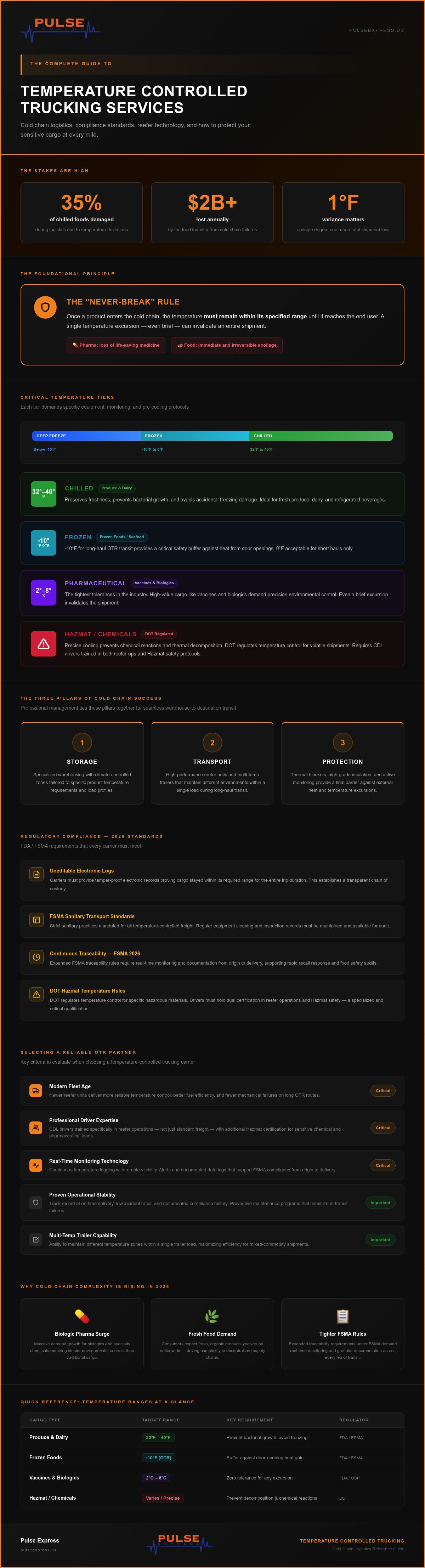
An estimated 35% of chilled foods are damaged during logistics due to temperature deviations, costing the food industry over $2 billion annually. It's a sobering reality for anyone responsible for sensitive cargo. You likely feel the constant pressure of avoiding equipment failure, navigating shifting FDA regulations, and managing the complexity of temperature controlled trucking services for Hazmat or pharmaceuticals. We understand that in this industry, a single degree of variance can mean the difference between a successful delivery and a total loss.
This guide is your definitive reference for achieving stability and precision in every shipment. We'll help you master the technical and regulatory landscape of modern cold chain technology, moving your operations toward a preventive, safety-focused model. We'll cover essential hardware components, the latest FSMA traceability rules, and a clear framework for selecting a professional OTR reefer partner that prioritizes your cargo's integrity as much as you do. By the end of this article, you'll have the knowledge to maintain compliance, ensure safety, and protect your bottom line.
Key Takeaways
- Understand the "Never-Break" rule and how specific temperature tiers, including chilled, frozen, and deep freeze, protect the integrity of your perishables.
- Navigate the complexities of FDA and FSMA compliance by mastering mandatory record-keeping and sanitation standards for the 2026 regulatory environment.
- Learn how modern airflow management and advanced reefer units optimize temperature controlled trucking services to prevent hotspots and cargo spoilage during long-haul transit.
- Identify the unique safety protocols and specialized equipment required for managing high-stakes refrigerated Hazmat and pharmaceutical logistics.
- Develop a robust framework for selecting a reliable OTR partner based on fleet age, professional driver expertise, and proven stability.
Defining Cold Chain Logistics in the Modern Supply Chain
Cold Chain Logistics refers to the uninterrupted series of refrigerated production, storage, and distribution activities that maintain a specific temperature range. It's more than just a trailer with a cooling unit. It's a science-based process designed to extend and ensure the shelf life of products like fresh produce, seafood, frozen foods, and chemicals. In the world of temperature controlled trucking services, this process is essential for protecting public health and product efficacy.
We operate under the "Never-Break" rule. This principle states that once a product enters the cold chain, the temperature must remain within its specified range until it reaches the end user. A single temperature excursion, even for a short duration, can invalidate an entire shipment. For pharmaceutical companies, this means a loss of life-saving medicine. For food shippers, it means immediate spoilage. There is no middle ground when it comes to thermal integrity.
The economic stakes are incredibly high. Research indicates that approximately 35% of chilled foods are damaged during transit due to temperature deviations. This failure costs the food industry more than $2 billion every year. These losses represent more than just financial hits; they reflect a significant waste of resources and labor that could have been avoided with precise oversight and reliable equipment.
The Core Components of Temperature-Controlled Freight
Success depends on three primary pillars. First, storage requires specialized warehousing with climate-controlled zones tailored to specific product needs. Second, transport relies on high-performance reefer units and multi-temp trailers that allow for different environments within a single load. Finally, equipment like thermal blankets and high-grade insulation provides a final layer of protection against external heat. Professional management ties these pillars together to ensure a seamless transition from the warehouse to the final destination.
Why Cold Chain Integrity is Critical in 2026
The landscape is shifting rapidly as we move through 2026. We're seeing a massive surge in demand for biologic pharmaceuticals and specialty chemicals that require stricter environmental controls than traditional cargo. Consumers also expect fresh, organic products to be available nationwide regardless of the season. Meeting these expectations requires resilient temperature controlled trucking services that can adapt to decentralized supply chain models. As logistics become more complex, the need for a stable, professional partner has never been greater.
Industry Standards and Temperature Requirements
Success in temperature controlled trucking services begins with a precise understanding of thermal tiers. We categorize freight into three primary levels: chilled, frozen, and deep freeze. Each tier demands specific equipment configurations, specialized monitoring, and rigorous pre-cooling protocols. Failing to distinguish between these requirements can lead to irreversible product degradation before the truck even leaves the dock.
Standard Temperature Ranges for Food and Pharmaceuticals
Maintaining the integrity of perishables requires sticking to established industry benchmarks. For produce and dairy, we target the 32°F to 40°F range. This window preserves freshness, prevents bacterial growth, and avoids the damage caused by accidental freezing. Frozen goods typically require a steady -10°F for long-haul transit. While 0°F is acceptable for short distances, the lower set point provides a necessary safety buffer against ambient heat during door openings.
Pharmaceutical logistics operate under even tighter tolerances. High-value cargo like vaccines and biologics must remain within the 2°C to 8°C range. Beyond food and medicine, the DOT regulates temperature control for specific hazardous materials. For these volatile shipments, precise cooling is a matter of safety, preventing chemical reactions or thermal decomposition during transport. If you're moving sensitive chemicals, it's vital to hire CDL drivers who are trained in both reefer operations and Hazmat safety.
Regulatory Compliance and Safety Protocols
Compliance is a foundational element of modern logistics. The FDA’s Industry Standards and Temperature Requirements under the Food Safety Modernization Act (FSMA) mandate strict sanitary practices and continuous record-keeping. Carriers must provide uneditable electronic logs that prove the cargo stayed within its required range for the entire duration of the trip. This documentation creates a transparent chain of custody for every stakeholder.
We rely on HACCP (Hazard Analysis Critical Control Point) integration to manage these risks effectively. This system focuses on three key areas: identifying potential hazards, establishing critical control limits, and implementing corrective actions. By documenting every hand-off and monitoring every mile, we ensure that domestic OTR shipments meet the highest safety standards. This methodical approach protects your cargo, your reputation, and your customers.
The Technology Behind Long-Haul Reefer Transport
Modern temperature controlled trucking services rely on a sophisticated ecosystem of hardware and software to maintain cargo integrity. It isn't just about blowing cold air into a trailer. It's about creating a balanced, stable environment that resists external ambient temperatures across thousands of miles. Achieving this requires a combination of thermal engineering, real-time data, and the skilled oversight of a professional driver.
The core of this system is the refrigeration cycle. A specialized engine drives a compressor that pressurizes refrigerant, moving it through a condenser to release heat outside the trailer. The cooled refrigerant then passes through an evaporator, where it absorbs heat from the cargo area. In 2026, the industry is transitioning to lower-GWP alternatives like R452A to comply with environmental regulations. This cycle must run efficiently to prevent the temperature spikes that lead to the spoilage rates we discussed earlier.
Airflow is the lifeblood of a reefer unit. Even the most powerful cooling system will fail if the air cannot circulate. Proper pallet loading is a technical skill that ensures air moves under, around, and over the cargo. If pallets are pushed too close to the walls or the floor channels are blocked, "hot spots" can develop. These pockets of stagnant air are where most cargo damage begins, making the driver's loading oversight a critical safety measure.
Advanced Refrigeration Units and Insulation
Precision starts with the trailer itself. Dual-temp and multi-temp trailers use internal bulkheads to manage multiple climates within a single load. This allows a single OTR journey to carry frozen goods at -10°F in one section and fresh produce at 36°F in another. We utilize high-R-value insulation in the trailer walls to minimize thermal transfer. This extra protection reduces the engine's workload and improves fuel efficiency. Before any cargo is loaded, we follow strict pre-cooling protocols to ensure the trailer interior matches the required set point, preventing "heat shock" when the product enters the van.
Real-Time Monitoring and Data Visibility
Data provides the transparency that modern shippers demand. We've integrated 4G and 5G-compatible IoT devices that offer active monitoring of the entire fleet. These sensors track temperature, humidity, and engine health every minute of the journey. If a deviation occurs or a reefer unit shows signs of mechanical stress, automated alerts notify both the driver and the dispatch team immediately. This proactive safety model allows us to address potential failures before they impact the cargo. At the end of the trip, we provide a complete "thermal map" of the journey, giving you uneditable proof that your freight remained within the required tolerances from dock to dock.
Specialized Challenges: Hazmat and Pharmaceutical Cold Chains
When the cargo transitions from food to chemicals or medicine, the margin for error disappears. In these high-stakes niches, temperature controlled trucking services provide more than just shelf-life extension. They provide essential stability for volatile substances and life-saving efficacy for biologics. Managing these loads requires a sophisticated blend of specialized endorsements, validated equipment, and unwavering driver expertise. We treat these shipments with a higher level of care, recognizing that a failure here has consequences far beyond a financial loss.
Shipping Temperature-Sensitive Hazardous Materials
Hazmat logistics introduce a layer of physical risk that standard reefer loads don't face. Certain chemicals, specifically those in Class 3 (flammable liquids), Class 4.1 (self-reactive substances), and Class 5.2 (organic peroxides), are thermally unstable. If these materials exceed their self-accelerating decomposition temperature, they can undergo thermal runaway. This leads to fires, explosions, or the release of toxic vapors. We also monitor for the danger of "auto-refrigeration," where a drop in temperature causes a pressure shift that can compromise container integrity.
Pulse Express bridges the gap between cold chain technology and Hazmat safety. Our professional fleet carries the necessary endorsements to manage both dry and temperature-controlled hazardous freight. We utilize secondary monitoring systems and specialized containment protocols to ensure these sensitive materials stay within their safe operating window. If your supply chain involves volatile chemicals, it's vital to partner with a Reefer Hazmat Transport specialist that understands the chemistry behind the cargo.
Pharmaceutical Logistics Best Practices
Pharmaceutical transport often focuses on the "last mile," but the "long haul" is where the most significant environmental risks occur. We strictly adhere to Good Distribution Practices (GDP) to maintain a transparent, audit-ready record for every mile on the road. This involves more than just a temperature log. It requires a complete validation of the equipment to ensure the trailer meets pharma-grade standards for insulation, cleanliness, and mechanical reliability. We also implement enhanced security protocols, including geofencing and dual-driver oversight, to protect these high-value assets.
Our emergency protocols are designed for immediate action. If a reefer unit shows signs of stress while carrying sensitive pharmaceuticals, our drivers are trained to implement pre-approved contingency plans. This might include moving the cargo to a backup cooling environment or utilizing thermal blankets as a temporary buffer. We prioritize communication, stability, and speed to ensure that life-saving medications reach their destination without a single break in the cold chain. This methodical approach provides the reassurance you need when shipping the world's most sensitive freight.
Optimizing Your Cold Chain Strategy with Pulse Express
Selecting the right partner for temperature controlled trucking services is a strategic decision that impacts your brand's reputation and your bottom line. You need more than just a carrier; you need a guide that understands the technical nuances of thermal integrity. When evaluating potential partners, we suggest focusing on three core areas: fleet age, driver tenure, and specialized endorsements. These factors provide the stability required to manage the high-stakes logistics we've discussed throughout this guide.
Pulse Express has built a foundation of reliability since our founding in 2000. We've spent over two decades refining our processes to meet the most demanding standards in the industry. Our focus is on providing a seamless, stress-free experience for shippers who manage sensitive pharmaceutical and chemical freight. By combining advanced hardware with elite driver expertise, we ensure your cargo remains safe, compliant, and on schedule.
The Pulse Express Advantage: Reefer and Hazmat Expertise
Our commitment to safety is reflected in every aspect of our operations. We maintain an elite fleet of modern reefer and dry van equipment, ensuring that mechanical failures don't compromise your shipment. This hardware is only as effective as the person behind the wheel. That's why we focus on hiring CDL drivers who possess the specialized skills necessary for high-value OTR careers. Our drivers are trained to manage complex temperature-sensitive loads, navigate strict regulatory environments, and prioritize operational excellence at every turn.
- Precision: We use the latest IoT sensors to provide granular data on every shipment.
- Customization: Our team develops tailored logistics plans for Hazmat and pharmaceutical needs.
- Safety: We maintain a rigorous maintenance schedule to prevent equipment-related delays.
Integrated Logistics for Nationwide Reliability
Managing cross-country logistics requires a partner with a wide reach and deep expertise. Pulse Express provides nationwide OTR coverage, allowing you to move freight across the US with confidence. We coordinate seamlessly between general freight, reefer transport, and specialized Hazmat services. This integrated approach simplifies your supply chain and reduces the risk of communication gaps during long-haul transits. It creates a sense of organized momentum that reflects our focus on timely execution.
We believe in transparent communication as a tool for stability. You'll receive real-time updates for every mile of the journey, giving you the visibility needed to manage your inventory effectively. If you're ready to future-proof your supply chain with a professional, service-oriented partner, we invite you to reach out. Requesting a quote is the first step toward a partnership built on mutual growth and operational excellence. Let us show you how we can protect your sensitive cargo and streamline your logistics strategy.
Securing the Future of Your Cold Chain
Protecting your cargo requires more than just a cooling unit; it demands a synergy of advanced IoT monitoring, strict regulatory compliance, and the expertise of seasoned OTR drivers. We've explored how these elements work together to maintain the "Never-Break" rule and prevent the costly deviations that impact food and pharmaceutical safety. In 2026, the complexity of managing global standards and specialized Hazmat requirements makes a reliable partner more essential than ever. Success in this field isn't just about moving freight; it's about maintaining a stable, controlled environment from the first mile to the last.
Choosing the right temperature controlled trucking services is a commitment to your brand's stability and long-term growth. We bring over 25 years of OTR logistics excellence to every shipment we handle. Our team is specialized reefer hazmat certified, and we utilize real-time temperature monitoring and reporting to provide the uneditable proof of integrity your stakeholders expect. We focus on precision, safety, and transparent communication to ensure your sensitive freight arrives exactly as intended. We're ready to serve as the seasoned guide your supply chain deserves.
Secure Your Temperature-Sensitive Freight with Pulse Express
Let's work together to build a more resilient and efficient future for your temperature-sensitive freight. We look forward to supporting your operational excellence and helping your business thrive in an increasingly complex landscape.
Frequently Asked Questions
What is the difference between cold chain and cool chain logistics?
Cold chain is the umbrella term for the entire temperature-controlled supply chain process. In contrast, cool chain usually refers specifically to products that require chilling rather than freezing. While cold chains handle everything from deep-frozen seafood at -10°F to sensitive chemicals, cool chains focus on the 32°F to 45°F range. This distinction helps shippers select the right equipment, monitoring sensitivity, and pre-cooling protocols for their specific perishables.
How do OTR drivers monitor temperature during a long-haul trip?
OTR drivers use a combination of in-cab displays and automated telematics to monitor cargo. Modern reefer units transmit real-time data to a screen on the driver's dashboard, showing the return air temperature and set point. If the temperature deviates from the programmed range, the system triggers an immediate audible and visual alarm. This allows the driver to pull over and inspect the unit before any cargo damage occurs.
What are the most common causes of cold chain failure in trucking?
Equipment malfunction and poor airflow are the leading causes of failure. Mechanical issues with the compressor or a loss of refrigerant can stop the cooling cycle entirely. However, many failures happen because of "hot spots" caused by improper pallet loading. If air cannot circulate under, around, and over the freight, the core temperature of the product will rise even if the reefer unit is running perfectly.
Is it possible to ship Hazmat materials in a refrigerated trailer?
Yes, shipping hazardous materials in a refrigerated trailer is a common requirement for thermally unstable chemicals. Certain flammables and self-reactive substances must stay below their self-accelerating decomposition temperature to prevent dangerous reactions. This requires specialized temperature controlled trucking services that utilize drivers with Hazmat endorsements. These experts manage the dual complexity of refrigeration mechanics and hazardous material safety protocols throughout the entire cross-country transit.
What regulations govern the transport of pharmaceuticals in the US?
Pharmaceutical transport is primarily governed by the FDA's Good Distribution Practices (GDP) and the Code of Federal Regulations Title 21. These rules mandate continuous temperature monitoring and uneditable electronic logs to ensure product efficacy. Shippers must also comply with the Drug Supply Chain Security Act (DSCSA), which requires end-to-end traceability. Carriers must provide audit-ready documentation that proves the cold chain was never broken during the journey.
How does Pulse Express ensure temperature integrity during cross-country transit?
We ensure integrity by combining modern equipment with 24/7 IoT monitoring. Every trailer in our fleet is equipped with sensors that track temperature and humidity every minute. Our dispatch team receives real-time alerts for any deviations, allowing for proactive intervention. We also invest in hiring professional CDL Class A drivers who are trained in reefer mechanics. This ensures that a human expert is always personally monitoring your cargo's safety.
What is a reefer unit and how does it maintain temperature?
A reefer unit is a specialized refrigeration system mounted to the front of a trailer. It maintains temperature by circulating cooled air through the cargo space using a compressor, condenser, and evaporator. Unlike a home refrigerator, a reefer is designed to remove heat that enters through the trailer walls or during loading. It uses a powerful diesel engine to keep the cooling cycle running independently of the truck's main engine.
How much does cold chain logistics typically cost compared to dry van?
Cold chain logistics typically command a premium of 15% to 20% over standard dry van services. This higher cost reflects the specialized equipment, increased fuel consumption, and the professional expertise required to manage sensitive cargo. Shippers also pay for the added security of real-time monitoring and specialized insurance. While the base rate is higher, these temperature controlled trucking services prevent the significant financial losses associated with cargo spoilage and regulatory non-compliance.


