

Could a single degree of temperature deviation cost your business over $89,000 in regulatory fines? For modern logistics managers, the stakes of temperature sensitive hazmat shipping have never been higher. You understand that volatile cargo requires more than just a cold trailer; it demands a perfect synchronization of specialized equipment, rigorous safety protocols, and expert handling. Finding a partner who excels in both reefer technology and hazardous materials compliance is often the most difficult part of the journey.
We are here to help you master these complexities with a clear, comprehensive approach to specialized OTR logistics. This guide provides everything you need to navigate the 2026 regulatory landscape, including the latest PHMSA digital registration updates and DOT 49 CFR requirements. You'll learn how to ensure zero-incident transport, maintain full documentation, and gain reliable visibility for every mile of the trip. We will break down the essential strategies for securing your supply chain, protecting your bottom line, and building a partnership rooted in operational excellence. From understanding new aerosol definitions to managing lithium battery charge limits, we provide the clarity you need to move forward with confidence.
Key Takeaways
- Understand the critical risks of thermal instability and how precise temperature control prevents dangerous reactions like polymerization or combustion.
- Stay ahead of 2026 regulatory shifts by mastering DOT 49 CFR standards and the transition toward digital PHMSA documentation and electronic payments.
- Identify the essential criteria for selecting a carrier capable of temperature sensitive hazmat shipping, focusing on specialized reefer equipment and hazmat-endorsed drivers.
- Follow a streamlined preparation template for classifying cargo, determining Self-Accelerating Decomposition Temperatures (SADT), and selecting UN-certified packaging.
- Leverage advanced telematics and real-time visibility to ensure zero-incident transport and full regulatory compliance for every long-haul shipment.
What is Temperature Sensitive Hazmat Shipping?
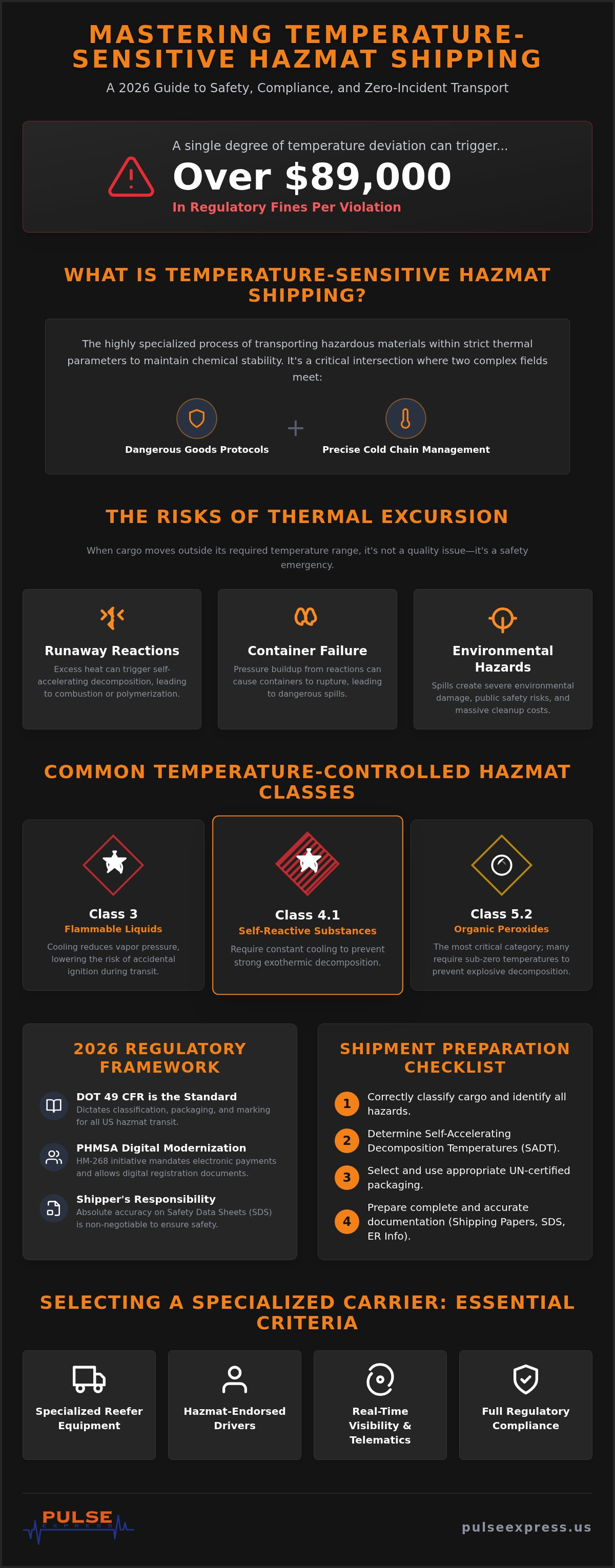
Temperature sensitive hazmat shipping is the highly specialized process of transporting hazardous materials within strict thermal parameters to maintain chemical stability. Unlike standard freight, these materials possess volatile properties that can change drastically if the ambient temperature shifts. This niche logistics category represents a critical intersection where Dangerous Goods protocols meet precise cold chain management. It's not just about keeping a product fresh; it's about preventing catastrophic chemical reactions during transit.
Maintaining a consistent environment is vital for several high-stakes industries. Pharmaceutical companies rely on this service for temperature-critical precursors. Industrial chemical manufacturers use it to prevent hazardous polymerization. High-tech manufacturing sectors require it for sensitive components that can't withstand thermal fluctuations. When you combine the rigors of over the road (OTR) transit, such as constant vibrations and varying climates, the need for specialized equipment becomes clear. Professional carriers focus on three core pillars: precision, safety, and reliability.
The Risks of Thermal Excursions in Hazmat
A thermal excursion occurs when cargo moves outside its required temperature range. In the world of hazmat, this isn't just a quality issue; it's a safety emergency. Excess heat can trigger self-accelerating decomposition, where a chemical starts to break down and generate its own heat, leading to a runaway reaction. If a container fails due to pressure buildup, the resulting spill creates severe environmental hazards and massive cleanup costs. Self-Accelerating Decomposition Temperature (SADT) is the lowest ambient temperature at which a substance in a specific package will undergo self-accelerating decomposition within a week. Monitoring this metric is a non-negotiable part of secure logistics.
Common Temperature-Controlled Hazmat Classes
While many materials are hazardous, three specific classes frequently require temperature sensitive hazmat shipping to remain stable:
- Class 3 (Flammable Liquids): These substances become increasingly volatile as temperatures rise. Cooling them reduces vapor pressure and lowers the risk of accidental ignition.
- Class 4.1 (Self-Reactive Substances): These materials are prone to strong exothermic decomposition. They require constant, reliable cooling to prevent them from reacting with themselves.
- Class 5.2 (Organic Peroxides): This is the most temperature-critical category. Many organic peroxides must be kept at sub-zero temperatures to prevent explosive decomposition.
The Regulatory Framework for Reefer Hazmat in 2026
Compliance with DOT 49 CFR remains the gold standard for anyone involved in temperature sensitive hazmat shipping. This framework dictates how hazardous materials are classified, packaged, and marked for transit across the United States. In 2026, the Pipeline and Hazardous Materials Safety Administration (PHMSA) has accelerated its push toward modernization. The HM-268 initiative, which became effective September 3, 2026, mandates electronic payments for all registrations. This shift toward digital compliance includes permission for carriers to carry registration documents in electronic form, reducing administrative friction while maintaining rigorous safety standards.
The regulatory landscape now demands higher levels of transparency and accountability. Shippers bear the ultimate responsibility for the accuracy of Safety Data Sheets (SDS). An error in characterizing the thermal limits of a chemical can lead to a thermal excursion, endangering the driver and the public. As of August 2026, DOT hazmat violation fines can exceed $89,000 per violation. This financial risk makes accuracy, transparency, and digital record-keeping essential components of your logistics strategy. Modern regulatory expectations prioritize real-time thermal reporting to ensure that every shipment stays within its mandated safety window.
Essential Documentation for Shippers
Every shipment must be accompanied by precise shipping papers and Emergency Response Information. These documents act as a vital roadmap for first responders in the event of an incident. Accuracy in the SDS is non-negotiable because it informs the carrier of the specific temperature range required for stability. You can see our guide on compliant hazardous material transport for more details on managing these critical records. Using digital logging helps maintain a clear audit trail and ensures that all stakeholders have access to the most current safety data.
Placarding and Labeling for Temperature-Controlled Loads
Properly identifying a load is a matter of public safety and legal necessity. Placards must be placed on all four sides of the vehicle, but reefer units present a unique challenge. Shippers must ensure that placards don't block air intake or exhaust vents on the refrigeration unit. Secondary labeling is often required to distinguish between materials that are "Keep From Freezing" and those that require constant active refrigeration. The distinction between a cargo tank and a van is also vital for labeling accuracy during temperature-controlled shipping. If you need a partner who prioritizes these standards, our Reefer Hazmat Transport services provide the security your high-stakes loads require.
Selecting a Specialized Reefer Hazmat Carrier
Selecting the right carrier for temperature sensitive hazmat shipping involves more than checking a box for refrigeration. It requires a partner who understands the intersection of chemical stability and long-haul logistics. While air freight is often discussed for its speed, over the road (OTR) reefer transport provides the volume capacity and cost-efficiency essential for large-scale industrial supply chains. You must ensure your carrier strictly adheres to 49 CFR Part 173 - General Requirements for Hazmat Shipments, which establishes the legal foundation for safe packaging and handling. A standard refrigerated trailer isn't enough for high-stakes chemical loads; you need specialized equipment designed for hazmat precision.
Modern logistics depends on transparency and data. You should evaluate a carrier’s FMCSA Safety Measurement System (SMS) scores to gauge their historical performance in hazmat compliance. With DOT hazmat violation fines exceeding $89,000 per violation as of August 2026, the cost of choosing an unqualified carrier is far too high. Look for technological capabilities like real-time telematics and remote monitoring. These systems allow for remote temperature adjustment and constant oversight, providing a digital safety net for your most volatile materials. This level of control ensures your shipment maintains the safety, stability, and success your business requires.
Equipment Checklist for Temperature-Sensitive Hazmat
Reliability in OTR transit starts with the trailer's technical specifications. Redundant cooling systems are essential for long-haul routes because they provide a vital backup if the primary unit fails. You should also verify insulation integrity to prevent external ambient heat from penetrating the cargo space. If your load doesn't require active cooling but needs protection from extreme shifts, you can compare options in our guide to dry van hazmat carriers. A well-maintained fleet reduces the risk of mechanical failure and keeps your shipment within its specified thermal window.
The Role of the OTR Driver in Safety
The driver is your first line of defense against cargo volatility during transit. At Pulse Express, we prioritize specialized hazmat-endorsed driver hiring to ensure every professional behind the wheel understands the gravity of their load. Drivers must conduct frequent en-route monitoring, checking the reefer unit’s status during every mandatory break. They're also trained in specific emergency response protocols to handle thermal deviations immediately. This proactive approach transforms a driver from a simple operator into a protective guardian of your supply chain's integrity.
Step-by-Step Template: Preparing Your Hazmat Shipment
Successful temperature sensitive hazmat shipping depends on a methodical preparation process. Shippers must go beyond basic checklists to address the physical realities of long-haul trucking. This template serves as a roadmap to ensure your cargo remains stable, compliant, and secure from dock to destination. By following these steps, you protect your drivers, your cargo, and your professional reputation.
- Step 1: Classify and Characterize. You must confirm the exact thermal limits and the Self-Accelerating Decomposition Temperature (SADT) of your materials. This data is the foundation of your entire safety plan.
- Step 2: Packaging Selection. Use only UN-certified containers that offer specific thermal properties. These containers are engineered to withstand the pressures, vibrations, and shifts of OTR transit.
- Step 3: Pre-cooling. Both the cargo and the trailer must reach the target temperature before loading begins. Pre-cooling prevents a thermal shock that could trigger a chemical reaction.
- Step 4: Loading Patterns. Arrange pallets to maintain consistent airflow throughout the trailer. Proper spacing prevents stagnant air pockets, reduces thermal variance, and ensures uniform cooling.
- Step 5: Final Documentation Check. Verify that the SDS, Bill of Lading, and Emergency Contact information are accurate, accessible, and compliant. These documents are vital for regulatory oversight and emergency response.
Advanced Packaging and Insulation
Modern shippers often employ secondary layers of protection to mitigate risks during long-distance hauls. Thermal transport blankets provide passive insulation that guards against brief ambient temperature spikes during the loading process. Phase Change Materials (PCMs) offer another level of stability as they absorb, release, and regulate thermal energy to maintain a constant internal environment. These tools are especially valuable when shipping Class 5.2 organic peroxides or other high-sensitivity compounds. If you're ready to secure your supply chain with experts, explore our Reefer Hazmat Transport solutions today.
Loading and Bracing for Long Hauls
OTR transit introduces constant movement that can compromise the integrity of your load. You must prevent the formation of 'hot spots' by ensuring pallets don't block the reefer unit's air intake or discharge vents. Securement techniques, such as heavy-duty bracing and load bars, prevent container rupture caused by shifting during transit. You can review our hazmat transport safety standards for specific loading protocols designed for long-distance stability. Proper bracing ensures that your specialized packaging remains intact, functional, and secure throughout the entire journey.
Why Pulse Express is Your OTR Hazmat Partner
Pulse Express specializes in the precise complexities explored throughout this guide. We provide specialized Reefer Hazmat Transport as a core competency, focusing on the secure movement of high-stakes cargo over long distances. Our approach combines the authority of a global leader with the personal attention of a dedicated partner. We understand that your supply chain relies on precision, safety, and reliability. By integrating advanced technology with a seasoned workforce, we ensure that your most sensitive materials are handled with the highest level of care.
Our modern fleet leverages advanced telematics to provide 24/7 visibility into your cargo's environment. This technology allows us to monitor every load in real-time, ensuring that temperature sensitive hazmat shipping remains stable from origin to destination. We offer nationwide coverage, providing reliable OTR shipping from coast to coast. Whether your freight is moving across state lines or across the country, our infrastructure is built to handle the most demanding requirements. Our drivers are the backbone of this operation. We employ highly trained Class A CDL professionals who possess the specific hazmat endorsements required for volatile freight. They are personally invested in the safety and security of every mile traveled.
Precision in Temperature Management
We maintain a strict commitment to zero-deviation cold chain logistics. Our remote monitoring technology keeps you informed with real-time data, eliminating the uncertainty often associated with long-haul transit. We have successfully managed the transport of sensitive industrial chemicals across several state lines, maintaining a constant thermal window despite extreme external weather shifts. This level of oversight ensures your materials arrive in the exact condition required for your operations. We prioritize the stability of your cargo through rigorous equipment maintenance and constant communication. Our team is trained to handle thermal deviations before they escalate into incidents.
The Pulse Express Advantage in 2026
In the evolving regulatory landscape of 2026, we balance technical expertise with a partnership-driven approach. We focus on a safety-first culture that protects your cargo, our drivers, and the public. Every professional behind the wheel is a highly trained Class A CDL driver with a mandatory hazmat endorsement. This ensures that your logistics partner is as invested in your success as you are. We pride ourselves on being a seasoned guide for businesses navigating the complexities of hazardous materials. Our goal is to instill confidence through established reliability and operational excellence. If you're ready to secure your high-stakes loads with a trusted expert, contact Pulse Express for a specialized hazmat shipping quote today.
Moving Forward with Confidence in 2026
Mastering temperature sensitive hazmat shipping requires a proactive approach to both chemical stability and digital compliance. Success in this specialized field depends on three core pillars: precise thermal management, rigorous adherence to DOT 49 CFR standards, and a deep partnership with an experienced carrier. By prioritizing accurate documentation and utilizing advanced loading templates, you protect your cargo and your professional reputation. The logistics landscape of 2026 demands transparency, efficiency, and a safety-first culture for every long-haul shipment.
Pulse Express is ready to serve as your trusted guide through these complexities. We offer a specialized hazmat and reefer fleet, DOT-compliant OTR services, and experienced Class A CDL drivers who understand the high stakes of your volatile freight. Our commitment to operational excellence ensures your materials remain secure from dock to destination. We invite you to Secure Your Sensitive Freight with Pulse Express and experience the reliability of a partner invested in your growth. Together, we can build a supply chain that is resilient, compliant, and ready for the future.
Frequently Asked Questions
What are the most common temperature-sensitive hazardous materials?
The most common materials requiring temperature sensitive hazmat shipping include Class 5.2 organic peroxides, Class 4.1 self-reactive substances, and Class 3 flammable liquids. These substances are highly sensitive to thermal fluctuations and can undergo dangerous reactions if they exceed stability limits. Industrial chemicals, pharmaceutical precursors, and high-tech manufacturing components represent the bulk of these shipments. Proper classification is the first step in ensuring a zero-incident transport process.
Does federal law require temperature monitoring for all hazmat?
Federal law under DOT 49 CFR requires active temperature monitoring for specific hazardous materials that are thermally unstable. This is particularly true for substances with a Self-Accelerating Decomposition Temperature (SADT) that falls within ambient ranges. Shippers must maintain records that prove the cargo stayed within its safety window throughout the journey. Modern 2026 regulations emphasize digital logging and real-time visibility to ensure full regulatory compliance and public safety.
Can hazmat be shipped in a standard dry van?
You cannot ship materials requiring active cooling in a standard dry van. However, a dry van may be used for hazardous materials that only require protection from extreme cold, often labeled as "Keep From Freezing." For volatile chemicals that require precise, active temperature management, a specialized reefer unit is mandatory. Choosing the wrong equipment type can lead to container failure, chemical decomposition, or significant regulatory fines during roadside inspections.
How do I determine the correct set point for my hazmat shipment?
You must determine the correct set point by consulting the Safety Data Sheet (SDS) provided by the chemical manufacturer. The SDS lists the control temperature and the emergency temperature for the specific substance. The control temperature is the maximum temperature at which the material can be safely transported for a prolonged period. It's vital to communicate this exact figure to your carrier to prevent thermal excursions that could trigger a hazardous reaction.
What happens if a reefer unit fails during a hazmat shipment?
If a reefer unit fails, the driver must immediately implement the emergency response plan outlined in the shipping papers. This typically involves moving the vehicle to a safe location, notifying the dispatcher, and contacting the emergency response provider. Carriers like Pulse Express use redundant cooling systems and real-time telematics to detect failures early. Proactive intervention is the only way to prevent a thermal deviation from escalating into a dangerous incident.
What certifications should a hazmat driver have in 2026?
In 2026, a hazmat driver must hold a valid Class A CDL with a hazardous materials endorsement. Many specialized loads also require a tanker endorsement, resulting in an "X" endorsement on the license. Beyond these legal requirements, drivers should have documented training in cold chain logistics and emergency response protocols. This specialized expertise ensures the professional behind the wheel can manage both the mechanical reefer unit and the volatile cargo safely.
Are there specific packaging requirements for temperature-controlled hazmat?
Yes, temperature sensitive hazmat shipping requires UN-certified packaging that is specifically tested for thermal integrity and pressure resistance. Shippers often use additional layers like thermal blankets or phase change materials to provide passive protection. These containers must be compatible with the chemical properties of the cargo to prevent leaks or ruptures. Proper packaging acts as the primary barrier against environmental hazards and is a non-negotiable requirement for DOT 49 CFR compliance.
How does Pulse Express ensure compliance during interstate transit?
Pulse Express ensures compliance during interstate transit through a combination of specialized equipment and rigorous driver training. We maintain a modern fleet of reefers equipped with advanced telematics for constant temperature visibility. Our Class A CDL drivers undergo continuous safety education to stay current with 2026 DOT and PHMSA regulations. By prioritizing accuracy in documentation and real-time monitoring, we provide a secure, reliable solution for your most sensitive long-haul freight needs.


