

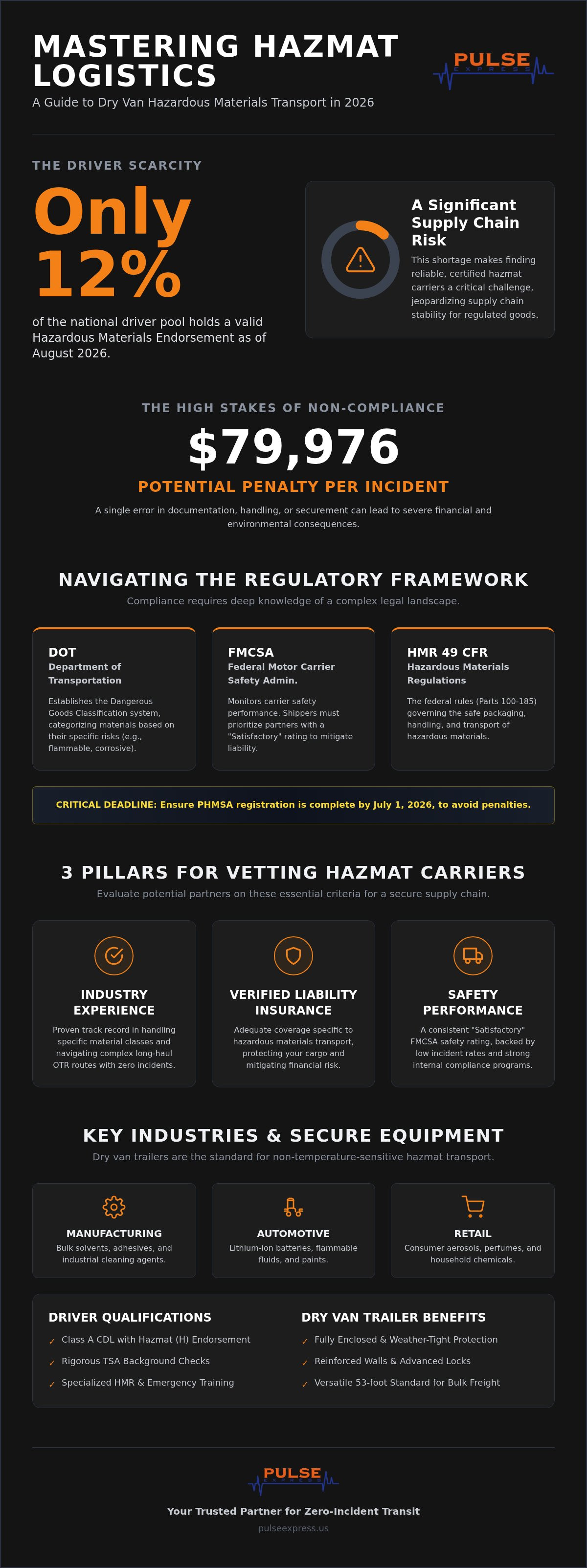
Did you know that as of August 2026, only 12% of the national driver pool holds a valid Hazardous Materials Endorsement? This scarcity makes finding reliable dry van hazmat carriers more than a logistical hurdle; it is a significant risk to your supply chain stability. When you are managing materials that require specialized handling, the margin for error disappears completely.
You already know that shipping hazardous freight involves more than just standard transport. It requires rigorous attention to detail, deep knowledge of FMCSA regulations, and a commitment to safety that never wavers. We understand the pressure of meeting the July 1, 2026, PHMSA registration deadline while trying to avoid penalties that can reach $79,976 per incident. Our goal is to provide the stability, reliability, and expertise you need to move your cargo with total confidence.
This guide will show you how to master the complexities of modern hazmat logistics. We'll cover the essentials of carrier vetting, regulatory compliance, and secure transport strategies. By the end, you'll have a clear roadmap for achieving zero-incident transit and maintaining transparent communication across every mile of your long-haul routes.
Key Takeaways
- Identify the critical role of specialized dry van hazmat carriers in maintaining a secure, compliant supply chain for regulated goods in 2026.
- Learn the mandatory safety requirements for hazardous transport, including the necessity of Class A CDL endorsements and proper trailer placarding.
- Evaluate potential logistics partners based on three essential pillars: industry experience, verified liability insurance, and historical safety performance.
- Implement best practices for secure freight management by following HMR 49 CFR packaging standards and ensuring transparent communication of material classes.
- Discover how partnering with a seasoned OTR expert provides the stability and precision required for zero-incident transit on long-haul routes.
What are Dry Van Hazmat Carriers and Why are They Critical?
Dry van hazmat carriers are specialized over-the-road (OTR) providers that transport regulated materials within fully enclosed, non-temperature-controlled trailers. While standard logistics focuses on the efficient movement of general freight, hazmat transport introduces a complex layer of safety protocols and legal requirements. These carriers don't just move boxes; they manage potential risks through precise handling and rigorous adherence to federal law. Because hazardous materials can pose a threat to public safety and the environment, the carriers who haul them must operate with a level of precision that far exceeds standard shipping practices.
The economic stability of the United States depends heavily on these specialized services. Shifting from standard cargo to hazardous materials changes the stakes for every stakeholder involved. A single error in documentation or securement can lead to environmental damage or legal penalties that reach $79,976 per incident in 2026. Reliable dry van hazmat carriers act as the backbone of the industrial supply chain, ensuring that the chemicals, paints, and batteries fueling our economy reach their destination without incident. With only 12% of the national driver pool holding the necessary endorsements, these carriers provide a rare and essential expertise.
The Versatility of Dry Van Equipment for Hazmat
Dry van trailers are the industry standard for transporting non-temperature-sensitive industrial chemicals and consumer goods. They provide a controlled, weather-tight environment that protects sensitive cargo from rain, wind, and road debris. This protection is vital because even minor moisture can compromise the integrity of specialized packaging, leading to dangerous leaks or regulatory violations. Modern 53-foot trailers offer significant security benefits, including reinforced walls and advanced locking mechanisms to prevent unauthorized access during long-haul transit. Common industries that rely on this equipment include:
- Manufacturing: Moving bulk solvents, adhesives, and cleaning agents.
- Automotive: Transporting lithium-ion batteries and flammable fluids.
- Retail: Shipping consumer-grade aerosols, perfumes, and household chemicals.
Regulatory Overview: The DOT and FMCSA Framework
Managing these shipments requires a deep understanding of the Dangerous Goods Classification system established by the Department of Transportation (DOT). The DOT categorizes materials based on their specific risks, while the Federal Motor Carrier Safety Administration (FMCSA) monitors carrier performance through safety ratings. Shippers must prioritize carriers with "Satisfactory" safety ratings to mitigate their own liability risks. The Hazardous Materials Regulations (HMR) are the federal rules found in 49 CFR Parts 100-185 that govern the safe handling, packaging, and movement of hazardous materials by highway in 2026.
Compliance and Safety Standards for Hazmat Transport
Ensuring compliance requires a multi-layered approach to risk management. The most basic requirement for dry van hazmat carriers is the mandatory Hazmat Endorsement (H) for all Class A CDL drivers. In 2026, the cost for this endorsement is $85.25, or $41 for drivers who also hold a Transportation Worker Identification Credential (TWIC). Because only 12% of the national driver pool holds this endorsement, vetting your carrier’s driver qualifications is the first step in ensuring a secure transit. These drivers undergo rigorous background checks and specialized training that goes far beyond standard freight requirements.
Adhering to hazmat transport safety standards is a continuous process rather than a one-time check. Top-tier carriers maintain their satisfactory safety ratings through internal audit processes that monitor driver logs, equipment maintenance, and documentation accuracy. These audits ensure that every shipment meets the updated requirements under the HM-215 series, which aligns U.S. regulations with international standards. If you are looking for a partner that prioritizes these rigorous protocols, exploring the Pulse Express OTR fleet can offer the stability your supply chain needs.
Classification of Hazardous Materials
Accurate OSHA Hazmat Regulations compliance begins with the proper classification of goods. There are nine distinct hazmat classes, ranging from explosives to corrosive substances. In the dry van sector, we most commonly see Class 3 (Flammable Liquids), Class 8 (Corrosives), and Class 9 (Miscellaneous Dangerous Goods). Shippers must provide a precise Bill of Lading (BOL) that includes the UN identification number, proper shipping name, and packing group. This documentation must remain within the driver's reach at all times to ensure safety during inspections and transit.
Emergency Response and Incident Prevention
Preparation is the only effective defense against an incident. Every hazmat shipment must include a 24/7 emergency response telephone number that connects to a person with comprehensive knowledge of the material. Federal law requires that hazmat incidents be reported to the National Response Center within 12 hours, with a detailed written report following within 30 days. Modern logistics technology now plays a vital role in this process. Real-time GPS solutions and automated document verification allow carriers to monitor routes, avoid hazmat-prohibited zones, and provide transparent communication throughout the journey. This level of oversight reduces the risk of the $79,976 penalties associated with non-compliance.
Key Criteria for Evaluating Dry Van Hazmat Providers
Identifying the right dry van hazmat carriers requires a shift in perspective. You aren't just buying space on a trailer; you're investing in a carrier's safety culture and operational history. Experience matters deeply in this specialized niche. A provider with 25 years of experience, like those in the Pulse Express OTR fleet, has likely managed every regulatory shift and logistical challenge imaginable. This longevity signals a stable foundation that can protect your brand during complex long-haul transits. Stability, reliability, and precision are the three pillars you should look for in a partner.
Don't overlook the financial safeguards. For high-hazard materials, carriers must maintain at least $5 million in public liability coverage. Verify these limits directly and cross-reference them with the carrier's FMCSA CSA scores. These scores provide a transparent look at their compliance, safety, and accountability performance. A carrier that prioritizes Federal Hazmat Compliance will have a documented history of clean inspections and low incident rates. This transparency is essential for mitigating your own liability as a shipper.
The Importance of Driver Endorsements
Safety starts behind the wheel. The process of hiring CDL drivers with hazmat endorsements is rigorous and highly selective. These professionals undergo extensive background checks and recurrent training every three years to keep their credentials active. Top carriers use higher compensation and better equipment to attract these elite drivers. This investment leads to higher retention, which means your freight is handled by a seasoned expert rather than a revolving door of new trainees. When drivers feel valued, they take better care of the cargo they carry.
Carrier Equipment and Maintenance Protocols
Reliable equipment is the final piece of the safety puzzle. Dry van hazmat carriers must maintain strict inspection cycles for their 53-foot trailers to ensure they remain weather-tight and secure. This includes frequent checks of tire tread depth, brake responsiveness, and floor integrity. Using late-model tractors is equally critical for OTR reliability. Modern trucks feature advanced safety technology that helps drivers avoid collisions and manage heavy loads with greater precision. When you evaluate a partner, ask about their fleet age and maintenance frequency to ensure your cargo stays moving without mechanical delays.
Best Practices for Secure Hazmat Freight Management
Successful hazardous material logistics depends on a disciplined partnership between the shipper and dry van hazmat carriers. Efficiency, compliance, and security are the three pillars that support every successful move. To maintain a zero-incident record, you must follow a methodical four-step management process. First, ensure all packaging and labeling strictly adheres to HMR 49 CFR. Second, communicate hazmat classes and UN numbers to your carrier early in the booking process. Third, inspect every trailer for cleanliness and structural integrity before loading. Finally, implement real-time monitoring and establish clear contingency plans for long-haul routes.
Dry van hazmat carriers provide the specialized equipment needed for these tasks, but the shipper's preparation sets the stage for safety. When you provide precise data, you enable the carrier to plan the safest route and assign the most qualified driver. This proactive approach reduces the risk of transit delays and ensures that every stakeholder remains informed throughout the journey. If you need a partner that understands these technical requirements, you can request a quote from Pulse Express today.
Loading and Securing Hazmat Cargo
Proper weight distribution is essential for hazardous dry van loads to prevent axle violations and maintain vehicle stability. Drivers must use advanced blocking and bracing techniques to ensure that pallets do not shift during sudden stops or sharp turns. Shippers must also strictly follow segregation rules to prevent incompatible chemicals from being transported in the same trailer. For example, certain oxidizers cannot be loaded alongside flammable liquids. Following these protocols protects the driver, the equipment, and the cargo from avoidable accidents.
Documentation and Digital Records
Modern logistics is rapidly moving toward e-BOLs to streamline compliance checks and reduce administrative errors. Digital records allow for faster communication with emergency responders and regulatory agencies during inspections. You must maintain accurate records of all hazmat shipping papers for at least three years to comply with federal auditing standards. The Shipper's Declaration is a legally binding document where the sender certifies that the materials are properly classified, described, packaged, marked, and labeled according to federal regulations. Maintaining these records in a central, accessible location ensures you are always prepared for a DOT audit.
Why Pulse Express is Your Trusted Hazmat Logistics Partner
Pulse Express has spent over 25 years refining the art of hazardous material transport. Since our founding in 2000, we've focused on one primary goal: providing the stability and precision required for sensitive freight. We understand that as one of the specialized dry van hazmat carriers, our responsibility extends beyond simple delivery. We protect your reputation, your cargo, and the safety of the public on every mile of the journey. Our approach combines the resources of a global logistics leader with the personal attention of a dedicated service partner. We believe in building relationships through transparency, reliability, and operational excellence.
Our team simplifies the complexities of nationwide shipping by managing the heavy lifting of compliance and route planning. We handle the documentation, verify the endorsements, and monitor the transit so you don't have to. This proactive management style ensures that your supply chain remains resilient, even as federal regulations become more demanding. We provide the peace of mind that comes from knowing your high-value cargo is in the hands of seasoned professionals who prioritize safety above all else.
Decades of Reliability in OTR Transport
Under the leadership of CEO Adelina Pavlov, Pulse Express has grown from a local provider into a nationwide OTR authority. We don't believe in one-size-fits-all logistics. Instead, we offer customized solutions for both dry van and reefer hazmat transport needs. This flexibility allows us to serve diverse industries while maintaining the rigorous standards that have defined our brand for decades. When you partner with us, you aren't just hiring a truck; you're gaining a seasoned guide that's personally invested in your success. Our history is built on three core values: integrity, precision, and partnership.
A Fleet Driven by Safety and Precision
The Pulse Express OTR Fleet represents the gold standard in equipment and expertise. We prioritize the recruitment of elite Class A CDL drivers who hold valid hazmat endorsements and have a proven track record of safety. These professionals receive continuous training to ensure they stay ahead of evolving federal protocols and industry best practices. Our modern tractors and 53-foot trailers feature advanced security systems and real-time tracking, giving you full visibility into your shipment's progress. We provide 24/7 support to ensure that communication remains responsive from pickup to final delivery. Contact Pulse Express today for a secure hazmat shipping quote and experience the difference that 25 years of experience makes.
Securing Your Supply Chain for the Future of Hazmat Logistics
Navigating the complexities of hazardous material transport requires a partner who understands the high stakes of every mile. By prioritizing elite driver endorsements, rigorous equipment maintenance, and total regulatory transparency, you protect your business from the rising costs of non-compliance. Reliable dry van hazmat carriers act as an extension of your own team; they provide the specialized knowledge and modern equipment necessary to move regulated goods with absolute precision.
Pulse Express offers over 25 years of OTR experience to help you manage these challenges. Our specialized hazmat and general freight expertise ensures that your cargo arrives safely and on time. We maintain a modern fleet of secure dry van and reefer units designed to meet the highest safety standards in the industry. We invite you to Partner with Pulse Express for Secure Hazmat Logistics today. We look forward to supporting your growth and ensuring your logistics operations remain stable, secure, and fully compliant.
Frequently Asked Questions
What classes of hazardous materials can be shipped in a dry van?
Dry van trailers are suitable for transporting a wide range of non-bulk hazardous materials that don't require temperature control. Common examples include Class 3 flammable liquids, Class 8 corrosive substances, and Class 9 miscellaneous dangerous goods. These materials are typically packaged in drums, totes, or specialized boxes. Shippers must always verify that their specific materials are compatible with the carrier's equipment and safety protocols before scheduling a pickup.
How do I verify if a dry van carrier is authorized to haul hazmat?
You can verify a carrier's authorization by checking their safety profile on the FMCSA SAFER system. Look for an active hazardous materials safety permit and a "Satisfactory" safety rating. Reliable dry van hazmat carriers will also provide a copy of their insurance certificate showing at least $5 million in public liability coverage. This verification ensures the provider meets federal safety, security, and financial responsibility standards for 2026.
What is the difference between a hazmat endorsement and a tanker endorsement?
A hazmat endorsement (H) allows a driver to transport materials classified as dangerous goods under DOT regulations. A tanker endorsement (N) is required only when those materials are in bulk packaging, such as tanks exceeding 119 gallons. Drivers who hold both are issued an "X" endorsement. For most dry van shipping, the "H" endorsement is the primary requirement because goods are usually moved in smaller, non-bulk containers.
Are there extra fees associated with dry van hazmat shipping?
Yes, hazmat shipments typically command a premium rate over standard dry freight. As of August 2026, these loads often pay 10% to 25% more because of increased insurance costs, specialized driver endorsements, and higher liability risks. These fees cover the extra administrative work, specialized equipment maintenance, and the expertise required to ensure full regulatory compliance. Shippers should view these costs as an investment in safety and risk mitigation.
What happens if a hazmat shipment is delayed on an OTR route?
If a delay occurs, the carrier must provide immediate communication and maintain 24/7 monitoring of the vehicle. Drivers are trained to find safe, secure parking locations that comply with federal attendance and parking rules for hazardous cargo. These regulations require the vehicle to be parked away from public areas and heavily populated zones. This protocol minimizes potential risks to the public while the driver waits for the route to clear.
How often do hazmat drivers need to renew their background checks?
Drivers must renew their TSA background check and hazmat endorsement every five years to maintain their credentials. However, federal regulations require hazmat employee training to be renewed every three years to stay current with safety protocols. This frequent cycle ensures that drivers remain familiar with classification, packaging, and emergency response procedures. It's a critical part of maintaining the high safety standards required for secure hazardous material logistics in the U.S.
Can I ship hazmat and general freight in the same dry van?
You can ship hazmat and general freight together if the materials are compatible and follow strict segregation rules. Federal regulations prohibit certain hazardous materials from being loaded near specific types of general cargo or other incompatible hazmat classes. Effective blocking and bracing are essential to prevent shifting during transit. This approach requires precise planning to ensure that the general freight does not compromise the integrity of the hazardous material packaging.
What insurance coverage should a hazmat carrier maintain?
Carriers hauling high-hazard materials are required by federal law to maintain at least $5 million in public liability coverage. This insurance protects against bodily injury, property damage, and environmental restoration costs in the event of an incident. Shippers should always request a current certificate of insurance to verify that the carrier's limits meet the specific requirements for their hazard class. This financial safeguard is essential for protecting your business from high liability risks.


