

Could a single oversight in your shipping documentation be the difference between a routine delivery and a heavy DOT fine? Most carriers understand that the 49 CFR regulations are dense, demanding, and constantly evolving. You're likely feeling the pressure of staying compliant while trying to integrate the latest 2026 safety technology into your fleet. It's a heavy burden to carry alone, but maintaining high hazmat transport safety standards doesn't have to be a source of constant anxiety.
We've designed this authoritative guide to help you master the complex requirements of hazardous materials transport with precision, clarity, and confidence. You'll gain a clear understanding of federal standards, personnel requirements, and the customized operational safeguards that protect your business. We'll break down the various Hazmat classes, explain the latest driver endorsement rules, and provide a practical checklist for safe transport. By the end of this guide, you'll have the knowledge needed to transform regulatory compliance from a hurdle into a competitive advantage for your logistics operations.
Key Takeaways
- Gain a clear understanding of how PHMSA and the DOT define hazardous materials to build a reliable foundation for your compliance strategy.
- Navigate the complexities of 49 CFR and the HMR to uphold elite hazmat transport safety standards while protecting your business from federal fines.
- Identify the essential training protocols and endorsement requirements for professional CDL drivers to maintain a safe, specialized, and reliable fleet.
- Adopt proven operational checklists for loading, segregation, and route planning to ensure the secure and precise movement of sensitive freight.
- Prepare for the future of logistics by integrating AI-driven monitoring and smart ELD technology to enhance real-time compliance and operational efficiency.
Understanding the Regulatory Framework for Hazmat Transport
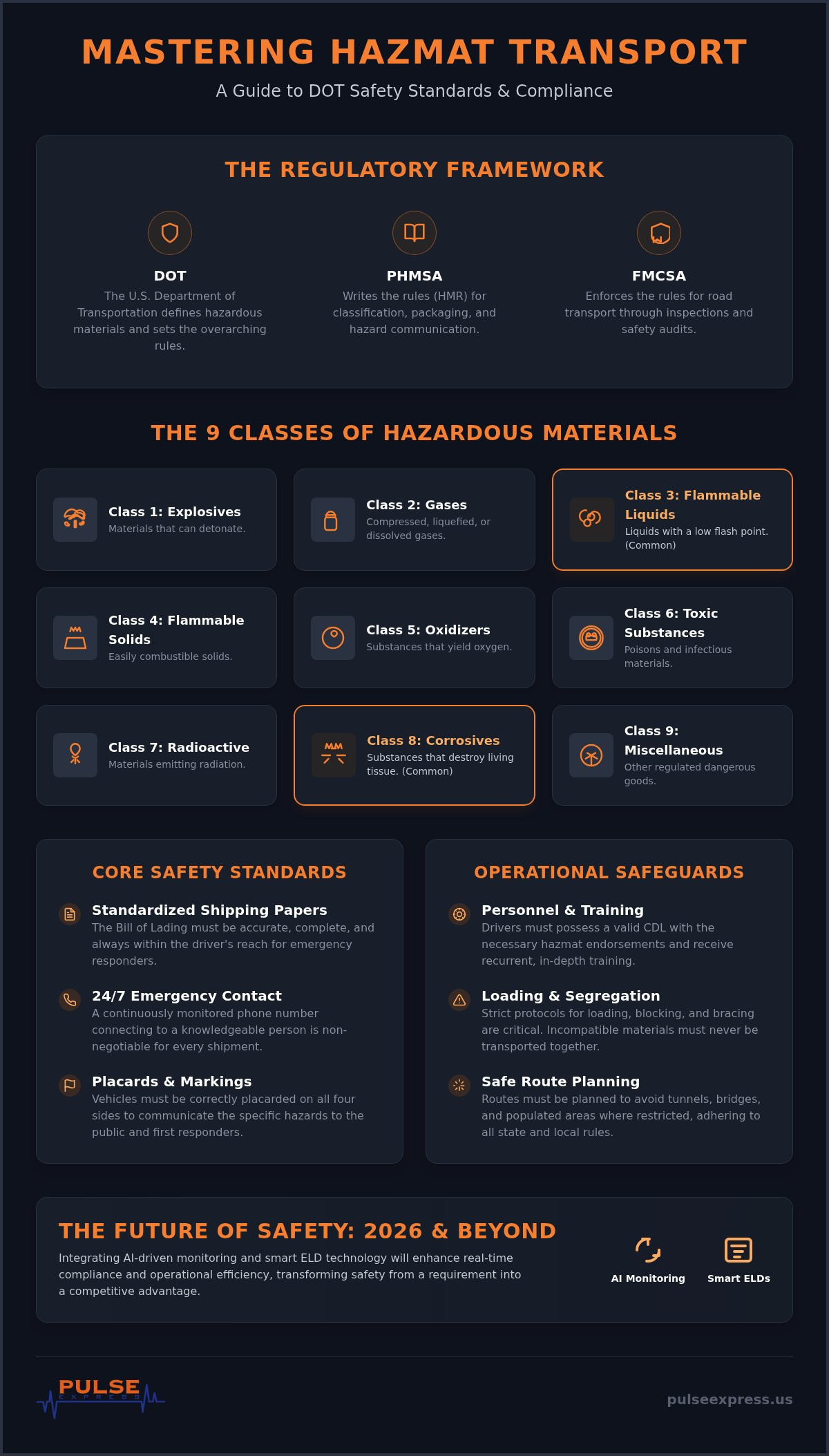
The Department of Transportation defines hazardous materials as substances that pose a risk to health, safety, and property during transit. This designation isn't just a label. It's the trigger for a strict set of hazmat transport safety standards that govern every mile of the journey. The Hazardous Materials Transportation Act (HMTA) serves as the primary federal law, giving the Secretary of Transportation the authority to regulate these goods with precision. The system relies on three pillars: rigorous classification, standardized packaging, and professional enforcement.
Two key agencies manage this regulatory framework to ensure public safety. The Pipeline and Hazardous Materials Safety Administration (PHMSA) writes the rules, focusing on classification, hazard communication, and packaging requirements. Meanwhile, the Federal Motor Carrier Safety Administration (FMCSA) handles the enforcement for over-the-road transport. They conduct roadside inspections and safety audits to ensure every carrier remains secure, compliant, and efficient. It's a balanced system of careful regulation and active oversight.
The Interplay Between Federal and State Standards
Federal preemption is vital for national commerce. It ensures that a truck moving from Ohio to Texas follows a consistent set of rules without facing a patchwork of conflicting local laws. Most requirements fall under 49 CFR Parts 100-180, which are the mandatory guidelines for all interstate commerce. Consistency in hazmat transport safety standards prevents confusion at state lines, allowing drivers to focus on the road rather than shifting regulations. While federal rules dominate, states do maintain authority over specific routing. These often involve restrictions on tunnels, bridges, or densely populated areas. You can typically find these state-specific maps through local DOT portals or specialized routing software.
The 9 Classes of Hazardous Materials
Proper classification is the first step in safety. If you don't know what you're hauling, you can't protect it. These substances are categorized into nine distinct classes based on their chemical and physical properties. These categories align with international standards for dangerous goods, ensuring clarity across borders. Proper classification ensures that every shipment is handled with the precision, care, and attention it deserves.
- Class 1: Explosives
- Class 2: Gases
- Class 3: Flammable Liquids
- Class 4: Flammable Solids
- Class 5: Oxidizing Substances
- Class 6: Toxic and Infectious Substances
- Class 7: Radioactive Materials
- Class 8: Corrosives
- Class 9: Miscellaneous Dangerous Goods
In the world of OTR freight, Class 3 (Flammable Liquids) and Class 8 (Corrosives) are the most common. Whether it's industrial chemicals or bulk fuels, these materials require specialized equipment and elite driver expertise. Identifying these classes correctly allows for the appropriate use of placards and shipping papers, which are the next critical steps in the safety process.
Core Safety Standards: 49 CFR and the HMR
The Hazardous Materials Regulations (HMR) act as the definitive manual for the industry. While the Hazardous Materials Transportation Act provides the legal skeleton, the HMR provides the daily muscle. It covers everything from how a box is taped to how a driver parks a trailer. These rules ensure that everyone in the supply chain speaks the same language. This shared vocabulary is essential for maintaining high hazmat transport safety standards across the country.
Standardized shipping papers are the first line of defense. The Bill of Lading must be within the driver’s reach at all times. It serves as a roadmap for emergency responders. If a spill occurs, these papers tell the crew exactly what they're facing. Accuracy here isn't just about paperwork; it's about life and death. It requires a commitment to precision, care, and total accountability.
Communication Standards for Shippers
Every shipment must include a 24-hour emergency telephone number. This number must connect to someone who is knowledgeable about the material and has comprehensive emergency response information. It's a non-negotiable link in the safety chain. Additionally, shipping papers must follow a strict sequence: the Proper Shipping Name, the UN Number, and the Packing Group. This standardized format allows for instant identification during an inspection or an incident. If you are looking for a carrier that prioritizes this level of detail, our Hazmat freight service ensures every document is handled with total precision.
Vehicle Placarding and Identification
Placards are the visual warnings that alert the public and first responders to potential risks. They must be placed on all four sides of the vehicle. They need to be visible, durable, and clean. Regulations specify when placards are required based on the weight and hazard class of the load. In some cases, such as very small quantities, placards might actually be prohibited to avoid confusion. Adhering to these hazmat transport safety standards ensures that your fleet remains compliant and professional on the road.
Managing mixed loads introduces another layer of complexity. The "Dangerous" placard can sometimes be used for shipments containing two or more categories of hazardous materials from Table 2 of the regulations. However, it’s never a shortcut. Proper placement and clear identification remain the core of operational excellence. These visual cues provide the transparency, safety, and reliability that modern logistics demands.
Personnel Standards: CDL Requirements and Training
Regulations are only as strong as the professionals who execute them. While placards and paperwork provide the framework, the person behind the wheel ensures the mission's success. High hazmat transport safety standards depend on a workforce that is vetted, trained, and fully prepared for the road. This begins with a rigorous training mandate that covers general awareness, function-specific tasks, and safety protocols. Every team member must understand the risks associated with the materials they handle to maintain a secure environment.
The core of this expertise is the Hazmat Endorsement (H) for Class A CDL drivers. Obtaining this endorsement is a multi-step process that includes a specialized knowledge test and a comprehensive TSA background check. Security awareness training is also a vital component. It teaches drivers how to recognize and respond to potential security threats during transit. To keep these skills sharp, the Hazardous Materials Regulations (HMR) mandate recurrent training every three years. This cycle ensures that every driver remains current on the latest safety technologies and regulatory shifts.
Hiring Standards for Professional Hazmat Drivers
We believe that safety starts at the recruitment stage. Pulse Express prioritizes hiring CDL drivers who demonstrate a long-term commitment to operational excellence and clean driving records. Our vetting process for OTR drivers is exhaustive. We analyze Motor Vehicle Records (MVR) and Pre-Employment Screening Program (PSP) reports to identify the most reliable talent. Once hired, the driver becomes the final safety inspector. They perform the critical walk-around to ensure every valve is closed, every placard is visible, and every load is secure before the wheels turn.
Driver Training for Emergency Situations
Even with the best preparation, drivers must be ready for the unexpected. Training focuses on a simple but effective protocol: contain, report, and protect. Drivers are taught to use the Emergency Response Guidebook (ERG) to identify immediate hazards and establish safety perimeters. This manual is a driver's most valuable tool during an incident. Clear communication is equally important. We establish direct protocols between the driver and dispatch to ensure that emergency responders receive accurate data without delay. This proactive approach to hazmat transport safety standards minimizes risks to the driver, the public, and the environment.
Operational Standards for Loading and Route Planning
Operational excellence is where regulations meet reality. It's the moment when segregation tables, securement straps, and route maps combine to create a safe journey. Maintaining high hazmat transport safety standards during the loading process prevents dangerous chemical reactions. You must ensure that incompatible materials stay separated according to the DOT segregation table. This isn't just about placing boxes; it's about understanding the chemistry of the cargo. Precision during loading provides the stability, security, and peace of mind that shippers expect.
Shifting cargo is a primary cause of package damage and leaks. Use appropriate blocking, bracing, and tie-downs to keep the load stationary. A secure load protects the driver, the equipment, and the public. Every strap must be checked, every pallet must be braced, and every gate must be locked. This methodical approach ensures that the cargo remains exactly where it was placed, regardless of road conditions.
Driving and parking rules under Part 397 add another layer of protection. For certain high-risk materials, such as explosives or specific poisonous gases, the vehicle must be attended at all times. This means the driver or a qualified representative must be within 100 feet of the vehicle with a clear line of sight. When parking on a public highway, you must stay at least five feet from the traveled portion. These rules ensure that hazardous cargo never becomes an unattended threat to local communities.
Hazmat Routing and Restricted Areas
Planning the path is just as critical as preparing the trailer. Drivers must avoid heavily populated areas, narrow tunnels, and restricted bridges whenever a practical alternative exists. Pre-trip planning involves identifying designated hazmat routes and verified safe havens for rest stops. Using specialized GPS software ensures compliance with local and federal routing laws. This proactive approach reduces the risk of incidents in vulnerable environments. It requires a blend of advanced technology, local knowledge, and constant vigilance.
Temperature Controlled (Reefer) Hazmat Safety
Reefer hazmat transport adds the complexity of thermal management to traditional safety protocols. Certain chemicals are unstable if they deviate from a specific temperature range. Monitoring reefer units is essential to prevent thermal runaway or crystallization. Our specialized Reefer Hazmat Transport service combines elite cold chain logistics with rigorous safety standards to protect your most sensitive cargo. This intersection of technology and expertise ensures that temperature-sensitive materials arrive in pristine condition. We prioritize the precision, reliability, and care that these high-stakes shipments demand.
The Future of Hazmat Safety: 2026 and Beyond
As we move through 2026, the logistics industry is entering a new era of proactive protection. We're seeing a shift where technology doesn't just record data; it predicts risk. Modern hazmat transport safety standards now incorporate sophisticated tools that were once considered futuristic. AI-driven driver monitoring systems provide real-time feedback, helping professionals stay focused during demanding long-haul routes. Smart ELDs have also evolved to track more than just hours of service. They now integrate with routing software to ensure constant compliance with hazmat-specific lanes. This evolution builds a culture of safety that goes beyond simply checking boxes. It creates a foundation of stability and trust for every shipment.
Technological Integration in Safety
Digital transformation is reshaping how we handle sensitive cargo. Real-time sensor data is now a standard for temperature-sensitive hazmat, providing instant alerts if a reefer unit deviates by even a fraction of a degree. This precision prevents thermal runaway before it starts. We're also seeing a significant move toward e-BOLs, or automated digital shipping papers. These digital documents ensure that first responders have immediate, legible access to cargo data in the event of an incident. Additionally, predictive maintenance uses onboard diagnostics to identify potential mechanical failures before they happen. Replacing a worn part in the shop is always safer than managing a breakdown on a busy highway. These tools provide the precision, care, and attention to detail that modern shipping demands.
Pulse Express: Your Partner in Compliant Logistics
At Pulse Express, we've spent decades refining our over-the-road expertise. Our commitment to a modern, safe OTR fleet means we don't just meet federal standards; we aim to exceed them. Whether you require specialized reefer hazmat transport or dry freight services, we provide the equipment and expertise needed for total security. We understand that high hazmat transport safety standards are only possible when you prioritize the person behind the wheel. By investing in our drivers and the latest safety technology, we offer a level of reliability that only a dedicated partner can provide. If you're ready to elevate your logistics, we invite you to reach out for a safety-first audit of your current shipping requirements. We're here to help you navigate the complexities of compliance with confidence and ease.
Securing the Future of Your Sensitive Freight
Mastering the complexities of 49 CFR and the latest 2026 technology is no longer optional for high-value logistics. It requires a deep understanding of classification, rigorous personnel training, and precise operational execution. By prioritizing elite hazmat transport safety standards, you protect your cargo, your reputation, and the public. We've explored how the intersection of AI-driven monitoring and expert driver vetting creates a foundation of reliability that traditional carriers often miss. This proactive approach ensures that every shipment is handled with the attention it deserves.
At Pulse Express, we bring over 25 years of OTR expertise to every shipment, serving our partners with excellence since 2000. Our specialized reefer and dry van hazmat fleet is managed by professionals who undergo rigorous safety training and vetting. We don't just move freight; we provide the precision, care, and stability your business deserves. Partner with Pulse Express for Secure Hazmat Logistics to streamline your operations and gain peace of mind. Let's build a safer, more efficient future together.
Frequently Asked Questions
How often do hazmat transport safety standards change?
Federal agencies like PHMSA and the DOT update regulations periodically to reflect new safety data and evolving technology. While major overhauls to the 49 CFR are less frequent, minor adjustments or "final rules" can happen multiple times a year. Carriers must stay vigilant by monitoring the Federal Register and subscribing to regulatory alerts. Consistent oversight ensures that your operational protocols remain aligned with federal mandates, industry best practices, and 2026 technological shifts.
What is the difference between a Hazmat endorsement and a Tanker endorsement?
A Hazmat endorsement (H) allows a driver to transport hazardous materials in any vehicle type, while a Tanker endorsement (N) is specifically for bulk liquid or gas containers. If a driver is hauling hazardous liquids in a tank, they require the combined X endorsement. Obtaining these requires separate knowledge tests, specialized training, and a total commitment to safety. Each endorsement ensures the driver has the specific expertise needed to manage the unique risks of their cargo.
Are all hazardous materials required to have a placard?
No, not every shipment requires a placard. Requirements depend on the material's hazard class and the total weight of the shipment. Materials in Table 1 always require placards regardless of weight, while Table 2 materials typically only require them for loads exceeding 1,001 pounds. Understanding these specific thresholds is a critical component of hazmat transport safety standards to ensure you remain compliant during every mile of transit.
What are the penalties for non-compliance with Hazmat regulations in 2026?
Penalties for non-compliance are severe and can include heavy civil fines, criminal charges, or the suspension of operating authority. As of 2024, maximum civil penalties for knowing violations exceeded $99,000 per day, per violation. If a violation results in death or serious injury, the financial and legal consequences escalate significantly. Maintaining precise records, following strict safety protocols, and investing in driver training is the only way to protect your business from these devastating impacts.
How does a driver obtain a Hazmat endorsement for their CDL?
Drivers must first hold a valid Class A CDL and pass a specialized hazmat knowledge test at their local DMV. They must also complete a TSA background check, which includes fingerprinting and a security threat assessment. Additionally, Entry-Level Driver Training (ELDT) is now a mandatory requirement for those seeking an initial endorsement. This comprehensive process ensures that only the most reliable, vetted, and professional individuals are entrusted with sensitive cargo.
What should a driver do if they discover a leak during transport?
A driver should immediately park the vehicle in a safe location away from populated areas and notify local emergency responders. They must refer to the Emergency Response Guidebook (ERG) to identify the specific risks and establish a safety perimeter. After securing the scene, the driver should contact their dispatch team to initiate the company’s internal incident response plan. Swift, calm, and methodical action is essential to contain the leak and protect the public.
Can hazardous materials be transported in a standard dry van?
Yes, many hazardous materials are compatible with standard dry van equipment if they are packaged and secured correctly. However, certain classes require specialized features, such as temperature control for unstable chemicals or specialized venting for specific gases. Shippers must ensure that the vehicle is in good mechanical condition and capable of supporting the load. Proper equipment selection is vital for maintaining high hazmat transport safety standards across your supply chain.
What is a "Safe Haven" in the context of Hazmat transport?
A safe haven is a government-approved parking location specifically designated for vehicles carrying high-risk hazardous materials, such as Class 1.1 explosives. These locations provide a secure environment where a driver can leave a vehicle unattended if necessary. If a safe haven is not available, the driver must follow strict attendance and surveillance rules. Identifying these locations during pre-trip planning is an essential step for ensuring the security, safety, and integrity of sensitive shipments.


