

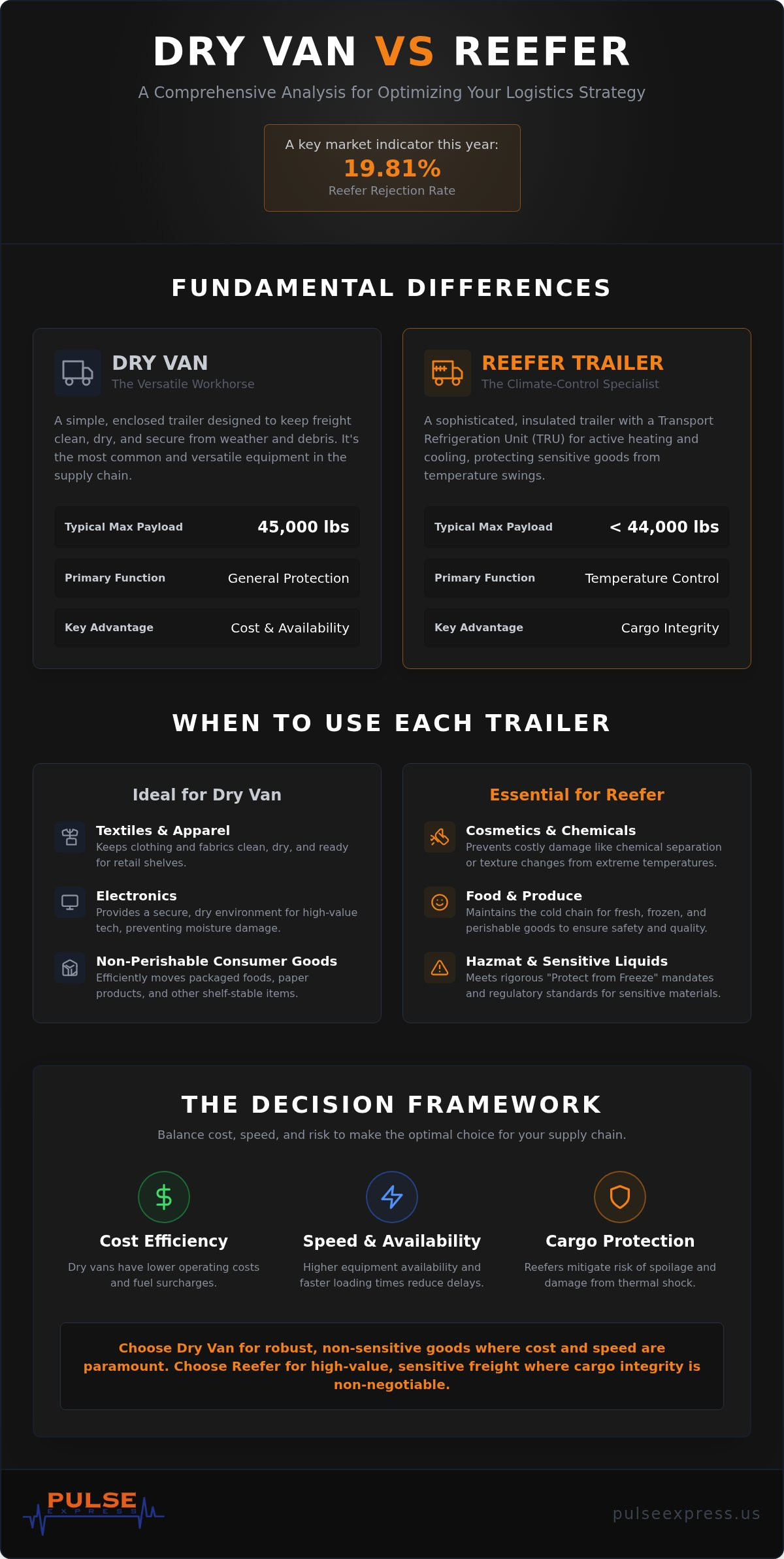
With reefer rejection rates climbing to 19.81% this year, the decision to book a refrigerated unit is no longer a simple matter of temperature control. It's a high-stakes calculation involving equipment availability, specialized handling, and fluctuating market rates. Choosing between dry van vs reefer trucking requires a deep understanding of how each trailer type impacts your bottom line and your cargo's integrity.
You've likely noticed that managing a modern supply chain feels more complex than ever. Between rising fuel surcharges for cooling units and the rigorous new CSA scoring weights for vehicle maintenance, the margin for error has disappeared. We're here to help you navigate these challenges with confidence, stability, and expert guidance.
This article provides a comprehensive cost-benefit analysis to help you optimize your logistics strategy. You'll learn about the latest 2026 regulatory requirements for Hazmat loads, the impact of new ELD data retention rules, and how to select a carrier that offers the flexibility your business deserves. We'll help you find the right balance between operational excellence, fiscal responsibility, and uncompromising safety.
Key Takeaways
- Evaluate the core differences in dry van vs reefer trucking to determine the most cost-effective and secure equipment for your 2026 logistics strategy.
- Discover how temperature-controlled environments safeguard high-value freight like chemicals and cosmetics, preventing costly spoilage and seasonal damage.
- Gain clarity on the rigorous regulatory standards and driver certifications needed for safe, compliant Hazmat transport in both dry and refrigerated trailers.
- Understand the trade-offs between speed and protection, including how dry van versatility can streamline loading times and reduce transit delays.
- Master a practical framework for balancing rising fuel surcharges against cargo risk to choose a partner that provides precision, safety, and reliability.
Understanding the Fundamental Differences: Dry Van vs. Reefer
Selecting the right equipment is the foundation of a successful logistics plan. When evaluating dry van vs reefer trucking, the choice often comes down to the specific requirements of your cargo and your budget. While both trailers look similar from the outside, their internal engineering and operational capabilities are worlds apart. We view this choice as a partnership between your product needs and our specialized equipment.
The dry van is the versatile workhorse of the American supply chain. It is a simple, enclosed box designed to keep freight clean, dry, and secure. In contrast, a refrigerator (reefer) truck is a sophisticated climate-controlled environment. It uses active cooling and specialized insulation to protect sensitive goods from external temperature swings. One industry secret is the "backhaul" advantage: reefer units can often carry dry freight to avoid empty miles, but a dry van can never carry refrigerated goods.
Weight is a critical factor in this comparison. Because reefer trailers include a heavy cooling engine and thick insulation, they have a lower maximum payload capacity than their dry counterparts. Choosing the right trailer involves balancing three core pillars: cargo sensitivity, weight limits, and cost efficiency.
Anatomy of a Dry Van Trailer
A standard 53-foot dry van typically handles an average payload of 45,000 lbs. These trailers are built with thin aluminum or composite walls to maximize internal space. They provide excellent protection from weather and road debris, making them the ideal choice for several categories of freight:
- Textiles and Apparel: Keeping clothing clean and shelf-ready.
- Electronics: Providing a dry, secure space for high-value tech.
- Consumer Goods: Moving non-perishable items efficiently across the country.
Anatomy of a Refrigerated (Reefer) Trailer
The heart of a reefer is the Transport Refrigeration Unit (TRU). This unit constantly monitors the internal temperature to ensure stability throughout the journey. Unlike the simple siding of a dry van, reefer walls are packed with high-density foam insulation. This design allows for a wide range of climate settings, including deep-freeze environments at -20°F or "protect from freeze" mandates for liquids during winter. Our professional Class A CDL drivers are trained to manage these complex systems, ensuring your freight arrives in the exact condition required.
Protection and Precision: How Temperature Control Impacts Cargo Integrity
Temperature control is often mistaken as a requirement exclusive to the food industry. In reality, the choice between dry van vs reefer trucking is a critical decision for any shipper moving high-value chemicals, specialized paints, or premium cosmetics. These products are highly sensitive to thermal fluctuations. Excessive heat can cause chemical separation in adhesives. Extreme cold can permanently ruin the texture of cosmetics. The margin for error is zero.
During winter months, many shippers rely on the "Protect from Freeze" mandate. Even for goods that don't require refrigeration, a reefer unit set to a steady 55°F prevents liquids from freezing in transit. This is a level of precision a standard dry van cannot provide. Without insulation and active heating, cargo is exposed to the ambient temperature of the road. This often leads to thermal shock. This sudden shift in temperature is particularly dangerous for high-value electronics, as it causes condensation that can short-circuit internal components.
Modern cold chain logistics rely on advanced telematics for complete transparency. Real-time monitoring allows us to track temperature, humidity, and airflow every mile of the journey. This data ensures compliance with the Sanitary Transportation of Human and Animal Food rule, providing a verifiable record of safety. For businesses that value this level of detail, our specialized OTR services offer the peace of mind that comes from total visibility.
Cold Chain Logistics for Pharmaceuticals and Biotech
Medical-grade transport requires more than just a cold trailer. It demands a strict chain of custody and rigorous adherence to regulatory standards. Pharmaceuticals and biotech samples are often irreplaceable. We manage these high-stakes loads through integrated OTR solutions that prioritize security, stability, and speed. Our drivers are trained to handle the specific needs of medical freight, ensuring that every shipment remains within its validated temperature range from pickup to delivery.
Industrial Applications for Temperature Control
Industrial freight like adhesives and specialized coatings requires protection from extreme heat to maintain its chemical integrity. Reefers prevent chemical degradation by neutralizing external weather conditions. Maintaining precise temperature stability ensures that industrial materials remain chemically stable and ready for immediate application.
Speed, Versatility, and Market Availability in OTR Logistics
Efficiency in OTR logistics is measured by more than just miles per hour. When comparing dry van vs reefer trucking, the turnaround time at the dock often determines the true speed of your supply chain. Dry vans typically offer faster loading and unloading cycles because they service a broader range of industrial and retail facilities. In contrast, reefer units frequently deliver to high-volume grocery warehouses where wait times can be significantly longer. This makes the dry van the preferred choice for operations where time is the most critical resource.
Versatility is another key advantage of the dry van trailer. Its lightweight design and simple structure allow for complex multi-stop routes that might be difficult to manage with a reefer. Understanding the nuances of dry van vs reefer trucking helps you choose the right equipment for these tight schedules. While refrigerated units are essential for specific goods, they come with higher rejection rates. As of August 2026, reefer rejection rates sit at 19.81%, compared to just 12.08% for dry vans. This difference in market availability means that dry van shippers often enjoy more reliable capacity and fewer service disruptions during peak periods.
Expedited Freight and Just-in-Time Manufacturing
Automotive and industrial sectors rely heavily on just-in-time (JIT) manufacturing models. These systems leave no room for delay. Dry vans are the standard for these industries because they minimize dwell time and maximize driver efficiency. Our team specializes in expedited dry van freight services designed to keep production lines moving without interruption. We focus on precision, speed, and clear communication to ensure your most urgent shipments arrive on schedule.
Seasonal Fluctuations in Trailer Demand
The availability of equipment shifts dramatically throughout the year. Produce season, which typically runs from April to September, creates a massive spike in demand for refrigerated units. During this window, reefer rates can jump by 40% or more. Meanwhile, the fourth quarter retail surge places heavy demand on dry van OTR driving positions. Planning for the 2026 peak seasons requires a partner who understands these cycles. We provide the stability and equipment access you need to manage seasonal volatility without sacrificing service quality.
Handling Sensitive Freight: Hazmat and Regulatory Considerations
Managing hazardous materials adds a layer of complexity to the dry van vs reefer trucking debate. While some assume Hazmat is a uniform category, the physical properties of the chemicals dictate the equipment required. Dry vans are frequently used for flammable solids, corrosive liquids, and miscellaneous dangerous goods that remain stable at ambient temperatures. These trailers provide a secure, enclosed environment that prevents exposure to road debris and external moisture. It's a reliable solution for industrial chemicals that don't require active climate monitoring.
When chemicals are unstable or volatile at high temperatures, a refrigerated unit becomes a safety requirement rather than a luxury. Reefers manage temperature-sensitive hazardous chemicals by preventing thermal degradation that could lead to combustion or toxic off-gassing. This specialized transport requires a carrier that understands the technical intersection of chemical safety and climate control. Partnering with a provider that offers both trailer types ensures your specific Hazmat class is matched with the correct containment strategy, equipment, and driver expertise.
Risk mitigation in this sector depends heavily on the professional behind the wheel. A Hazmat-endorsed Class A CDL driver is trained to handle spills, manage placards, and follow strict emergency response protocols. This level of expertise is non-negotiable for sensitive logistics. It ensures that every shipment complies with federal law while maintaining the highest standards of operational excellence, precision, and safety.
Regulatory Standards for Hazardous Materials
The DOT and FMCSA maintain rigorous requirements for the transportation of hazardous materials. Compliance involves accurate documentation, proper placard placement, and the implementation of specialized emergency response plans. These regulations are designed to protect the driver, the public, and the environment. We prioritize safety by focusing on hazmat endorsed driver hiring to ensure every operator meets these high standards. This commitment to training reduces the risk of roadside violations and ensures a stable, predictable supply chain.
Sensitive Industrial Goods and High-Value Cargo
High-theft dry van loads and sensitive industrial goods require advanced security protocols. These include GPS tracking, geofencing, and specialized seals to ensure the integrity of the shipment. For Hazmat containment, trailers may feature reinforced flooring or specialized tie-down points to prevent shifting during transit. Our focus on precision and safety makes us a preferred partner for specialized hazmat logistics. If you are looking for a reliable team to manage your sensitive freight, our Hazmat freight services offer the protection and expertise your cargo requires.
Dry Van vs. Reefer: Which Is Best for Your Supply Chain?
Choosing between dry van vs reefer trucking is a strategic decision that shapes your operational success. While earlier sections detailed the technical mechanics of each trailer, the final choice depends on a clear alignment between your cargo requirements and your fiscal goals. We suggest a methodical approach to ensure your logistics strategy remains both protective and efficient.
To select the right mode, follow these five essential steps:
- Step 1: Assess Cargo Sensitivity. Determine if your product requires active cooling, protection from freezing, or simple shelter from the elements.
- Step 2: Evaluate Budget vs. Risk. Balance the higher per-mile rates of refrigerated transport against the potential cost of cargo spoilage or thermal degradation.
- Step 3: Check Regulatory and Insurance Requirements. Verify that your carrier possesses the specific Hazmat endorsements and high-value cargo insurance necessary for your freight class.
- Step 4: Analyze Urgency. Consider dock dwell times and the availability of expedited dry van units if your primary goal is speed.
- Step 5: Choose a Multi-Fleet Partner. Select a carrier with a balanced fleet to ensure flexibility as your seasonal needs shift.
The Cost-Benefit Analysis of Trailer Choice
Understanding the total cost of ownership in cold chain logistics involves looking beyond the base freight rate. Refrigerated transport includes hidden costs such as specialized trailer washouts, higher fuel consumption for the cooling unit, and rigorous maintenance schedules. As of August 2026, national average contract rates sit at $3.29 per mile for reefers compared to $3.01 for dry vans. This premium reflects the added complexity of the equipment. While you can use a reefer to haul dry freight as a backhaul strategy, it's often a mistake for heavy loads. The added weight of the cooling unit reduces your maximum payload, which can increase the total number of shipments required to move your inventory.
Partnering for Operational Excellence
We believe that a successful supply chain is built on a foundation of reliability and professional expertise. Pulse Express maintains a balanced fleet to provide the logistical flexibility your business deserves. Our commitment to excellence starts with hiring CDL drivers who are experts in both dry and refrigerated modes. These professionals understand the nuances of temperature logging, Hazmat compliance, and time-sensitive delivery. By choosing a partner that values precision and safety, you gain a seasoned guide dedicated to your long-term growth. Contact Pulse Express today to develop a customized OTR freight solution tailored to your specific needs.
Securing Your Supply Chain for 2026 and Beyond
The strategic decision between dry van vs reefer trucking is a pivotal moment for your logistics plan. It directly impacts your safety standards, your delivery speed, and your total operational costs. By carefully assessing cargo sensitivity and checking regulatory requirements, you can protect your high-value freight from thermal shock, chemical degradation, or seasonal spoilage. A well-chosen trailer type ensures your products remain stable and your budget stays on track.
We've been a trusted OTR partner since 2000, providing 24/7 OTR nationwide support for businesses across the country. As Hazmat and general freight specialists, we offer the stability, precision, and safety your supply chain requires. Our professional fleet is ready to handle your most sensitive loads with the care they deserve. We invite you to Request a Specialized Freight Quote from Pulse Express Today. Let's work together to build a reliable, efficient, and successful logistics partnership.
Frequently Asked Questions
Can a reefer trailer haul dry van freight?
Yes, refrigerated units frequently transport dry goods in a practice known as a backhaul. This helps carriers avoid empty miles while providing shippers with additional equipment options. However, you should consider that reefers have slightly less internal width due to thick insulation. The floors are typically metal with grooves rather than flat wood, so you must ensure your packaging is compatible with these surfaces before loading.
Is reefer trucking more expensive than dry van for shippers?
Refrigerated transport generally commands a higher price due to specialized equipment and fuel needs. The cooling unit requires its own diesel supply to maintain a steady temperature throughout the journey. Market data from August 2026 shows that reefer contract rates typically carry a premium over dry van vs reefer trucking averages. Shippers pay this extra amount for the precision, protection, and rigorous monitoring required for sensitive cargo.
What are the main advantages of dry van freight services?
Dry vans provide superior payload capacity and widespread market availability. Since these trailers lack a heavy cooling engine, they can typically carry up to 45,000 lbs of freight. They are the primary choice for just-in-time manufacturing and retail distribution. Choosing dry van vs reefer trucking for non-perishables often results in lower rejection rates and more predictable scheduling because there are more dry units available in the nationwide OTR network.
Do I need a reefer for Hazmat shipping?
Your choice depends on the specific chemical properties of your freight. While many corrosive liquids stay stable in a dry van, volatile chemicals require a reefer to prevent dangerous thermal degradation. Active cooling is a safety requirement for certain Hazmat classes to prevent combustion or toxic off-gassing. You should always consult the Material Safety Data Sheet (MSDS) to determine if your hazardous materials require a strictly controlled climate.
How much weight can a dry van haul compared to a reefer?
A standard 53-foot dry van can usually haul a maximum payload of 45,000 lbs. Refrigerated trailers are heavier because of the cooling engine and high-density foam insulation. This extra weight reduces the maximum cargo capacity to approximately 42,500 or 44,000 lbs. If you are moving dense commodities that sit near the legal weight limit, a dry van is often the better choice to avoid overloading the tractor's axles.
What is the "protect from freeze" service in trucking?
This service uses a refrigerated unit to keep non-perishable liquids or industrial goods from freezing during the winter. Instead of cooling the trailer, the unit maintains a steady internal temperature of roughly 55°F. It's a critical safeguard for adhesives, paints, and beverages moving through northern OTR routes. This prevents the expansion and packaging rupture that occurs when these liquids reach freezing temperatures during transit.
Which trailer type is better for expedited freight?
Dry vans are usually the better choice for expedited services because they offer faster turnarounds at the dock. They don't require the pre-cooling or temperature validation steps that can slow down cold chain logistics. When speed is your primary driver for automotive or industrial parts, the simplicity and abundance of dry van equipment make it the most efficient solution for urgent, time-sensitive deliveries across the country.
How do I find Hazmat-certified OTR drivers for my cargo?
You should partner with an established carrier that manages a fleet of professional Class A CDL drivers with Hazmat endorsements. These drivers undergo background checks and specialized training to handle sensitive materials safely. A trusted partner will ensure that every driver understands placard requirements, emergency response protocols, and federal compliance. This expertise is vital for maintaining a secure and stable supply chain for your most sensitive industrial freight.


