

A reefer trailer alone doesn’t make a shipment safe. The right OTR reefer carrier must match its equipment and operating practices to your cargo, route, and temperature requirements. That matters on a long haul, where a temperature excursion can put sensitive freight at risk. It can also be difficult to tell whether the company you’re speaking with operates the truck or arranges transportation through another provider.
If you’re comparing carriers, ask for clear answers before tendering a load. Reefer units are designed to maintain a set temperature, not cool a warm shipment, so preparation and communication matter as much as equipment. Start by confirming what the carrier can handle for your specific freight.
This guide explains what OTR reefer carriers do, when refrigerated transport may suit a shipment, and what to verify before booking. It covers practical questions about temperature control, route coverage, and carrier responsibilities, as well as considerations for general freight and eligible hazmat loads. Pulse Express provides over-the-road freight transportation across the United States, including refrigerated and dry van transport. Shipment suitability depends on your cargo requirements and the capabilities confirmed for the load.
Key Takeaways
- Choose an OTR reefer carrier based on your cargo requirements, route, and confirmed equipment capabilities.
- Compare carriers on commodity acceptance, service coverage, communication, and shipment documentation.
- Prepare pickup details in advance, including dimensions, timing, handling instructions, and delivery contacts.
- Confirm shipment-specific requirements before booking, especially for temperature-sensitive or hazmat freight.
- Use a clear checklist to assess whether a carrier’s services align with your shipment and delivery needs.
What Does an OTR Reefer Carrier Do for Long-Haul Freight?
An OTR reefer carrier is a motor carrier that transports freight over long distances in refrigerated trailers suited to the shipment’s temperature and handling requirements. The reefer is the temperature-control equipment; the carrier is the transportation provider responsible for operating the shipment. A refrigerator truck uses an insulated trailer and refrigeration unit to support controlled conditions in transit.
Refrigerated service differs from dry van transportation, which uses an enclosed trailer without the same temperature-control function. Cargo that doesn’t need controlled conditions may be suitable for dry van service. Freight with temperature-sensitive handling needs may call for a reefer, but the equipment alone doesn’t determine suitability. Match the trailer and service to the cargo, route, and handling instructions.
When Does Long-Haul Freight Need a Reefer Trailer?
Fresh or frozen foods, some medicines, and other sensitive commodities may require temperature-controlled transportation. Requirements vary by product, so don’t assume that similar goods have the same needs. Before requesting capacity, identify the commodity and share its required conditions, handling instructions, and any restrictions with the prospective carrier.
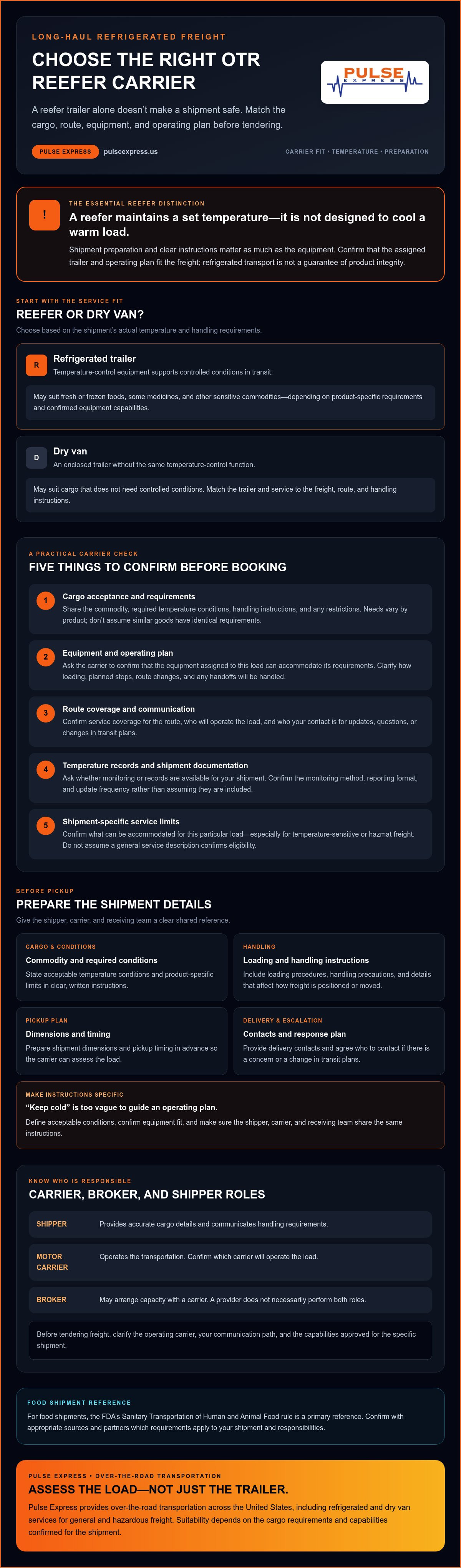
A reefer unit is designed to maintain a set temperature, not cool a warm load. That makes shipment preparation and clear instructions essential. Confirm that the trailer’s capabilities and operating plan fit your freight, and don’t treat refrigerated transport as a guarantee of product integrity.
Carrier, Broker, and Shipper: Who Does What?
The shipper provides accurate cargo details and communicates handling requirements. A motor carrier operates the transportation, while a broker may arrange capacity with a carrier. One provider doesn’t necessarily perform both roles, so ask who will operate the load and who will be your contact for updates or questions.
Clarifying these responsibilities is part of understanding cold chain logistics, the coordinated handling of temperature-sensitive goods through transportation and related steps. Before tendering freight, confirm the operating carrier, the communication path, and the capabilities approved for your specific shipment.
Pulse Express provides over-the-road transportation across the United States, including refrigerated and dry van services for general and hazardous freight. Whether a particular load is suitable depends on its requirements and the service capabilities confirmed for it. Share the commodity, route, and handling needs when discussing a shipment so the fit can be assessed directly.
How OTR Reefer Transport Protects Temperature-Sensitive Freight
A refrigerated trailer supports controlled conditions during transit, but reliable planning takes more than selecting reefer equipment. The cargo’s requirements, loading process, route length, planned stops, and any handoffs all affect how the shipment should be handled. On a long route, schedule changes can affect coordination, so clarify the plan with the carrier before dispatch.
Reefer suitability depends on the cargo’s handling instructions and the confirmed capabilities of the equipment assigned to the shipment. Don’t assume a trailer can meet a particular requirement simply because it is refrigerated. Ask the OTR reefer carrier to review the shipment’s needs and confirm what can be accommodated for that load.
For food shipments, shippers can consult the FDA’s Sanitary Transportation of Human and Animal Food rule as a primary reference. Confirm with appropriate sources and partners which requirements apply to your shipment and responsibilities.
What Temperature and Handling Details Should Shippers Provide?
Give the carrier the required temperature conditions and any product-specific limits in clear, written instructions. Include loading procedures, handling precautions, and details that could affect how the freight is positioned or moved. “Keep cold” is too vague to guide an operating plan. It doesn’t define acceptable conditions or explain what to do if they can’t be met.
Before dispatch, confirm the acceptable range, equipment fit, and who to contact if there’s a concern or a change in transit plans. This gives the shipper, carrier, and receiving team a shared reference instead of leaving key decisions open to interpretation.
What Should Shippers Ask About Temperature Records?
Ask whether temperature monitoring or records will be available for your specific shipment. Don’t assume a particular monitoring method, reporting format, or update frequency is included. Confirm what information the carrier can provide, when it can be shared, and who will receive it. Agreeing on these details in advance sets clear expectations for transit and delivery.
At receiving, agreed records can help the team compare shipment information with its own inspection and acceptance process. If a concern arises, a clear record-sharing plan gives the shipper and carrier a basis for follow-up. Availability and detail vary, so document the arrangement before the load moves.
Share your commodity, route, and handling instructions when you discuss a shipment with Pulse Express. Its OTR refrigerated and dry van services may suit different freight needs, subject to confirmation of capabilities for the specific load.
How to Compare OTR Reefer Carriers Before Booking
A refrigerated trailer is only a starting point. It doesn’t establish that a carrier can meet your commodity’s handling needs, serve the route, or provide the information your team expects. Compare providers using the same shipment details, and distinguish what they’ve confirmed from what still needs to be checked for your load.
| Area | Establish | Confirm for this shipment |
|---|---|---|
| Equipment fit | What reefer equipment is being considered? | Can it meet the cargo’s stated conditions for this route? |
| Commodity acceptance | Does the carrier handle this type of freight? | Are there restrictions or special handling needs to resolve? |
| Route coverage | Does the provider serve the origin and destination? | Is the requested schedule feasible for this specific load? |
| Communication | Who is the operating carrier and dispatch contact? | How are updates and exceptions communicated? |
| Documentation | What shipment documents are expected? | Are temperature records available, and in what format? |
Which Reefer Carrier Questions Matter Most?
Ask what equipment is assigned, whether it fits the cargo instructions and route, and who will operate the shipment. Confirm your dispatch contact, how routine updates are shared, and whom to reach if plans change. If records matter to your receiving process, ask what temperature information may be available and how an exception would be reported. Get shipment-specific answers before tendering.
How Should You Check Compliance and Hazmat Fit?
For hazardous-material freight, provide an accurate commodity description and relevant shipment details before asking about capacity. Where relevant, confirm the operating carrier’s applicable authority, endorsements, and procedures through current official sources. Requirements depend on the material and shipment, so don’t assume a general hazmat service description confirms suitability. For more shipper considerations, consult a specialized hazmat logistics guide.
For food freight, review the FDA’s sanitary transportation requirements and confirm which provisions apply to your shipment. Keep a record of what the provider has verified and what remains subject to confirmation.
Choose an OTR reefer carrier based on documented fit, not trailer type alone. Pulse Express provides OTR transportation across the United States, including refrigerated, dry van, general, and hazardous freight services. Ask about your cargo and route to confirm whether its capabilities match the specific load.
How to Prepare a Reefer Shipment for OTR Pickup
A complete freight request gives a carrier the details needed to assess equipment fit, route, timing, and handling before pickup is scheduled. It also reduces avoidable questions caused by missing or unclear instructions. Use this sequence to prepare the load, then confirm shipment-specific requirements with your OTR reefer carrier.
- Define the cargo. Provide an accurate commodity description, including product characteristics that affect handling. If the freight is hazardous, share the relevant details and documents needed to assess whether the load can be accepted.
- Specify the shipment size. Give dimensions, total weight, and handling-unit or pallet information as applicable. Include loading notes that may affect how the freight is placed or handled.
- State temperature and handling requirements. Provide the required temperature conditions in clear terms, along with loading instructions, product-specific limits, and other special handling needs. Avoid broad directions such as “keep cold.”
- Set the route and schedule. Identify the pickup origin, delivery destination, ready time, and delivery window. Share timing constraints early so the carrier can assess the requested plan.
- Identify documents and contacts. List required shipping paperwork and receiving requirements. Name the pickup and delivery contacts, how to reach them, and who can resolve questions about the load.
- Confirm the plan before dispatch. Verify equipment capability, commodity acceptance, agreed handling instructions, and the communication process. Resolve open questions before the shipment is tendered.
Plan for Updates and Exceptions
Agree on a primary contact and expected update method before dispatch. Decide who should be notified if pickup or delivery timing changes, instructions need clarification, or a shipment condition raises concern. For any transfer of responsibility, document the handoff and share relevant instructions with the next contact. This creates a clear communication record without assuming a particular tracking system or promising a specific delivery outcome.
Pre-Tender Checklist
Before requesting capacity, check that you have the following information ready:
- Commodity description and any applicable hazmat details
- Shipment dimensions, weight, and loading notes
- Required temperature conditions and handling instructions
- Origin, destination, ready time, and delivery window
- Required documents and receiving procedures
- Pickup, delivery, and exception contacts
- Confirmation of the carrier’s shipment-specific equipment and service capabilities
Have a shipment to discuss? Share your reefer freight requirements with Pulse Express to confirm whether its OTR refrigerated transportation fits the cargo and route.
Choose an OTR Reefer Carrier That Fits Your Shipment
The right choice isn’t simply the provider with a refrigerated trailer. Match the carrier to the cargo, route, and handling requirements, then verify the equipment and service details for the specific load. Confirm applicable compliance needs and agree on how the parties will communicate before tendering. These checks help you make an informed decision without treating a general service description as proof that a particular shipment is covered.
Pulse Express provides over-the-road freight transportation across the United States, including reefer, dry van, general freight, and hazardous freight services. These services may be relevant to shippers moving temperature-sensitive or other freight, but a service label alone doesn’t establish that a load is suitable. Discuss and confirm commodity restrictions, route coverage, equipment capability, and any applicable hazmat requirements directly.
When Is Pulse Express Worth Contacting?
Consider contacting Pulse Express if you’re evaluating OTR refrigerated capacity for general or temperature-sensitive freight. Explain the shipment’s handling needs and route so its suitability can be assessed. For hazmat freight, share accurate commodity details and confirm that the shipment and applicable requirements can be accommodated. Don’t assume a particular temperature range, monitoring feature, certification, or service commitment unless it’s confirmed for your load.
What to Include When Requesting Reefer Capacity
Clear shipment details help the carrier assess fit and identify open questions. Prepare the information needed to review your request:
- Route and schedule: Origin, destination, ready time, and requested delivery window.
- Cargo: Commodity description, shipment size, and any applicable hazardous-material details.
- Handling: Required temperature conditions, loading instructions, and product-specific limits.
- Confirmation needs: Questions about equipment capability, commodity acceptance, route coverage, documentation, and communication.
Before tendering, make sure shipment-specific capabilities and unresolved requirements have been addressed. A clear discussion helps both sides understand the request and determine whether the service fits, without assuming an outcome before the details are reviewed.
To discuss your shipment details, discuss an OTR reefer shipment with Pulse Express. Share the cargo, route, timing, and handling requirements so the team can review the request with you.
Make Your Next Reefer Shipment a Clear Fit
A dependable long-haul plan starts by matching cargo needs to confirmed carrier capabilities. Before tendering, make sure temperature and handling instructions are clear, the route and schedule are understood, and you know who will operate the shipment and provide updates. These details help you evaluate an OTR reefer carrier based on fit, not simply on the presence of refrigerated equipment.
Pulse Express has provided over-the-road freight transportation across the United States since 2000. Its stated services include reefer, dry van, general, and hazardous freight. The right service depends on your cargo, route, and specific requirements, so confirm shipment suitability directly before booking.
To start a practical conversation, gather your origin, destination, timing, cargo description, and temperature requirements. Then discuss your OTR reefer shipment with Pulse Express and ask about the capabilities your load requires. With clear information and careful confirmation, you can move forward with a partner discussion grounded in your shipment’s needs.
Frequently Asked Questions
What is an OTR reefer carrier?
An OTR reefer carrier transports freight over long distances in refrigerated trailers. “Reefer” refers to the trailer’s temperature-control equipment, while the carrier is the motor carrier operating the transportation. Shippers use this service when cargo has specified temperature or handling requirements during transit. The term alone doesn’t confirm that a carrier’s equipment suits a particular commodity or that temperature monitoring and records are available, so verify those details for each shipment.
How do I choose an OTR reefer carrier?
Choose an OTR reefer carrier by matching its confirmed capabilities to your cargo and route. Explain the commodity, temperature requirements, handling instructions, origin, destination, and timing. Ask which carrier will operate the truck, who your contact will be, how updates are shared, and whether temperature records are available for your load. For hazmat freight, provide accurate shipment details and confirm acceptance and applicable requirements before tendering.
Can an OTR reefer carrier transport hazardous materials?
Some carriers transport certain hazardous materials in refrigerated equipment, but acceptance depends on the material, shipment requirements, route, and confirmed carrier capabilities. Provide an accurate commodity description and relevant hazardous-material details before requesting capacity. Ask the carrier to confirm whether it can handle that specific load. Check applicable requirements with current official sources, including FMCSA or PHMSA guidance where relevant, rather than assuming every reefer carrier accepts hazmat freight.
What temperature should a reefer trailer be set to?
There’s no single temperature setting that suits every shipment. The required conditions depend on the commodity and the shipper’s handling instructions. Give the carrier clear, product-specific requirements and ask whether the equipment assigned to your load can meet them. Avoid relying on a generic range or assuming a refrigerated trailer can cool freight that was loaded warm. Confirm requirements with the responsible shipper or cargo specialist before dispatch.
How much does OTR reefer shipping cost?
The cost of OTR reefer shipping depends on shipment-specific factors such as route, timing, cargo characteristics, equipment needs, and handling requirements. A carrier or logistics provider needs those details to assess your request and provide relevant pricing. Share the origin, destination, commodity, shipment size, temperature conditions, and schedule. Broad online averages may not reflect your load, especially if the compared services or shipment requirements differ.
What happens if a reefer shipment has a temperature issue in transit?
The response depends on the circumstances, shipment instructions, and carrier procedures. Before dispatch, agree on who should be contacted, how an exception will be communicated, and what temperature information or records may be available for your load. If a concern arises, document the relevant details and promptly contact the agreed representative. Don’t assume every carrier uses the same monitoring, reporting, or escalation process; confirm the plan in advance.


