

The carrier with the fastest quote may not be the right choice for your hazmat shipment. Compare regulated hazmat freight carriers by how their documented capabilities match the material, route, and handling requirements, not by availability or broad claims alone. If you’re unsure which qualifications apply to your load or how to assess equipment and communication before tendering, that uncertainty is understandable. Hazmat shipments leave little room for assumptions.
This guide will help you build a consistent evaluation process and compare carriers on shipment fit, relevant compliance processes, equipment, and communication. You’ll learn what to confirm before tendering freight, which questions can clarify a carrier’s ability to handle your requirements, and how to assess updates during transit. With a clear process, you can make a more informed choice and set expectations with a transportation partner before the shipment moves.
Key Takeaways
- Start with the shipment’s material, classification, packaging, and handling needs to identify what the carrier must be prepared to transport.
- Use a consistent pre-tender sequence to clarify requirements, request relevant evidence, and confirm responsibilities before awarding the load.
- Compare regulated hazmat freight carriers on verified shipment fit, equipment, communication, route coverage, and exception handling, not the quote alone.
- Use a practical checklist to keep shipment details, carrier verification, equipment fit, and communication expectations aligned.
- Assess whether Pulse Express’s US OTR hazmat service using dry van or refrigerated equipment fits your route and shipment requirements.
What Regulated Hazmat Freight Carriers Do and When You Need One
Regulated hazmat freight carriers transport shipments identified as hazardous under the rules that apply to the material and its movement. The carrier provides transportation; government authorities establish and administer applicable requirements. The phrase “regulated carrier” shouldn’t be taken as proof of a particular certification or qualification. Shippers need to confirm what applies to their load and verify a carrier’s relevant credentials separately.
Carrier fit depends on the shipment and route, including the material, its classification and packaging, handling and equipment needs, shipment details, and applicable rules. A general freight capability claim alone doesn’t establish that a carrier is suitable for every hazmat load. The right review connects the shipment’s documented requirements with the carrier’s verified capabilities.
What makes a freight shipment regulated as hazardous material?
Start with authoritative shipment information, including the material’s classification and required shipping details. A product’s everyday name or a general description isn’t enough to determine how it should move. The shipper should establish the correct information for the specific material and packaging, then use it to discuss carrier fit.
In the United States, the Department of Transportation and the Pipeline and Hazardous Materials Safety Administration (PHMSA) are relevant authorities. Which requirements apply depends on the shipment and current rules, so verify specifics with official sources. For introductory context, Dangerous goods explains the broader term used internationally. A commodity list or general overview can help orient a discussion, but it can’t replace shipment-specific classification.
When does a shipper need a specialized hazmat carrier?
Review carrier fit whenever a shipment’s material, handling needs, equipment, route, or delivery expectations call for capabilities beyond an ordinary freight match. This may happen when shipping a newly classified product, changing packaging, introducing temperature requirements, or planning a route that hasn’t been reviewed for that load. Discuss unusual handling or temperature needs early, before requesting or awarding transportation.
That conversation should establish whether the carrier can address the stated shipment requirements, what documentation and responsibilities each party will handle, and how exceptions will be communicated. Specialized hazmat logistics means coordinating these details around the actual freight, not relying on a broad service label. A clear review gives both shipper and carrier a shared basis for deciding whether the proposed transportation is appropriate.
How to Verify a Regulated Hazmat Carrier’s Shipment-Specific Readiness
A carrier’s general hazmat capability is a starting point, not confirmation that it can handle a specific shipment. Readiness means matching verified carrier capabilities to the shipment’s documented requirements. Use a repeatable pre-tender review so the shipper and carrier can identify open questions before a load is accepted.
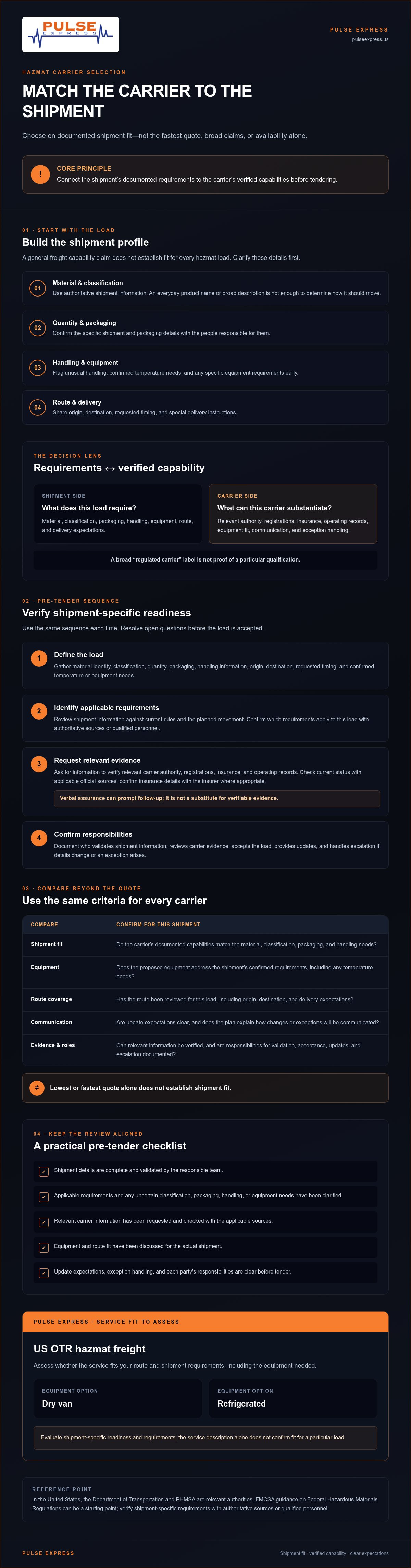
- Define the load. Gather the material identity, classification, quantity, packaging, and handling information from the people responsible for those details. Include the origin, destination, requested timing, and any confirmed temperature or equipment needs.
- Identify requirements. Review the shipment information against current rules and the planned movement. The FMCSA’s guidance on Federal Hazardous Materials Regulations is a useful starting point, but confirm which requirements apply to this load with authoritative sources or qualified personnel.
- Ask for evidence. Request information that lets you verify relevant carrier authority, registrations, insurance, and operating records. Check current status with the applicable official source, and confirm insurance details with the insurer where appropriate. A verbal assurance can prompt follow-up, but it isn’t a substitute for verifiable evidence.
- Confirm responsibilities. Document who will validate shipment information, review carrier evidence, accept the load, provide updates, and handle escalation if details change or an exception arises.
Prepare clear shipment information
Accurate details help the carrier assess fit. Share special delivery instructions and flag unclear classification, packaging, handling, or equipment requirements before requesting capacity. Don’t assume a carrier can infer missing details from a product name or prior shipment. The shipper’s responsible team should validate shipment information; the carrier should confirm whether its verified capabilities fit the described load and route.
Verify evidence and operational communication
Ask which relevant authority, registrations, insurance, and operating records can be checked, then confirm current requirements through official sources. The person responsible for carrier qualification should verify the records rather than relying solely on a sales conversation. Also ask how dispatch and drivers receive shipment instructions, how changes are communicated, and whom to contact if an exception occurs. Record the agreed process and each party’s role.
Evaluate regulated hazmat freight carriers against the actual load, not a generic checklist treated as universal. For shippers comparing dry van or refrigerated OTR hazmat transportation, Pulse Express hazmat freight service may be one option to assess. Share the material, handling, equipment, and route details, then verify the fit and applicable requirements before tendering.
How to Compare Regulated Hazmat Freight Carriers Beyond the Quote
A useful comparison starts with the same shipment assumptions for every carrier. If one quote assumes dry van equipment and another assumes reefer service, or only one includes the requested delivery timing, the numbers aren’t directly comparable. Record what each carrier has confirmed in writing, and mark missing details as questions rather than treating them as included.
A low quote doesn’t prove that the equipment, compliance processes, or service plan fit your load. Check relevant authority and carrier information using current official records, and use the Federal Motor Carrier Safety Administration (FMCSA) regulations as a reference for understanding responsibilities. Marketing statements can guide your questions, but they aren’t a substitute for verification.
Compare the same criteria
Use a consistent table for each candidate. Track evidence separately from unresolved questions, so a confident verbal answer doesn’t appear equivalent to a verified record.
| Criteria | What to compare | Record before award |
|---|---|---|
| Verified fit | Does documented carrier information align with this shipment’s requirements? | Evidence checked, source, and any open qualification questions |
| Equipment | Can the carrier confirm the required equipment for this material and handling plan? | Equipment type and written clarification of capabilities or parameters |
| Communication | Who owns updates, and how are shipment changes or exceptions escalated? | Named contact or role, update method, and agreed response expectations |
| Route coverage | Has the carrier confirmed the origin, destination, and requested timing? | Route and schedule assumptions, including any limitations |
| Exception handling | What happens if shipment details, timing, or conditions change? | Notification and escalation steps, with responsibilities recorded |
Match equipment to the shipment
Dry van may fit when the shipment requirements and shipper instructions support that choice. Consider reefer service when the product or shipper specifies temperature management. Don’t assume that a refrigerated trailer’s presence confirms suitable temperature-control parameters. Ask the carrier to confirm the specific equipment capability and operating requirements for the load.
For each criterion, label the response verified, clarification needed, or not confirmed. Regulated hazmat freight carriers should first meet the shipment’s verified requirements; only then should you weigh preferences such as communication style or schedule alignment. Eliminate unverified mismatches before comparing service preferences or selecting on price.
A Practical Carrier Selection Checklist for Regulated Hazmat Freight
A checklist helps your team apply the same standard before requesting capacity, comparing options, and awarding a load. Use it to capture what’s confirmed, what still needs verification, and who owns each follow-up. If shipment details conflict or a carrier claim can’t be verified, stop and clarify before tendering.
Confirm the essentials before tendering
- Shipment information: Confirm material identity, classification, quantity, packaging, and handling instructions with the responsible shipper team. Check the origin, destination, timing, delivery instructions, and any special conditions.
- Carrier verification: Identify the relevant carrier authority, registrations, insurance, and operating records that need review. Verify applicable information through current, appropriate sources, and record any unresolved questions.
- Equipment fit: Confirm the required equipment against the shipment and shipper instructions. If temperature management is specified, clarify the required conditions and ask the carrier to verify its equipment capability and operating parameters. General information about temperature-controlled freight can help frame questions, but the load’s actual requirements should guide the decision.
- Communication: Agree on who provides status updates, which contact handles exceptions, how changes are reported, and what response expectations apply.
- Documented responsibilities: Record who validates shipment details, confirms carrier fit, approves revised instructions, and escalates open issues.
Manage handoffs and changes
Clear handoffs keep current information moving to the people coordinating and carrying out the shipment. Define who must communicate changes to material details, timing, or handling instructions, and how the carrier acknowledges revised information. Ensure dispatch and relevant operating personnel receive the same accurate instructions, not an outdated version passed along informally.
Before the load moves, document the agreed response process for delays, equipment concerns, or other exceptions. If new information changes the shipment requirements, pause and reassess rather than assuming the original acceptance still applies. For additional background, shippers can consult resources on hazmat transport safety standards, then verify which guidance applies to the specific load using current authoritative sources.
Keep the completed checklist with the shipment record so the shipper, carrier, and operating teams can refer to one shared decision. Select regulated hazmat freight carriers based on confirmed requirements, not assumptions. If you’re evaluating US OTR dry van or refrigerated hazmat transportation, discuss your hazmat freight requirements with Pulse Express.
Evaluate Pulse Express for OTR Regulated Hazmat Freight
Once you’ve defined the shipment requirements and know what evidence to verify, assess potential carriers against the same criteria. Pulse Express provides US over-the-road transportation for hazardous and general freight using dry van and refrigerated equipment. That service scope makes the company an option for shippers comparing OTR dry van or reefer hazmat transportation, but it doesn’t confirm fit for every material, route, or handling requirement.
What shipment needs can Pulse Express discuss with your team?
Start with the shipment, not an assumed equipment choice. Prepare the commodity information and classification available to your team, along with packaging and handling needs, origin and destination, requested timing, and any specified temperature conditions. These details can help clarify whether the stated transportation scope may align with the load and which points need further confirmation.
Dry van and refrigerated equipment serve different shipment needs. Share the basis for your equipment request, including any temperature-management requirements, and ask for confirmation of the relevant capabilities and operating parameters. Don’t infer specific hazmat classes, certifications, temperature ranges, or availability from a general service description. Verify those details directly before deciding to tender.
For additional context on planning a regulated over-the-road shipment, see Specialized Hazmat Logistics: A Shipper’s Guide to Safe & Compliant OTR Transport. Use broader guidance to prepare questions, then assess the carrier against the actual shipment and current applicable requirements.
What are the next steps for evaluating a carrier?
Use your checklist to separate confirmed fit from evidence gaps and open questions. Verify relevant carrier information through current appropriate sources, and ask for written clarification where equipment, route, handling, communication, or responsibilities remain uncertain. A productive shipment-specific discussion should establish what’s known, what still needs to be checked, and whether the proposed service aligns with the load.
Evaluate regulated hazmat freight carriers on documented fit, not general assurances. Before making assumptions about acceptance or equipment, share the shipment details and confirm outstanding points directly with the carrier. This supports a clear decision without treating a service description as proof of specific qualifications or capabilities.
Discuss your hazmat freight requirements with Pulse Express, including the material, route, timing, and handling needs you’ve identified. The conversation can help clarify service fit and what needs verification before tendering.
Choose With Confidence, One Shipment at a Time
The right carrier decision starts with the load, not the quote. Define the shipment’s requirements, verify relevant carrier information through current sources, and compare equipment, route fit, communication, and responsibilities using the same criteria. If a detail is unclear or unverified, pause and resolve it before tendering.
Regulated hazmat freight carriers should be assessed against the specific material and movement rather than a broad capability claim. A clear evaluation process helps your team make a consistent choice and align expectations before freight moves.
Pulse Express provides US over-the-road transportation for hazmat and general freight using dry van and refrigerated equipment. Whether those options fit your shipment depends on its material, handling, equipment, and route requirements, which should be confirmed directly. Discuss your hazmat freight requirements with the team and clarify open questions as you evaluate your next shipment.
With careful preparation and clear communication, you can select a transportation partner with greater confidence and keep your shipment requirements in focus from tender through transit.
Frequently Asked Questions
What does a regulated hazmat freight carrier do?
A regulated hazmat freight carrier transports hazardous materials by truck when the shipment is subject to applicable requirements. The carrier’s role is transportation, while authorities establish and administer relevant rules. Evaluate regulated hazmat freight carriers against the specific shipment, including its material, classification, packaging, handling needs, and route. A general hazmat service description alone doesn’t confirm that a carrier is suitable for every load.
How do I verify a hazmat freight carrier?
Verify relevant carrier authority, registrations, insurance, and operating records using current, appropriate official sources. First identify which checks apply to your shipment and route, then confirm the records rather than relying on verbal assurances or marketing claims. Ask the carrier for details that can be independently checked, and clarify any gaps before tendering. Also agree on how dispatch receives shipment instructions and how changes or exceptions will be communicated.
What documents are required to ship hazardous materials by truck?
Required shipment documents depend on the material, its classification, packaging, shipment details, and current applicable rules. Don’t assume one document list applies to every load. Confirm the shipment information with the responsible shipper team and consult authoritative sources or qualified personnel to determine what’s needed. Before tendering, make sure the carrier understands the applicable instructions and document handoffs, and resolve discrepancies between shipment records and the information used to arrange transportation.
Can a reefer carrier transport hazardous materials?
A reefer carrier may be an option if its verified capabilities match the hazardous material, route, handling instructions, and any specified temperature requirements. Reefer equipment alone doesn’t establish suitability for a particular hazmat shipment. Ask the carrier to confirm relevant authority, equipment capabilities, and operating parameters for the load. Compare those details with the shipper’s documented requirements, and verify open questions before assuming the carrier can accept or move the shipment.
How do I compare regulated hazmat freight carriers?
Compare regulated hazmat freight carriers using the same shipment assumptions and criteria: verified fit, equipment, route, communication, and exception handling. Record what each carrier has confirmed and flag missing information rather than treating it as included. A lower quote doesn’t prove that the carrier’s equipment or processes fit the load. Resolve unverified mismatches first, then weigh service preferences and compare pricing for equivalent requirements.
What should I ask a hazmat carrier before booking?
Ask whether the carrier’s verified capabilities match your material, route, handling needs, and required equipment. Clarify what authority, registrations, insurance, or operating records you should verify, and where to check them. Ask who receives shipment instructions, who provides updates, and how changes, delays, or equipment concerns are escalated. Before booking, document each party’s responsibilities and resolve unclear shipment details so the carrier’s acceptance is based on accurate information.


