

The carrier with the right truck isn’t automatically the right choice for a hazardous load. Hazardous materials logistics US decisions depend on more than equipment. Cargo details, handling conditions, documentation, and regulatory responsibilities all help determine a suitable plan.
To compare providers effectively, prepare a clear shipment profile and ask practical questions about carrier and equipment fit. Compliance, equipment selection, and route planning need to work together, and the parties should be clear about who handles each part of the process.
This guide explains what information to prepare, how to compare carrier capabilities, and what to ask about US regulatory requirements during shipment planning. It also covers how dry van and reefer options may suit different freight conditions. Pulse Express provides over-the-road hazardous freight transportation using dry van and reefer equipment. Confirm specific load fit and availability for each shipment.
Key Takeaways
- Hazardous materials logistics US planning starts with accurate cargo and handling details, since shipment requirements can vary by material and circumstances.
- Use 49 CFR as a reference point, then verify current requirements and responsibilities with a qualified compliance professional.
- Compare dry van and reefer options against the shipment’s conditions, and confirm that the carrier accepts the specific load.
- Prepare a consistent carrier checklist covering cargo information, equipment fit, carrier capabilities, and communication before requesting capacity.
- Pulse Express provides US over-the-road hazardous and general freight using dry van and reefer equipment. Confirm specific load fit and availability.
What hazardous materials logistics in the US involves, and what shippers must coordinate
Definition: Hazardous materials logistics is the coordinated planning and transportation of regulated freight. It aligns shipment information, handling conditions, documentation, equipment, and route plans with the cargo and applicable requirements.
That coordination is central to Hazardous materials logistics US. Requirements can vary with the material, its quantity and packaging, and the circumstances of transport. An everyday product name or broad cargo description may not establish how a shipment should be prepared and moved. Confirm the classification and shipment requirements for each load with a qualified compliance professional.
What makes a shipment hazardous material freight?
Classification depends on the material and applicable US transport rules, not an informal description. Shippers may need to establish details such as the proper shipping name and hazard class, then determine which markings, labels, or shipping documents apply. Check the exact terms and requirements against current rules before dispatch. This dangerous goods classifications overview offers general background, but it shouldn’t replace current regulatory guidance.
Accurate identification informs decisions throughout the shipment. A carrier needs verified information to assess whether it can accept the load and what transportation arrangement may fit. Equipment type alone does not establish that a shipment is suitable for a particular carrier or vehicle.
Who coordinates the shipment from origin to delivery?
The shipper, carrier, and receiver all contribute information and coordination, but their precise legal duties can vary by shipment and must be verified. The shipper provides accurate cargo and handling details for planning. The carrier assesses transportation fit and coordinates the movement it agrees to perform. The receiver helps clarify delivery arrangements and relevant handling information.
Make each handoff specific. Share the material’s verified identity, packaging and handling conditions, relevant documentation, pickup and delivery details, and known constraints. This information helps the parties align the shipment plan, select suitable equipment, and communicate changes. Don’t expect a carrier to infer requirements from a general cargo description.
For more on planning and carrier coordination, see this specialized hazmat logistics shipper’s guide. Once the shipment profile is established, check how US rules and cargo details shape the transport plan.
How US hazmat rules and shipment details shape the transport plan
US hazmat planning has both regulatory and operational considerations. The US Department of Transportation (DOT) and its Pipeline and Hazardous Materials Safety Administration (PHMSA) are relevant to federal hazardous materials transportation requirements. Confirm agency terminology and roles during compliance review. The Hazardous Materials Regulations in Title 49 of the Code of Federal Regulations, or 49 CFR, provide a regulatory reference point, not a substitute for checking what applies to a specific shipment.
Requirements are shipment-specific: verify them against the material, quantity, packaging, and transport circumstances before dispatch.
For Hazardous materials logistics US planning, these details connect compliance review with carrier and equipment decisions. A change to the material or its packaging may affect applicable requirements. Temperature conditions can influence equipment needs, but hazardous freight does not automatically require a reefer. Confirm current rules and any exceptions with a qualified compliance professional.
Which shipment details should be confirmed before dispatch?
Build a verified shipment profile before requesting capacity. Confirm the cargo identity and applicable classification, quantity and packaging, and any handling conditions that must be maintained. Check that shipping descriptions and required documentation accurately reflect the load, then review them against current requirements.
Don’t rely on an informal product name or assume paperwork from a previous shipment applies to a new load. Commodity-specific requirements and exceptions may affect preparation. Have a qualified compliance professional review uncertain classification or documentation details instead of guessing.
How do transport and temperature requirements affect planning?
Some freight can move without temperature control. Other cargo has specific temperature conditions that should be understood before choosing equipment. A dry van or reefer is a starting point for discussing cargo fit, not proof that the equipment or carrier is suitable for a particular hazardous load. Confirm the required conditions and the carrier’s ability and willingness to accept the shipment.
Include route and transit considerations in the planning conversation. Share pickup and delivery details, timing constraints, handling needs, and known route considerations with the carrier. This information supports a realistic transport plan, but does not guarantee a particular route or outcome.
For a load requiring over-the-road transportation, review Pulse Express’s freight transportation options and discuss the cargo and handling requirements for assessment. Confirm acceptance of the specific commodity, equipment fit, and availability for each load.
Compare hazmat logistics options by cargo needs, equipment, and carrier fit
Select equipment based on verified cargo requirements, not the assumption that one trailer type suits every hazardous load. A dry van may fit freight that doesn’t require temperature control. A reefer may be relevant when the cargo has specified temperature conditions. Neither equipment type alone proves that a carrier can accept a commodity or meet applicable requirements.
Choose equipment and a carrier only after matching the shipment’s verified conditions to confirmed carrier capabilities.
When should shippers evaluate dry van versus reefer transport?
Start with the cargo’s required handling conditions. If temperature control is specified, discuss the required parameters and how they relate to the carrier’s reefer capabilities. If it isn’t required, a dry van may be an option, subject to the shipment profile and applicable requirements. Before planning dispatch, confirm equipment availability, operating parameters, and acceptance of the specific commodity.
| Option | Potential fit | Questions to verify |
|---|---|---|
| Dry van | Freight that doesn’t require temperature control, when cargo conditions and applicable requirements support this equipment. | Does the carrier accept this commodity? Does the proposed equipment fit the cargo and handling requirements? Is it available for the shipment? |
| Reefer | Freight with confirmed temperature-control needs, subject to the specific cargo requirements and equipment capability. | Can the carrier meet the required operating parameters? How will handling needs be communicated? Is the equipment and load acceptance confirmed? |
What should a US hazmat carrier comparison include?
Compare providers against the shipment profile, not broad claims about experience or equipment. Ask whether the carrier has handled the relevant commodity and similar shipment conditions, then verify that it accepts the load you’re planning. Clarify how it reviews shipment information, coordinates required documentation, shares status updates, and escalates issues. Verify specific procedures and credentials rather than assuming them.
For temperature-sensitive freight, discuss control needs from the outset. This temperature-controlled freight reference can help frame the conversation, but the carrier must confirm whether its equipment and service fit the particular shipment.
Ask each candidate the same questions: Which commodities do you accept? What suitable equipment is available? How are shipment details reviewed? Who communicates if plans change? Pulse Express provides US over-the-road hazardous freight using dry van and reefer equipment. Confirm commodity acceptance, equipment fit, and availability for each load instead of inferring suitability from the equipment category.
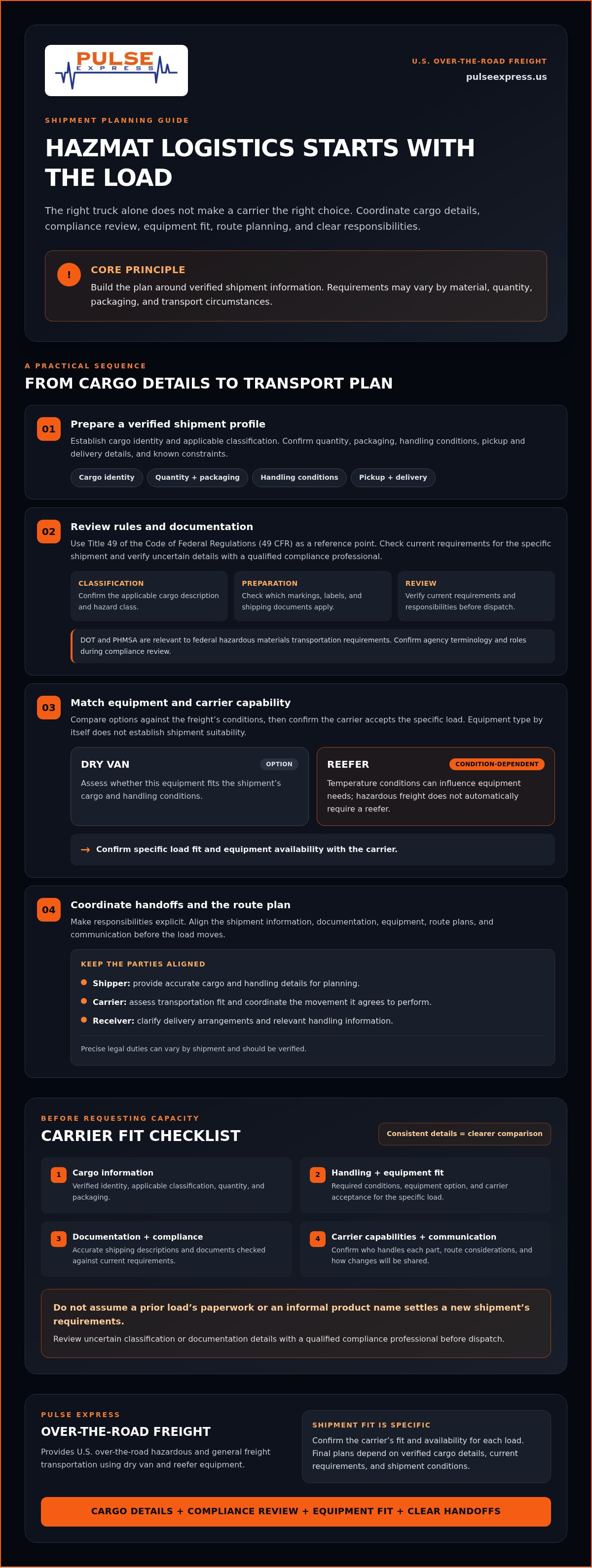
Use this checklist to evaluate a hazmat logistics provider and prepare a load
A consistent process makes carrier conversations more useful and can surface missing details before dispatch planning advances. Start with verified cargo information, then confirm requirements, equipment fit, carrier acceptance, and communication expectations. Share material and handling details accurately before requesting capacity. A carrier can’t reliably assess an incomplete or informal description.
Hazmat load preparation checklist
- Define the cargo, quantity, packaging, and handling conditions.
- Confirm classification and documentation details with qualified compliance staff.
- Ask the carrier to confirm acceptance of the specific commodity and shipment profile.
- Match equipment to cargo conditions and confirm availability for the load.
- Agree on information handoffs, shipment updates, responsibilities, and escalation contacts.
What questions should you ask a prospective carrier?
Ask about the specific load. Does the carrier accept the exact commodity, quantity, packaging, and handling profile? Request confirmation for that shipment rather than relying on a general service description. Confirm suitable equipment and, if temperature control applies, whether the carrier can support the stated conditions. Check that availability is current.
Then clarify how shipment information and documentation will be coordinated, who will provide updates, and whom to contact if a shipment detail or plan changes. Verify compliance-sensitive details with your own qualified staff. Specific answers make it easier to compare carriers using the same practical criteria.
What information should be ready for a freight request?
Prepare accurate cargo identity, quantity, packaging, origin, destination, and handling requirements. Have applicable classification and documentation information reviewed internally before sharing it. If a detail is uncertain, flag it for resolution instead of presenting an assumption as confirmed. Include relevant timing or route considerations for discussion, without presuming the carrier can meet them.
This checklist supports provider evaluation and shipment coordination. It doesn’t replace compliance advice or review of current requirements for the specific load. For broader over-the-road planning context, see this long-distance freight transportation guide.
Once your shipment profile is ready, discuss your freight requirements with Pulse Express. Pulse Express provides US over-the-road hazardous and general freight using dry van and reefer equipment. Confirm commodity acceptance, equipment fit, and load availability for your shipment.
Choose a US OTR hazmat partner that fits the shipment, not just the category
A sound carrier decision brings together four things: verified cargo requirements, suitable equipment, confirmed carrier acceptance, and clear communication. A provider’s general hazardous freight offering is a starting point, not confirmation that every commodity or load is a fit. Before proceeding, check that the proposed transportation plan reflects the specific shipment and that open questions have been resolved.
Where Pulse Express may fit a shipper’s transport needs
Pulse Express provides over-the-road hazardous and general freight transportation across the United States, using dry van and reefer equipment. These equipment options suit different freight conditions, but neither is guaranteed to fit every hazardous shipment. A dry van may suit freight that doesn’t require temperature control. A reefer may be relevant when the cargo has verified temperature needs.
For each prospective load, confirm that Pulse Express accepts the specific commodity and shipment profile, that the equipment matches the handling requirements, and that capacity is available. Assessing fit this way helps avoid choosing a provider based only on a broad service category and gives both parties a clear basis for discussing the load.
What to include when requesting a shipment review
Prepare the details needed to assess the proposed movement. Share the origin and destination, timing needs, accurate cargo identity, quantity and packaging, and verified handling or temperature requirements. Include applicable classification and documentation information after review by qualified compliance staff. If a detail is uncertain, identify it rather than presenting it as confirmed.
Ask the provider to confirm commodity acceptance, equipment fit, and current capacity before moving ahead. Clarify how shipment information will be handed off, how updates will be shared, and whom to contact if a requirement or plan changes. These practical questions help establish a workable arrangement without assuming unverified capabilities or outcomes.
Strong Hazardous materials logistics US planning matches a specific shipment to a carrier’s confirmed capabilities. Pulse Express can review the information you provide and discuss whether its over-the-road hazardous freight service and dry van or reefer options may fit. Discuss your US hazmat freight requirements with Pulse Express.
Move Forward With a Shipment-Specific Plan
Hazardous materials logistics US planning works best when verified cargo details guide each decision. Confirm applicable requirements with qualified compliance staff, match equipment to the shipment’s handling conditions, and ask the carrier to confirm acceptance and availability for the specific load.
Pulse Express provides US over-the-road hazardous freight transportation using dry van and reefer equipment. The right option depends on your cargo and handling needs, so share the shipment profile and confirm service fit before proceeding. Accurate information and clear communication give all parties a reliable starting point.
Share your shipment requirements with Pulse Express to discuss your freight needs and confirm whether its transportation options may fit your load. Prepare the shipment details, ask the questions in this guide, and review carrier fit before moving forward.
Frequently Asked Questions
What does hazardous materials logistics include in the United States?
Hazardous materials logistics coordinates planning and transportation of regulated freight from origin to delivery. It can include identifying the material, confirming applicable requirements, preparing accurate shipping information, matching equipment to cargo conditions, and coordinating communication among the shipper, carrier, and receiver. In Hazardous materials logistics US planning, the material and transport circumstances determine what must be verified. Confirm shipment-specific requirements with qualified compliance staff.
Which US rules apply to hazardous materials freight shipments?
US Department of Transportation hazardous materials requirements are a key reference, with PHMSA administering relevant federal transportation rules. Title 49 of the Code of Federal Regulations, commonly called 49 CFR, includes the Hazardous Materials Regulations. Applicable requirements depend on the material and shipment circumstances, including details such as quantity and packaging. Check current rules for the specific load with a qualified compliance professional rather than relying on a general summary.
How do I choose a hazardous materials carrier in the US?
Choose based on verified shipment fit, not a broad hazmat service label alone. Ask whether the carrier accepts your specific commodity and shipment profile, then confirm suitable equipment and current availability. Compare how each provider handles shipment information, documentation coordination, status updates, and issue escalation. Ask about relevant experience with similar cargo, and verify claims and any credentials that matter to your shipment. A qualified compliance professional can help assess regulatory considerations.
Can hazardous materials be transported in a reefer trailer?
Some hazardous materials may be transported in reefer equipment if temperature control is required and the carrier confirms that the specific load is acceptable and the equipment fits its requirements. A reefer is not automatically necessary for hazardous freight, and reefer equipment alone does not establish hazmat capability or compliance suitability. Before arranging transportation, confirm the cargo’s verified temperature conditions, applicable requirements, carrier acceptance, equipment parameters, and availability.
What information should I provide when requesting hazmat freight service?
Provide accurate cargo identity, verified classification information, quantity, packaging, origin, destination, timing needs, and handling requirements, including temperature conditions where relevant. Share applicable shipping descriptions and documentation details only after qualified compliance staff have checked them. Be clear about unknowns rather than guessing. This information helps a carrier assess commodity acceptance, equipment fit, and availability for the particular shipment, but it doesn’t replace your own compliance review.
Who is responsible for hazmat shipping documents, the shipper or the carrier?
There isn’t a simple rule that one party handles every document. The shipper and carrier may have different obligations depending on the material, transport circumstances, and each party’s role in preparing or handling the shipment. Agree on document preparation, review, and handoff before dispatch, but don’t assume coordination transfers a legal duty. Have a qualified compliance professional verify current responsibilities for the specific shipment.
How can I verify that a carrier accepts my hazardous material?
Give the carrier a complete, accurate shipment profile and ask it to confirm acceptance of the specific commodity, quantity, packaging, and handling conditions. Confirm the proposed equipment, any temperature needs, and current capacity for the load. Ask how shipment information and documentation will be coordinated, and verify compliance-sensitive details with qualified staff. Don’t rely only on a general statement that the carrier transports hazardous freight. Acceptance can vary by shipment.


