

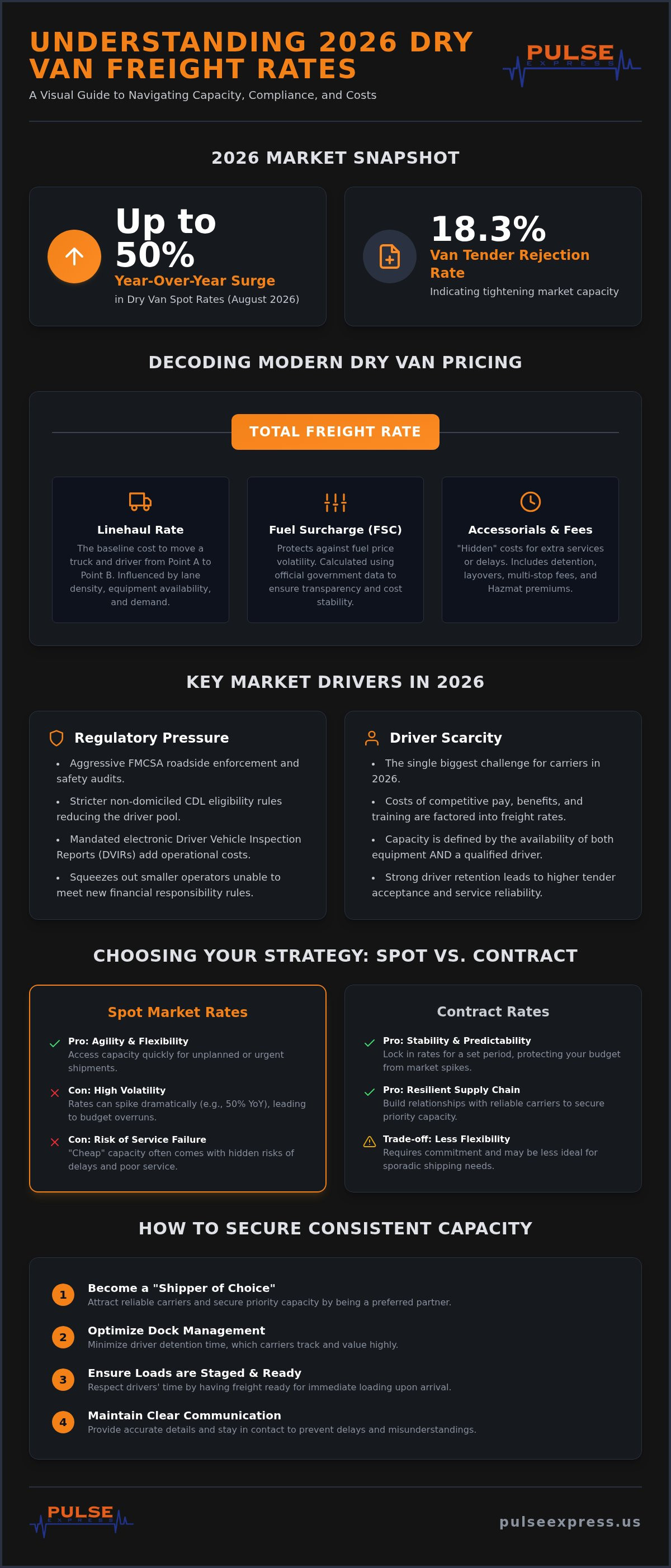
In August 2026, dry van spot rates have surged by as much as 50 percent year-over-year, making the task of understanding dry van freight rates more critical than ever. With van tender rejection rates climbing to 18.3 percent, the stability you once relied on might feel increasingly out of reach. You're likely facing the frustration of unpredictable market spikes, the difficulty of finding qualified drivers for Hazmat loads, and the sting of hidden fees that push your logistics spend over budget.
Securing the future of your supply chain requires more than just tracking numbers; it requires a partner committed to transparency, safety, and mutual growth. This guide will help you master the complexities of 2026 pricing so you can secure stable, high-quality freight capacity that protects your bottom line. We'll explore how shifting regulatory standards, the transition to USDOT primary identifiers, and a dedicated focus on driver retention create a more predictable shipping experience. By the end of this article, you'll have a clear roadmap to higher tender acceptance, reduced cargo risks, and a more resilient logistics strategy.
Key Takeaways
- Gain a strategic advantage by understanding dry van freight rates in a 2026 market defined by regulatory pressure and capacity shifts.
- Master the core components of modern pricing to better manage linehaul costs and the impact of fuel surcharge volatility.
- Evaluate the trade-offs between spot market agility and contract stability to build a more resilient and predictable supply chain.
- Implement actionable steps, such as improving your "Shipper of Choice" status, to attract reliable carriers and secure priority capacity.
- Learn how partnering with carriers that prioritize professional driver recruitment leads to lower claim rates and enhanced service reliability.
The 2026 Dry Van Market: Why Capacity and Compliance Drive Rates
The 2026 freight market is experiencing what experts call a structural repricing. For shippers, understanding dry van freight rates now requires looking past simple supply and demand. Current pricing is heavily influenced by a supply-driven upturn, where spot rates climbed 45 percent year-over-year in June 2026. This shift isn't just about more goods moving; it's about the rising cost of keeping a compliant fleet on the road. Most dry van moves fall under the broader umbrella of Truckload shipping, and the baseline costs for these services are rising across the board.
"Cheap" capacity is becoming a relic of the past. As insurance premiums and labor costs climb, carriers can't offer rock-bottom pricing without sacrificing safety or reliability. Regulatory pressure is squeezing out smaller, less-prepared operators who can't keep up with the financial responsibility rules that took effect in January 2026. This contraction in the number of available trucks, combined with steady manufacturing demand, creates a market where quality and compliance are the primary drivers of cost. Understanding dry van freight rates in this climate means recognizing that a lower initial quote often carries the hidden risk of service failure or cargo delays.
Regulatory Impacts on 2026 Pricing
Federal oversight has tightened significantly this year. The FMCSA has shifted its focus toward aggressive roadside enforcement, stricter driver vetting, and comprehensive safety audits. New rules, such as those regarding non-domiciled CDL eligibility that took effect in March 2026, have reduced the pool of available drivers. Additionally, the mandate for electronic Driver Vehicle Inspection Reports (DVIRs) has added layers of administrative and operational expenses. Carriers like Pulse Express maintain long-term stability by staying ahead of these changes. This proactive approach ensures your freight isn't delayed by compliance failures or equipment out-of-service orders.
The Driver Scarcity Factor
Finding and keeping experienced Class A CDL drivers is the single biggest challenge for carriers in 2026. High-value driver recruitment is no longer an HR task; it's a core business strategy that impacts every quote you receive. The costs of competitive pay, comprehensive benefits, and safety training are naturally baked into freight rates to ensure your cargo is handled by a professional. In this environment, capacity is defined as the simultaneous availability of both reliable equipment and a qualified, compliant driver. When drivers are treated as the foundation of the business, tender acceptance remains high even when the market tightens. This focus on driver retention directly translates to precision, customization, and safety for your supply chain.
Decoding the Components of Modern Dry Van Pricing
To master the art of understanding dry van freight rates, you must look beyond the single number on a quote. A truly transparent rate is built from several distinct layers that reflect the reality of the 2026 market. The linehaul rate serves as your baseline, covering the primary cost of moving equipment and a professional driver from point A to point B. This figure is influenced by lane density, equipment availability, and seasonal demand. However, this base rate is rarely the final price you see on an invoice.
Energy volatility remains a significant factor in 2026. Fuel Surcharges (FSC) protect carriers from rapid price swings at the pump, which have been frequent this year. These charges are typically calculated using official U.S. government data on diesel fuel prices. By separating fuel from the linehaul rate, carriers provide a clearer view of operational costs. This structure ensures price stability, operational transparency, and financial predictability for your supply chain.
The "Hidden" Costs: Accessorials and Delays
Detention fees often catch shippers off guard, turning a competitive quote into a budget overrun. These charges apply when a driver is held at a facility past the standard two-hour loading or unloading window. Beyond detention, you might encounter fees for layovers, equipment cleaning, or multi-stop routes. You can minimize these costs by optimizing dock management, ensuring loads are staged before arrival, and maintaining clear communication. Efficient shippers often see higher tender acceptance because carriers prioritize facilities that respect a driver’s time.
Hazmat and Sensitive Freight Premiums
Gaining a deeper understanding of dry van freight rates helps you identify where your budget is actually going, especially for specialized moves. Transporting hazardous materials or sensitive industrial goods requires a higher level of precision and safety. Hazmat dry van transport commands a premium because of the specialized insurance and rigorous driver training involved. Drivers must maintain specific endorsements and adhere to strict safety protocols to meet 2026 federal compliance standards. Secure dry van shipping is essential for high-value cargo that requires protection from the elements, road hazards, and unauthorized access. Pulse Express offers specialized Hazmat freight service to ensure your sensitive loads are handled with the highest level of care and regulatory expertise.
Spot vs. Contract Rates: Choosing the Right Strategy
In June 2026, the national average dry van spot rate surpassed the contract rate for the first time in over four years. This shift has fundamentally changed the math for logistics managers across the country. Understanding dry van freight rates now requires a delicate balance between immediate needs and long-term goals. While the spot market provides flexibility for one-off shipments, contract rates offer the stability required for a healthy, predictable supply chain. Success in this market comes from knowing exactly when to pivot between these two procurement methods.
When to Use the Spot Market
The spot market remains a necessary tool for managing seasonal surges, testing new lanes, or handling production overflows. It offers agility when your business experiences sudden, unexpected growth. However, the risks in 2026 are significant. With spot rates increasing by up to 50 percent year-over-year, total reliance on this market can lead to massive budget overruns. You also risk being "ghosted" by unreliable carriers who may abandon your load for a higher-paying offer elsewhere. This creates a cycle of delays, extra costs, and broken promises to your customers. It's a reactive approach that often sacrifices safety for speed.
The Benefits of Dedicated Contract Capacity
Dedicated contract capacity is the preferred choice for shippers seeking predictable shipping costs and higher tender acceptance rates. By locking in a rate, you protect your 2026 budget from the "structural repricing" currently hitting the industry. This approach fosters a sense of partnership and mutual growth between you and your carrier. Pulse Express supports large-scale dry van logistics through these dedicated arrangements, ensuring that your freight is handled by professional Class A CDL drivers. We prioritize precision, customization, and safety to keep your operations running smoothly. Our driver-first approach ensures that when you have a contract, we have the capacity to honor it.
Identifying the tipping point for your volume is essential for maintaining a lean budget. If you find yourself booking the same lane more than once a week, it's time to move toward a contract. This transition provides the reassurance and stability needed to scale your business with confidence. It transforms your logistics from a source of daily stress into a reliable engine for growth. Choosing a dedicated partner allows you to focus on your core business while we handle the complexities of the road.
Mitigating Volatility: How to Secure Consistent Dry Van Capacity
Data provides a necessary baseline, but operational excellence is what actually secures capacity in a tight market. Understanding dry van freight rates involves recognizing that your facility's efficiency directly impacts the quotes you receive from carriers. In 2026, the most reliable logistics strategies move beyond reactive booking and focus on long-term partnership development. By refining your internal processes, you can transform your supply chain into a preferred destination for the industry’s best drivers and equipment.
Forecasting demand is one of the most effective ways to stabilize your logistics spend. Providing carriers with at least a two-week lead time allows them to optimize their networks, assign the best equipment, and secure professional drivers. This proactive communication reduces the need for last-minute spot market searches that often result in price spikes. Additionally, standardizing your lanes helps carriers reduce empty miles and operational overhead. Routine routes lead to better precision, improved safety, and more consistent service levels across your entire network.
Becoming a Shipper of Choice
Your "Shipper of Choice" score is a reflection of how well you treat the people moving your goods. Reducing driver wait times is a primary factor in lowering detention-related rate increases and keeping your freight moving on schedule. Providing accurate weight and commodity descriptions during the quoting process also prevents costly re-quotes and equipment mismatches. When facility amenities like clean restrooms, secure parking, and break areas are provided for OTR drivers, it significantly increases a carrier’s willingness to prioritize your freight. These small details foster a sense of respect and partnership that pays dividends during capacity crunches.
Lane Optimization and Volume Commitment
Commitment is the currency of a stable 2026 freight market. You can gain significant leverage by bundling low-volume lanes with your high-volume routes, making your account more attractive to established fleets. Communicating your 2026 growth plans with your logistics partner early ensures they can scale their assets alongside your business. This level of transparency is essential for carriers that focus on Hiring CDL Drivers in 2026: A Guide to High-Value OTR Careers, as it allows them to offer drivers more predictable schedules. When you provide volume consistency, carriers can offer better rate stability in return. If you are ready to move from unpredictable spot rates to a more secure logistics model, contact Pulse Express for a customized freight solution today.
The Pulse Express Advantage: Why Expert Drivers Ensure Freight Reliability
Pulse Express has operated as a trusted long-haul carrier since its founding in 2000. For over twenty-five years, we've focused on a foundational truth: the quality of the driver determines the reliability of the freight. While many competitors focus solely on digital brokerage data, we treat Class A CDL OTR driver recruitment as our core business strategy. This focus creates a direct correlation between high driver retention and lower freight damage claims. When you're understanding dry van freight rates in 2026, it's vital to recognize that an experienced driver is your best defense against the hidden costs of transit delays, cargo loss, and administrative errors.
Safety as a Cost-Saving Measure
Safety is far more than a compliance requirement; it's a significant cost-saving measure for our shipping partners. Our rigorous driver screening process reduces the risk of expensive transit delays and roadside out-of-service orders. We employ professional OTR drivers who specialize in sensitive and hazardous cargo, bringing a level of precision that general carriers often lack. Pulse Express maintains a deep commitment to safe hazmat freight handling for every load, ensuring that every shipment meets the highest regulatory standards. This specialized expertise in Hazmat and Reefer transport naturally translates to a higher standard of care, attention to detail, and operational excellence for our standard dry van services.
Your Nationwide Dry Van Logistics Partner
Choosing a mid-sized carrier provides the perfect balance of nationwide reach, personalized support, and established reliability. We offer customized solutions for both general freight and hazardous materials, ensuring your specific logistical needs are met with total accuracy. You aren't just another entry in a digital database; you're a partner in mutual growth. Our team is personally invested in your success, offering the approachability of a service-oriented business with the confidence of an established industry leader. We provide the stability, efficiency, and care required to navigate the complexities of the 2026 market with complete confidence.
If you're ready to secure your supply chain with a partner that values operational excellence, we're here to help you. You can Request a reliable dry van quote from Pulse Express today to experience the difference that expert drivers make. Our team is ready to assist you in understanding dry van freight rates while providing the high-quality capacity your business deserves.
Securing Your Supply Chain in a Shifting Market
Navigating the complexities of the 2026 freight landscape requires more than just reacting to price changes. By mastering the art of understanding dry van freight rates, you can transition from chasing the lowest spot price to building a resilient, predictable logistics network. Success this year depends on recognizing the value of regulatory compliance, prioritizing driver retention, and fostering deep partnerships with carriers that value precision and safety. These strategies ensure your cargo moves without the disruptions caused by capacity crunches or service failures.
Pulse Express brings decades of stability to your operations. Founded in 2000, we maintain a specialized Hazmat certification and an expert OTR driver fleet dedicated to excellence. We offer the professional authority of a global leader with the personal care of a service-oriented partner. When you're ready to stabilize your shipping costs and improve your tender acceptance rates, we're here to guide you. Request a Reliable Dry Van Freight Quote today and take the first step toward a more secure supply chain. We look forward to growing alongside your business and providing the reliable capacity you need to thrive.
Frequently Asked Questions
What is the average dry van rate per mile in 2026?
The national average for dry van freight rates in August 2026 ranges between $2.02 and $2.28 per mile. Long-haul rates are slightly higher, averaging approximately $2.26 per mile across most major lanes. These figures fluctuate based on equipment availability, lane density, and seasonal demand. Monitoring these trends is a vital part of understanding dry van freight rates in a volatile market where spot rates have seen significant year-over-year increases.
How do fuel surcharges work in dry van shipping?
Fuel surcharges are separate fees that protect carriers from energy price volatility. Most carriers calculate these using official U.S. government data on diesel fuel prices provided by the EIA. By adjusting the surcharge weekly, logistics partners maintain price transparency and financial stability. This mechanism ensures that linehaul rates remain consistent even when global energy markets shift rapidly. It provides a fair way to distribute fuel costs without constant renegotiation.
Why are dry van rates higher for Hazmat loads?
Hazmat loads command a premium due to specialized insurance requirements and rigorous driver training. Carriers must maintain higher liability coverage and ensure drivers hold specific federal endorsements. The extra cost also covers the intensive safety protocols required for handling hazardous materials safely. These shipments demand a high level of precision, customization, and safety. Working with a certified partner ensures your sensitive cargo meets all 2026 federal compliance standards.
Should I use a broker or a carrier for dry van freight?
Choosing between a broker and a carrier depends on your specific logistics goals. Carriers provide direct communication, established reliability, and consistent equipment availability. This direct partnership often leads to higher tender acceptance and better service levels. Brokers offer agility for irregular lanes but may lack the specialized driver focus found in a dedicated fleet. For sensitive or Hazmat freight, working directly with an experienced asset-based carrier offers the greatest peace of mind.
How can I lower my dry van freight costs without sacrificing safety?
You can lower costs by improving your "Shipper of Choice" status and reducing driver detention times. Providing carriers with at least a two-week lead time allows them to optimize their networks and stabilize pricing. Standardizing your lanes also reduces operational overhead for your partner. These efficiency gains lead to lower rates without compromising on safety or service quality. Respecting a driver's time is the most effective way to secure competitive pricing.
What is the difference between spot and contract rates in trucking?
Spot rates are immediate prices for one-off shipments, while contract rates are fixed prices for long-term volume commitments. In June 2026, spot rates surpassed contract prices for the first time in several years. Contract rates provide budget predictability, guaranteed capacity, and stronger partnerships. Spot rates offer flexibility but carry the risk of significant price spikes during capacity crunches. Most successful shippers utilize a blended strategy to balance cost and agility.
How does driver availability impact my freight rates?
Driver availability is the primary driver of freight capacity and pricing. When qualified Class A CDL drivers are scarce, tender rejection rates rise and spot prices spike. In August 2026, van tender rejections reached 18.3 percent due to tighter enforcement of driver vetting and qualification files. Carriers that prioritize driver retention offer more stable rates. Investing in high-quality drivers ensures your freight moves on time even when the market tightens.
What are the most common accessorial charges in 2026?
The most common accessorial charges in 2026 include several standard fees. Detention fees apply for loading delays exceeding two hours, while layover charges occur when a driver is held overnight. Equipment cleaning fees are common for sensitive or food-grade loads. Additionally, multi-stop fees apply to shipments with several pick-up or delivery points. Clear communication and efficient dock management help minimize these extra costs. Understanding these components is essential for accurate budgeting and understanding dry van freight rates.


