

A refrigerated trailer can be running properly, yet a loading dock delay or missed handoff can still put temperature-sensitive freight at risk. Cold chain logistics protects cargo from pickup to delivery through more than refrigeration alone. Careful planning, clear coordination, and attention at every transfer point all matter.
It’s easy to focus on the temperature setting. But the product’s requirements, packaging, equipment, transit plan, and responsibilities between parties all need to work together to help prevent temperature excursions. If those details aren’t aligned, uncertainty can arise precisely when a shipment changes hands.
This guide explains the stages of a cold chain shipment and where temperature risks can emerge. You’ll learn practical ways to prepare cargo, coordinate equipment and delivery plans, and improve visibility during transit. It also covers what to consider when choosing a transportation partner for reefer and long-haul freight, so you can plan each shipment with greater confidence.
Key Takeaways
- Understand how cold chain logistics connects cargo requirements, transport planning, and receiving into one temperature-conscious journey.
- Identify where loading, transfers, and delivery can introduce risk, and how clear coordination helps reduce disruptions.
- Use a pre-dispatch checklist to share accurate commodity, handling, timing, and delivery details.
- Assess how cargo fit, route planning, communication, and reefer freight experience support long-distance transport.
What cold chain logistics means for temperature-sensitive freight
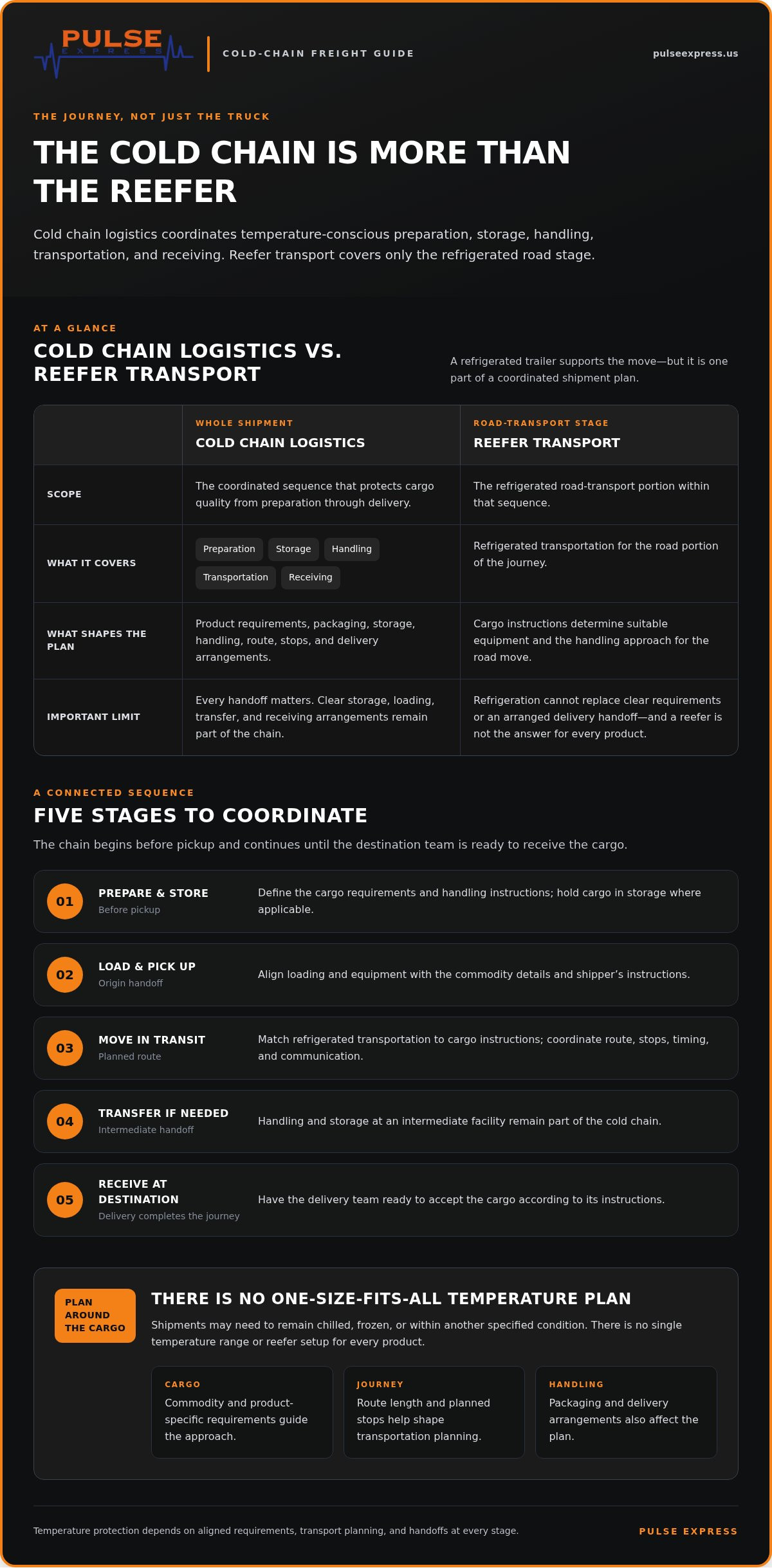
Cold chain logistics is the coordinated planning and movement of goods that must stay within product-specific temperature and handling conditions. Its purpose is to protect cargo quality from preparation through delivery, not simply to keep a truck cold. The plan starts with the shipper’s requirements, then aligns packaging, storage, handling, transportation, and receiving around them.
Requirements vary by product. A shipment may need to remain chilled, frozen, or within another specified condition, depending on the commodity and shipper instructions. There is no single temperature range or reefer setup for every product. Cargo type, route length, planned stops, packaging, and delivery arrangements all shape the transportation plan. For a foundational overview of the concept and its use across industries, see What cold chain logistics means.
Which shipments rely on cold chain transportation?
Perishable foods, pharmaceuticals, and other temperature-sensitive freight may rely on cold chain transportation, but their handling needs can differ substantially. Food products may have specific temperature and hygienic handling requirements, while pharmaceutical shipments may have product-defined storage and transport conditions. Other cargo may need protection from heat, cold, or temperature swings.
Clear instructions help determine suitable equipment and handling for each shipment. A refrigerated trailer is one transportation option, not a universal solution for every temperature-sensitive product. Use the shipper’s commodity details and requirements to guide preparation, loading, transit, and delivery.
What does the cold chain include?
The cold chain is the full sequence of temperature-conscious preparation, storage, handling, transportation, and receiving that protects sensitive freight. Reefer transport is only the refrigerated road-transport stage within that sequence.
The sequence begins before pickup. Cargo is prepared and, where applicable, held in storage until loading. At pickup, the freight is loaded and moves by its planned transportation mode. If it passes through an intermediate facility or changes hands, handling and storage at that point remain part of the chain. At destination, receiving completes the journey. The delivery team needs to be ready to accept the cargo according to its instructions.
Each stage connects to the next. A suitable reefer transport plan can support long-haul movement, but it cannot replace clear storage, loading, transfer, and receiving arrangements. Treating the shipment as one coordinated journey helps everyone involved understand what the cargo needs and when those needs matter.
How cold chain logistics protects freight across a long-haul journey
A long-distance shipment involves a sequence of decisions and handoffs. Clear instructions at the start help align the cargo’s requirements with the transportation plan. Communication along the route helps keep pickup, transit, and receiving coordinated. Refrigerated transportation supports the journey, but it cannot make up for unclear requirements or an unplanned delivery handoff.
Before pickup: define shipment requirements
Planning begins with the details that shape the move: the commodity, shipper’s handling instructions, origin and destination, route considerations, and delivery requirements. Accurate information helps the transportation team understand what equipment and handling approach the shipment calls for. It also brings practical coordination needs, such as delivery timing or planned stops, to light before dispatch.
For food cargo, responsibilities can depend on the shipment and the parties involved. The U.S. Food and Drug Administration outlines its sanitary transportation framework in its guidance on food transportation. Use applicable requirements and cargo-specific instructions to clarify what information, handling, and records are needed for the arrangement.
During transit: coordinate equipment, route, and communication
Once the shipment is planned, the route and delivery schedule need to fit the cargo’s needs. A long-haul refrigerated move may involve distance, planned stops, and handoffs that affect timing. Share schedule changes promptly so the people coordinating the shipment can respond with a clear understanding of its requirements. Reefer transportation provides a temperature-controlled environment for the road portion of the journey, but the equipment setting and handling plan must reflect the cargo instructions.
Refrigeration supports temperature control. Route planning and timely communication help protect the shipment through the realities of transit.
Temperature monitoring and documentation are also planning considerations. The appropriate approach depends on the commodity, shipper instructions, and applicable rules. Don’t assume every shipment uses the same monitoring method or records. Define expectations before dispatch so the parties involved know what information is needed and how it fits into the shipment plan.
- Plan: Share cargo, route, and delivery requirements.
- Move: Match refrigerated transportation and handling to those instructions.
- Receive: Coordinate the destination handoff and any required shipment records.
Pulse Express provides over-the-road refrigerated freight transportation across the United States. Explore Pulse Express reefer transportation when planning temperature-sensitive freight for the road.
Where cold chain shipments face risk, and how to reduce it
Refrigeration is essential for many temperature-sensitive loads, but a running reefer alone can’t guarantee an uninterrupted cold chain. Problems can arise when shipment instructions are incomplete, loading or receiving is delayed, or people at a handoff aren’t clear about who is responsible for the next step. Cold chain logistics depends on coordinating the full journey, especially where plans or custody change.
Why handoffs and delays need attention
Loading, transfers, planned stops, and delivery are all points where timing and communication matter. For example, a late arrival at a facility may affect the receiving plan, while a schedule change can leave the next party without the information needed to prepare. These events don’t automatically cause a temperature excursion, but they can make a shipment harder to manage if responsibilities and expectations aren’t clear.
Before dispatch, share the cargo’s handling instructions, delivery requirements, and relevant timing details with the parties coordinating the move. If the route or schedule changes, communicate the update promptly and clarify who is responsible for the next handoff. For more on planning extended transit, see this long-distance freight transportation guide.
For food shipments, applicable requirements depend on the arrangement and the parties involved. The FDA’s Sanitary Transportation rule provides information on food transportation requirements. Use relevant guidance alongside cargo-specific instructions to understand what planning, communication, and records the shipment calls for.
When temperature-sensitive freight also needs hazmat handling
Some freight needs both temperature control and hazardous-material handling. These are distinct shipment needs: a reefer plan addresses temperature-sensitive transport, while hazmat requirements depend on the material and shipment details. Provide accurate cargo information and applicable handling instructions so the transportation plan accounts for both.
Pulse Express provides refrigerated transportation, including temperature-controlled hazmat freight. For more context on specialized shipments, read the specialized hazmat logistics guide.
Good planning can reduce avoidable uncertainty, even though no process can eliminate every delay or disruption. Identify likely handoff points, make delivery expectations clear, and keep shipment information consistent from pickup through receiving. This gives each party a better basis for coordinating the freight and responding when plans change.
How shippers can prepare a cold chain shipment
A dependable dispatch starts with complete, consistent information. Before the load moves, align the cargo’s requirements with its packaging, transportation plan, schedule, and receiving arrangements. Use this checklist to bring the key details together. Documentation and regulatory responsibilities can vary by cargo and route, so identify the requirements that apply to the specific shipment.
Shipment information to prepare
Share accurate details with the parties coordinating the freight. Include the commodity description and handling instructions, especially temperature sensitivities or hazardous-material information. Avoid general descriptions that could leave important needs open to interpretation.
- Cargo: Describe the goods and note any temperature-sensitive or hazardous characteristics.
- Handling: Provide the applicable product and shipper instructions, including packaging or preparation needs.
- Pickup and delivery: Give accurate locations, timing expectations, and delivery details.
- Documents: Organize shipment records and other documents relevant to the cargo and transportation arrangement.
- Route considerations: Share known stops, transfer points, or constraints that could affect timing and coordination.
Packaging and cargo preparation should match the product’s requirements and established shipper procedures. Packaging suited to one commodity or journey may not suit another. Cargo-specific instructions give the transportation team a sound basis for coordinating the move without relying on assumptions about a universal temperature setting or handling method.
Questions to resolve before dispatch
Agree on how schedule updates will be shared and who will communicate changes to the shipper, carrier, and receiver. Clarify who is responsible for coordinating each handoff, and make sure the receiving location understands the delivery plan and relevant cargo instructions.
- Who should be notified if pickup, transit, or delivery timing changes?
- Are there receiving hours, access limits, or other delivery constraints?
- What handling or documentation expectations need to carry through each handoff?
- Who is responsible for communicating shipment changes and coordinating the next step?
Resolving these points before dispatch helps prevent avoidable confusion as the load moves. It also supports better cold chain logistics by giving each party a shared understanding of the shipment’s needs, responsibilities, and delivery plan. Pulse Express provides over-the-road refrigerated transportation for temperature-sensitive freight. Plan reefer freight transportation with the shipment’s requirements and coordination needs in view.
Choosing a cold chain logistics partner for nationwide reefer freight
The right transportation partner should fit the shipment, not just the distance. Compare the cargo’s requirements with the carrier’s freight experience, route needs, and ability to coordinate the move using the details you provide. A clear match helps set practical expectations for refrigerated transportation without assuming every load needs the same approach.
| Evaluation point | Why it matters | Pulse Express fit |
|---|---|---|
| Cargo fit | Commodity and handling instructions shape the transportation plan, including whether refrigerated freight or additional hazmat handling is needed. | Pulse Express provides refrigerated transportation and temperature-controlled hazmat freight. |
| Route planning | Origin, destination, route, and delivery details inform long-haul coordination. | Pulse Express provides over-the-road freight transportation nationwide across the United States. |
| Communication | Accurate shipment details and timely updates help keep shipper, carrier, and receiver aligned as plans change. | Share cargo instructions, timing, and delivery requirements to support clear transportation planning. |
| Relevant freight experience | Experience with the shipment type helps put its transportation needs in context. | Founded in 2000, Pulse Express handles over-the-road freight, including refrigerated and sensitive-freight transportation. |
Match transportation capabilities to cargo requirements
Start with the commodity and its specific handling instructions, then consider the route and delivery arrangement. A long-distance refrigerated shipment needs a transportation plan suited to those details. A load with hazardous-material requirements may need those needs addressed alongside temperature sensitivity. Pulse Express’s refrigerated OTR transportation supports the road portion of a broader cold chain. For more background, read this cold chain logistics reference.
Pulse Express’s nationwide OTR freight experience and founding in 2000 provide useful company context, but a founding date alone doesn’t establish a particular shipment outcome. The practical focus is matching the cargo, route, and handling requirements to the transportation arrangement.
Plan the next step with Pulse Express
Have the commodity description, temperature and handling instructions, pickup and delivery details, schedule expectations, and any relevant hazmat information ready. These details create a clearer starting point for a coordinated freight discussion. To discuss your shipment, Discuss your freight transportation needs.
Plan Your Next Temperature-Sensitive Shipment with Confidence
Protecting sensitive freight takes more than a refrigerated trailer. Successful cold chain logistics starts with cargo-specific instructions, continues through clear coordination at pickup and handoffs, and depends on a delivery plan understood by everyone involved. Preparing accurate shipment details helps align the route, handling needs, and receiving arrangements before dispatch.
Pulse Express was founded in 2000 and provides nationwide over-the-road freight transportation, including refrigerated and temperature-sensitive freight services. The company transports cargo across the United States with plans shaped around the shipment’s requirements.
Bring your commodity details, handling instructions, pickup and delivery information, and timing expectations together as you plan. Discuss your freight transportation needs with Pulse Express.
Frequently Asked Questions
What is cold chain logistics?
Cold chain logistics is the coordinated preparation, storage, handling, transportation, and delivery of goods that need specific temperature conditions. Refrigerated trucking is one part of this wider process. The shipment’s commodity and handling instructions guide the plan because different products can have different requirements. Clear information at each stage helps the shipper, carrier, and receiver manage the freight as one connected journey.
How does cold chain transportation work?
Cold chain transportation moves temperature-sensitive freight using a plan based on the product’s requirements, route, and delivery arrangements. Before pickup, the shipper shares cargo details and handling instructions so transportation can be coordinated accordingly. During transit, the reefer supports the road portion of the journey. Communication, applicable monitoring or documentation, and a prepared receiving location help connect pickup, transit, and delivery.
What products need cold chain logistics?
Products that can be affected by temperature changes may need cold chain logistics. Examples include perishable foods, pharmaceuticals, and other temperature-sensitive freight. Requirements depend on the product, so cargo should not be assigned a universal temperature range or assumed to need identical equipment. Accurate commodity details and handling instructions guide decisions about packaging, transportation, and delivery.
Why is cold chain logistics important?
Cold chain logistics helps protect product quality and condition by coordinating the steps between shipment preparation and receiving. Temperature-sensitive freight may be vulnerable not only during transit but also while loading, transferring, or waiting for delivery. A plan shaped around cargo requirements, clear communication, and suitable transportation helps reduce avoidable uncertainty. It also gives each party a shared understanding of how the shipment should be handled.
What can cause a cold chain to fail during transportation?
Failures can stem from more than refrigeration problems. Equipment issues, delays, unclear handling instructions, incomplete shipment details, or a poorly coordinated handoff can complicate temperature-sensitive transport. Loading and receiving arrangements matter too. Shippers can reduce preventable confusion by sharing cargo requirements, delivery expectations, and schedule updates with the parties involved. Planning helps manage risk, though it can’t eliminate every disruption.
How do shippers prepare a temperature-sensitive shipment?
Start by sharing an accurate cargo description, product-specific handling instructions, temperature sensitivities, pickup and delivery details, and relevant shipment documents. Align packaging and cargo preparation with the product’s requirements and shipper procedures. Before dispatch, clarify who will communicate schedule changes, what the receiver needs to know, and any delivery constraints. Documentation and regulatory responsibilities vary by cargo and route, so account for the specific shipment.
Can hazardous materials also require cold chain transportation?
Yes. Some hazardous materials may also require temperature-controlled transportation, so a shipment can have both temperature and hazmat handling needs. The appropriate plan depends on the material and shipment details. Identify hazardous materials accurately and provide relevant handling instructions so those needs are considered alongside the product’s temperature requirements. Pulse Express provides refrigerated transportation, including temperature-controlled hazmat freight, for over-the-road shipments.


