

Can hazardous freight move safely in a dry van? It depends on the material and its shipping requirements, not just the trailer. Successful dry van hazmat shipping starts with accurate cargo classification, suitable packaging, and a plan for the shipment’s handling needs.
Before arranging transport, gather the details that identify the material and how it is prepared for shipment. Classification, packaging, quantity, temperature requirements, and handling instructions all help determine whether dry van equipment fits and what requirements apply.
This guide explains how dry van hazmat shipping works, what freight details to prepare, and how to coordinate documentation and handling. You’ll also learn how to compare dry van and reefer equipment and prepare for pickup. Pulse Express provides over-the-road freight transportation across the United States, including dry freight hazmat transport. Clear shipment information helps you plan the move and coordinate a practical handoff.
Key Takeaways
- Assess dry van suitability by considering the freight’s classification, packaging, temperature needs, and handling instructions.
- Use shipment details to determine which documents, package marks, labels, and placards may apply.
- Compare dry van and reefer equipment based on whether the freight requires active temperature control.
- Prepare for pickup by confirming cargo details, packaging, loading needs, and handoff responsibilities.
- Pulse Express provides nationwide OTR transportation, including dry van hazmat service, to support a coordinated freight move.
What Is Dry Van Hazmat Shipping, and Which Freight Fits?
Dry van hazmat shipping is the over-the-road transport of hazardous freight in an enclosed trailer, planned around the material’s classification, packaging, and handling requirements. The trailer type is only one part of the decision. The freight’s specific properties and applicable transport requirements determine whether a dry van is suitable.
Dry vans provide enclosed transport without active temperature control. They may fit hazardous freight that does not need temperature management, but they are not right for every material or shipment condition. Start with the cargo information, then compare the freight’s packaging and handling needs with the equipment’s capabilities.
What kinds of hazardous freight may move in a dry van?
Some properly packaged industrial or consumer goods may be candidates, depending on the specific material’s classification and preparation for transport. A product name alone does not establish eligibility: goods with similar names can differ in composition, packaging, and handling requirements. A foundational overview of dangerous goods classes can explain why classification matters, but shipment planning should use the freight’s specific classification and packaging information.
Before planning the move, gather details that identify the actual material and its shipping form. Avoid relying on a broad product category or familiar name. Accurate cargo information gives you a better basis for identifying requirements and comparing equipment.
When is a dry van a suitable equipment choice?
A dry van may suit hazardous freight that needs enclosed transport but does not require active temperature control. If the cargo must stay within controlled temperature conditions, a reefer may be the more appropriate equipment type. For a closer look at temperature-managed freight, see the cold chain logistics guide.
Choose equipment based on the shipment, not just its broad cargo category. Consider the material’s classification, packaging, temperature requirements, and handling instructions together. This gives you a clearer basis for coordinating the right equipment and planning an OTR move.
How Hazmat Classification, Packaging, and Documentation Shape the Move
Hazmat requirements depend on the material and how it is prepared for transport. Two products that seem similar may require different packaging, marks, labels, shipping papers, or placards. Accurate cargo classification is the starting point for identifying the requirements that shape a compliant shipment plan.
For dry van hazmat shipping, classification and shipment details inform decisions from packaging through loading and handoff. PHMSA administers federal hazardous materials regulations, and U.S. Department of Transportation rules set requirements that can apply to shippers and carriers. The FMCSA’s overview of the Federal Hazardous Materials Regulations is a useful highway-transport reference. Requirements vary by shipment, so use current rules and shipment-specific information instead of applying one checklist to every hazmat load.
Which shipment details help establish hazmat requirements?
Organize the material description, hazard class, identification number, packing group, and quantity where applicable. These details describe what is moving and help establish which requirements apply. A Safety Data Sheet and product knowledge can support the classification process, but they do not replace required shipping determinations or documents.
Use the shipment’s classification to coordinate any required shipping papers, package marks and labels, and placards. Not every hazmat shipment needs the same set. Check that the information is accurate and consistent across shipment records and package details to reduce confusion during planning and handoff.
How do packaging and cargo securement affect dry van transport?
Packaging must suit the material and meet applicable requirements. Before pickup, review the package condition and confirm the freight is prepared to remain intact during loading and over-the-road movement. Loading and securement should also account for the freight’s form and dimensions to help limit shifting, impact damage, and package damage in transit.
Share handling instructions and shipment details with the transport partner early enough to support planning. For a wider view of safety and compliance considerations, read the specialized hazmat logistics guide. Pulse Express provides over-the-road dry freight hazmat transportation across the United States. Explore Pulse Express dry van hazmat transportation when coordinating cargo information, documentation, and transport needs.
Dry Van vs. Reefer for Hazmat Freight: How to Compare Equipment
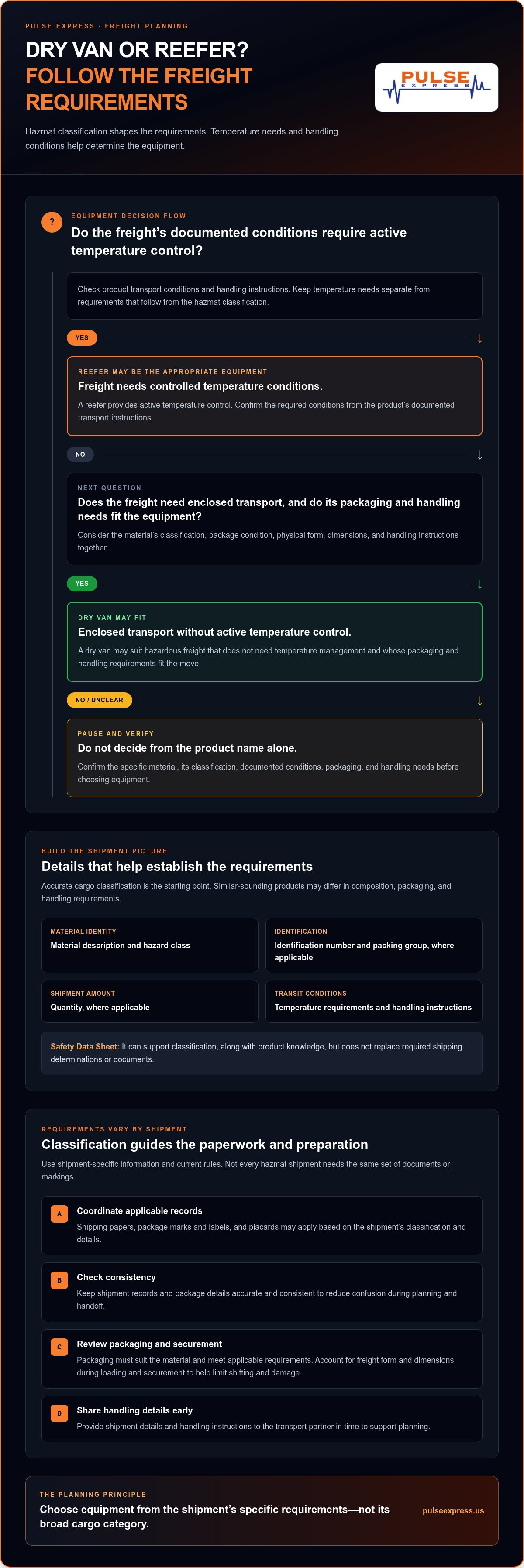
Hazardous classification alone does not determine whether freight belongs in a dry van or reefer. Start with the product’s documented transport conditions and handling instructions. Then consider temperature needs, packaging, cargo form, and loading constraints. A reefer provides active temperature control for freight that needs it; a dry van may suit freight that does not.
When should a shipper compare dry van and reefer transport?
Compare equipment whenever product requirements or documented instructions call for controlled temperatures, or leave the need unclear. Keep two questions separate: what requirements follow from the hazmat classification, and what conditions must be maintained during transit? The answers may affect different parts of the plan. The reefer hazmat transport guide provides broader context on coordinating hazardous freight requirements.
What should the equipment comparison include?
Review the conditions the freight must travel under, its physical form, how it is packaged, and any loading or handling limits. Consider route and shipment conditions when they could affect those requirements. Neither equipment type is inherently safer or right for every hazardous load. Let the shipment’s documented needs guide the choice.
| Consideration | Dry van | Reefer |
|---|---|---|
| Temperature control | Enclosed transport without active temperature control. | Provides active temperature control for freight with defined temperature needs. |
| Cargo form and packaging | Assess whether the packaged freight fits the shipment’s handling and loading needs. | Consider whether both the packaging and cargo can travel under the required temperature conditions. |
| Cargo protection | The enclosed trailer protects freight from direct exposure during transport. | Temperature control may be part of the protection plan when the cargo requires it. |
| Handling and loading | Plan around package condition, loading limits, and shipment instructions. | Account for those same needs, plus any temperature-related instructions. |
For example, if the shipment’s documented instructions do not require active temperature control, dry van transport may be a suitable option. If specific temperature conditions must be maintained, evaluate reefer transport against those instructions. The Federal Hazardous Materials Regulations offer a highway hazmat reference, while equipment selection depends on the details of each load. Dry van hazmat shipping works best as a coordinated plan, with freight requirements informing equipment choice, preparation, and handoff.
How to Prepare a Dry Van Hazmat Shipment: A Shipper Checklist
A clear handoff begins before pickup. For dry van hazmat shipping, organize cargo information, packaging details, and handling needs in a consistent order. Applicable documents and package markings depend on the material’s classification and shipment details, so use the cargo’s specific requirements rather than a one-size-fits-all checklist.
What information should be ready before arranging transport?
Gather the details that describe both the freight and the move. Material description, classification information, packaging, quantity, package dimensions, pickup and delivery locations, timing needs, and documented handling instructions all support practical planning. Flag temperature-control needs and loading constraints early so they can be considered alongside the other shipment requirements.
Shipper checklist
- Identify the cargo. Record an accurate material description and applicable classification details. Do not rely on a familiar product name alone.
- Assemble shipment details. Note quantities, package count and dimensions, pickup and delivery locations, timing needs, and handling instructions.
- Confirm packaging. Check that packages suit the material and are prepared according to applicable requirements. Compare package information with the shipment details.
- Plan loading. Share the cargo form, dimensions, and loading constraints. Consider how to position and secure the freight to help prevent shifting or package damage during transit.
- Coordinate the handoff. Align responsibilities for loading and provide the transport partner with the shipment information and instructions needed for the move.
How can shippers reduce avoidable delays at handoff?
Before pickup, compare the shipment details on the documents with the information shown on the packages. Resolve mismatches in descriptions, quantities, or markings before presenting the freight. Confirm that required paperwork and package markings reflect the shipment’s classification and applicable requirements, rather than assuming every load needs the same items.
Communicate shipment-specific constraints in advance, including package dimensions, handling instructions, temperature needs, and loading responsibilities. Clear details give everyone involved a shared plan and help avoid preventable confusion at pickup. For coordinated dry van hazmat freight transportation, discuss your shipment with Pulse Express.
Dry Van Hazmat Shipping with Pulse Express: Plan the OTR Move
Dry van hazmat shipping is a coordinated freight move, not just a trailer assignment. The cargo description, classification, packaging, quantity, and handling needs help shape the equipment choice and shipment plan. Pulse Express provides over-the-road transportation across the United States, including dry van hazmat and general freight. Founded in 2000, the company brings OTR experience to freight planning.
What does a collaborative shipment-planning conversation cover?
A useful planning discussion connects shipment details with the requirements of the move. Be ready to share the cargo description, classification information, package type and quantity, and documented handling instructions. These details help define freight requirements and support a clear discussion about equipment and timing.
Equipment planning should reflect the cargo. Identify early if the freight needs active temperature control or has special loading considerations. Classification and packaging requirements are separate from temperature needs, so consider each as part of the overall plan. Clear communication helps align shipment information with the proposed OTR move without relying on assumptions about the material.
How can shippers move from planning to a freight request?
Prepare a concise shipment brief before requesting transport. Include:
- Cargo: Description, classification information, packaging, and quantity.
- Locations: Pickup and destination details.
- Timing: Requested pickup and delivery timing.
- Requirements: Temperature-control needs, handling instructions, and any loading constraints.
Bringing these details together makes it easier to understand what the freight needs and where coordination may be required. Keep the information consistent with shipment documents and package details, and communicate changes promptly. Careful preparation supports a clearer handoff and a well-coordinated over-the-road move.
Pulse Express works with shippers to plan dry van hazmat freight around shipment details and transport requirements. Plan a dry van hazmat shipment with Pulse Express.
Plan Your Next Hazmat Freight Move with Confidence
A reliable dry van hazmat shipping plan begins with the freight itself. Classification, packaging, and shipment details shape applicable documentation and markings, while temperature and handling needs help determine whether dry van or reefer equipment is the right fit. Organizing this information before pickup supports clearer planning and a smoother handoff.
Pulse Express provides over-the-road transportation across the United States, including dry van hazmat freight transport. Bring the cargo description, classification information, packaging and quantity details, pickup and destination, and timing needs into the planning conversation. Clear information connects shipment requirements with a practical OTR move.
Discuss your dry van hazmat shipment with Pulse Express. With careful preparation and a coordinated transport plan, you can move forward with greater clarity and confidence.
Frequently Asked Questions
Can hazardous materials be shipped in a dry van?
Yes, some hazardous materials can move in a dry van when the material and shipment meet applicable requirements. Dry vans provide enclosed transport without active temperature control, so they may suit freight that does not require temperature management. The cargo’s classification, packaging, handling needs, and shipment details determine whether this equipment is appropriate. Dry van hazmat shipping requires shipment-specific planning, not an assumption that every hazardous material fits.
What hazardous materials can a dry van carrier transport?
There is no universal list that applies to every shipment. Requirements depend on the material’s classification, packaging, quantity, and special transport needs. A product name alone is not enough to establish what applies. Organize the material description and available classification and packaging information to support planning. Pulse Express provides dry van hazmat transport, with shipment-specific requirements guiding each move.
How do I know whether hazmat freight needs a reefer instead of a dry van?
Check the product’s documented transport conditions and handling instructions. If the freight requires active temperature control, reefer transport may be appropriate; if it does not, a dry van may suit the shipment. The hazardous designation by itself does not determine the equipment choice. Consider temperature requirements separately from hazmat classification, packaging, and handling needs, then plan around the full set of shipment-specific requirements.
What documents are needed for dry van hazmat shipping?
Required documents depend on the material’s classification and shipment details. Organize accurate cargo information and determine which shipping papers or other documentation apply under current U.S. hazardous materials rules. Details such as the material description, identification information, and quantity can inform that process. Do not assume every hazmat load uses identical paperwork. Accurate, consistent shipment information supports planning and a clear handoff.
Do hazmat shipments require special packaging, labels, or placards?
They may, depending on the material’s classification, packaging, quantity, and applicable requirements. Packaging must suit the material, while marks, labels, and placards are shipment-specific considerations. One set of instructions does not fit every load. Use the shipment’s classification and current requirements to determine what applies, and check that package information aligns with the details provided for transport.
What happens if hazardous freight is classified or documented incorrectly?
Incorrect classification or inconsistent documentation can create safety and compliance concerns and may disrupt the planned move. The freight could need correction before transport proceeds, leading to delays at pickup or during the shipment. Consequences depend on the circumstances and applicable rules. Reduce avoidable issues by using accurate material information, aligning documents with package details, and resolving discrepancies before handoff.
How should a shipper prepare packaged hazmat freight for pickup?
Start by confirming the cargo description, classification information, quantity, packaging, and documented handling instructions. Check that packages are in suitable condition and that shipment details align with package information and applicable documents or markings. Share pickup and delivery locations, timing needs, package dimensions, and any temperature or loading constraints in advance. Coordinating these details with the transport partner supports a clear plan and orderly handoff.


