

What if the right trailer choice depends less on the freight label and more on how your cargo needs to travel? Dry van trucking services move freight in an enclosed trailer, but they don’t provide temperature control. Cargo protection, handling needs, and route expectations all matter when deciding whether a dry van is the right fit.
This guide explains what dry van transport covers, what freight may suit it, and how it compares with refrigerated options. You’ll also learn which shipment details to prepare, including cargo information and pickup and delivery requirements, so you can plan around the load’s actual needs.
Pulse Express provides over-the-road dry van transportation across the United States for general and hazardous freight. For hazardous cargo, suitability depends on the specific shipment and applicable rules. Temperature-controlled transportation is handled as a separate reefer service. These distinctions help you choose a transportation option that fits your freight.
Key Takeaways
- Use cargo protection, temperature needs, and handling requirements to decide whether dry van transport fits your shipment.
- Dry van trucking services move freight over the road, while freight forwarding serves a different role in coordinating shipments.
- Share accurate cargo details, shipment size, locations, timing, and handling instructions to support clear transport planning.
- For regulated freight, precise cargo descriptions and paperwork help clarify shipment requirements.
- Pulse Express supports over-the-road transport for general and hazardous freight, with suitability shaped by cargo requirements and applicable rules.
What Are Dry Van Trucking Services, and What Do They Carry?
Dry van trucking services move freight over the road in an enclosed dry van trailer. The enclosure shields cargo from direct exposure to weather and road conditions during transit. It doesn’t control temperature or provide specialized protection, so the cargo’s needs determine whether this option fits.
A dry van trailer is a type of semi-trailer used for enclosed freight transport. “General freight” is a broad category, not a guarantee that every shipment is suitable. Packaging, dimensions, weight, handling instructions, and applicable requirements all matter. Hazardous freight, for example, must be assessed against its specific shipment requirements and applicable rules.
What freight commonly travels in a dry van?
Packaged, palletized, and boxed goods are common types of freight considered for enclosed transport. Those labels alone don’t establish that a shipment is suitable. Describe how the goods are packaged, provide their dimensions and weight, and note any handling needs that could affect loading or transit.
Clear details help match the shipment to appropriate transportation and handling. If cargo needs a controlled temperature or specialized protection, an enclosed trailer alone won’t meet that need. Dry van means covered, not climate-controlled.
What does over-the-road dry van service mean?
Over-the-road, or OTR, service refers to freight transportation over longer routes, including interstate journeys. It moves cargo from a pickup location to a delivery location. It isn’t the same as warehousing or fulfillment, which involve storing or preparing goods. Nor is it a public load board, which is a marketplace for posting and finding freight.
Dry van service is the over-the-road transportation of freight in an enclosed trailer. Whether it fits depends on the cargo, handling needs, and shipment requirements.
For shippers, start with a complete cargo description and a clear understanding of what the freight needs in transit. Pulse Express provides over-the-road dry van transportation across the United States for general and hazardous freight. The right fit depends on the shipment’s characteristics and applicable requirements, not simply on calling it general freight.
How Dry Van Trucking Moves Freight from Pickup to Delivery
A dry van shipment moves through planning and coordination: the shipper shares load details, the cargo’s requirements are matched with a transportation plan, and pickup, transit, and delivery are arranged. Complete information at the start helps everyone involved understand the shipment and reduces the chance of missing important handling details.
Which shipment details help plan a dry van move?
Provide the origin and destination, requested pickup and delivery timing, a precise cargo description, and any handling instructions. Include accurate dimensions, weight, and packaging details. These facts help determine whether the shipment can be accommodated and how it should be handled. “Boxed goods” may be too broad if the dimensions, total weight, or packaging affect the plan.
For hazardous materials, accurate identification and shipment-specific handling information are especially important. The cargo must be assessed against its requirements and applicable rules. Don’t assume every regulated shipment is suitable for the same transport arrangement.
To plan dry van transport, provide the shipment’s origin, destination, timing, cargo description, dimensions, weight, packaging, and handling instructions.
How do pickup, transit, and delivery coordination work?
Pickup and delivery requirements shape how a move is organized. Site access, receiving hours, requested timing, and location-specific instructions can affect coordination and route planning. Sharing these details early gives everyone involved a common plan for the shipment’s key stages.
Communication matters during transit, too. Clear updates help shippers and receiving teams coordinate around expected arrival and changes to the plan. Tracking methods vary, so don’t assume every transportation service uses a particular platform. The American Trucking Associations offers broader context on the U.S. trucking industry and its role in freight transportation.
For a wider view of the considerations involved in interstate moves, read this long-distance freight transportation guide. Pulse Express provides over-the-road freight transportation across the United States, including dry van transport for general and hazardous freight. Learn more about Pulse Express freight transportation.
Dry Van vs. Reefer and Freight Forwarding: Which Role Fits?
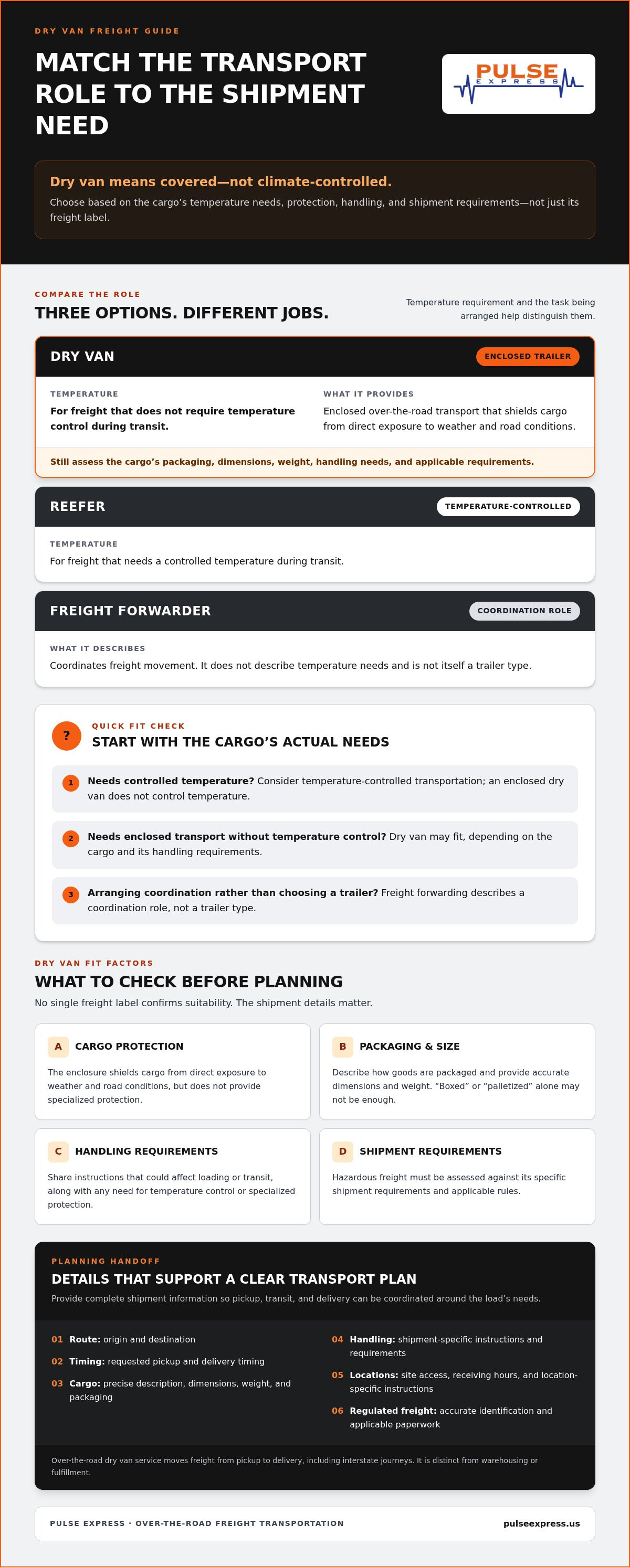
The right fit depends on the shipment’s needs and the task you’re arranging. A dry van carries freight in an enclosed trailer, while a reefer provides temperature-controlled transportation. Freight forwarding is a coordination role, not a trailer type. The Bureau of Transportation Statistics provides broader information about freight and the U.S. transportation system. For a specific shipment, start with the cargo requirements.
| Option | Temperature needs | Equipment or role |
|---|---|---|
| Dry van | For freight that doesn’t require temperature control during transit | Transportation in an enclosed trailer |
| Reefer | For freight that needs controlled temperature during transit | Temperature-controlled transportation |
| Freight forwarder | Doesn’t describe the cargo’s temperature needs | Coordinates freight movement; it isn’t itself a trailer type |
When is dry van a better fit than reefer?
Start with the cargo’s temperature requirements. If the freight needs a controlled temperature throughout transit, an enclosed dry van alone won’t provide it. Reefer transportation is the relevant option for temperature-sensitive shipments. If temperature control isn’t needed, a dry van may fit, depending on the cargo’s handling requirements and shipment plan.
Describe temperature needs clearly during planning, since they affect how freight must be transported. For more on temperature-controlled movement, read the cold chain logistics guide.
Is a dry van carrier the same as a freight forwarder?
No. A carrier transports freight. A freight forwarder coordinates its movement, which may involve arranging transportation. These are distinct roles, and the shipper’s needs determine which is relevant. A straightforward shipment may require transportation without a separate forwarding role.
Dry van trucking services describe a transportation method, not a coordination function. Pulse Express provides over-the-road dry van transportation for general and hazardous freight. For hazardous materials, suitability depends on the specific material, its packaging and documentation, and applicable requirements. Not every hazardous shipment belongs in a dry van, so accurate cargo information is essential when determining the right transport arrangement.
How to Prepare a Shipment for Dry Van Trucking
A complete shipment brief helps align cargo requirements, pickup and delivery arrangements, and handling needs before transport begins. Use this checklist to make dry van trucking services easier to plan:
- Cargo description: Identify the freight and note any characteristics that affect handling.
- Packaging: Describe how the goods are packed and secured, and include relevant labeling details.
- Shipment size: Provide accurate dimensions and total weight. These details help assess the load and plan suitable transportation.
- Locations: Share pickup and delivery addresses, site access information, and location-specific instructions.
- Timing: State requested pickup and delivery timing, plus receiving hours or scheduling constraints.
- Handling instructions: Flag requirements for loading, unloading, or care in transit, along with unusual access or delivery conditions.
Separate confirmed details from estimates. This keeps planning assumptions visible and makes it easier to update the shipment plan if information changes.
What should shippers confirm before pickup?
Confirm both locations, site access, receiving hours, and requested timing. Check that the freight is packaged and labeled according to its shipment-specific requirements and will be ready for pickup. Mention constraints such as limited loading access or special delivery instructions early. Accurate paperwork and a clear cargo description help keep shipment information aligned from planning through handoff.
What changes when the shipment contains hazardous materials?
Hazardous freight needs material-specific identification, documentation, and handling. Provide accurate information about the material and its packaging so the shipment can be assessed against its requirements and applicable rules. Suitability for dry van transport depends on the specific shipment; not all hazardous materials fit the same arrangement. For deeper compliance context, read this specialized hazmat logistics guide.
Pulse Express provides over-the-road transportation for general and hazardous freight, with dry van suitability shaped by cargo details and shipment requirements. Explore Pulse Express freight services for support with planning your shipment.
How Pulse Express Supports Dry Van Freight Shippers
Pulse Express provides over-the-road dry van transportation across the United States for shippers moving general freight. Dry van service suits cargo that can travel in an enclosed trailer without temperature control, provided its packaging, dimensions, weight, handling needs, and route requirements align with the shipment plan. Sharing these details gives planning a clear starting point.
Hazardous freight is also part of Pulse Express’s over-the-road transportation offering. Dry van suitability depends on the specific material, its packaging and documentation, handling requirements, and applicable rules. A hazardous-material label alone isn’t enough to determine the right arrangement; the shipment details matter.
Which shipper needs may align with Pulse Express dry van service?
Businesses arranging over-the-road movement of general freight across the United States may find dry van service a practical fit when the cargo doesn’t require temperature control or specialized protection beyond what enclosed transport provides. Match the service to the freight, handling needs, and route.
For cargo that needs controlled temperature during transit, Pulse Express provides reefer transportation as a separate service category. For hazardous shipments, material-specific requirements guide the transportation plan. No single trailer type or handling plan suits every load.
What information helps start a useful freight conversation?
Organize the essentials before discussing a move: cargo description, packaging, dimensions, weight, pickup and delivery locations, requested timing, and handling instructions. Include site access limits or unusual loading and receiving conditions. For hazardous freight, provide accurate material identification and relevant shipment documentation.
Clear requirements focus planning on cargo fit, transportation needs, and the details that shape the move, without relying on assumptions about the shipment.
If you’re planning an over-the-road move, discuss your freight transportation needs with Pulse Express. Share the cargo, route, timing, and handling requirements to start planning the right fit.
Plan Your Next Freight Move with Confidence
The right transport choice starts with the cargo. Dry van trucking services suit freight that needs enclosed over-the-road transportation but not temperature control. If a shipment requires a controlled temperature, reefer transport is a separate option. In either case, accurate details about the cargo, route, timing, and handling needs help shape a clear plan.
Pulse Express provides over-the-road freight transportation across the United States, including dry van, general freight, and hazardous-material transport. For hazardous cargo, suitability depends on the specific material, packaging, documentation, handling requirements, and applicable rules. Founded in 2000, Pulse Express supports shippers with transportation needs grounded in practical planning and clear shipment information.
Bring your route and shipment requirements together for a focused plan. Discuss your freight transportation needs with Pulse Express and take the next step with a clear picture of your cargo.
Frequently Asked Questions
What are dry van trucking services?
Dry van trucking services transport freight over the road in an enclosed trailer. The enclosure helps protect cargo from direct exposure to weather and road conditions, but it doesn’t provide temperature control or specialized protection by itself. Whether this transport fits depends on the cargo, packaging, handling instructions, route, and applicable requirements. Pulse Express provides over-the-road dry van transportation across the United States for general and hazardous freight.
What types of freight can a dry van carry?
A dry van may carry general freight that can travel in an enclosed trailer without temperature control, subject to shipment requirements. Packaged, boxed, or palletized goods may be considered, but those descriptions alone don’t establish suitability. Share the cargo’s description, packaging, dimensions, weight, and handling needs so the load can be assessed. Freight that requires controlled temperatures needs a different transportation arrangement, such as reefer service.
Is dry van trucking the same as reefer trucking?
No. Dry van trucking moves freight in an enclosed trailer without temperature control, while reefer trucking provides temperature-controlled transportation. The central question is whether the cargo needs a controlled temperature during transit. If it does, an enclosed dry van alone won’t meet that need. Pulse Express provides dry van and reefer transportation as distinct service categories, so the cargo’s requirements help determine which type of transport is appropriate.
Can hazardous materials be shipped in a dry van?
Some hazardous freight may be suitable for dry van transportation, but not all hazardous materials can travel this way. Suitability depends on the specific material, packaging, documentation, handling needs, and applicable requirements. Provide accurate material identification and shipment details so the transportation arrangement can be assessed against those needs. Pulse Express provides hazardous-material transport, including dry freight hazmat transport, with the shipment’s requirements guiding the appropriate fit.
What information do I need to book dry van freight?
Prepare the cargo description, packaging details, dimensions, weight, pickup and delivery locations, requested timing, and handling instructions. Include site access conditions, receiving hours, and unusual loading or delivery constraints. Accurate details help align transportation and handling with the shipment rather than relying on assumptions. For hazardous freight, provide precise material identification and relevant documentation. Keep estimates distinct from confirmed information so planning details are clear.
What is the difference between a dry van carrier and a freight forwarder?
A dry van carrier transports freight in an enclosed trailer. A freight forwarder coordinates freight movement, which may involve arranging transportation. These are different roles, and a shipper’s needs determine which is relevant; not every shipment requires both. Dry van describes the transportation method and equipment, while forwarding describes a coordination function. Pulse Express provides over-the-road freight transportation, including dry van transport for general and hazardous cargo.


