

What if a carrier has the right truck but can’t handle your material, route, or temperature requirements? Choosing a dedicated hazmat carrier means checking its capabilities against your specific shipment, not relying on a general promise to move hazardous freight.
It’s reasonable to want clear answers before pickup. The shipper remains responsible for providing accurate material classification, packaging, markings, and documentation, so agree on responsibilities and communication early. It also helps to know whether you’re working directly with a transportation provider or with a broker arranging transportation.
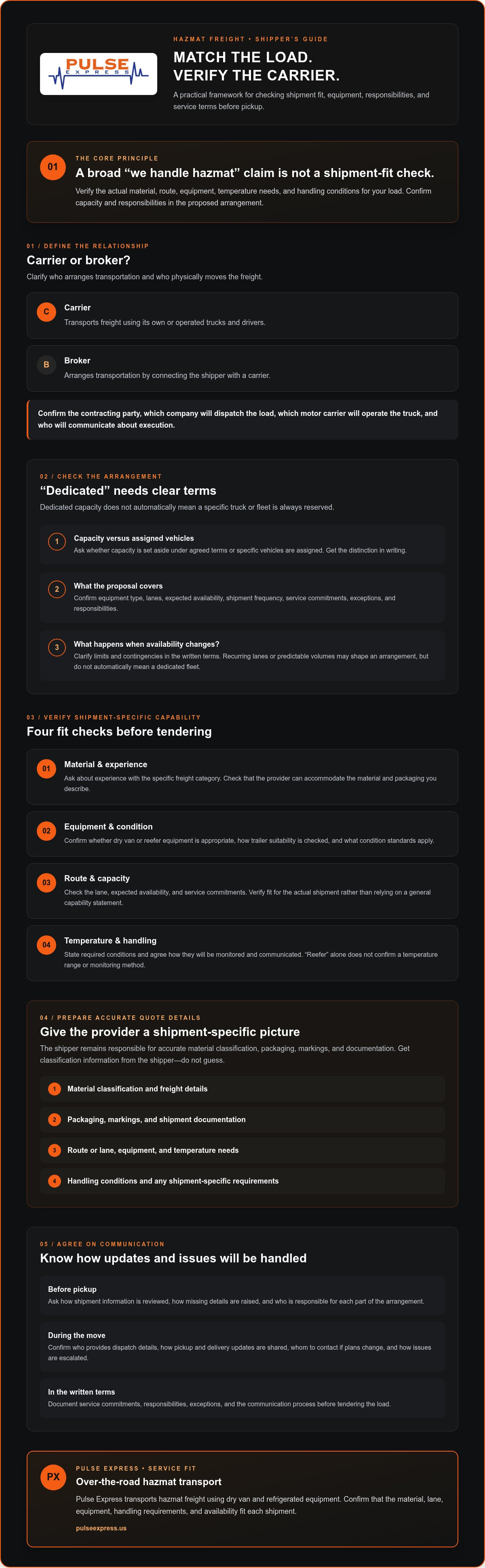
This guide offers a practical framework for matching your freight with a carrier, suitable equipment, and clearly defined shipment requirements. You’ll learn what information to prepare for a quote, what to verify about materials and handling, and how to compare carrier and broker roles. Pulse Express transports hazmat freight using dry van and refrigerated equipment. Confirm shipment fit and capacity for each load.
Key Takeaways
- Assess whether a dedicated hazmat carrier’s proposed service arrangement clearly defines the capacity and responsibilities included.
- Check shipment-specific experience, equipment condition, temperature needs, and route fit rather than relying on broad capability claims.
- Compare providers using verifiable details, including communication expectations and documented shipment terms.
- Prepare accurate freight and documentation details for a quote, and get classification information from the shipper rather than guessing.
- Pulse Express offers over-the-road dry van and reefer hazmat transport. Confirm that the material, lane, equipment, and availability fit your shipment.
What Does a Dedicated Hazmat Carrier Do, and How Is It Different from a Broker?
A dedicated hazmat carrier is a transportation provider assigned to meet a shipper’s agreed freight needs. “Dedicated” should describe a defined service arrangement, not a blanket promise that a particular truck or fleet will always be reserved. The shipment must still match the provider’s capabilities. Hazardous-material requirements vary by load, and a general claim doesn’t establish that a carrier can handle every material.
For long-haul freight, clarify the arrangement before comparing proposals. Ask what equipment is planned, which lanes are included, what service commitments are documented, and what happens if availability changes. Recurring lanes or predictable volumes may help shape a dedicated arrangement, but they don’t automatically mean a dedicated fleet. Confirm the actual capacity and contract terms with the provider. For foundational context on U.S. hazardous-material transportation law, see the Hazardous Materials Transportation Act (HMTA).
What does dedicated capacity mean for a hazmat shipment?
Dedicated capacity may mean transportation capacity set aside under agreed terms, while a dedicated fleet may imply specific vehicles assigned to a shipper. Don’t assume one includes the other. Request written details covering equipment type, expected availability, lanes, shipment frequency, and service commitments. If the freight needs temperature control, confirm that requirement is included in the proposed arrangement.
For example, a shipper moving predictable volume on a recurring lane can ask whether the provider can support that pattern and what the proposal commits to. The response should distinguish planned capacity from a guaranteed vehicle assignment. Confirm exceptions, responsibilities, and any limits in the written terms.
Is a hazmat carrier the same as a freight broker?
No. A carrier transports freight using its own or operated trucks and drivers. A broker arranges transportation by connecting a shipper with a carrier. Since providers may have different business arrangements, ask which company will dispatch the load, operate the truck, and communicate about shipment execution. Confirming these roles helps clarify who is responsible for each part of the arrangement.
A carrier operates the truck; a broker arranges transportation with a carrier. Before accepting a proposal, identify the contracting party and the motor carrier that will physically move the freight. Then verify that the actual carrier can accommodate the material, equipment, lane, and handling needs. Pulse Express provides over-the-road hazmat transportation using dry van and refrigerated equipment. Confirm shipment-specific fit and availability directly.
Which Hazmat Carrier Capabilities Should Shippers Verify?
A carrier’s general hazmat experience is only a starting point. Ask about experience with the specific freight category and shipment profile, then confirm that the provider can accommodate the material, route, equipment, and handling conditions you’ve described. A useful response addresses your load’s details rather than relying on a broad claim such as “we handle hazmat.”
Also check how shipment updates will work during the long-haul move. Confirm who provides dispatch details, how pickup and delivery updates are shared, whom to contact if plans change, and how issues are escalated. Agree on the process and points of contact before tendering the load. These details help you assess the actual service, not just the equipment.
How do you verify equipment and freight compatibility?
Match the proposed equipment to the freight’s documented shipping conditions. Ask whether a dry van or reefer is appropriate, how the provider checks trailer suitability before accepting the load, and what condition standards apply. For temperature-sensitive freight, specify the required conditions and agree on how they’ll be monitored and communicated. Don’t assume “reefer” alone confirms a particular temperature range or monitoring method.
Make your questions shipment-specific:
- Can the proposed equipment accommodate this material and packaging?
- Are there particular loading, handling, or temperature conditions the provider needs to confirm?
- What updates will you receive if equipment or shipment conditions require attention?
What safety and compliance questions should you ask?
Ask how the carrier reviews the shipment information you provide, identifies missing details, and raises questions before pickup. Clarify the roles of the shipper, carrier, and any broker involved. Each party’s responsibilities should be understood rather than assumed. Avoid accepting a blanket “compliant” assurance without knowing what it covers.
Check applicable requirements for your specific shipment against current PHMSA, FMCSA, and 49 CFR guidance. The FMCSA’s Federal Hazardous Materials Regulations resource is a useful starting point, but it doesn’t replace checking the rules that apply to your freight and role. Keep the confirmed shipment conditions and agreed communication process in writing.
Pulse Express offers over-the-road hazmat transportation using dry van and refrigerated equipment. Shippers considering a dedicated hazmat carrier arrangement can review Pulse Express hazmat transportation and confirm material, lane, equipment, temperature needs, and availability directly.
How Do You Compare Dedicated Hazmat Carriers for Your Shipment?
Compare providers using the same shipment details, not their marketing language. A side-by-side review makes gaps visible. One proposal may confirm the material and equipment but leave the lane or communication plan unclear. Record what each provider has verified, what’s documented, and what still needs an answer.
What should a carrier comparison table include?
Use one column for each provider and mark unconfirmed items “follow up.” Keep the carrier operating the truck distinct from any broker arranging transportation. Evaluate a dedicated hazmat carrier on confirmed shipment fit and written terms, not on the label alone.
| Comparison point | What to record |
|---|---|
| Material and handling | Freight category and handling needs the provider confirms it can accept |
| Equipment | Dry van or reefer, suitability, and any required temperature conditions |
| Lane and availability | Pickup and delivery locations, route fit, and confirmed capacity for the shipment |
| Communication | Dispatch contact, shipment updates, and escalation process |
| Accountability and terms | Who operates the truck, who arranges transportation, and what the written proposal covers |
Separate verifiable answers from broad descriptions such as “reliable,” “specialized,” or “nationwide.” Those claims don’t establish whether a particular material, lane, or equipment setup is acceptable. For general workplace and public-safety context, OSHA’s overview of transporting hazardous materials can help frame questions. Confirm shipment-specific requirements with appropriate official guidance.
When might a dry van or reefer carrier be the better fit?
Start with the freight’s documented shipping conditions. If the load requires temperature control, ask each provider to confirm that its reefer equipment and operating plan can meet those conditions. If temperature control isn’t required, confirm whether a dry van is suitable. Don’t infer compatibility from equipment labels alone. Ask for shipment-specific confirmation. For broader over-the-road context, see this specialized hazmat logistics guide.
Decision rule: Prioritize verified shipment fit over a general service label. Choose the option with clear answers on material, equipment, lane, communication, and documented terms, then resolve unanswered points before proceeding.
What Information Should You Prepare Before Requesting a Hazmat Quote?
A quote is only useful if it reflects the freight and service you actually need. Gather shipment details before contacting a carrier so it can assess material fit, equipment, lane, and availability. Use accurate information from the shipper’s records. Don’t guess at a hazardous-material classification or assign one to make the request easier.
What shipment details help a carrier assess fit?
Work through these steps in order, and keep the information consistent across your quote request and shipping documents.
- Describe the material. Ask the responsible shipper for applicable identification and classification details, such as the UN or NA number, proper shipping name, hazard class, and packing group, when applicable. Include the Safety Data Sheet (SDS) and other relevant shipping documentation.
- Explain the load. Provide the quantity, load size, packaging type, and any handling conditions the transportation provider needs to assess the shipment.
- Give the lane and timing. List pickup and delivery locations, requested shipment dates, and any timing constraints. For recurring freight, describe the expected pattern without assuming capacity is available.
- Specify equipment needs. State whether the documented freight conditions call for dry van or temperature-controlled transportation. For temperature-sensitive loads, include the required conditions and ask the provider to confirm suitability.
- Define the service requested. Identify communication expectations and other service terms you want considered. Ask which items the provider can confirm and which need further discussion.
How should you review a transportation proposal?
Check the proposal against the details you submitted. Confirm the transportation provider operating the truck, proposed equipment, lane, availability, service scope, and each party’s responsibilities. If a broker is involved, clarify its role and identify the carrier that will physically move the shipment.
Read the written terms closely. Separate what’s explicitly included from anything still subject to confirmation, such as shipment fit, equipment, timing, or communication arrangements. If a proposal uses broad language, ask for the relevant detail in writing. This makes offers easier to compare and helps you spot mismatches before pickup.
For a shipment-specific discussion, discuss a hazmat shipment with Pulse Express. Pulse Express provides over-the-road hazmat transportation using dry van and refrigerated equipment. Confirm material, lane, service fit, and availability for your load.
Is Pulse Express the Right Dedicated Hazmat Carrier for Your Load?
The right choice depends on the shipment, not the service label. Pulse Express is an over-the-road transportation provider offering dry freight hazmat transport and reefer hazmat transport. These services may be relevant if your load calls for dry van or refrigerated equipment, but they don’t by themselves confirm that a particular material, lane, temperature requirement, or dedicated arrangement is available.
When should a shipper consider Pulse Express?
Consider discussing your load with Pulse Express if its over-the-road service and dry van or reefer equipment may suit your freight. Share the shipper-provided material details, origin and destination, requested timing, equipment needs, and any temperature conditions. This gives the provider the information needed to assess shipment suitability instead of relying on a general description of the load.
Confirm directly whether Pulse Express can handle the specific material and lane, whether suitable equipment and capacity are available, and whether a dedicated capacity arrangement can be offered. Don’t assume that requesting a dedicated hazmat carrier means a dedicated truck or fleet will be assigned. Ask what the proposed service includes and have the agreed scope documented.
What should you confirm before booking?
Before moving forward, compare the provider’s response with your shipment requirements. Make sure these critical details are clear:
- Freight fit: The provider has reviewed and confirmed the specific material and its stated handling conditions.
- Equipment: The proposed dry van or reefer suits the load, including any required temperature conditions.
- Route and schedule: The lane and requested timing have been reviewed, and availability is confirmed for the shipment.
- Responsibilities: You understand which company operates the truck and how shipper, carrier, and any broker responsibilities are handled.
- Written terms: Service scope, communication expectations, and any conditions or limitations are documented.
If temperature control is part of the shipment’s documented requirements, review this guide to cold chain logistics as you clarify conditions and expectations with the provider. Resolve open questions before booking rather than assuming an equipment type or service description answers them.
If your freight may fit Pulse Express’s dry van or reefer hazmat transportation, the next step is a shipment-specific conversation. Contact Pulse Express to discuss your shipment and confirm material fit, equipment, route, availability, and service terms.
Make Your Next Hazmat Shipment a Clearer Fit
Choosing a dedicated hazmat carrier starts with shipment-specific confirmation, not a broad service label. Verify that the provider can handle your material, equipment, lane, and timing, and clarify who operates the truck and what each party is responsible for. A written proposal should make the service scope and any unresolved details clear before pickup.
Prepare accurate freight information from the shipper, including applicable classification and documentation, packaging, quantity, locations, and handling conditions. These details help a transportation provider assess whether its equipment and available service match your load.
Pulse Express provides over-the-road transportation across the United States, with stated services for dry van and refrigerated hazmat transport. Confirm shipment-specific materials, routes, temperature requirements, capacity, and any dedicated arrangement directly. If your freight may fit, Discuss your hazmat freight requirements with Pulse Express and share the details needed to assess the shipment.
With clear information and responsibilities agreed in advance, you can move forward with greater confidence and a better-defined transportation plan.
Frequently Asked Questions
Is a dedicated hazmat carrier the same as a hazmat freight broker?
No. A carrier transports freight through its own transportation operations, while a broker arranges transportation with a carrier. Before booking, identify the contracting party, the company that will operate the truck, and each party’s responsibilities. Pulse Express is described as a trucking and transportation provider, not a freight broker. Whatever provider you consider, confirm who will physically move the load and who will handle communication about its transportation.
How do I choose a dedicated hazmat carrier for my shipment?
Start with the shipment’s documented material, packaging, route, timing, and handling needs. Ask the provider to confirm it can accept that freight and has suitable equipment and capacity for the requested lane. Clarify who operates the truck, how shipment updates will be shared, and which terms are included in writing. Compare specific, verifiable answers instead of relying on general claims about expertise, reliability, or nationwide service.
What information should I provide when requesting a hazmat freight quote?
Provide shipper-verified material identification and applicable shipping documents, along with origin, destination, quantity, packaging, and requested dates. Include handling conditions and whether the freight needs dry van or refrigerated transportation. If relevant, share identification and classification details from the shipper’s records instead of estimating or assigning a classification yourself. Ask the provider what additional information it needs to assess the load, and don’t omit details that could affect shipment acceptance.
Can a reefer carrier transport hazardous materials?
Some providers transport certain hazardous materials using refrigerated equipment, but acceptance depends on the material, its requirements, and the carrier’s capabilities. Don’t assume every reefer carrier accepts hazmat or that refrigeration alone makes the equipment suitable. Provide accurate shipment information and ask the provider to confirm the specific freight, required temperature conditions, equipment suitability, and availability for your lane and requested dates before proceeding.
What should I verify about a hazmat carrier’s compliance?
Ask how the provider reviews shipment information, documentation, equipment suitability, and operational responsibilities. Confirm what the shipper, carrier, and any broker are each expected to handle. Check requirements that apply to your shipment using current authoritative sources, including PHMSA, FMCSA, and relevant provisions of 49 CFR. Requirements can vary with the material and circumstances, so don’t treat a generic checklist as legal advice. Resolve unclear responsibilities before tendering the load.
When is dedicated hazmat capacity a good fit?
Dedicated capacity may be worth evaluating if you have recurring lanes, predictable freight needs, or service requirements that could benefit from planned transportation resources. The term can mean different things, so read the proposal closely. Confirm whether capacity is reserved, which equipment and routes are covered, how exceptions are handled, and whether the provider can support your shipment. Don’t assume the arrangement includes a dedicated truck or fleet unless the terms say so.
Does Pulse Express offer dry van and reefer hazmat transportation?
Yes. Pulse Express’s stated services include hazardous freight transportation using dry van and refrigerated equipment, as well as over-the-road transportation across the United States. That doesn’t confirm acceptance or availability for every material, lane, temperature condition, or requested date. Share complete shipment details and ask Pulse Express to confirm service fit, current capacity, and written terms for your load before making arrangements.


