

What if a driver has the right hazmat endorsement, but the transportation setup doesn’t fit your shipment? An endorsement speaks to a driver’s qualifications. It doesn’t, by itself, tell you whether a carrier’s service and equipment align with the cargo. That distinction matters when comparing hazmat endorsed trucking companies: the driver’s credential is essential, but carrier and shipment fit complete the decision.
Before freight moves, you need a clear picture of the cargo requirements, the route, and whether dry van or temperature-controlled service is appropriate. It also helps to understand how shipper and carrier responsibilities fit into the transportation plan.
This guide explains the difference between driver credentials and carrier capabilities, then walks through practical factors that shape hazmat carrier fit. It also compares dry freight and reefer hazmat transport for different cargo needs. Pulse Express provides over-the-road hazmat transportation across the United States with dry van and refrigerated service. Understanding these moving parts can help you prepare a more focused shipment plan.
Key Takeaways
- “Hazmat endorsed” usually describes a driver’s qualification, not a complete measure of a carrier’s operating fit.
- When comparing hazmat endorsed trucking companies, consider driver qualifications alongside carrier capabilities, cargo details, and transportation arrangements.
- Match dry van or reefer service to the freight’s needs. Temperature control matters when the cargo requires it, not simply because it’s hazardous.
- Organize shipment details early to support coordination from freight preparation through delivery.
- Pulse Express provides over-the-road hazmat freight transportation across the United States through dry van and refrigerated service.
What Does ‘Hazmat Endorsed’ Mean When Choosing a Trucking Company?
“Hazmat endorsed” can sound like a company-wide designation, but it commonly refers to a qualification held by an individual driver. That distinction matters when comparing hazmat endorsed trucking companies: a qualified driver is one part of the decision, not proof that every carrier, vehicle, or transportation arrangement suits a particular shipment.
A hazmat endorsement is added to a commercial driver’s license and relates to the driver’s credentials. “Hazmat” broadly refers to hazardous materials, also called dangerous goods. This general definition provides useful context, but it doesn’t determine the requirements for a particular load. Those depend on the material and shipment details. Verify current requirements for the specific freight rather than treating a general description as a compliance determination.
Does a hazmat endorsement belong to the driver or the company?
The endorsement belongs to the driver. It indicates a driver qualification, not the full scope of a carrier’s operations. The carrier’s role is to arrange and transport freight using a service and transportation plan that fit the shipment. A driver credential alone doesn’t establish that the carrier’s capabilities or proposed setup are suitable for every load.
What should shippers understand before comparing carriers?
Start with the material and shipment conditions, then consider the origin, destination, and service expectations. Temperature needs, for example, can affect whether refrigerated transportation is appropriate. Freight that doesn’t require temperature control may align with dry van service. Other cargo details can affect the requirements that apply, so don’t assume a general hazmat label tells the whole story.
Before coordinating transport, organize the shipment information and identify any special handling or temperature considerations. Then verify the current requirements that apply to that freight. This gives the shipper and carrier a clearer basis for aligning driver qualifications, transportation service, and cargo needs.
For additional planning context, see Pulse Express’s specialized hazmat logistics guide. The central distinction is simple: a driver’s endorsement addresses the driver, while carrier-level freight capability addresses how the shipment can be transported. Both matter, and neither replaces understanding the cargo and its requirements.
How Driver Qualifications and Carrier Capabilities Work Together
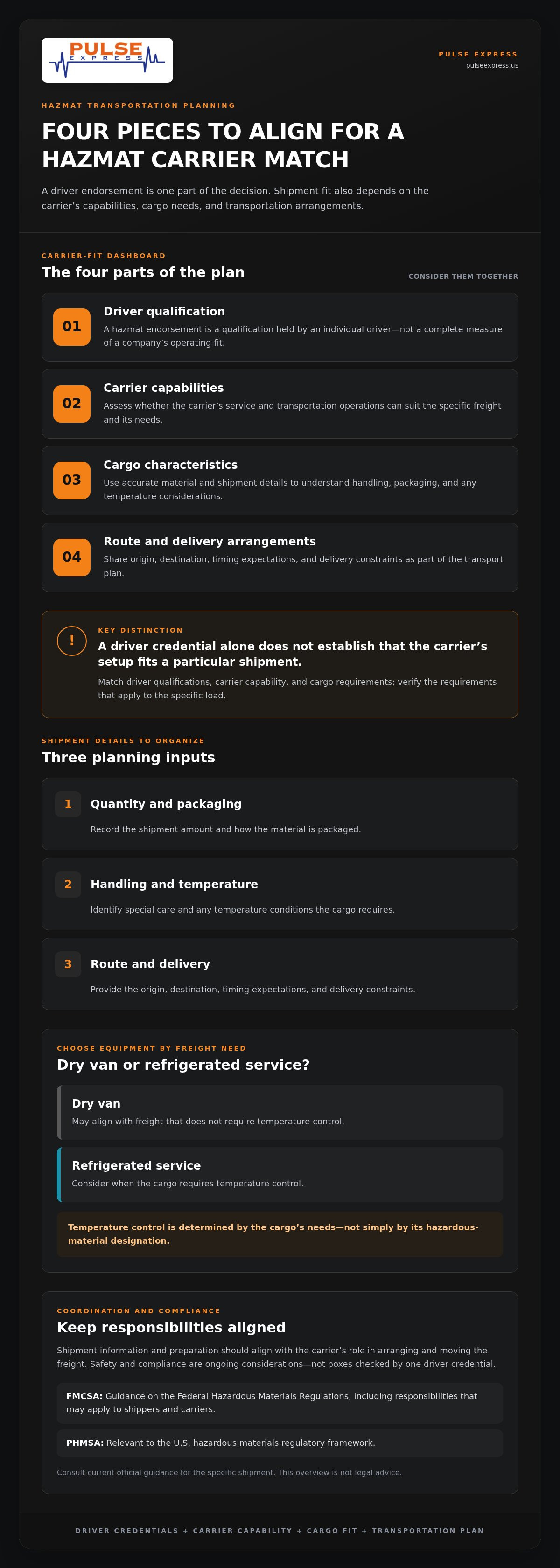
A well-planned hazmat move brings several pieces together: the driver’s qualifications, the carrier’s transportation operations, the cargo’s characteristics, and the arrangements for the route and delivery. A gap in any one area can affect whether the overall plan fits the shipment. That’s why comparing hazmat endorsed trucking companies involves more than checking one credential or reading a general carrier description.
A driver’s credential qualifies the driver; it doesn’t, by itself, establish that a carrier’s services and transportation arrangements fit a specific shipment. Shippers and carriers need to consider the particular freight and verify the requirements that apply, rather than treating a general capability statement as a determination of compliance.
Which shipment details shape a hazmat carrier match?
Gather accurate material identification and the shipping documents associated with the load. Then organize the details that help shape transportation planning:
- Quantity and packaging: Record the shipment amount and how the material is packaged.
- Handling needs: Note any special care or temperature conditions the cargo requires.
- Route and delivery: Share the origin, destination, timing expectations, and any delivery constraints.
These details help connect cargo needs to a suitable service and transport plan. Don’t infer a hazard category from a broad product description or use an example’s classification as a substitute for accurate shipment information. Requirements can depend on the specific material and shipment conditions, so verify them for the load.
How do safety and compliance fit into the decision?
Safety and compliance are ongoing considerations throughout shipment preparation and transportation, not boxes checked by a single driver credential. The shipper’s cargo information and preparation must align with the carrier’s role in arranging and moving the freight. The Federal Motor Carrier Safety Administration (FMCSA) provides guidance on the Federal Hazardous Materials Regulations, including responsibilities that may apply to shippers and carriers. PHMSA is also relevant to the U.S. hazardous materials regulatory framework. Consult current official guidance for the specific shipment; this overview isn’t legal advice.
In practical terms, share complete cargo and delivery details early, identify handling needs, and keep the transportation plan aligned with applicable requirements. Pulse Express provides over-the-road hazardous freight transportation across the United States, including dry van and refrigerated service. Explore Pulse Express hazmat freight transportation as you plan the carrier and service fit for your shipment.
Dry Van or Reefer? Match Hazmat Transport to the Freight
Choose between dry van and refrigerated transportation based on the cargo’s needs, not its hazardous-material designation. A temperature-sensitive load may call for reefer service. Freight that doesn’t require temperature control may fit dry van service. In either case, the shipper’s cargo information and applicable requirements guide the transportation plan.
Cargo requirements, not the hazmat label alone, determine whether dry van or temperature-controlled transport is the better fit. This distinction helps shippers compare hazmat endorsed trucking companies more clearly and avoid treating “hazmat” as a single equipment category.
| Planning factor | Dry van hazmat transport | Reefer hazmat transport |
|---|---|---|
| Cargo temperature needs | For freight that doesn’t require temperature-controlled transportation. | For temperature-sensitive freight that requires refrigerated transportation planning. |
| Service type | Dry freight hazmat transport. | Refrigerated hazmat transport. |
| Shipment details | Material, packaging, handling needs, route, and delivery expectations still matter. | The same cargo and route details matter, along with the shipment’s temperature needs. |
| Planning focus | Align the freight requirements with dry van service and applicable rules. | Include temperature-control needs in the transport plan, alongside other handling and compliance considerations. |
When might dry van hazmat transport fit?
Dry van service may suit hazardous freight that doesn’t need temperature control. The right fit still depends on the actual material, packaging, handling requirements, and shipment arrangements. Avoid assuming that a general example applies to a particular cargo. Pulse Express provides dry freight hazmat transport as an over-the-road service for shippers planning this type of move.
When might temperature-controlled hazmat transport fit?
If the cargo is temperature-sensitive, refrigerated transportation may be part of the plan. Temperature control is one consideration, not a replacement for assessing the material, packaging, handling, or applicable requirements. Identify the cargo’s temperature needs clearly so they can be considered alongside the other shipment details. Pulse Express also provides reefer hazmat transport. For more context on temperature-controlled freight planning, read this cold chain logistics guide.
Neither service category alone determines whether a shipment is properly prepared or compliant. Match the freight to the transportation requirements, then verify current rules for the specific load.
How to Prepare a Hazmat Freight Shipment for Carrier Coordination
Clear shipment information gives the shipper and carrier a practical starting point for arranging transportation. Before coordinating with hazmat endorsed trucking companies, bring the cargo details, route, handling needs, and delivery expectations together. This workflow helps organize the conversation without assuming that every hazardous shipment follows the same documentation or transport requirements.
Prepare the shipment information
- Identify the material and packaging. Gather accurate cargo identification, packaging details, shipment size or quantity, and relevant documents. Keep the records consistent, and verify which documentation applies to this specific freight rather than relying on a universal checklist.
- Set out the route and schedule. Record the pickup and delivery locations, timing expectations, and any constraints at either end. Clear location and schedule details help shape transportation planning.
- Describe handling and temperature needs. Note special handling considerations and whether the cargo requires temperature control. For reefer freight, include the shipment’s temperature requirements and relevant handling context. The cold chain logistics guide offers additional context on temperature-controlled freight.
- Verify applicable requirements. Review current requirements for the material and shipment conditions. Documentation, preparation, and transportation expectations can vary with the freight, so don’t assume that a document list or process for one load applies to another.
- Coordinate the movement and delivery. Share the organized information early enough to support planning. Align on pickup and delivery expectations, communication during the move, and any special handling details relevant to the shipment.
Make coordination clear
Specific, consistent information helps reduce avoidable uncertainty. For example, stating that a load requires temperature control is more useful for planning than describing it only as hazardous. Precise pickup and delivery details also clarify route and timing expectations. If shipment details change, communicate the update so the transportation plan can reflect the latest information.
Before transport is arranged, keep the cargo description, packaging information, relevant documents, and handling instructions accessible to the people coordinating the shipment. Confirm that the planned service aligns with the cargo’s needs, while verifying applicable requirements for that specific load.
For over-the-road hazardous freight planning, plan your hazmat freight transportation with Pulse Express. Organized shipment details help create a clearer path from initial coordination through delivery.
How Pulse Express Supports OTR Hazmat Freight Transportation
Pulse Express provides over-the-road freight transportation across the United States, including hazardous and general freight. For shippers planning long-distance hazmat moves, start with the freight itself: what it is, how it needs to be handled, and what transportation conditions it requires. Those details help connect cargo needs with a suitable service category.
How do Pulse Express service categories support different freight needs?
Hazardous and general freight are distinct transportation categories. For hazmat loads, Pulse Express provides dry freight hazmat transport and reefer hazmat transport. The distinction comes down to cargo needs: dry van service may suit freight that doesn’t require temperature control, while refrigerated transportation is relevant when the cargo requires it. A hazardous-material designation alone doesn’t determine which service is appropriate.
This distinction gives shippers a practical starting point without making assumptions about particular materials, equipment features, or shipment outcomes. Consider the load’s temperature requirements alongside its handling needs, route, and delivery expectations. Pulse Express’s OTR service connects these planning considerations with transportation across the United States.
General freight transportation is also part of Pulse Express’s services. Keeping freight type and service requirements clear helps frame the coordination process and makes it easier to discuss the shipment’s needs.
What is the next step for a shipper?
Before arranging transportation, bring the key shipment details together. A concise brief can include:
- Cargo information: Material description, packaging, and shipment size.
- Route and timing: Pickup location, destination, and delivery expectations.
- Handling requirements: Relevant care instructions and temperature needs, if applicable.
Share accurate, consistent information so the transportation plan can be shaped around the freight. Requirements vary by shipment, so verify the current rules and documentation that apply to the specific load. For broader context on long-distance moves, explore this nationwide freight transportation guide.
Comparing hazmat endorsed trucking companies is most useful when you consider driver qualifications alongside carrier service categories and cargo requirements. Pulse Express brings nationwide OTR transportation together with dry van and refrigerated hazmat freight services, giving shippers a clear basis for planning.
Discuss your hazmat freight transportation needs with Pulse Express.
Plan Your Hazmat Freight Move with Clarity
Choosing among hazmat endorsed trucking companies starts with understanding what a driver’s endorsement tells you and what it doesn’t. The endorsement relates to driver qualifications. Carrier service capabilities and the shipment’s requirements also shape transportation fit.
Start with the cargo. Organize its material and packaging information, handling and temperature needs, route, and delivery expectations. Then match those details to the appropriate service category. Dry van and refrigerated transport serve different cargo needs, and temperature control matters when the freight requires it.
Pulse Express provides over-the-road freight transportation across the United States, including hazmat freight through dry van and refrigerated service categories. Clear shipment details create a practical foundation for planning and coordination. Discuss your hazmat freight transportation needs with Pulse Express.
With accurate information and a clear view of service fit, you can take the next step with greater confidence. Thoughtful planning brings cargo needs, transportation arrangements, and delivery expectations into focus.
Frequently Asked Questions
What does ‘hazmat endorsed trucking company’ mean?
The phrase usually describes a carrier transporting hazardous materials with appropriately qualified drivers and relevant operating capabilities. The hazmat endorsement itself is associated with a driver’s credential, not a complete description of a company’s services. When comparing hazmat endorsed trucking companies, consider the cargo, transportation requirements, equipment needs, and current applicable regulations together. A driver credential alone doesn’t establish that every carrier arrangement suits every shipment.
Does a trucking company need a hazmat endorsement?
A hazmat endorsement is generally a driver credential, rather than a company endorsement. A carrier’s ability to transport a specific shipment involves broader operational and regulatory considerations. Requirements depend on the freight and its circumstances, so don’t treat one driver’s credential as proof that every load is suitable. Review current requirements for the specific shipment as part of transportation planning.
How do I choose a hazmat trucking company for freight?
Start by describing the material, packaging, shipment size, route, and timing expectations. Include any temperature-control or special handling needs. Then consider how the carrier’s transportation services fit those details, keeping driver qualifications distinct from carrier-level capabilities. Requirements can vary with the shipment, so verify what applies to your freight. A clear, accurate shipment profile gives the transportation team a practical basis for coordination.
Can hazmat freight travel in a reefer truck?
Yes, hazardous freight can travel using refrigerated transportation when the cargo requires temperature control and the transport arrangement fits the shipment. A reefer isn’t automatically needed just because freight is hazardous. Consider the material, packaging, temperature needs, handling instructions, and applicable requirements together. Communicate these details during planning so the transportation service can be aligned with the cargo’s needs.
What information should I provide when arranging hazmat freight?
Prepare accurate information about the material, packaging, quantity or shipment size, and relevant shipping documents. Include pickup and delivery locations, timing expectations, and any temperature-control or special handling needs. Requirements can differ by shipment, so a general checklist shouldn’t replace current, cargo-specific guidance. Clear and consistent details help the transportation team understand the shipment and plan the coordination process appropriately.
Are all hazmat trucking companies equipped for temperature-sensitive freight?
No. Hazmat transportation and temperature-controlled transportation are separate service considerations, and not every shipment requires both. Identify whether the freight needs temperature management, then align that need with the transportation arrangement. Pulse Express provides hazmat freight transportation through dry van and refrigerated service categories. The appropriate option depends on the cargo’s requirements and shipment plan, not simply on its hazardous-material designation.
What is the difference between a hazmat endorsement and hazmat carrier capability?
A hazmat endorsement relates to a driver’s qualification. Carrier capability is broader: it concerns whether the transportation service and arrangements fit the cargo, equipment needs, operating considerations, and shipment plan. These factors work together, but they aren’t interchangeable. Considering both helps shippers avoid assuming that one driver credential, on its own, addresses every requirement for a particular load.


