

A full trailer isn’t automatically the right move for hazardous freight. The right choice depends on the cargo, shipment size, handling needs, and equipment required. With full truckload hazmat shipping, matching those details from the start helps shippers plan a more controlled over-the-road move.
It’s understandable to have questions. Should the load move by full truckload or less-than-truckload? Which shipping papers and emergency response information are needed? And does the cargo call for a dry van or temperature-controlled transport? Getting clear answers helps align the shipment plan with its requirements.
This guide explains when full truckload may fit, what cargo details and documents to prepare, and what to coordinate with your carrier. You’ll also learn how equipment needs shape the plan, including the difference between dry van and reefer transport. Pulse Express provides U.S. over-the-road hazmat freight services with both options, tailored to cargo requirements, so shippers can approach each move with greater clarity and confidence.
Key Takeaways
- Assess cargo, shipment volume, handling needs, and route requirements to decide whether full truckload is the right fit.
- Plan full truckload hazmat shipping by identifying the material, confirming its classification, and preparing the required shipment information.
- Match dry van or reefer equipment to the freight’s characteristics and temperature requirements.
- Use a shipment checklist to align cargo details, documents, packaging, equipment, and route plans before dispatch.
- Share accurate shipment details and communicate changes early to support coordinated long-haul transportation.
When Does Full Truckload Hazmat Shipping Make Sense?
Choosing a transport mode for hazardous freight starts with the shipment, not a simple rule about size. Cargo characteristics, total volume, handling requirements, and route needs all affect whether a truckload arrangement makes sense. The same product category can call for different plans depending on its packaging, quantity, and transport conditions.
Full truckload hazmat shipping is the road transport of hazardous cargo planned as a truckload shipment, rather than as freight consolidated with other shippers’ loads or sent as individual parcels. “Full truckload” describes the transportation arrangement. It doesn’t replace the shipper’s responsibility to identify and prepare the cargo according to applicable requirements.
How Does Hazmat FTL Differ from LTL?
In less-than-truckload (LTL) shipping, freight from multiple shippers is consolidated into a vehicle. A full truckload move is planned around a larger shipment’s use of truck capacity. Parcel networks typically handle smaller packages through a separate distribution process. These differences affect coordination and the opportunities for freight to be consolidated or handled along the way.
For hazardous cargo, mode selection should account for the material’s details and shipment requirements, not just the number of pallets. The federal framework includes the Hazardous Materials Transportation Act (HMTA); shippers should use current authoritative guidance to understand requirements that apply to their specific shipment.
Which Shipments May Benefit from a Full Truckload Move?
A larger shipment may make truckload capacity a practical fit, especially when its volume is better planned as one move than divided among smaller shipments. Sensitive freight or cargo with particular handling needs may also benefit from a plan built around its specific characteristics. These are considerations, not automatic rules: the shipment’s material, packaging, and route still matter.
Not every hazardous shipment needs a full truckload. A smaller load may suit another mode if its requirements and handling plan allow. Conversely, a shipment that doesn’t fill a trailer can still merit truckload planning when its handling needs, route, or coordination requirements make that arrangement appropriate. Avoid selecting by weight or pallet count alone.
A practical first review can focus on four questions:
- What is the cargo? Gather an accurate description and relevant handling information.
- How much is moving? Consider shipment volume alongside how it is packaged and prepared.
- What does it require in transit? Identify any temperature or other handling needs.
- What does the route involve? Share origin, destination, and route-specific considerations when planning the move.
Pulse Express supports U.S. over-the-road hazmat transportation with dry van and refrigerated options. Sharing cargo and route details helps align equipment and coordination with shipment needs. The mode decision is a starting point, not a substitute for accurate cargo information or appropriate shipment preparation.
What Must Shippers Plan for a Compliant Hazmat Truckload?
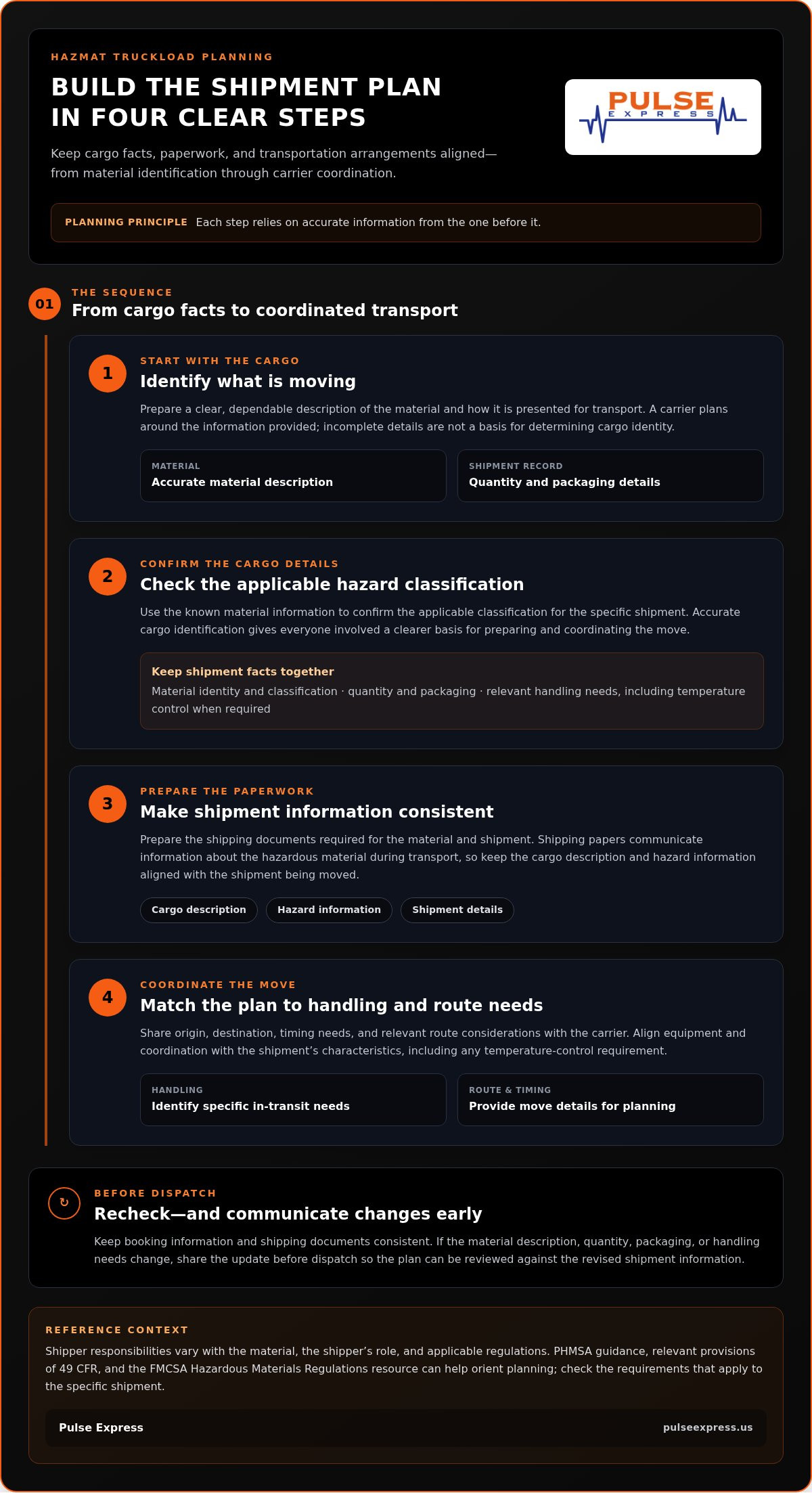
A reliable planning sequence keeps cargo facts, paperwork, and transportation arrangements aligned. Start by identifying the material, confirm its applicable hazard classification, prepare shipment documents, then coordinate the move with the carrier. Each step depends on accurate information from the one before it.
Accurate cargo identification supports safer, more compliant planning by giving everyone involved a clear basis for preparing and coordinating the shipment. Shipper responsibilities vary with the material, the shipper’s role, and the regulations that apply. PHMSA guidance and relevant provisions of 49 CFR are important references, but the applicable requirements should be checked for the specific shipment. The FMCSA Hazardous Materials Regulations resource can help orient shippers to federal requirements; it isn’t a substitute for assessing the rules that apply to a particular load.
Which Cargo Details Should Be Ready Before Booking?
Gather dependable shipment information before requesting transportation. A carrier can plan around information provided, but shouldn’t be expected to determine the identity or classification of cargo from incomplete details. For full truckload hazmat shipping, prepare a clear description of what is moving and how it is presented for transport.
- Material identity and classification: Provide the known material description and applicable hazard classification.
- Quantity and packaging: Share the amount being shipped and how it is packaged, using accurate shipment records.
- Handling needs: Identify relevant handling information, including any temperature-control requirement.
- Move details: Provide origin, destination, and timing needs so the transportation plan reflects the shipment and route.
Keep these details consistent across booking information and shipping documents. If a material description, quantity, packaging detail, or handling need changes, communicate the update before dispatch so the plan can be reviewed against the revised shipment information.
How Do Shipping Papers and Responsibilities Fit Together?
Shipping papers communicate information about the hazardous material during transport. Their accuracy matters: they help connect the cargo description and hazard information to the shipment being moved. The documents required and the information they must contain depend on the material and applicable rules, so avoid relying on a generic template without checking its fit.
Responsibilities are not interchangeable. Shippers provide accurate information about the cargo and prepare required shipment details as applicable; carriers have their own responsibilities for transportation. The exact duties depend on the parties’ roles and current requirements, so this overview is not legal advice. For a broader look at coordination and handling considerations, see specialized hazmat logistics guidance.
Once cargo details and documents are aligned, share the origin, destination, timing needs, and handling requirements with your carrier. Pulse Express coordinates U.S. over-the-road hazmat freight using dry van and refrigerated transport. Shippers can discuss shipment details with Pulse Express to support planning around the cargo and route.
Dry Van or Reefer: Which Equipment Fits Hazmat Freight?
Equipment selection should follow the freight, not the other way around. A dry van and a refrigerated trailer serve different transportation needs, and neither is automatically suitable for every hazardous material. For full truckload hazmat shipping, align the cargo’s characteristics, packaging, temperature instructions, and applicable handling requirements before settling on equipment.
Use this comparison to guide the planning conversation. It’s a starting point, not a substitute for the specific requirements of the material being shipped.
| Planning factor | Dry van | Reefer |
|---|---|---|
| Cargo need | Consider when the cargo’s requirements call for general freight transport without temperature management. | Consider when the cargo has a defined temperature-control requirement. |
| Temperature | Does the cargo’s shipping guidance permit transport without active temperature control? | What temperature instructions apply, and are they clearly documented? |
| Planning question | Do the cargo, packaging, and applicable handling conditions fit this equipment choice? | Are the cargo’s temperature requirements understood and included in the shipment plan? |
When Might Dry Van Transport Be Appropriate?
A dry van is a general freight equipment option, not a universal hazmat solution. It may fit cargo whose material-specific requirements, packaging, and applicable shipping conditions don’t call for temperature management. Review the shipment information as a whole rather than assuming that a product’s usual storage conditions automatically determine its transportation needs. Pulse Express provides dry van hazmat transport for shipments planned around cargo requirements.
When Does Temperature-Controlled Hazmat Transport Matter?
Some hazardous cargo may have temperature requirements that shape how it should move. Those instructions should be clear and validated before equipment is planned; a vague request to “keep it cool” isn’t a useful substitute for the cargo’s actual guidance. Reefer planning depends on the material’s specific needs. Pulse Express provides reefer hazmat transport, with planning tailored to the shipment requirements.
Temperature control is only one part of the picture. Shippers should communicate the cargo’s handling instructions alongside its description and route details, so the transportation plan reflects the complete shipment rather than a single equipment preference. For broader context on managing temperature-sensitive freight, explore cold chain logistics guidance.
For example, if a shipment’s documentation and handling guidance specify no temperature-control need, a reefer shouldn’t be selected simply because the cargo is hazardous. If the material has defined temperature instructions, those requirements should inform the equipment discussion from the outset. In either case, match the transport arrangement to the cargo and its applicable handling conditions, and communicate any special instructions clearly before the move is coordinated.
How Can Shippers Prepare a Full Truckload Hazmat Shipment?
A clear shipment file gives the carrier a practical foundation for coordinating equipment, pickup, and delivery. Before requesting transport, bring together cargo information, applicable documents, packaging details, equipment needs, and route requirements. This preparation helps reveal gaps early, while there’s time to resolve them.
Before requesting transport, organize what the cargo is, how much is moving, how it’s packaged, what documents apply, what equipment it needs, and where and when it must travel. Use this checklist to prepare the handoff, not to determine the legal classification or interpret regulations. Requirements vary by material and shipment circumstances. Verify current applicable requirements through authoritative guidance or qualified compliance resources.
What Information Helps Coordinate the Move?
Make shipment details specific enough to support a useful plan. “Chemical freight” or “temperature sensitive” may leave important questions unanswered; use the accurate cargo description and handling instructions available for the shipment. For full truckload hazmat shipping, organize the information in one place and keep it consistent across booking details and documents.
- Cargo: Material identity, applicable classification, quantity, packaging description, and relevant handling information.
- Documents: Shipping papers and other documents applicable to the material and move. Check details against current requirements rather than assuming one template applies to every load.
- Equipment: The requested equipment type and the cargo-based reason for it, including any documented temperature instructions.
- Route: Pickup and delivery locations, requested dates, and any known route or access considerations.
- Site needs: Loading and receiving arrangements, access limitations, and other facility instructions that could affect the pickup or delivery plan.
Flag constraints early. For example, a delivery location with limited access or a receiving schedule can affect coordination even when the cargo information is complete. Share specific instructions rather than relying on assumptions about what a site can accommodate.
How Should Shippers Coordinate Before Dispatch?
Before dispatch, compare the shipment details with the documents and agreed equipment plan. If the cargo description, quantity, packaging, or handling instructions have changed, communicate the update promptly. Even a seemingly small change can affect how the shipment is understood and whether the existing plan still matches it. Don’t let outdated booking information stand in for the current load.
Establish who will share updates and how the shipper and carrier will communicate changes. A clear point of contact can help prevent conflicting instructions between shipping, loading, and receiving teams. Keep the latest cargo details and relevant documents together so everyone coordinating the move is working from the same information.
For long-haul moves, include route and facility details in the planning conversation; long-distance freight transportation planning also depends on clear coordination from origin to destination. Pulse Express coordinates U.S. over-the-road hazmat freight using dry van and refrigerated transport. Discuss your hazmat shipment details with Pulse Express to plan around its cargo, route, and handling needs.
Plan Your Full Truckload Hazmat Move with Pulse Express
A well-planned hazmat move starts with a clear picture of the shipment. Pulse Express provides U.S. over-the-road transportation for hazardous freight, with dry van and refrigerated options for long-haul needs. Founded in 2000, the company brings established transportation experience to moves where cargo details, equipment planning, and route coordination all matter.
Full truckload hazmat shipping calls for more than a pickup location and a requested date. Sharing accurate cargo and handling information gives the transportation conversation a useful starting point. It helps align the shipment’s characteristics with equipment considerations and the move’s practical requirements, without making assumptions about the cargo.
What Shipment Information Supports a Useful Conversation?
Before discussing a move, gather the details that describe both the freight and the journey. A concise, accurate summary helps the team understand what needs to move and what factors may shape planning. Include:
- Cargo identity and quantity: Describe the material using accurate shipment information and provide the quantity being transported.
- Pickup and delivery: Share origin and destination locations, along with requested dates and any known site access requirements.
- Handling instructions: Include applicable cargo handling guidance, loading or receiving constraints, and other relevant shipment-specific needs.
- Temperature requirements: If the cargo has temperature instructions, provide the applicable guidance so refrigerated transport can be considered appropriately.
Keep the same current details available to the people coordinating the shipment. If the cargo, quantity, dates, or handling instructions change, communicate the update promptly. A timely update helps keep the transportation plan connected to the shipment that will actually be tendered.
What Should Shippers Expect from a Transport Partner?
A dependable transport conversation should be clear, careful, and centered on the freight. Shippers can expect to discuss cargo characteristics, route, timing needs, and handling details so these factors inform coordination. Clear communication also makes it easier to keep relevant parties aligned as shipment information develops.
Pulse Express’s dry van and reefer hazmat services support different over-the-road freight needs. Equipment planning should follow the cargo’s characteristics and applicable handling instructions, rather than a general assumption that one option fits every hazardous load. Sharing details early gives the planning discussion more context, whether the shipment calls for dry freight transport or temperature-controlled consideration.
A useful next step is to bring the cargo description, quantity, pickup and delivery locations, requested dates, and any relevant handling or temperature instructions together. With those details in hand, shippers can have a focused conversation about the move and its planning needs.
Discuss your hazmat shipment with Pulse Express to start a conversation about your cargo, route, timing, and handling requirements.
Build a More Consistent Plan for Every Move
Turn what you’ve learned into a repeatable process. For recurring freight, create an internal shipment profile that records the cargo information, handling guidance, and planning decisions your team has already established. Treat it as a reference, not a standing approval: review each load for changes in material, quantity, packaging, route, or instructions before arranging transportation.
This simple habit can make future full truckload hazmat shipping conversations more focused. It also helps teams spot differences early, keep shipment information current, and bring the right questions to their transportation partner. If your next move has a new requirement or an unusual handling consideration, raise it as part of the planning discussion rather than relying on assumptions from a previous load.
Pulse Express can discuss the details of your shipment and its transportation needs. Discuss your full truckload hazmat shipment with Pulse Express and take the next step with a clear, thoughtful plan.
Frequently Asked Questions
What is full truckload hazmat shipping?
Full truckload hazmat shipping is the road movement of hazardous materials arranged as a truckload rather than parcel freight or a shipment consolidated with other shippers’ freight. The term describes how transportation is arranged, not whether cargo is properly classified or prepared. For example, a shipper might consider a truckload move for a large volume of one material, but cargo requirements and the route still shape the plan.
When should I choose hazmat FTL instead of LTL?
Consider hazmat FTL when shipment volume, handling needs, or route requirements make planning the freight as a truckload a better fit. LTL consolidates freight from multiple shippers, which can involve additional coordination around combined shipments and handling. There’s no universal size threshold that decides the mode. Compare the cargo’s characteristics, packaging, quantity, and delivery needs, then consider which arrangement best supports the shipment plan.
What documents are needed for full truckload hazmat shipping?
Required documents depend on the material, its classification, and the rules that apply to the shipment. Shipping papers are central to communicating cargo information during transport, and emergency response information may also be required. Other markings or documents can depend on the material and circumstances. Use the current applicable requirements rather than a generic checklist, and make sure the paperwork describes the actual cargo being tendered.
Can hazardous materials travel in a reefer truck?
Some hazardous materials may be transported using refrigerated equipment when the cargo’s specific requirements and applicable handling rules support that choice. A reefer is not automatically suitable for every hazardous load. For example, if a material has documented temperature instructions, share them during planning so the equipment discussion can reflect those requirements. Confirm that the cargo, packaging, and transportation conditions work together before arranging the move.
How do I prepare a hazmat freight shipment for pickup?
Prepare the cargo according to the applicable requirements and make sure the shipment is ready as described in its documents. Before pickup, align the cargo description, quantity, packaging information, shipping papers, and agreed equipment plan. Let the carrier know about changes or site instructions, such as receiving hours or loading access. If the actual load differs from the booking details, share the correction before dispatch.
Does full truckload hazmat shipping mean the truck makes no other stops?
No. “Full truckload” describes the transportation arrangement, but it doesn’t by itself promise a nonstop trip or specify every stop along the route. Stops may depend on the agreed transportation plan and operational needs. If a particular routing or stop requirement matters to your shipment, raise it during planning and make sure the expectations are clear. Don’t assume truckload means uninterrupted transit.
What information should I provide to get a hazmat truckload quote?
Provide the cargo’s accurate identity, applicable classification, quantity, packaging details, and any handling or temperature instructions. Include pickup and delivery locations, requested dates, and known site access or loading constraints. These details give the carrier a clearer basis for discussing equipment and planning. If classification or cargo identity is uncertain, resolve that information before requesting a quote instead of relying on an incomplete description.
Who is responsible for hazmat shipping compliance?
Responsibilities depend on the parties’ roles, the material, and the requirements that apply to the shipment. Shippers generally provide accurate cargo information and prepare the documentation required for their part of the process; carriers have separate transportation responsibilities. Duties can vary, so don’t assume one party’s actions replace another’s. Check current authoritative guidance for the specific material and shipment, and seek qualified compliance advice when interpretation is needed.


