

What determines the right truck for a hazardous load: its classification, its handling needs, or both? Choosing hazardous materials trucking services can feel complicated when you’re comparing dry van and refrigerated equipment, planning a long-distance move, and organizing shipment details and documents.
Those considerations matter. Equipment fit depends on the cargo, and a dependable shipment starts with clear coordination around its requirements and route. Sharing accurate information early helps reduce surprises from pickup through delivery.
This guide explains how to match hazardous freight with dry van or reefer equipment, plan an over-the-road shipment, and organize shipment details and documentation. Pulse Express provides OTR hazardous materials freight transportation across the United States, including dry freight hazmat and reefer hazmat transport. Use the steps below to identify the transport approach that fits your cargo and prepare for a more predictable shipment.
Key Takeaways
- Match equipment to the cargo’s handling needs. Consider a dry van or reefer based on whether temperature management is required.
- Plan hazardous materials trucking services around the specific cargo, route, equipment needs, and current documentation guidance.
- Share clear shipment details early, including cargo information, route, timing, and temperature requirements.
- Distinguish the cargo information the shipper provides from the transport details coordinated for the OTR move.
- Pulse Express’s U.S. OTR dry van and reefer hazmat transport can accommodate different cargo-handling needs.
What Hazardous Materials Trucking Services Include for OTR Freight
Hazardous materials trucking is freight transportation planned around the material’s characteristics, handling needs, route, and applicable requirements. Hazmat trucking isn’t one fixed process. Each shipment needs a transport plan suited to its cargo and circumstances. A general freight plan may not address the considerations associated with a particular hazardous load.
In the United States, the federal framework for hazardous materials transportation includes the Hazardous Materials Transportation Act. Shippers should use current, material-specific regulatory guidance to determine classification and documentation needs. The carrier coordinates transportation around the information provided, the route, and the equipment needs.
How hazardous freight differs from general freight
A material’s properties affect how it must be handled and transported. Its classification, physical form, temperature sensitivity, and other shipment circumstances can shape applicable requirements and influence equipment choice. A general freight plan shouldn’t be assumed to suit every hazardous load. Accurate information about the material is an essential starting point.
Hazmat trucking covers transportation, not every service involving hazardous materials. OTR freight service moves cargo between business locations; waste collection, disposal, and emergency response are separate activities. Keeping the scope clear helps shippers focus on the movement itself: what is being transported, where it needs to go, and what conditions it requires in transit.
When OTR hazmat trucking fits a shipment
Over-the-road hazmat transportation can suit freight moving longer distances between a shipper, receiver, or other business locations. The route helps shape the transport plan alongside cargo characteristics and equipment needs. For example, an industrial material moving between facilities may have different handling considerations from a temperature-sensitive product traveling to a receiver.
These examples illustrate possible shipment contexts, not requirements for every load. Identify the cargo’s needs first, then consider whether dry van or refrigerated equipment fits. Reefer equipment is relevant when the cargo requires managed temperature conditions during transit. A hazardous designation alone is not a reason to select it. Pulse Express provides OTR hazardous freight transportation across the United States using dry van and reefer equipment.
As you assess a shipment, work through these practical questions:
- What material is moving, and what are its relevant handling needs?
- Does the cargo require temperature management?
- What route and receiving location should the transport plan account for?
- What current classification and documentation guidance applies to this shipment?
Clear answers help match the freight to an appropriate OTR approach without treating every hazardous load alike. For a closer look at how cargo needs, equipment, and shipment planning work together, explore this specialized hazmat logistics guide.
What Shippers Should Clarify Before Planning Hazmat Freight
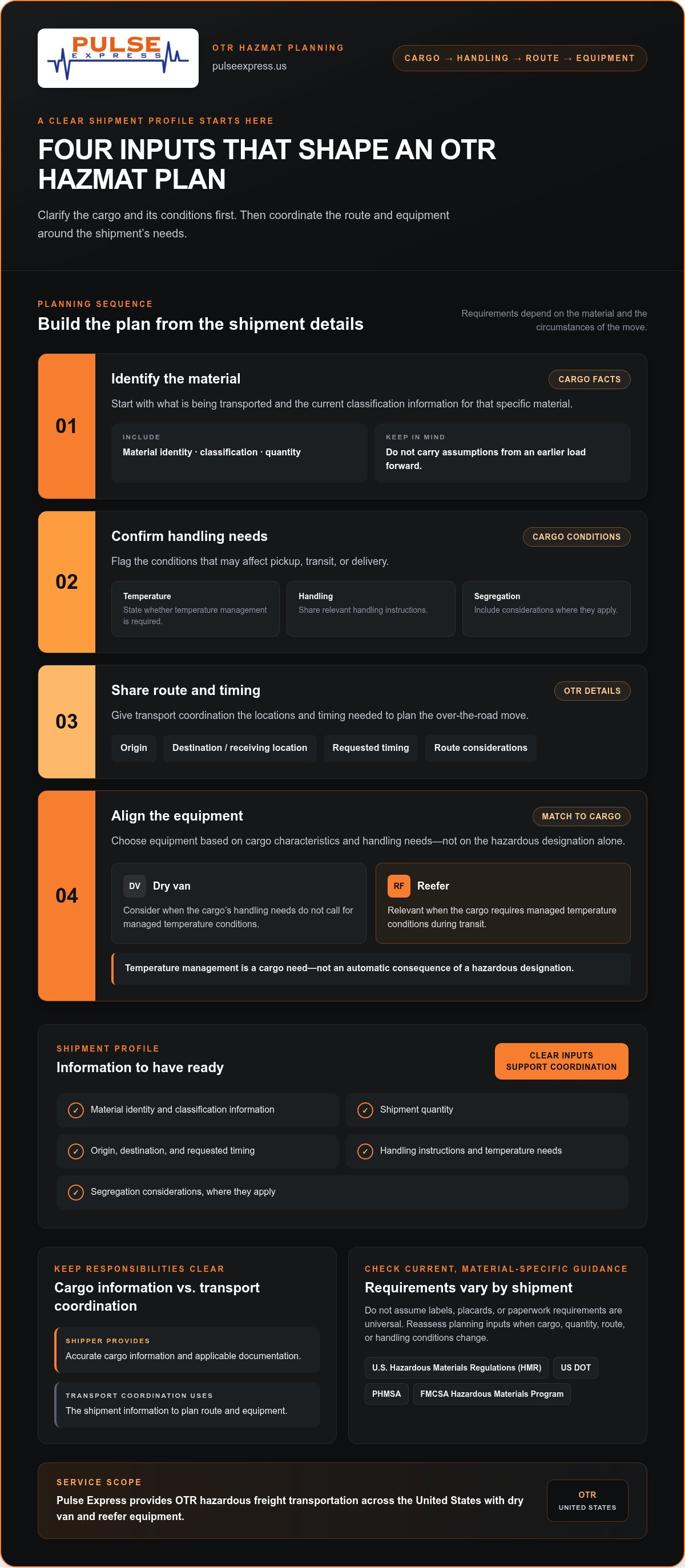
A clear shipment profile gives the transport plan a practical starting point. Before arranging hazardous materials trucking services, work through four steps: identify the cargo, confirm its handling needs, share route details, and align the equipment. Material classification and shipment details guide transport planning. Accurate information helps connect the cargo’s requirements with the OTR movement.
Start with the material’s identity and current classification information. Then gather details that may affect pickup, transit, and delivery. Temperature-sensitive material, for example, may call for different equipment considerations than cargo with no temperature-management needs. Requirements depend on the material and shipment circumstances, so don’t assume instructions from an earlier load automatically apply to a new one.
Shipment information that helps define transport needs
Prepare a concise shipment profile before discussing the move. Include the material identity and classification information, shipment quantity, origin, destination, and requested timing. Add relevant handling instructions, temperature requirements, and segregation considerations where they apply. These details help define what the transport plan must account for.
Use current guidance for the specific material to determine required details and records. The shipper provides accurate cargo information and applicable documentation; transport coordination uses that information to plan the route and equipment. Keep these responsibilities distinct, and clearly flag any special cargo-handling needs.
Regulatory details to handle carefully
Classification and shipping papers are subject to applicable hazardous materials requirements, including the U.S. Hazardous Materials Regulations (HMR). Exact obligations can vary with the material and circumstances. Don’t apply a universal checklist to labels, placards, or paperwork: a requirement for one shipment may not apply to another. Check current U.S. Department of Transportation (US DOT) and Pipeline and Hazardous Materials Safety Administration (PHMSA) guidance for the relevant details.
The FMCSA Hazardous Materials Program is another federal reference for hazmat transportation topics. Review authoritative guidance alongside the material’s current classification information, especially when shipment details change. If the cargo, quantity, route, or handling conditions differ from a previous move, reassess the planning inputs instead of carrying old assumptions forward.
Use this pre-planning checklist to keep the conversation focused:
- Identify the material and its current classification.
- Record shipment quantity, origin, destination, and timing.
- Describe applicable handling, temperature, or segregation needs.
- Organize current documentation guidance for that specific cargo.
- Share the route context so equipment and transport coordination can be aligned.
With those details organized, consider Pulse Express OTR hazmat transportation in relation to your cargo-handling needs and route. A complete shipment profile supports a focused discussion of dry van or reefer transport and helps identify planning gaps early.
Dry Van or Reefer: Match Hazmat Trucking Equipment to Cargo
Choose equipment based on the cargo’s handling requirements, especially whether it needs managed temperature conditions during transit. A hazardous designation alone doesn’t determine whether a load belongs in a dry van or reefer. The material’s specific requirements and applicable rules shape whether either option is suitable.
Use this comparison as a starting point, not a replacement for material-specific guidance:
| Equipment | May fit when | Key planning question |
|---|---|---|
| Dry van | The freight needs enclosed over-the-road transport without a specified temperature-control requirement. | Do the material’s handling needs and applicable requirements allow this approach? |
| Reefer | The cargo requires managed temperature conditions during transit. | What temperature-related needs apply to this specific material? |
When dry van hazmat transport may fit
A dry van may suit hazardous freight that needs enclosed OTR transport but has no specified temperature-control requirement. It’s an option to assess, not the default for every hazardous load. Material-specific handling needs and current applicable requirements determine whether it’s appropriate. Use the cargo’s current classification and handling guidance to inform that decision.
When reefer hazmat transport may fit
Reefer transport may suit cargo that requires managed temperature conditions in transit. That need should come from the material’s handling requirements, not an assumption that refrigerated equipment is inherently better for hazardous freight. Share the relevant temperature needs during planning, without assuming a particular range or monitoring feature. For temperature-sensitive freight, base the equipment discussion on the cargo’s documented requirements.
For either option, align the equipment decision with the complete shipment profile. Consider:
- Temperature: Does the cargo require managed conditions during transit?
- Handling: Are there material-specific considerations that affect the transport approach?
- Route: What origin, destination, and route context shape the OTR movement?
- Requirements: What current guidance applies to the material and shipment?
These questions help distinguish an equipment preference from a cargo need. If shipment guidance specifies temperature management, a reefer may be the relevant option to consider. If no temperature control is specified, a dry van may be worth considering, provided the material’s handling needs and applicable requirements are consistent with that choice.
Neither equipment type is a universal solution for hazardous freight. A label or broad cargo category alone doesn’t establish the right fit. The shipper’s material information guides the decision, while route and equipment coordination turn that information into an OTR transport plan. Pulse Express provides hazardous materials trucking services using dry van and reefer equipment, aligning transport options with cargo-handling and temperature needs.
How to Prepare a Hazmat Trucking Shipment for OTR Movement
A well-prepared shipment brief turns cargo requirements into a clear transport plan. Before arranging hazardous materials trucking services, gather the cargo details and current guidance that apply to the specific material and movement. Then share the route, timing, and handling needs so equipment and transportation coordination can be aligned with the shipment.
Build a clear shipment brief
Start with the information that defines the load and its movement. Provide accurate cargo details and applicable classification information, then organize the pickup and delivery locations, shipment quantity, and desired timing. If the cargo has temperature, handling, or load-separation needs, note them clearly. These details can affect equipment selection and route planning.
Use current regulatory guidance for the specific material to determine classification and documentation requirements. Requirements can vary, so don’t reuse paperwork assumptions from a different cargo or shipment. The shipper supplies accurate cargo information and applicable documents; the carrier uses those details to coordinate transportation. Keeping these roles distinct makes it easier to identify missing information early.
Coordinate the transport plan
Once the shipment brief is organized, align the equipment with the cargo’s documented handling needs. A temperature requirement may inform whether reefer equipment is appropriate, while freight without a specified temperature-control need may call for a different equipment discussion. Share route details and timing early so the plan reflects the full move, not just the pickup.
Set clear communication expectations for key shipment milestones, such as pickup coordination and delivery planning. Agree on who should receive updates and which contacts are responsible for shipment questions. This creates a shared point of reference without assuming a particular tracking system or communication feature. For wider context on planning an over-the-road move, see this long-distance freight transportation guide.
Use this checklist to prepare:
- Cargo: Material identity, current classification details, quantity, and relevant documentation.
- Handling: Temperature needs, special handling considerations, and load-separation needs where applicable.
- Route: Pickup and delivery locations, along with any route details relevant to the movement.
- Timing: Desired pickup and delivery timing, plus any receiving-location constraints the carrier should account for.
- Coordination: Equipment considerations, shipment contacts, and the milestones that matter for communication.
Before finalizing the shipment, review the cargo information and documents against current requirements for that material and movement. If details change, such as quantity, route, or handling needs, update the shipment brief so coordination uses the latest information.
With the cargo profile and movement details in hand, plan your OTR hazmat shipment with Pulse Express. A clear brief supports a focused discussion of dry van or reefer transport and the route your freight needs to travel.
Hazardous Materials Trucking Services with Pulse Express
Once cargo needs, equipment, and route have been considered, align them with an OTR transport partner. Pulse Express provides hazardous materials trucking services across the United States using dry van and refrigerated equipment. The right fit depends on the specific cargo requirements, including whether it needs temperature management, and the context of its route.
Pulse Express focuses on freight transportation, connecting shipper and receiver locations through an OTR move. Equipment selection is informed by the shipment’s handling needs. Clear information about the freight helps make the service discussion focused and practical.
A transport partner for dry van and reefer hazmat freight
Pulse Express transports hazmat freight using dry van and reefer equipment. A dry van may suit cargo without a specified temperature-control requirement, while reefer equipment is relevant when the material requires managed temperature conditions. These are equipment categories, not blanket solutions. The cargo’s current handling guidance and shipment circumstances determine what to consider.
Route context matters, too. Pickup and delivery locations, together with the cargo’s requirements, help frame the OTR transport plan. Founded in 2000, Pulse Express provides freight transportation and logistics services for general and hazardous freight.
Keep the service conversation grounded in the freight itself. Helpful details include:
- Cargo needs: Material identity and relevant handling requirements.
- Temperature: Whether the freight calls for temperature-managed transit.
- Route: Origin, destination, and relevant movement details.
- Timing: The shipment’s desired schedule and delivery context.
These details help connect a shipper’s requirements to the available OTR equipment categories. They also keep the discussion centered on transportation needs instead of assuming every hazardous shipment calls for the same equipment or plan.
Discuss your OTR shipment with Pulse Express
To start a service conversation, share the cargo information, route, desired timing, and any relevant handling or temperature requirements. Those details focus the discussion on the freight to move, the conditions it needs, and the locations it must connect. Current classification and documentation guidance for the material should inform the shipment details you provide.
Pulse Express provides OTR freight transportation across the United States, including dry freight hazmat and reefer hazmat transport. If you’re planning a hazardous freight move, discuss your hazmat freight needs with the team. A straightforward conversation is a practical next step toward matching the shipment with an appropriate OTR approach.
Move Your Hazmat Shipment Forward
A dependable transport plan starts with turning what you know about the shipment into a clear, current brief. If cargo details or requirements change before movement, update the information so planning stays aligned with the freight. This helps keep the shipper and carrier focused on the same needs as coordination progresses.
For hazardous materials trucking services, make decisions based on the specific shipment rather than assumptions. Bring your cargo profile, route, timing, and handling considerations into the conversation with Pulse Express.
Start planning your hazardous freight transportation with Pulse Express. Share the shipment’s needs and discuss OTR hazmat transport using dry van and reefer equipment in relation to your cargo and route.
Frequently Asked Questions
What information should I provide when requesting hazardous materials trucking?
Provide enough detail to identify the freight and the move: material name and classification information, quantity, pickup and delivery locations, and desired timing. Include applicable shipping documents and note any temperature, handling, or separation considerations. For example, explain whether the receiver has a specific delivery window or whether cargo conditions affect equipment choice. These details help the carrier understand the shipment before coordinating the OTR transport plan.
Who is responsible for classifying hazardous materials for shipment?
The shipper or other party offering the material for transportation is generally responsible for determining its proper classification under applicable requirements. Classification depends on the material’s properties, so don’t rely on a broad product name or a previous shipment as a substitute for current guidance. If the material’s status is unclear, use current U.S. Department of Transportation and PHMSA resources or qualified regulatory guidance before arranging transportation.
Do hazardous materials shipments need shipping papers?
Many hazardous materials shipments require shipping papers, but specific requirements and exceptions depend on the material and shipment circumstances. Don’t assume one document format or set of details applies to every load. Use current Hazardous Materials Regulations guidance to determine what applies, and ensure shipment information matches the material being offered for transport. Keep relevant documentation organized for coordination as part of the move.
Can hazardous materials be transported with non-hazardous freight?
Sometimes, but compatibility and applicable requirements determine whether hazardous and non-hazardous freight can move together. The material’s characteristics, separation needs, and shipment conditions all matter. A shared vehicle should never be assumed appropriate based only on available space. Identify all freight in the load and its relevant handling needs before planning so the transport discussion can account for potential conflicts.
Does hazardous materials trucking always require a reefer?
No. A reefer is relevant when the cargo requires managed temperature conditions, but a hazardous designation alone doesn’t mean refrigeration is necessary. Some freight may be considered for dry van transport if it has no specified temperature-control need and its material-specific requirements allow that approach. Check current handling guidance for the particular cargo before choosing equipment. Pulse Express provides OTR hazmat transportation using both dry van and reefer equipment.
How does temperature affect hazardous materials transport planning?
Temperature needs can influence equipment selection and the shipment instructions shared before pickup. Material that must remain within specified conditions calls for planning around those requirements, while freight without temperature controls may have other handling priorities. Provide the applicable temperature guidance and explain any conditions that could affect the trip. Don’t assume a reefer’s range or monitoring features. Base the plan on the cargo’s documented needs and the transport details.


