

Did you know that a single hazardous materials violation in 2026 can result in a civil penalty of up to $102,348? For shippers managing high-stakes freight, this number represents more than just a fine; it's a reminder of the immense responsibility involved in specialized hazmat logistics. We recognize the pressure you feel when balancing strict DOT compliance with the need for reliable temperature control. Finding the right balance is challenging when the safety of your cargo, the environment, and your bottom line are all at risk.
This guide is designed to help you master the complexities of hazardous material transport for 2026. We provide the stability, precision, and care you need to move sensitive shipments with absolute confidence. We explore current safety standards, carrier qualifications, and specialized equipment requirements to ensure your operations remain seamless. By the end of this article, you'll have a clear roadmap for achieving total compliance and operational excellence in every shipment you schedule.
Key Takeaways
- Understand the 2026 regulatory landscape to manage specialized hazmat logistics with absolute precision and legal compliance.
- Discover the essential criteria for vetting carriers, focusing on Class A CDL endorsements and strict equipment maintenance schedules.
- Determine the best asset for your freight by comparing the operational benefits of dry van and reefer hazardous material transport.
- Use our comprehensive checklist to verify carrier safety ratings and ensure insurance limits protect your high-value cargo.
- Learn how partnering with an established OTR expert ensures your sensitive hazardous shipments don't face unnecessary risks.
Understanding the Stakes of Specialized Hazmat Logistics
Specialized hazmat logistics involves the planning, execution, and monitoring of hazardous material transport under strict regulatory oversight. This discipline goes far beyond standard freight movements. It's a commitment to safety, precision, and legal compliance that protects both your cargo and the public. Shippers must navigate a dense landscape of PHMSA and FMCSA requirements for interstate commerce in 2026. General carriers often fail in this space because they lack the specific training and specialized equipment required to handle sensitive cargo with the necessary care.
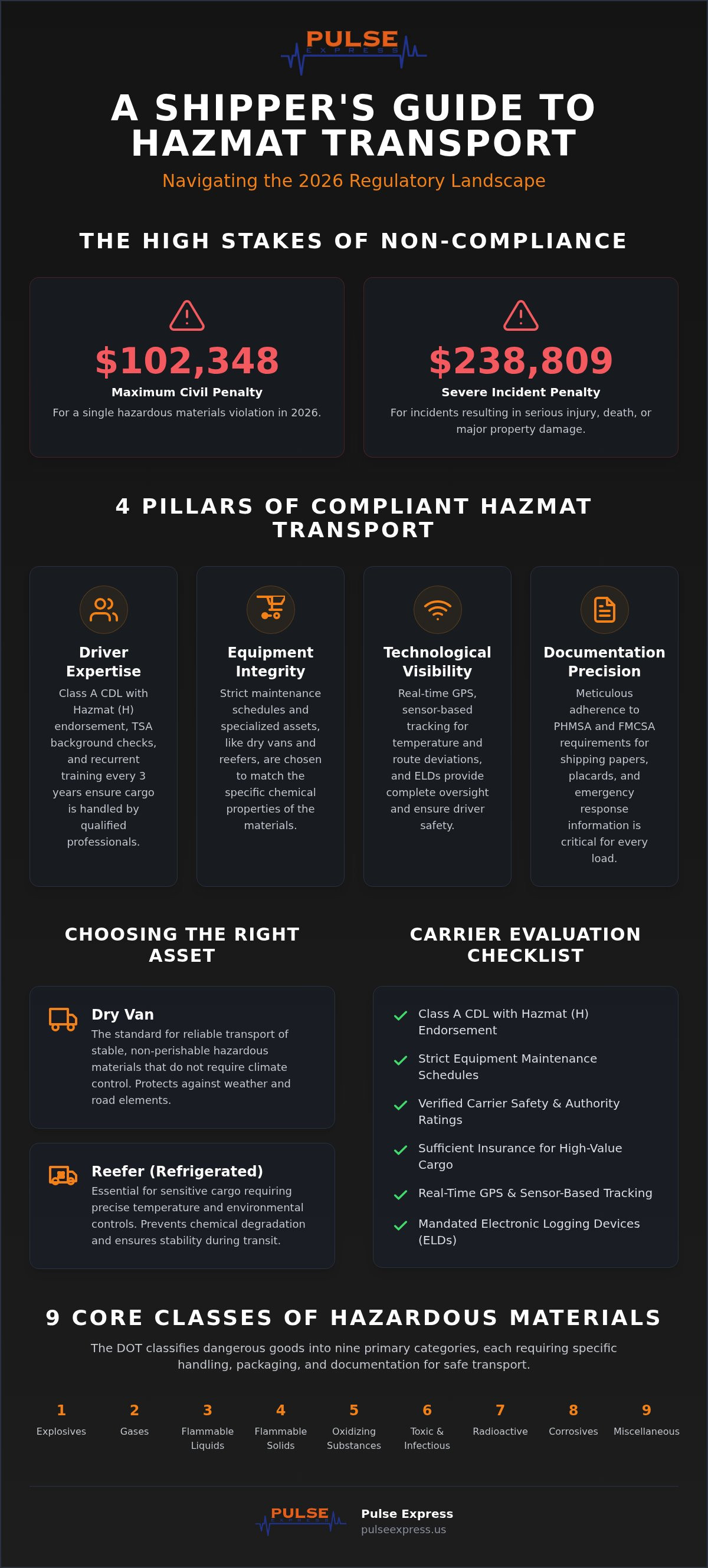
The financial impact of a non-compliant shipment is significant. As of March 2026, the civil penalty for a single hazmat violation can reach $102,348. If an incident results in serious injury or death, that penalty can climb as high as $238,809. Beyond these immediate costs, the reputational damage from an environmental incident can disrupt your supply chain for years. Choosing a partner for specialized hazmat logistics with a proven track record is the most effective way to protect your business interests and your brand.
The Core Classes of Hazardous Materials in OTR
The Department of Transportation classifies Dangerous Goods into nine primary categories. These include explosives, gases, flammable liquids, and corrosive substances. Each class requires specific handling procedures, specialized packaging, and precise documentation. High-hazard shipments often require specialized routing to avoid densely populated areas and minimize public risk. In 2026, the specific cargo classification and chemical properties of your materials dictate the equipment choice and environmental controls needed for safe transit.
Risk Mitigation as a Competitive Advantage
Proactive logistics planning does more than prevent accidents; it creates a tangible competitive edge. By identifying risks early, you can reduce insurance premiums and limit your overall liability. Driver experience is vital here. A seasoned operator understands how to manage weight distribution and monitor equipment health during long-haul transit. Establishing a culture of safety that mirrors modern hazmat transport safety standards ensures your freight moves without unnecessary delays. This focus on prevention provides the stability and reliability your partners expect while fostering long-term growth.
The Pillars of Compliant Hazardous Material Transport
Operational excellence in specialized hazmat logistics rests on a foundation of proactive risk management rather than reactive cleanup. Success in this field requires a methodical approach to every shipment. We focus on four critical pillars: driver expertise, equipment integrity, technological visibility, and documentation precision. This structured framework ensures that every load remains within the strict boundaries of federal law while maintaining the efficiency your business requires.
Compliance begins long before the wheels turn. It requires a deep understanding of the regulations governing transporting hazardous materials, which include specific training and security protocols. Shippers who prioritize these pillars often experience fewer delays and lower total costs of ownership. By partnering with a carrier that understands these nuances, you can move away from the anxiety of potential incidents toward a model of stable growth.
Driver Training and Hazmat Endorsements
The human element is the most vital component of any safety program. When hiring CDL drivers for hazmat roles, we look beyond the basic Class A license to the specialized Hazmat endorsement (H). This process involves rigorous background checks and TSA security threat assessments. Our drivers undergo recurrent training every three years to stay updated on the latest PHMSA rulemakings and safety protocols. This commitment fosters a culture rooted in safety, compliance, and reliability, ensuring that your cargo is handled by a professional who understands the specific chemistry and risks of their load.
Technology in the Hazmat Supply Chain
Modern logistics relies on digital tools to maintain oversight across thousands of miles. Real-time GPS and sensor-based tracking are non-negotiable in 2026. These systems provide instant alerts for temperature fluctuations or unauthorized route deviations. Electronic Logging Devices (ELDs) ensure that drivers remain within legal hours of service, reducing the risk of fatigue-related incidents. By using predictive maintenance and digital auditing, we achieve compliant hazardous material transport that anticipates problems before they occur. If you're looking for a partner that prioritizes this level of technical precision, exploring our specialized fleet can help streamline your high-stakes operations.
Finally, documentation accuracy remains a cornerstone of the modern supply chain. Every Bill of Lading (BOL) and Safety Data Sheet (SDS) must be perfectly aligned with current 2026 standards. Errors in classification or labeling are the leading causes of DOT violations and shipment rejections. Maintaining digital copies of all paperwork ensures that inspections go smoothly and that emergency responders have the information they need in any situation.
Dry Van vs. Reefer: Choosing Assets for Specialized Logistics
Selecting the right equipment for specialized hazmat logistics is a decision that balances chemical stability, environmental safety, and operational cost. It's not just about finding space in a trailer; it's about ensuring the asset matches the material's specific risks. Shippers often face a choice between dry van and refrigerated (reefer) assets. While both transport hazardous materials, the technical requirements for each differ significantly. Understanding these distinctions is essential for complying with Federal Hazardous Materials Regulations and ensuring your cargo arrives without incident.
Asset-based carriers offer a level of oversight that brokerages often can't match. When a company owns the trucks, they maintain direct control over maintenance schedules, driver training, and equipment specifications. This direct relationship is particularly important for high-stakes OTR transport. It ensures the person behind the wheel is intimately familiar with the trailer's safety features and the specific needs of the hazardous load. Choosing an asset-based partner provides the reliability, protection, and performance needed for consistent results.
Refrigerated Hazmat: Precision Temperature Control
Certain chemicals require strict thermal stability to prevent dangerous reactions or product degradation. This is where temperature sensitive hazmat shipping becomes critical for your supply chain. In 2026, modern reefer units utilize advanced redundancy systems to maintain set points during long-haul interstate routes. These systems protect pharmaceuticals and volatile chemicals from the Cold Chain Hazmat intersection, where even a slight deviation can lead to cargo loss. Our approach to reefer hazmat excellence focuses on precision, monitoring, and stability to keep your most sensitive materials safe.
Dry Van Efficiency for Industrial Cargo
For stable industrial goods, dry van hazmat carriers provide a cost-effective and efficient solution. We optimize payloads for Class 3 flammables, Class 8 corrosives, and Class 9 miscellaneous materials by using specialized securement techniques. These methods prevent shifting during transit, which remains a primary cause of container leaks and DOT violations. Balancing speed, safety, and compliance allows us to deliver nationwide dry van logistics that respect both your timeline and the environment. By focusing on payload optimization and securement, we ensure your industrial shipments remain secure from origin to destination.
Evaluating a Hazmat Carrier: A Shipper’s Checklist
Choosing a partner for specialized hazmat logistics requires a rigorous evaluation process that moves beyond surface-level promises. You need a carrier that prioritizes precision, safety, and compliance. Start by verifying DOT Safety Ratings through the Safety Measurement System (SMS). These scores offer a transparent look at a carrier's historical performance in crash indicators, hours-of-service compliance, and vehicle maintenance. High insurance limits are equally essential to match the specific risk profile of your specialized cargo.
Driver tenure is a often overlooked metric that directly impacts safety. Carriers with low turnover rates typically have more experienced operators who've internalized complex safety protocols. Communication must be proactive and clear. You should know exactly how a carrier manages weather delays or sudden route changes before the shipment begins. Finally, consider fleet age. Newer equipment often features advanced braking systems and stability controls that enhance hazmat reliability during long-haul transit.
The Audit Process: What to Ask Your Logistics Partner
During the procurement phase, ask specific questions about driver training frequency and emergency response protocols. A reliable partner will provide proof of current 2026 PHMSA registration and valid hazmat permits without hesitation. It's also helpful to assess their history with long distance freight transportation. Carriers with extensive OTR experience understand the unique stresses that multi-day hauls place on hazardous cargo and can plan routes that minimize risk.
Transparency and Reporting Standards
Real-time data is a necessity in 2026. You should have 24/7 access to shipment status and environmental data to ensure your cargo stays within its safe parameters. At Pulse Express, we provide reassurance and stability through transparent reporting and consistent communication. We establish clear KPIs for transport performance, focusing on on-time delivery, safety incidents, and documentation accuracy. This methodical approach ensures your supply chain remains efficient and protected. If you're ready to partner with a team that values operational excellence, connect with our hazmat experts today to discuss your 2026 shipping needs.
Pulse Express: Your Partner in Specialized Hazmat Excellence
Pulse Express is more than a carrier; we're a seasoned guide in the complex world of specialized hazmat logistics. Founded in 2000, we've spent over 25 years refining our processes to meet the highest safety and compliance standards. We offer the stability of an established leader with the personal touch of a close-knit, service-oriented partner. Our team is deeply committed to precision, care, and operational excellence in every mile we travel across the United States. We're here to instill confidence through reliability and a solution-focused approach to your transport needs.
We maintain a dual-focus fleet that handles both reefer and dry van hazardous freight with equal expertise. This versatility allows us to integrate seamlessly into your supply chain, regardless of whether you're moving stable industrial goods or volatile chemicals. By managing both general and hazardous freight, we provide a level of stability and equipment availability that niche carriers often struggle to match. Our fleet is designed to provide the protection, efficiency, and performance your high-stakes cargo requires.
Why Experience Matters in 2026 Logistics
The regulatory landscape for hazardous materials in 2026 is more demanding than ever. You need a partner who has witnessed the evolution of these laws and understands how to navigate them without disrupting your operations. Our close-knit service model allows us to cut through the noise of larger corporate entities, providing you with direct answers and stable results. We achieve this by focusing on hiring and retaining the best professionals for our hazmat OTR driver jobs. These expert drivers bring the skill, patience, and attention to detail required to protect your reputation and your cargo.
Streamlined Onboarding for New Shippers
We've designed our onboarding process to be as efficient as the shipments we manage. Moving from an initial quote to your first load is a journey defined by clarity, transparency, and partnership. We don't believe in one-size-fits-all solutions. Instead, we create customized logistics plans tailored to the specific chemical properties and industrial requirements of your freight. This methodical approach ensures that every safety protocol is followed and every deadline is met. We invite you to partner with a carrier that prioritizes your cargo's safety as much as you do. Connect with Pulse Express today and experience the difference that 25 years of specialized hazmat logistics expertise can make for your business.
Securing Your Future in Hazmat Transport
Managing hazardous materials requires more than just compliance; it demands a commitment to operational excellence. Throughout this guide, we've explored how matching the right equipment to your material's chemistry and vetting carriers with a focus on safety ratings can transform your supply chain. We believe that precision, care, and stability are the cornerstones of successful specialized hazmat logistics. By prioritizing these values, you protect your cargo, your reputation, and the environment.
Pulse Express has been a trusted leader in the industry since 2000. Our specialized reefer and dry van fleet is operated by expert hazmat-endorsed OTR drivers who understand the nuances of sensitive freight. You don't have to face these complexities alone. We're ready to serve as your seasoned guide through the intricacies of 2026 regulations and beyond. If you're looking for a partner that offers both global capability and a close-knit service approach, it's time to take the next step. Request a Specialized Hazmat Quote from Pulse Express and move forward with confidence. We look forward to helping your business grow safely and efficiently.
Frequently Asked Questions
What are the requirements for specialized hazmat logistics in 2026?
Shippers must ensure carriers possess current PHMSA registration and active hazmat permits. Drivers need a Class A CDL with a hazmat endorsement and recurrent training every three years. Documentation like Safety Data Sheets and accurate Bills of Lading must be present. In 2026, real-time tracking and digital auditing are standard expectations for any specialized hazmat logistics operation to maintain safety, visibility, and total regulatory compliance.
How do I verify if a trucking company is authorized to haul hazardous materials?
You can verify a carrier's authority by checking their USDOT number against the FMCSA's Safety Measurement System. Look for an active hazardous materials classification and a valid PHMSA registration. Shippers should also request a copy of the carrier's hazmat safety permit for high-hazard materials. It's vital to confirm their safety ratings are within acceptable thresholds to ensure they maintain the high standards required for sensitive freight.
What is the difference between general freight and specialized hazmat transport?
General freight involves stable goods with standard handling, while specialized hazmat transport requires strict regulatory oversight and specialized equipment. Hazmat shipments involve materials that pose risks to health, safety, or the environment. This necessitates specific driver endorsements, advanced securement techniques, and precise routing. Specialized logistics focus on risk mitigation and preventative planning, whereas general freight logistics prioritize volume and speed without the same level of environmental risk management.
Can hazardous materials be shipped in refrigerated (reefer) trucks?
Yes, hazardous materials can be shipped in refrigerated units, often referred to as reefer hazmat transport. This is common for volatile chemicals, pharmaceuticals, and temperature-sensitive industrial products. Pulse Express utilizes specialized reefer equipment to maintain thermal stability during long-haul OTR transit. These trailers feature advanced redundancy systems to prevent reactions caused by temperature fluctuations, ensuring that sensitive hazardous cargo remains stable and compliant from origin to final destination.
What should I do if my hazmat shipment requires temperature control?
If your shipment requires temperature control, you must specify the exact set point and acceptable range on the Bill of Lading. Partner with a carrier that offers Reefer Hazmat Transport and real-time sensor monitoring. These systems provide instant alerts if temperatures deviate from the required parameters. It's also important to confirm the carrier's emergency protocols for equipment failure to ensure your cargo remains protected during an unexpected roadside delay.
How does Pulse Express ensure driver compliance for hazmat loads?
Pulse Express ensures compliance by hiring high-quality Class A CDL drivers who hold active hazmat endorsements. We conduct thorough background checks and TSA security threat assessments for every operator. Our team undergoes recurrent training every three years to stay current with PHMSA and FMCSA regulations. This methodical approach to driver vetting and education ensures that your load is handled by a professional who prioritizes safety and operational excellence.
What insurance coverage is required for specialized hazmat shipping?
Specialized hazmat logistics requires higher insurance limits than general freight to cover potential environmental incidents and cargo loss. Federal law typically mandates a minimum of $5 million in public liability insurance for certain hazardous materials. Shippers should verify that their carrier's policy includes environmental restoration and pollution coverage. Ensuring these limits match the risk profile of your specific cargo is a critical step in protecting your business from financial liability.
Are there specific routing restrictions for hazmat OTR transport?
Hazmat OTR transport is subject to specific routing restrictions designed to avoid densely populated areas and sensitive environments. These hazmat-permitted routes are designated by state and federal authorities to minimize public risk. Drivers must follow these paths strictly and avoid prohibited tunnels or bridges. Pulse Express uses advanced logistics planning to identify compliant routes early, ensuring that your sensitive shipments move efficiently while adhering to all local and federal safety requirements.


