

A safe chemical shipment takes more than the right truck. Safe chemical transport trucking depends on accurate shipment details, suitable equipment, and coordinated handoffs from dispatch through delivery. To build a clear plan, identify the cargo’s requirements first, then share them with the carrier and receiver. Chemical freight requirements vary, so every party needs to work from the same information.
This guide covers what to organize before dispatch, how to match freight needs with an equipment plan, and how to coordinate shipper, carrier, and receiver responsibilities. It also explains why documentation and communication matter throughout the shipment, not just at pickup.
Pulse Express provides U.S. over-the-road transportation for hazardous and general freight using dry van and reefer equipment. The company supports shippers moving chemical freight by aligning transportation planning with dry or temperature-controlled requirements. Start by understanding the load and sharing its needs clearly at every handoff.
Key Takeaways
- Organize the chemical’s identity, packaging, quantity, and shipment conditions before dispatch to support a clear transport plan.
- Safe chemical transport trucking depends on matching handling and documentation needs to the specific freight, not relying on a one-size-fits-all approach.
- Use cargo requirements and documented temperature needs to guide dry van or reefer planning.
- Coordinate pickup readiness, transit communication, and delivery details so the shipper, carrier, and receiver understand their handoffs.
- Pulse Express provides U.S. over-the-road transportation for hazardous and general freight, with dry van and reefer equipment for dry or temperature-controlled shipment needs.
Safe Chemical Transport Trucking Starts With Understanding the Shipment
Safe chemical transport trucking begins before the load reaches the trailer. The plan needs to account for the specific product, its packaging and quantity, required transport conditions, and communication at delivery. Not all chemicals are hazardous materials, and the terms should not be used interchangeably. Whether a product is regulated as hazardous material depends on its classification and shipment details. Start with accurate cargo information, not assumptions.
The product, packaging, quantity, and required conditions shape the transport plan, including what handling, equipment, and information need to be coordinated.
Which shipment details matter before dispatch?
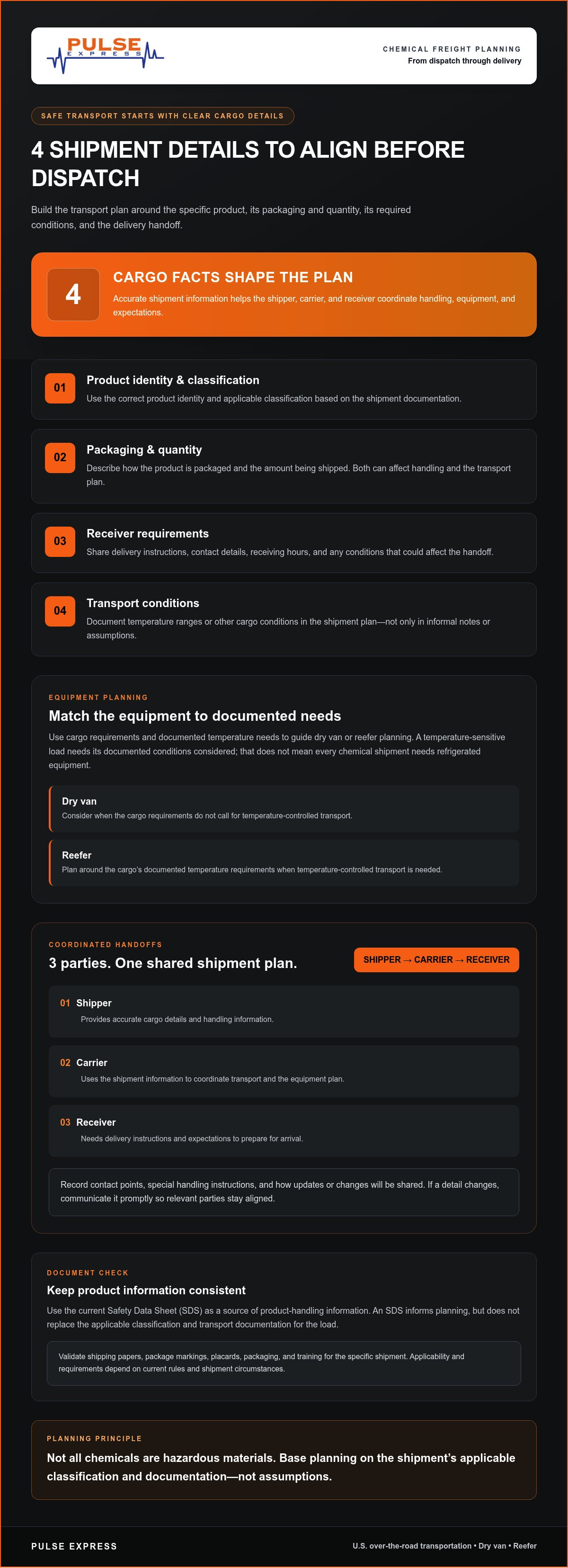
Gather the information the shipper, carrier, and receiver need to understand the load and prepare for their roles. Before dispatch, organize:
- Product identity and classification: Provide the correct product identity and applicable classification based on the shipment documentation.
- Packaging and quantity: Describe how the product is packaged and the amount being shipped. Both details can affect handling and the transport plan.
- Receiver requirements: Share delivery instructions, contact details, receiving hours, and any conditions that could affect the handoff.
- Transport conditions: Document temperature ranges or other conditions the cargo requires. Include them in the shipment plan instead of relying on informal notes or assumptions.
Use the current Safety Data Sheet (SDS) as a source of product-handling information, and keep shipment-specific instructions consistent with the shipping documents. An SDS can inform planning, but it does not replace the applicable classification and transport documentation for the load. If the product has a documented temperature range, share it early so equipment planning can account for it.
Why do chemical shipments need coordinated handling?
Information gaps create uncertainty that can make coordination harder. If the carrier does not have the cargo’s documented conditions, the equipment plan may not reflect the shipper’s needs. If the receiver has different delivery instructions, the final handoff may be difficult to coordinate. Consistent details help each party understand what is being moved, how it needs to be handled, and what to expect at pickup and delivery.
Separate general precautions from material-specific requirements. Accurate records and clear communication support every shipment, but the handling steps depend on the product and its packaging. A temperature-sensitive load needs its documented conditions considered in the transport plan; that does not mean every chemical shipment needs refrigerated equipment. Similarly, do not assume a product is or is not regulated based only on its everyday name. Base planning on the shipment’s applicable classification and documentation.
Once the cargo details are clear, align the equipment plan and responsibilities at each handoff.
How Compliance and Communication Support Safe Chemical Trucking
Compliance planning starts with the shipment’s classification and details, not a generic checklist. Requirements can vary with the material, packaging, quantity, and mode of transport. Do not assume every chemical load has the same documentation or handling rules. Depending on the shipment, relevant requirements may appear in Title 49 of the Code of Federal Regulations (49 CFR) and involve the U.S. Department of Transportation, the Pipeline and Hazardous Materials Safety Administration (PHMSA), or the Federal Motor Carrier Safety Administration (FMCSA).
Before dispatch, review shipping papers, package markings, placards, packaging, and training as items to validate for the specific load. Their applicability and requirements depend on current rules and shipment circumstances. The FMCSA’s guidance on Federal Hazardous Materials Regulations is a useful government reference. Use current official guidance to verify what applies instead of relying on assumptions or a checklist prepared for a different shipment.
What information and records should the shipment plan address?
Keep the product identity and classification consistent across shipment information, applicable records, and handling instructions. Confirm that documents and package markings reflect the load being transported, then identify shipment-specific conditions the carrier and receiver need to know. Responsibilities can differ among the parties under applicable requirements. Make clear who is supplying and communicating each piece of information without assuming one party covers every obligation.
For additional planning context, read this specialized hazmat logistics shipper’s guide. It offers a broader look at coordinating hazardous freight over the road.
How do clear handoffs reduce avoidable confusion?
Carry the shipment plan from shipper to carrier to receiver. The shipper provides accurate cargo and handling details. The carrier uses that information to coordinate transport, and the receiver needs delivery instructions and expectations to prepare for arrival. Record contact points, special handling instructions, and how updates or changes will be shared.
Consistent shipment information helps each party make decisions from the same plan, reducing avoidable confusion at pickup, in transit, and at delivery. If a detail changes, communicate it promptly and keep the relevant parties aligned. Pulse Express provides U.S. over-the-road transportation for hazardous and general freight using dry van and reefer equipment. Learn more about Pulse Express freight transportation.
Choose Dry Van or Reefer Transport Around the Cargo Requirements
Choose equipment based on the cargo’s documented needs, not the assumption that all chemical freight requires the same trailer. A dry van may suit freight whose packaging and transport conditions do not call for temperature control. A reefer may be appropriate when the shipper’s instructions specify temperature management. Neither option is automatically suitable for every chemical or hazardous material. The product, packaging, handling requirements, and applicable rules all matter.
For safe chemical transport trucking, translate the shipper’s requirements into clear equipment-planning details before dispatch. Share any temperature range, setpoint instructions, and monitoring expectations early, along with relevant packaging and loading information. If the documentation does not establish a need for temperature control, do not assume a reefer is required. If it does, state the operating expectations clearly.
When might dry van transport fit the shipment?
Dry van planning may suit freight when its documented conditions align with that equipment and no temperature-control requirement changes the plan. Consider whether the packaging is appropriate for the load and how it will be secured in transit. An enclosed trailer can provide a barrier from ordinary weather exposure, but that alone does not establish suitability for a particular chemical. Cargo-specific handling requirements still guide the decision.
When should temperature-controlled transport be considered?
Consider reefer planning when shipper documentation identifies temperature sensitivity or other temperature-control instructions. Before dispatch, communicate the required range or setpoint and any expectations for monitoring or reporting. Do not choose a temperature or assume a monitoring method without shipment-specific direction. Clear instructions give the shipper, carrier, and receiver a shared reference for planning and handoffs.
Use the shipment record to guide the equipment discussion. Review the documented conditions, then align the plan around them:
- Dry van: Consider it when documented freight and handling requirements suit non-temperature-controlled transport.
- Reefer: Consider it when documented instructions call for temperature control, with expectations stated before dispatch.
- Either option: Confirm that the packaging, loading plan, and applicable handling requirements align with the shipment.
Pulse Express provides U.S. For broader context on planning temperature-controlled loads, read this cold chain logistics guide. Match equipment to the cargo’s documented needs rather than treating the trailer type as a substitute for shipment-specific planning.
Use This Chemical Freight Checklist Before Pickup and Delivery
A clear checklist keeps shipment details, equipment planning, and handoffs aligned. Use this sequence to prepare the load and give each party a practical reference from dispatch through delivery. For safe chemical transport trucking, make sure the final instructions reflect the specific freight and applicable current requirements.
What should shippers prepare before pickup?
- Compile cargo information. Record the product identity, applicable classification, quantity, packaging, and current product-handling information needed for the shipment.
- Gather shipment documents and instructions. Share applicable documentation, handling requirements, and receiver details through the agreed shipment channels. Review document and marking requirements for the specific load instead of assuming one checklist applies to every chemical.
- Align equipment and pickup plans. Communicate documented temperature conditions, if any, and other cargo needs before dispatch. Confirm pickup timing, site instructions, and the contact responsible for resolving questions during loading.
- Coordinate secure loading. Align shipper and carrier expectations for loading, packaging condition, and load security. Make sure the people involved understand the agreed plan and how to raise a concern before the truck departs.
What should teams coordinate during transit and delivery?
- Set update expectations. Agree on how transit updates will be shared and identify the contact for changes, delays, or other exceptions. This creates a communication path without assuming a particular tracking feature.
- Prepare the receiver. Confirm receiving hours, delivery instructions, unloading coordination, and required delivery documentation with the receiver. For longer routes, the long-distance freight transportation guide offers additional context on route coordination.
- Review and close the handoff. Before dispatch, compare cargo information, applicable documents, equipment instructions, and contact details with current shipment-specific requirements. At delivery, record exceptions and communicate them promptly through established contacts.
Keep the checklist with the shipment plan and update it when instructions change, so the shipper, carrier, and receiver work from the same information. Pulse Express provides U.S. Plan chemical freight transportation with Pulse Express.
Plan Safe Chemical Transport Trucking With Pulse Express
Safe chemical transport trucking takes a shipment-specific plan and clear communication between the shipper, carrier, and receiver. Pulse Express provides U.S. The company works with shippers to align freight needs and equipment planning, recognizing that not every chemical requires the same approach.
Start with the cargo information. Product identity, packaging, quantity, applicable classification, and documented handling conditions help shape the transportation plan. Current requirements also depend on the shipment, so use applicable official guidance to verify documentation and handling expectations rather than relying on a general rule of thumb.
What to include in a shipment inquiry
Share the details that describe the load and support an informed equipment conversation:
- Product and quantity: Identify the product and amount being shipped, along with its applicable classification where relevant.
- Packaging and handling: Describe the packaging and provide documented handling instructions or other shipment-specific requirements.
- Locations and timing: Include pickup and delivery locations, planned timing, and site instructions that may affect coordination.
- Temperature conditions: If temperature control is needed, share the documented range or setpoint and related handling expectations.
- Receiver coordination: Note receiving constraints, delivery instructions, contact details, and any special handoff needs.
Specific information keeps the conversation focused. For example, documented temperature requirements can inform whether reefer planning is appropriate, while freight whose documented needs suit non-temperature-controlled transport may be considered for dry van planning. The equipment decision should follow the cargo details and applicable handling requirements.
A dependable next step for shippers
With shipment details organized, the shipper and carrier can discuss the freight, equipment needs, and handoffs from a shared starting point. Clear information also helps identify questions that depend on the specific cargo or current applicable requirements. Pulse Express supports shippers coordinating hazardous and general freight transportation over the road.
Prepare the cargo details and receiver expectations, then discuss your chemical freight transportation needs with Pulse Express.
Move Your Chemical Freight Forward With a Clear Plan
Safe chemical transport trucking starts with accurate shipment details and a shared understanding of the load. Product classification, packaging, quantity, and documented handling conditions help shape the plan. Check current requirements for the specific shipment.
Equipment choices should follow cargo needs. Dry van or reefer planning depends on whether the freight’s documented requirements call for temperature control. Clear instructions, coordinated contacts, and well-planned pickup and delivery handoffs help keep the shipper, carrier, and receiver aligned.
Pulse Express provides U.S. Share your cargo details, locations, timing, and handling requirements to start a focused conversation about your shipment. Discuss your chemical freight transportation needs with Pulse Express.
Careful preparation and a transportation plan built around the shipment’s requirements give your team a clear starting point for the next load.
Frequently Asked Questions
What makes chemical transport by truck safe?
Safe chemical transport trucking relies on a shipment-specific plan, accurate cargo information, suitable equipment, and clear communication through delivery. The shipper and carrier need consistent details about the product, packaging, quantity, and handling conditions. Check documentation and applicable requirements for the specific load. Clear pickup instructions, transit contacts, and receiver expectations help prevent avoidable confusion at each handoff.
Does every chemical shipment require a hazmat carrier?
No. A chemical product is not automatically a hazardous material for transport. Whether hazardous-material requirements apply depends on the product’s classification and shipment details, including factors such as packaging and quantity. Determine the applicable classification and verify current requirements using official guidance. If the shipment is regulated as hazardous material, account for the rules that apply to that load instead of relying on its everyday product name.
Can chemicals be transported in a reefer truck?
Yes, a reefer may be considered when documented cargo requirements call for temperature-controlled transport and the equipment plan suits the shipment. Share the required temperature range or setpoint, handling instructions, and monitoring expectations before dispatch. Do not assume all chemicals need refrigeration or choose a temperature without shipment-specific direction. Pulse Express provides reefer transportation for hazardous and general freight, with planning informed by the cargo’s documented needs.
What documents are needed to ship hazardous materials by truck?
Required records vary according to the material’s classification and shipment details. Depending on the load, the shipment plan may need to address shipping papers, packaging, markings, and placarding. Do not treat this as a universal checklist. Verify current documentation and marking requirements against official guidance for the specific shipment. A Safety Data Sheet can inform product-handling decisions, but it should not be assumed to replace required transport documents.
How should a shipper prepare chemicals for truck transport?
Start by organizing the product identity, applicable classification, quantity, packaging details, and current product-handling information. Share documented temperature or other transport conditions, if applicable, along with pickup instructions and receiver requirements. Coordinate loading expectations, contact points, and delivery details with the carrier and receiving team. Before dispatch, review the shipment documents and instructions against current requirements for the specific cargo.
What is the difference between dry van and reefer chemical transport?
A dry van is generally considered for freight whose documented handling and transport conditions suit non-temperature-controlled equipment. A reefer is considered when the shipment’s instructions call for temperature control. Neither equipment type is automatically right for every chemical. Packaging, cargo conditions, and applicable handling requirements inform the decision. Provide the required temperature range or setpoint before dispatch when temperature management is part of the shipment plan.
Who is responsible for chemical shipping information and documentation?
Responsibilities depend on applicable requirements and each party’s role in the shipment. The shipper should provide accurate cargo details and relevant handling information, while the carrier and receiver need clear instructions for their parts of the transport and delivery plan. Do not assume one party’s information replaces another’s responsibilities. Align contacts, records, and handoff expectations, and verify current requirements for the particular shipment.


