

What if your hazardous freight is packed for the right temperature, but the shipment details don’t account for its hazmat requirements? Refrigerated hazmat transport works best when temperature control and compliance are planned together, from cargo classification to handling instructions and route.
Whether a load needs reefer equipment, what temperature range applies, and which shipment details must be ready before pickup all depend on the specific material and cargo. Clear information helps align the equipment, handling, and transportation plan.
This guide explains what to prepare for refrigerated hazmat freight, how reefer equipment and precise instructions support temperature control, and why cargo details and routing belong in the same conversation. Pulse Express provides nationwide over-the-road transportation for hazardous and temperature-sensitive freight, coordinating both needs as part of the shipment plan. Understanding the process helps you prepare your freight and plan a well-coordinated move.
Key Takeaways
- Hazardous classification alone doesn’t determine whether freight needs refrigeration. The cargo’s specific requirements guide the decision.
- Plan temperature instructions and hazmat requirements together, using shipment-specific guidance rather than generic assumptions.
- For refrigerated hazmat transport, align cargo details, handling instructions, route planning, and handoff documentation before dispatch.
- Use a preparation checklist to organize shipment identification, temperature needs, regulatory details, and dispatch information.
- Pulse Express coordinates nationwide over-the-road transportation for hazardous and temperature-controlled freight using reefer and dry van equipment.
What Is Refrigerated Hazmat Transport, and When Is It Needed?
Refrigerated hazmat transport is the movement of hazardous freight under a shipper-specified temperature plan. It combines the cargo’s temperature-control needs with the handling, documentation, and transportation requirements associated with its hazardous classification.
Hazardous classification alone doesn’t mean a shipment needs refrigeration. The need for temperature control depends on the material’s properties and handling instructions. Some temperature-sensitive chemicals may require a defined range to preserve their condition or support safe handling; other hazardous materials can travel without refrigerated equipment. Don’t assume every chemical needs a reefer or that one temperature setting suits all hazardous freight.
Hazardous materials are classified according to the risks they pose. The overview of Dangerous goods provides useful background on classification and labeling. Base shipment decisions on current, material-specific information and applicable official requirements.
Which hazardous shipments need refrigerated transport?
Start with the product’s handling instructions and applicable shipment documentation. Review the Safety Data Sheet (SDS) for relevant information, then use the shipper’s specific instructions to determine whether temperature control is needed and what range to maintain. The SDS is a reference, not a substitute for complete shipping instructions. If the required range isn’t clear, resolve that detail before dispatch instead of relying on a generic reefer setting.
For example, a temperature-sensitive chemical may need controlled conditions during transit, while another chemical classified as hazardous may not. The material, its packaging, and its documented handling requirements determine the plan.
How does reefer hazmat freight differ from standard hazmat shipping?
Standard hazmat planning addresses the shipment’s hazardous-material requirements. Reefer hazmat planning adds a temperature-control plan that must work alongside them. Refrigerated equipment supports the specified temperature conditions, but it doesn’t change the material’s hazard classification or replace the documentation and handling considerations that classification brings.
Keep both plans aligned across pickup, transit, and delivery. Shipment instructions should clearly identify the cargo, temperature requirements, and handling information needed for the move. This gives everyone involved a shared reference at each handoff and keeps temperature control connected to the hazmat plan.
Refrigerated hazmat transport is a coordinated shipment, not simply hazardous freight placed in a reefer. Clear cargo information and precise instructions help plan equipment and movement around the shipment’s documented requirements.
How Temperature Control and Hazmat Planning Work Together
Align temperature and hazmat instructions before dispatch so the equipment, handling plan, and shipment documents support the same requirements. A clear workflow helps keep cargo needs visible from initial planning through delivery.
From cargo details to a workable temperature plan
Start with the cargo, not a default reefer setting. Identify the material and its classification, then review the shipper’s handling instructions and applicable shipment documents. Together, these details inform whether temperature control is needed and what conditions the shipment must maintain.
State the required temperature range and any handling limits plainly in the shipment instructions. Avoid assumptions based on a broad product category: materials with similar uses may have different requirements. Check material-specific details against current documentation and applicable regulations. OSHA’s overview of transporting hazardous materials provides background on the safety and regulatory framework. Shipment requirements depend on the material and its classification.
What happens during an OTR refrigerated hazmat shipment?
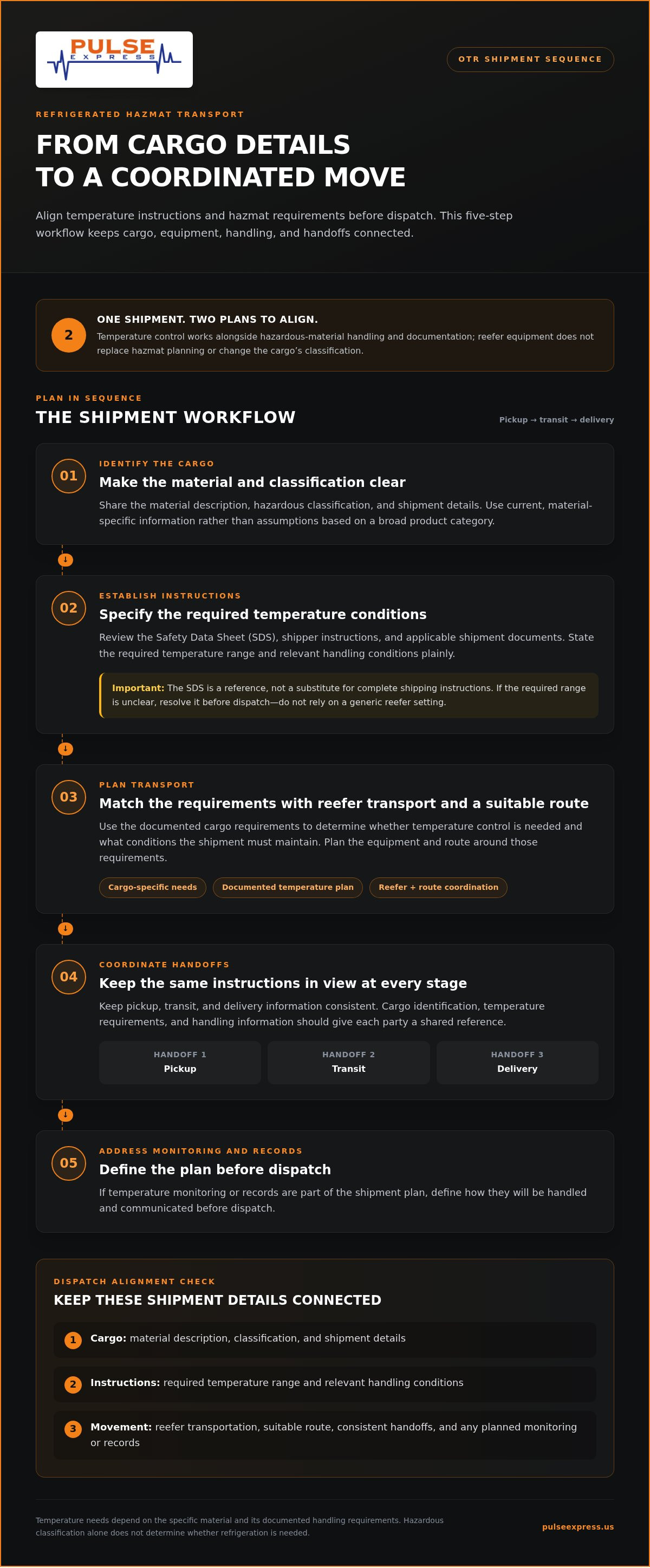
Use this sequence to organize an over-the-road move:
- Identify the cargo: Share the material description, classification, and shipment details.
- Establish instructions: Document the required temperature range and relevant handling conditions.
- Plan transport: Match the shipment’s requirements with reefer transportation and a suitable route.
- Coordinate handoffs: Keep pickup, transit, and delivery information consistent so each party works from the same instructions.
- Address monitoring and records: If temperature monitoring or records are part of the shipment plan, define how they’ll be handled and communicated before dispatch.
Reefer equipment supports the shipment’s specified temperature conditions during transit. Its use doesn’t replace hazmat planning or change the cargo’s classification. Keep the temperature plan and hazardous-material information linked through pickup, transit, and delivery.
Pulse Express coordinates nationwide OTR transportation for hazardous and temperature-sensitive freight. Nationwide OTR freight transportation supports moves planned around documented cargo requirements, with clear instructions guiding coordination at key handoffs.
Refrigerated Hazmat Transport: What Shippers Should Compare
Compare the plan against your actual load, not just a general list of services. The useful question is how the transportation plan fits your cargo, instructions, and route. For broader context on temperature-controlled freight, see this cold chain logistics guide.
| What to compare | Shipment-specific question |
|---|---|
| Cargo fit | Are the material identity, applicable classification, and packaging details reflected in the shipment plan? |
| Temperature instructions | Is the required range and any documented handling limit stated clearly, rather than assumed? |
| Hazmat coordination | Are hazardous-freight details considered alongside the temperature plan and applicable requirements? |
| Communication | Are pickup, delivery, and handoff instructions clear, with a defined way to communicate shipment updates? |
| Route coverage | Does the planned route support the shipment’s origin, destination, and documented requirements? |
Broad capability statements describe general services; shipment-specific planning shows how they apply to a particular load. For regulatory context, consult the FMCSA’s guide to the Federal Hazardous Materials Regulations. Requirements depend on the material and shipment, so use current official guidance alongside the cargo’s documentation.
Questions the shipment plan should answer
Before dispatch, organize information around the load. Identify the material, its applicable classification, packaging, and handling instructions. Record the required temperature range and any documented limits. Clarify pickup and delivery details, route needs, and how information will be communicated during handoffs. This gives the transportation plan a practical basis.
How refrigerated, dry van, and dedicated transport differ
Refrigerated equipment supports freight with documented temperature-control needs. Dry van equipment may suit hazardous freight that doesn’t require those conditions. Neither option is universally better; the cargo’s documented requirements should guide the choice. Dedicated transport describes an operating model arranged around particular shipping needs. It may suit some freight, but it isn’t automatically necessary for every load.
For refrigerated hazmat transport, compare how the proposed equipment, instructions, communication, and route work together for your shipment, rather than relying on a single service label.
How to Prepare a Temperature-Sensitive Hazmat Shipment
A well-prepared shipment gives the shipper, carrier, and receiving location one consistent set of instructions. Use this checklist to organize refrigerated hazmat transport, from cargo identification through dispatch readiness.
- Identify the material. Record its accurate description and applicable hazardous-material classification. Check the information against current shipment documents and material records.
- Review packaging details. Document how the freight is packaged and include relevant packaging or handling information needed to plan the move.
- Set the temperature instructions. State the shipper-specified temperature range and any documented limits or handling conditions. Avoid generic assumptions or an unspecified reefer setting.
- Assemble applicable documents. Gather the Safety Data Sheet and other shipment documentation relevant to the material and its movement. Keep descriptions and instructions consistent across records.
- Verify applicable requirements. PHMSA, USDOT, and 49 CFR requirements vary with the material, classification, and shipment. Check current official requirements for the specific load rather than treating a checklist as a substitute for regulatory review.
- Coordinate pickup, route, and delivery. Share the origin, destination, planned route details, pickup and delivery instructions, and receiving-site requirements that affect the handoff.
- Prepare for dispatch. Make sure the shipper, carrier, and receiver have the same cargo description, temperature instructions, handling information, and communication details before the freight moves.
Gather cargo, temperature, and handling information
Accuracy matters at each step. A clear material description and classification connect cargo documents to the shipment plan, while precise temperature instructions give the transportation team an actionable reference. If instructions change, update the relevant parties and records so outdated details don’t carry through to pickup or delivery.
Coordinate compliance and delivery handoffs
Confirm material-specific regulatory details against current official guidance. Then make handoffs practical: identify the pickup and receiving locations, share access or delivery instructions that affect execution, and establish who needs shipment updates. For broader planning context, read this specialized hazmat logistics guide.
With cargo details and handoff instructions organized, you can discuss your temperature-sensitive hazmat shipment with Pulse Express and plan the over-the-road move around its documented requirements.
How Pulse Express Supports Refrigerated Hazmat Transport
Temperature-sensitive hazardous freight calls for a transportation plan shaped around the cargo, not assumptions about a standard load. Pulse Express provides nationwide over-the-road transportation for hazardous and temperature-controlled freight using reefer and dry van equipment. The plan starts with the shipper’s documented requirements and keeps cargo details, temperature instructions, and hazmat information aligned.
A coordinated OTR approach for sensitive freight
Pulse Express provides reefer and hazmat transportation for shipments with documented requirements. Information about the material, its classification, packaging, temperature range, and handling instructions establishes a practical basis for planning the move. Pickup, route, and delivery details also matter because instructions need to stay clear as freight moves between parties.
Careful planning, secure handling, and clear coordination are central to sensitive freight transportation. These priorities don’t replace material-specific documentation or applicable requirements. They keep the transportation plan grounded in the shipper’s instructions. Reefer equipment supports freight with temperature-control needs; dry van equipment serves freight whose documented requirements don’t call for temperature control. Choose equipment based on shipment details.
For shippers, this means sharing complete, consistent information early in the planning conversation. If an instruction changes, keeping shipment details aligned helps reduce confusion across dispatch and delivery coordination. Pulse Express’s nationwide OTR service connects cargo requirements with transportation across the United States.
Plan your next refrigerated hazmat shipment
Before discussing a load, gather the material description and classification, packaging information, applicable documents, shipper-provided temperature range, and handling conditions. Include origin, destination, pickup and receiving-site details, along with route or communication needs that affect the move. This gives the transportation plan a clear starting point.
Material-specific compliance details and temperature instructions guide refrigerated hazmat transport. Review current requirements for the specific shipment and share the same accurate instructions with the carrier and receiving location. Clear coordination supports handoffs from planning through delivery.
For shipment planning, contact Pulse Express about your refrigerated hazmat shipment.
Plan Your Next Sensitive Freight Move with Confidence
Successful refrigerated hazmat transport starts with shipment-specific information. Confirm whether the cargo needs temperature control, document its required range and handling instructions, and coordinate hazmat details with pickup, transit, and delivery planning. Clear, consistent information helps everyone involved work from the same shipment plan.
Pulse Express provides nationwide over-the-road transportation across the United States for hazardous and general freight, using refrigerated and dry van equipment to support different cargo requirements.
Gather your cargo details, temperature instructions, and delivery information, then discuss your refrigerated hazmat shipment with Pulse Express to plan a coordinated transport move.
Frequently Asked Questions
Does every hazardous material shipment need refrigerated transport?
No. A hazardous-material classification doesn’t automatically mean a shipment needs refrigeration. Temperature control depends on the specific material’s properties and documented handling instructions. Some temperature-sensitive chemicals may require a defined range, while other hazardous freight may not. Review applicable shipment documents, including the Safety Data Sheet, and use material-specific instructions to determine whether reefer transportation is appropriate.
Can hazardous materials be transported in a refrigerated truck?
Yes, hazardous materials can be transported in a refrigerated truck when the shipment’s requirements call for temperature control and the transportation plan addresses applicable hazmat requirements. Reefer equipment supports the specified temperature conditions, but it doesn’t change the material’s hazard classification or replace required shipping information. Pulse Express transports hazardous and temperature-controlled freight using reefer and dry van equipment for over-the-road shipments.
How is the temperature range for refrigerated hazmat freight determined?
The required range comes from the specific material’s documented requirements and the shipper’s handling instructions, not a generic reefer setting. Review the Safety Data Sheet and other applicable shipment documents, then clearly state the required range and any handling limits in the shipment instructions. If the material-specific temperature requirement is unclear or documents conflict, resolve the information before dispatch so the plan is based on accurate guidance.
What information should I provide for a refrigerated hazmat shipment?
Provide an accurate material description, applicable classification, packaging details, and relevant shipment documents. Include the shipper-specified temperature range and handling instructions, plus pickup and delivery locations, route considerations, and receiving-site details that may affect the handoff. Keep the information consistent across documents and communications shared with the carrier and receiving location. Complete, aligned details give the transportation plan a clear starting point.
What regulations apply to refrigerated hazardous-material transportation?
Applicable requirements depend on the material, its classification, and the specific shipment. PHMSA, USDOT, and relevant provisions of 49 CFR may apply to hazardous-material transportation. Verify current official requirements for the freight rather than relying on a general checklist or outdated guidance. The temperature plan is also shipment-specific, so coordinate documented temperature instructions with the material’s applicable hazmat information.
How do refrigerated hazmat shipments stay temperature-controlled during long-haul transit?
Start with reefer equipment and clear, shipment-specific temperature instructions to guide planning from pickup through delivery. The shipper, carrier, and receiving location should share consistent handling details and communicate relevant information at handoffs. Temperature monitoring or recordkeeping arrangements can vary by shipment, so include them in the plan when required or agreed for that load. Don’t assume a standard setting or monitoring process applies to every shipment.


