

What if the right trailer still can’t protect a shipment from a poorly planned handoff? Temperature-sensitive freight needs careful handling, but choosing reefer equipment is only one part of temperature sensitive cargo transport. Product requirements, route conditions, timing, and communication all shape the plan, especially when delays or transfers are possible.
This guide turns product handling requirements into a practical shipping plan. You’ll learn how to assess trailer fit, plan routes and handoffs, and ask carriers what monitoring, reporting, and documentation they can support. Use specific questions to compare transport options, rather than assuming one setup suits every shipment.
Pulse Express provides over-the-road transportation across the United States, including reefer and dry van freight services for general and hazardous goods. Whether its service fits depends on the shipment and route. This guide outlines what to confirm with a prospective OTR partner before dispatch, so you can make an informed choice about your freight and its handling requirements.
Key Takeaways
- Build a shipping plan from the cargo’s documented handling requirements, not assumptions about the product.
- Assess reefer and dry van options against the shipment’s needs, and confirm equipment capabilities directly with the carrier.
- Use a preparation checklist to align appointments, contacts, and documentation among the shipper, carrier, and receiver.
- Evaluate temperature sensitive cargo transport by considering cargo requirements, equipment fit, route planning, communication, and verified carrier capabilities.
- Pulse Express provides OTR reefer and dry van freight transportation across the United States. Confirm whether its service fits your cargo and route.
What temperature-sensitive cargo transport needs to protect
Temperature-sensitive freight is cargo that must stay within product-specific conditions during defined handling and transit stages. That’s different from simply calling a shipment refrigerated. Refrigerated freight describes an equipment approach; temperature-sensitive cargo describes what the product requires. A reefer trailer can support a planned temperature environment, but having one does not confirm that every product requirement has been met from preparation through delivery.
For effective temperature sensitive cargo transport, start with the product owner’s written instructions. Use them to guide decisions about equipment, packaging, handling, and timing. Together, these steps help maintain the intended cold chain, the sequence of temperature-aware handling from origin to destination.
Which cargo requirements should shippers identify first?
Ask the product owner for the approved transport conditions and handling instructions. Clarify when each requirement applies: before loading, during transit, at delivery, or throughout the shipment. Don’t assume products in the same general category have identical needs.
- Record product sensitivities and any packaging requirements.
- Document shipment-specific handling restrictions.
- Share instructions with the carrier and receiver before pickup, and confirm who is responsible for each step.
Why does temperature control matter beyond the trailer?
Conditions can be affected at several points, not just during the drive. Loading delays, time spent waiting at a facility, open doors, transfers, and uncoordinated delivery appointments can all complicate the handling plan. Their significance depends on the product’s documented requirements, so don’t apply one risk level to every shipment.
Equipment capability is only one part of the plan. The shipper’s packaging and preparation, the carrier’s confirmed equipment and handling capabilities, and the receiver’s readiness all need to work together. Clarify how the shipment should be handled during expected dwell time or handoffs, and who should be contacted if plans change. This gives each party a clear role without treating a refrigerated trailer as a substitute for product-specific instructions.
How temperature-sensitive cargo transport works on an OTR route
An OTR shipment is a sequence of coordinated decisions, not just a pickup and a drive. Start with the cargo’s documented requirements, then connect them to pickup readiness, equipment selection, route timing, delivery, and receiving. Each handoff should preserve clear instructions and accountability.
Cargo requirements, equipment fit, and route planning are connected decisions. A suitable trailer helps only when the route and handling plan also support the shipment’s needs. A reefer trailer is generally considered when freight calls for a refrigerated environment, but the required conditions, equipment capabilities, and operating procedures must be confirmed for the specific load. Don’t assume all reefer equipment or carrier processes are the same.
What should happen before a reefer shipment is dispatched?
Before dispatch, align the freight description and documented conditions with pickup readiness and delivery requirements. Confirm who is responsible for each part of the handling plan, who to contact if an exception occurs, and what information must accompany the shipment. For food shipments, consult the FDA’s FSMA Final Rule on Sanitary Transportation for relevant shipper, carrier, and receiver responsibilities.
Ask the carrier to explain its procedures for this shipment. Verify any pre-trip checks, loading steps, or documentation practices directly instead of assuming they are standard capabilities. For wider context on controlled freight planning, see this guide to cold chain logistics.
How can route and handoff planning reduce avoidable exposure?
Review the lane before pickup. Route length affects transit time, and weather may inform planning. Planned stops, facility dwell, appointment windows, and transfers can also create timing or coordination challenges. Identify likely dwell points and any relay or handoff in advance, then confirm delivery arrangements with the receiver.
Ask the carrier how it communicates delays and other shipment exceptions, who will receive updates, and how it handles changes to appointments or route plans. Clear contacts help the shipper and receiver respond without relying on assumptions. If you’re assessing U.S. OTR reefer or dry van options, you can review Pulse Express freight transportation and discuss the cargo and route requirements before deciding whether the service is a fit.
Reefer or dry van: how to assess the right transport option
A product being sensitive doesn’t automatically mean every shipment needs the same refrigerated setup. Base the decision on documented cargo specifications, the planned handling process, and conditions along the route. If the product requires controlled transport, don’t choose a dry van based on assumptions about packaging or product category. Confirm the acceptable option with the product owner and carrier.
Use this comparison to organize the discussion. It’s a starting point, not a substitute for shipment-specific instructions or verified carrier capabilities.
| What to assess | Reefer questions | Dry van questions | What to verify |
|---|---|---|---|
| Cargo needs | Does the product owner’s written specification call for a refrigerated environment? | Do the specifications permit the proposed transport environment? | Approved conditions and any limits on handling or exposure. |
| Equipment fit | Can the carrier confirm the proposed equipment and operating plan suit this shipment? | Can the carrier confirm the equipment and process meet the product requirements? | Specific equipment capabilities and procedures, directly with the carrier. |
| Route conditions | How do transit duration, weather, stops, and appointments shape the plan? | Could route exposure or loading conditions conflict with the product specifications? | Pickup and delivery timing, planned stops, and any transfers. |
| Handling plan | How will the shipper, carrier, and receiver coordinate responsibilities? | Are packaging and handling appropriate for the approved transport environment? | Instructions, contacts, and exception procedures for the load. |
When should a shipper evaluate reefer transportation?
Start with the product owner’s written requirements and consider expected exposure during loading, transit, stops, and delivery. Then ask the carrier whether its proposed reefer equipment and operating plan fit those needs. Don’t assume a particular temperature range or performance capability. Confirm the details for the shipment and carrier before dispatch.
What should shippers verify before considering dry van?
Get confirmation that the cargo specifications allow the proposed environment and handling process. Discuss packaging, transit duration, weather exposure, and loading conditions with the responsible parties. If requirements call for controlled transport, dry van is not suitable unless the product owner and carrier verify that the proposed plan meets them.
Hazardous materials may involve separate requirements. Verify the applicable requirements and the carrier’s capabilities for the specific freight instead of assuming the same rules apply to every load. This comparison helps you make temperature sensitive cargo transport decisions based on the shipment itself, not a broad label.
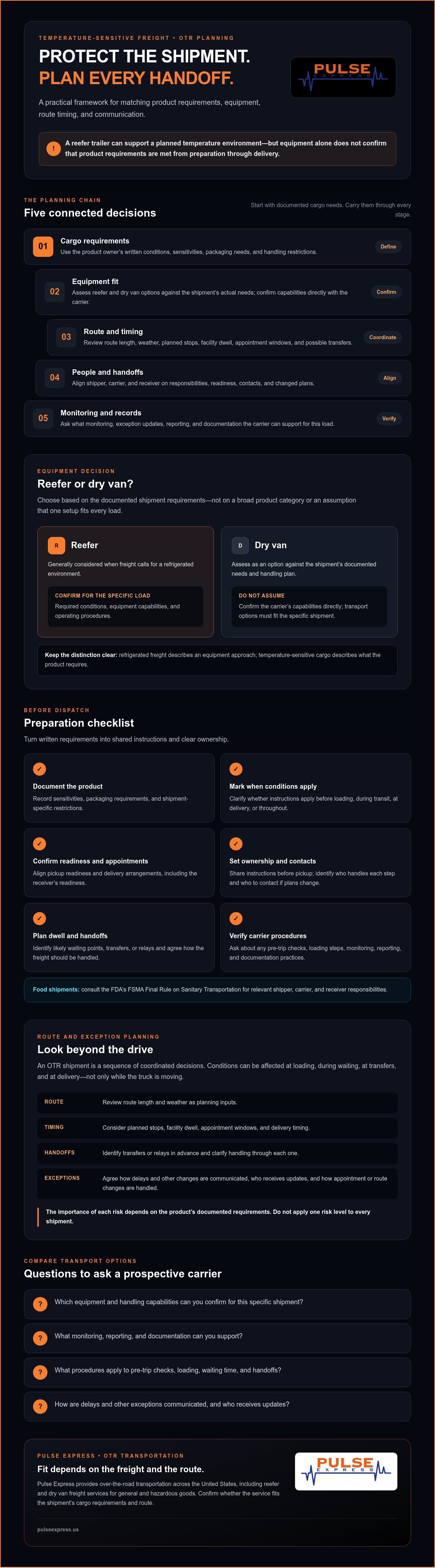
A practical checklist for preparing temperature-sensitive freight
A clear shipment brief gives the shipper, carrier, and receiver a shared reference before pickup. For temperature sensitive cargo transport, agree on requirements, responsibilities, and exception steps in advance. Keep instructions and shipment records accessible to the people who need them.
What information should the shipper give the carrier?
Prepare shipment details and delivery constraints together. A useful handoff should cover:
- Cargo requirements: Product-specific conditions, handling instructions, sensitivities, packaging needs, and restrictions, as provided by the product owner.
- Freight details: An accurate freight description and any hazardous-material status. Provide applicable shipment documentation where relevant.
- Pickup and delivery: Readiness, receiving hours, appointment requirements, and any limits on delivery timing.
- Contacts and exceptions: Names and contact details for people authorized to resolve issues, plus agreed steps for delays or suspected shipment exceptions.
- Responsibilities and records: Clarify what the shipper, carrier, and receiver are each expected to do, and what documentation each party will keep or share.
Commodity-specific or regulatory requirements can vary. Have qualified compliance personnel confirm what applies to the shipment. A general checklist is not a compliance determination.
What questions help evaluate a carrier’s shipment plan?
Ask the carrier to describe the proposed reefer or dry van service and explain how it will assess equipment fit against the shipment’s documented requirements. Confirm which procedures and capabilities are documented for this load. Don’t assume a general service description confirms specific equipment, monitoring, reporting, or handling arrangements.
- How will dispatch updates, delays, and shipment exceptions be communicated on the planned route?
- Who is the designated contact for an issue, and what response steps should the shipper and receiver follow?
- How will appointments, planned stops, and any transfer or handoff be reflected in the shipment plan?
- What records or shipment documents should each party provide, receive, and retain?
For hazardous freight, verify applicable requirements and carrier capabilities for the specific material. Pulse Express’s specialized hazmat logistics guide offers further context for planning those shipments.
Before confirming a load, compare the carrier’s answers with the product instructions and route plan. To discuss OTR reefer or dry van freight requirements, contact Pulse Express about your shipment.
Choosing an OTR partner for temperature-sensitive cargo transport
The right OTR partner should be able to discuss the shipment as a whole: its documented cargo requirements, proposed equipment, route, communication plan, and capabilities the carrier can verify. A broad label such as “reefer service” isn’t enough to establish that a particular trailer, process, or lane fits your freight. Ask specific questions, then compare the answers with the product owner’s instructions.
How should shippers compare OTR transport partners?
Use the same criteria with each prospective carrier to assess fit consistently. Look for clear, shipment-specific answers about:
- Service and route fit: Can the carrier transport the freight on the planned lane, and does its proposed service match the documented cargo requirements?
- Equipment and procedures: What equipment is proposed? Which operating procedures are confirmed for this shipment, and what remains the shipper’s or receiver’s responsibility?
- Communication: How will dispatch share updates, who will be contacted about delays or exceptions, and how are handoffs or appointment changes addressed?
- Relevant freight experience: Can the carrier speak to the type of freight involved and explain which capabilities apply to this load?
Verify the claims that matter to your cargo. If temperature-related equipment, monitoring, reporting, or handling details are essential, ask for confirmation rather than inferring them from a general service description. The shipper, carrier, and receiver should also agree on responsibilities and records before dispatch.
When may Pulse Express be a relevant transport partner?
Pulse Express provides over-the-road freight transportation across the United States, including reefer and dry van services. The company handles general and hazardous freight. This makes Pulse Express a potential option for shippers evaluating U.S. OTR reefer or dry van transportation, but the specific cargo, route, and handling requirements still need to be assessed for suitability.
For hazardous freight, confirm the requirements and carrier capabilities relevant to the specific shipment. Don’t assume a general freight service description confirms specialized equipment, certifications, temperature ranges, monitoring, or other procedures. Ask what can be verified for your load and clarify expectations before making a decision.
A careful comparison can help you select a partner whose confirmed service fits the cargo and lane, with communication and responsibilities understood by all parties. To start that conversation, discuss your temperature-sensitive freight needs with Pulse Express.
Plan Your Next Shipment with Confidence
Effective temperature sensitive cargo transport starts with the product’s documented requirements, then matches them to suitable equipment, a realistic route plan, and clear communication among shipper, carrier, and receiver. Reefer service isn’t automatically the right answer for every sensitive load, and a trailer alone can’t replace agreed handling instructions. Confirm shipment-specific capabilities before choosing a carrier.
Founded in 2000, Pulse Express provides over-the-road freight transportation across the United States, including reefer and dry van services. The company handles general and hazardous freight. Whether these options fit a particular shipment depends on its cargo requirements, route, and verified service details.
Before booking, align the handling plan, appointments, contacts, and documentation with everyone responsible for the shipment. A clear discussion can help you assess fit and identify what still needs confirmation. Discuss your temperature-sensitive freight requirements with Pulse Express to take the next step toward a well-planned shipment.
Frequently Asked Questions
What is temperature-sensitive cargo transport?
Temperature-sensitive cargo transport is the movement of freight that must be handled within product-specific conditions during some or all of transit. In practice, temperature sensitive cargo transport planning starts with the product owner’s instructions or applicable shipment documents, not a generic industry assumption. The shipper and carrier should align on equipment, route, loading, delivery, and communication, then confirm which shipment-specific capabilities and procedures the carrier can provide.
How do I choose a carrier for temperature-sensitive cargo?
Choose a carrier by comparing its documented service fit with the cargo’s handling requirements and planned route. Ask how its proposed equipment and OTR plan fit the shipment, and discuss timing, appointments, delays, handoffs, communication, and responsibilities for exceptions. Request confirmation of any capability essential to your freight. Specific answers and documented procedures are more useful than broad labels such as “refrigerated” or “temperature-controlled.”
Does temperature-sensitive cargo always need a reefer trailer?
No. The appropriate transport approach depends on the product’s documented requirements, packaging, route, transit duration, and exposure risks. Some shipments may call for refrigerated transportation; others may have different approved handling conditions. Don’t choose reefer or dry van based only on a broad product category. Confirm the requirements with the product owner, then ask the carrier to verify that its proposed equipment and plan suit the shipment.
What information should I provide before booking temperature-sensitive freight?
Provide an accurate freight description, product-specific handling instructions, required conditions, packaging details, and pickup readiness. Share delivery appointments, receiving hours, contact information, and any route or timing constraints. Disclose hazardous-material status and provide applicable shipment documentation where relevant. Also identify who can make decisions if delays or exceptions arise. This gives the carrier information to assess whether its proposed service may fit the shipment.
How can shippers reduce temperature-related risks during long-distance transport?
Start with clear product requirements, then match them to suitable equipment and a realistic route plan. Coordinate loading and delivery appointments, identify likely dwell points, and agree on who communicates delays or suspected exceptions. The shipper, carrier, and receiver should understand their respective responsibilities. Ask the carrier which procedures it can confirm for this shipment, and don’t assume a monitoring or handling capability unless it has been verified.
Can hazardous materials also be temperature-sensitive cargo?
Yes. Some hazardous materials may also have temperature-related handling requirements, but considerations depend on the specific material and shipment. Treat hazardous-material classification and temperature needs as related but distinct checks. Confirm requirements with the product owner and qualified compliance personnel, then ask the carrier to verify relevant service capabilities for the load. Don’t assume the documentation, equipment, or handling approach for one type of freight applies to another.
What should I ask a reefer carrier about a delayed shipment?
Ask how the carrier communicates delays, who provides updates, and what steps are set out in the agreed shipment plan. Confirm who determines whether a delay affects the product’s requirements and which receiving-location contact should be notified. Establish the escalation path before pickup, including the contacts authorized to make decisions. Carrier procedures vary, so don’t assume a particular response, monitoring process, or recovery capability without confirmation.


