

In 2026, a high OTR truck driver salary isn't just about chasing the longest hauls; it's about mastering the most complex ones. You've likely felt the frustration of opaque pay structures, unpaid detention time, and those hidden road costs that quietly eat your profit. It's exhausting to watch your miles fluctuate while you're away from home, especially when you're looking for the stability your family deserves.
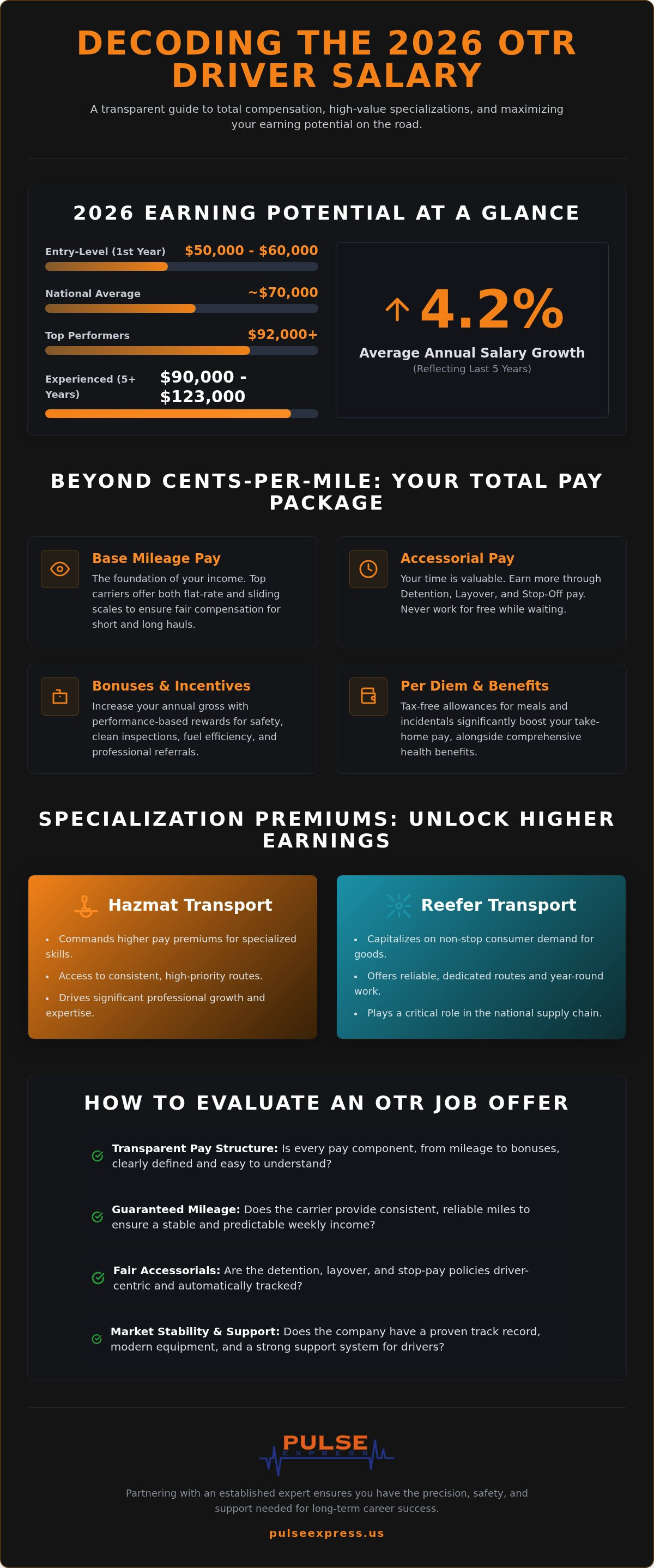
We're here to clear the air and provide a transparent look at what's possible in today's market. You'll learn exactly how much OTR drivers are earning this year, with national averages sitting around $70,000 and top performers often exceeding $92,000. We'll show you how to leverage specialized endorsements, secure reliable bonuses, and partner with carriers that prioritize your growth. This guide covers the latest FMCSA regulatory shifts, the high-value potential of Hazmat and Reefer transport, and the practical steps to maximize your weekly take-home pay. By understanding the intersection of mileage and specialization, you can build a career that is both profitable and sustainable.
Key Takeaways
- Total compensation in 2026 is defined by base mileage, accessorial pay, and comprehensive benefits.
- Specializing in Hazmat or Reefer transport provides higher premiums, consistent routes, and professional growth.
- You can maximize your OTR truck driver salary by selecting carriers that offer transparent pay, reliable miles, and consistent support.
- Evaluating a job offer effectively requires analyzing detention rates, stop-pay, and the carrier's overall market stability.
- Partnering with an established expert like Pulse Express ensures you have the precision, safety, and support needed for long-term success.
The OTR Truck Driver Salary Landscape in 2026
In 2026, understanding your earning potential requires looking beyond a single number on a recruitment flyer. A competitive OTR truck driver salary is now a composite of base pay, accessorial earnings, and comprehensive benefits. While the industry has found a new rhythm of supply chain stability, the ways drivers are paid have become more sophisticated. This shift reflects a market that values precision, safety, and long-term partnership over simple mileage counts.
Many drivers still focus on cents-per-mile, but this metric is only half the story. To truly evaluate a position, you must analyze truck driver compensation methods that include detention pay, breakdown coverage, and stop-off bonuses. These "extras" often represent the difference between a standard paycheck and a high-value career. National averages for OTR positions currently hover around $70,000. However, those who master the full pay structure and choose the right niches often see significantly higher returns.
Market Drivers Affecting OTR Pay in 2026
Freight demand in the Reefer and Hazmat sectors remains the primary engine for wage growth. As consumers demand faster, safer, and more precise logistics, carriers are willing to pay a premium for specialized skills. The 2026 FMCSA regulatory updates have further tightened the market. With the rebuilt Safety Measurement System and stricter ELD enforcement, drivers with clean Motor Vehicle Records (MVR) are in higher demand than ever. This regulatory environment has created a clear financial incentive for safety, precision, and compliance. Over the last five years, OTR driver salaries have seen a steady annual growth of approximately 4.2%, reflecting the ongoing need for qualified professionals in a tightening labor market.
Entry-Level vs. Experienced Driver Earning Potential
Your first year in the cab is about building a foundation of reliability. Rookie OTR drivers in 2026 can expect to earn between $50,000 and $60,000 as they master long-haul logistics. It's a period of learning, adapting, and proving your worth on the road. However, the "Experience Premium" is real and substantial. Once you surpass the two-year mark with a clean record, you unlock access to top-tier carriers and specialized routes. Experienced professionals with five or more years behind the wheel are frequently seeing annual earnings between $90,000 and $123,000. If you're looking to start this journey, exploring Hiring CDL Drivers in 2026: A Guide to High-Value OTR Careers can help you identify the best path forward.
Beyond Cents-Per-Mile: Components of a Total Pay Package
While base mileage pay remains the foundation of a driver's income, the modern OTR truck driver salary is built on a diverse range of compensation channels. In 2026, the most successful drivers look for a balance between flat-rate mileage and sliding scales. Sliding scales often provide a higher rate for shorter hauls, ensuring you're fairly compensated for the additional time spent at docks. This nuanced approach to base pay ensures that your effort aligns with your earnings, regardless of the route length.
A true total pay package also incorporates per diem allowances. These tax-free meal and incidental reimbursements significantly increase your actual take-home pay by reducing your taxable income. When combined with the official 2026 salary data, it becomes clear that drivers who maximize these non-taxable benefits often enjoy a higher standard of living than those who focus solely on gross mileage rates.
The Critical Importance of Detention and Layover Pay
In 2026, professional drivers shouldn't be expected to donate their time to shippers. High-quality carriers recognize that every hour you spend waiting is an hour you aren't earning mileage pay. Detention and layover pay are now standard requirements for any competitive contract. At Pulse Express, we prioritize driver partnership by ensuring you're compensated for every hour of your commitment, even when the wheels aren't turning. The precision of modern ELD technology allows for the automated verification of detention time, removing the friction and guesswork from your weekly settlement. This level of transparency ensures that your time is respected, valued, and paid.
Bonuses and Incentives: Boosting Your Annual Gross
Performance bonuses offer a direct path to increasing your annual gross without adding extra miles. Safety bonuses are particularly lucrative; carriers reward drivers who maintain high CSA scores and pass clean roadside inspections with consistent cash incentives. Referral programs also provide a way to leverage your professional network for passive income. Additionally, fuel efficiency bonuses are calculated by comparing real-time engine data from 2026 telematics against standardized route benchmarks to reward drivers who minimize idle time and optimize speed. If you're ready to work with a team that values these contributions, consider the opportunities available when you partner with Pulse Express for your next career move.
Specialization Premiums: Hazmat, Reefer, and Dry Van
The type of freight you pull often determines your financial ceiling. While many drivers start with general freight, those looking to maximize their OTR truck driver salary eventually transition into specialized sectors. In 2026, the demand for precision and safety has created a distinct pay gap between general dry van hauling and high-value logistics like Hazmat or temperature-controlled transport. These premiums reflect the specialized training, increased responsibility, and meticulous attention to detail required to move sensitive cargo safely across the country.
The Salary Advantage of Hazmat Endorsed Jobs
Pulling hazardous materials requires more than just a Class A CDL; it demands a high level of vetting and a commitment to strict safety protocols. Shippers pay a "Security Premium" for these vetted professionals because the risk associated with these loads is significantly higher. When you explore Hazmat OTR Driver Jobs: High-Value Career Paths in 2026, the compensation clearly reflects this added responsibility. Industry data indicates that a Hazmat endorsement can increase a driver's earnings by 15% to 35% over standard rates. This specialization isn't just about the extra cents-per-mile. It's about accessing a tier of freight that remains steady even when the broader economy fluctuates, providing a sense of security and professional growth.
Reefer vs. Dry Van: Which Offers Better Long-Term Stability?
Choosing between refrigerated (Reefer) and Dry Van transport involves balancing operational complexity with consistency. Dry van hauling offers high-volume frequency and is often considered the foundation of the OTR experience, with annual earnings typically ranging between $42,000 and $65,000. It's a reliable choice for those who prefer straightforward operations and a high density of available loads. It's the classic long-haul path that keeps the country's retail shelves full.
However, Reefer transport provides a distinct advantage in terms of recession-proof stability. Consumers always require food and medicine, which are the primary components of Cold Chain Logistics: The Definitive Reference for Temperature-Controlled Freight. Reefer drivers can earn up to $0.72 CPM including bonuses, with top performers reaching $105,000 annually. This premium compensates for the complexity of temperature monitoring and the tighter delivery windows required for perishable goods. When evaluating truck driver salary data, it's clear that endorsements like Tanker, Hazmat, and Doubles significantly improve your marketability. By stacking these qualifications, you position yourself as a versatile partner capable of handling the industry's most critical and highest-paying cargo.
How to Evaluate an OTR Job Offer in 2026
Evaluating a potential OTR truck driver salary involves more than just calculating cents-per-mile. You must look at the entire operational ecosystem of the carrier to understand your true earning potential. Many companies advertise "average weekly miles" based on their top 10% of performers, but real-world dispatching might look very different for a new hire. Before signing, ask for verified mileage averages for your specific division. This level of transparency ensures your expectations align with your actual take-home pay.
A robust benefit package adds thousands to your annual value. When vetting an offer, consider these three pillars of compensation:
- Health and Dental: Comprehensive coverage that protects your physical and financial well-being while on the road.
- Retirement Planning: 401k matching programs that help you build wealth and security for the future.
- Equipment Reliability: Modern trucks that minimize unpaid downtime and maximize your earning hours.
Equipment quality is a critical financial factor in 2026. A fleet with advanced safety technology reduces the risk of accidents and prevents unpaid roadside delays. Additionally, flexible home time policies provide a value that isn't always captured in a gross pay figure. Finding a carrier that balances your need for miles with your need for rest is the key to a sustainable, long-term career.
Red Flags in OTR Pay Disclosures
Be cautious of any offer that relies heavily on "Up To" claims. These targets often require perfect weather, zero traffic, and impossible dock times to achieve. Other warning signs include mandatory escrow accounts, forced per diem programs, or aggressive equipment lease-purchase traps. These structures often shift the carrier's financial risk onto your shoulders. Always insist on receiving a clear, written compensation plan before you commit to orientation. A professional carrier will provide this documentation without hesitation, ensuring a foundation of mutual trust and respect.
The Value of Carrier Stability and Culture
Carrier longevity is a reliable indicator of financial health and driver respect. Pulse Express has provided stability for 25 years, surviving market shifts through a commitment to excellence and driver partnership. Under the leadership of CEO Adelina Pavlov, we focus on precision, safety, and mutual growth. Your relationship with your dispatcher is particularly vital; a good dispatcher acts as a partner who understands your goals. They manage your schedule, your loads, and ultimately, your paycheck. To learn more about how load types influence your daily operations, read Beyond the Box: The Truth About Secure Dry Van Shipping in 2026. If you're ready to join a team that values your expertise, you can apply for an OTR position with Pulse Express today.
Maximize Your Earning Potential with Pulse Express
Pulse Express has spent 25 years refining the professional driver experience. Founded in 2000, our carrier has successfully navigated every market shift by prioritizing the people behind the wheel. Under the leadership of CEO Adelina Pavlov, we've built a culture where you're treated as a professional partner rather than a dispatch number. This approach is central to how we help you maximize your OTR truck driver salary. By focusing on high-value Hazmat and temperature-controlled freight, we provide the consistent, high-paying routes that experienced professionals seek in 2026.
Efficiency on the road requires more than just available miles. It requires a modern fleet equipped with advanced safety technology and a 24/7 support team that understands the realities of the road. We recognize that every minute of avoidable downtime is a minute you aren't earning. Our proactive maintenance programs and streamlined dispatch strategies are designed to keep you moving safely and predictably. This commitment to operational excellence ensures that your time is respected and your earning potential is protected.
Why Specialized Drivers Choose Pulse Express
Experienced professionals choose to partner with us for three primary reasons: transparency, growth, and stability. Our pay structures are straightforward and honest, combining competitive cents-per-mile rates with clear accessorial pay for detention, layovers, and stop-offs. We actively encourage career advancement by helping drivers transition into high-reward roles involving Reefer Hazmat Transport and Dry Freight Hazmat Transport. You benefit from the financial power of a nationwide network while enjoying the personal, inclusive support of a close-knit team. This balance creates a sense of established reliability that is rare in the long-haul sector.
Join the Pulse Express Fleet Today
Starting your next chapter shouldn't be a complicated or stressful process. We've streamlined our application for Class A CDL holders to respect your time and acknowledge your expertise. Once you join our fleet, you'll participate in a comprehensive safety orientation that sets the standard for your career with us. This process ensures you're fully equipped to handle specialized freight with the precision and care our clients expect. To take the first step toward a more stable and rewarding OTR truck driver salary, you can View Open OTR Driving Positions at Pulse Express and discover the benefits of a true professional partnership in 2026.
Securing Your Professional Future on the Road
Achieving a top-tier OTR truck driver salary in 2026 requires a strategic focus on high-value freight and carrier reliability. We've explored how specialized endorsements like Hazmat and Reefer transform your earning potential from standard mileage into a comprehensive, high-reward career. By prioritizing carriers that offer transparent pay, modern equipment, and dedicated support, you ensure that every mile you drive contributes to your long-term financial stability. These choices define the difference between just having a job and building a sustainable legacy in the transportation industry.
Pulse Express has provided this level of established reliability since 2000. We offer the precision of specialized freight, the safety of a modern fleet, and the constant reassurance of 24/7 dispatch support. We invite you to experience a partnership that values your professional expertise and invests in your individual growth. Our team is ready to support your journey with the respect and transparency you've earned through your commitment to the road.
Join the Pulse Express OTR Fleet Today
Your skills are the backbone of the global supply chain, and we're here to ensure your career reflects that vital importance.
Frequently Asked Questions
What is the average OTR truck driver salary in 2026?
The national average OTR truck driver salary in 2026 is approximately $70,000 per year. However, specific earnings vary based on experience and specialization. First-year drivers typically earn between $50,000 and $60,000. Experienced professionals with five or more years behind the wheel often see annual compensation ranging from $90,000 to $123,000. Top performers in the industry's highest decile frequently exceed $92,000 through consistent miles and specialized endorsements.
How much more do Hazmat drivers make compared to standard OTR?
Hazmat drivers earn significantly more than standard OTR drivers, typically seeing a pay premium of 15% to 35%. This increase reflects the higher level of responsibility and the meticulous safety protocols required for hazardous materials. On average, a driver with a Hazmat endorsement earns between $69,000 and $80,000 annually. This specialization provides a reliable path to higher earnings while offering access to more stable, recession-proof freight categories.
Does Pulse Express offer detention and layover pay?
Yes, Pulse Express provides transparent detention and layover pay to ensure our drivers are compensated for their time. We recognize that your commitment to the road includes time spent at shippers and receivers. Our pay structure includes competitive accessorials that protect your earnings when the wheels aren't turning. By utilizing precise ELD technology, we automate the verification process to ensure every hour of your professional commitment is valued and paid.
What is the difference between gross pay and take-home pay for OTR drivers?
Gross pay represents your total earnings before any deductions, including your base mileage and bonuses. Take-home pay is the actual amount deposited into your account after taxes, health insurance premiums, and 401k contributions. In 2026, many drivers use per diem allowances to reduce their taxable income, which increases their net take-home pay. It's essential to evaluate the total compensation package, including benefits, to understand your true financial gain.
How often do OTR drivers get a pay raise in 2026?
Most OTR drivers receive pay raises based on performance milestones or annual reviews. In 2026, many carriers have implemented structured increases every 50,000 to 100,000 miles to reward consistency and safety. Some companies also offer retention bonuses and cost-of-living adjustments to remain competitive during the ongoing driver shortage. Maintaining a clean MVR and high safety scores are the most reliable ways to secure frequent and substantial pay increases.
Do OTR drivers get paid for the time they spend sleeping in the truck?
Standard OTR compensation is typically based on mileage or specific accessorial tasks rather than hourly rest periods. Drivers aren't directly paid for the time they spend sleeping in the truck's sleeper berth. However, modern compensation packages often include layover pay if you're delayed between loads for an extended period. This ensures you maintain a baseline level of income even when you're required to remain away from home during non-driving hours.
What are the highest paying OTR trucking companies in 2026?
The highest paying OTR trucking companies in 2026 are typically those specializing in high-value, temperature-controlled, or hazardous freight. Carriers like Pulse Express offer competitive rates, such as $0.70 to $0.75 per mile, by focusing on complex logistics. Specialized niches like oversized loads, pharmaceutical reefer transport, and Hazmat logistics consistently provide the best compensation. Look for established companies with 25 or more years of stability to find the best balance of pay and reliability.
How does per diem impact my truck driver salary and taxes?
Per diem is a tax-free reimbursement for meals and incidental expenses incurred while traveling away from home. By categorizing a portion of your OTR truck driver salary as per diem, you lower your overall taxable income. This results in a higher net take-home pay because fewer taxes are withheld from your check. It's a critical component of a modern compensation strategy that helps drivers offset the unique costs of living on the road.


