

What if the right long-haul job depends less on the listing and more on the freight behind it? Professional OTR driving positions can look similar on paper, but hauling dry van freight and refrigerated loads brings different day-to-day considerations. Before committing to life on the road, it’s reasonable to want clear information about the work, time away, and how a role fits your experience.
This guide explains how freight types shape OTR work and what to consider when comparing positions. You’ll learn how general and hazardous freight, dry van operations, and reefer assignments differ, along with practical ways to assess expectations and personal fit.
Pulse Express transports general and hazardous freight using dry van and refrigerated equipment, and hires Class A CDL drivers for OTR roles. This guide covers the factors to weigh, then points you to a straightforward way to explore Pulse Express opportunities that align with your background and preferences.
Key Takeaways
- Understand how OTR work differs from local and regional driving, including long-distance routes that can cross multiple states.
- Compare dry van and reefer freight to see how cargo can shape loading coordination, temperature awareness, and delivery requirements.
- Evaluate professional OTR driving positions by freight, routes, operating expectations, communication, and fit with your life.
- Prepare to apply by reviewing your driving background, organizing credentials, defining your preferences, and accurately describing your experience.
- Explore Class A CDL OTR opportunities with Pulse Express, a carrier founded in 2000.
What professional OTR driving positions involve on the road
Over-the-road (OTR) driving is long-distance commercial freight transportation along routes that may cross multiple states, unlike local delivery, which generally serves a more limited area. That’s the clearest distinction: OTR drivers move freight over longer distances, while local drivers typically make shorter trips closer to a home base. Regional roles often fall between the two, but route boundaries and schedules depend on the carrier’s operating plan.
Professional OTR driving positions can involve extended time on the road, but no single schedule or home-time pattern represents every job. Routes, freight assignments, customer needs, and the specific position all shape the work. A general overview of the truck driver profession can help put OTR in the broader context of commercial driving. For a realistic picture of day-to-day expectations, focus on the details of the position itself.
How OTR work differs from local and regional driving
Distance is a defining difference. An OTR assignment may take a driver across several states, while local work is more concentrated around a particular area. Regional work typically covers a defined multistate area or broader region. These descriptions are useful starting points, not promises about a specific route or schedule.
Time away from home can differ, too. Some OTR positions involve longer stretches on the road than local roles, but route length and home time vary by position and operating plan. Consider how much time away fits your priorities, then review the role’s expected routes and schedule. Don’t assume every long-haul position follows the same routine.
What a professional OTR driver manages
The job involves more than covering miles. Drivers operate their vehicles safely, plan trips, and communicate as work progresses. These responsibilities support reliable freight movement and help keep pickups and deliveries coordinated.
Daily tasks depend on the freight and customer requirements. A driver may need to coordinate pickup timing, follow delivery instructions, and meet handling expectations tied to the load. Refrigerated freight, for example, calls for attention to temperature-related requirements. Other freight may involve different handling or delivery details. The assignment determines the specifics, so a job title alone won’t tell you everything about the work.
Trip planning also means keeping practical details and changing conditions in view. Clear communication helps keep relevant parties informed when plans or timing shift. Safe operation, thoughtful planning, and consistent coordination are central to professional OTR work. Understanding these responsibilities gives you a stronger basis for comparing freight assignments and deciding which kind of long-haul role suits your experience and preferences.
How OTR freight types shape professional driving positions
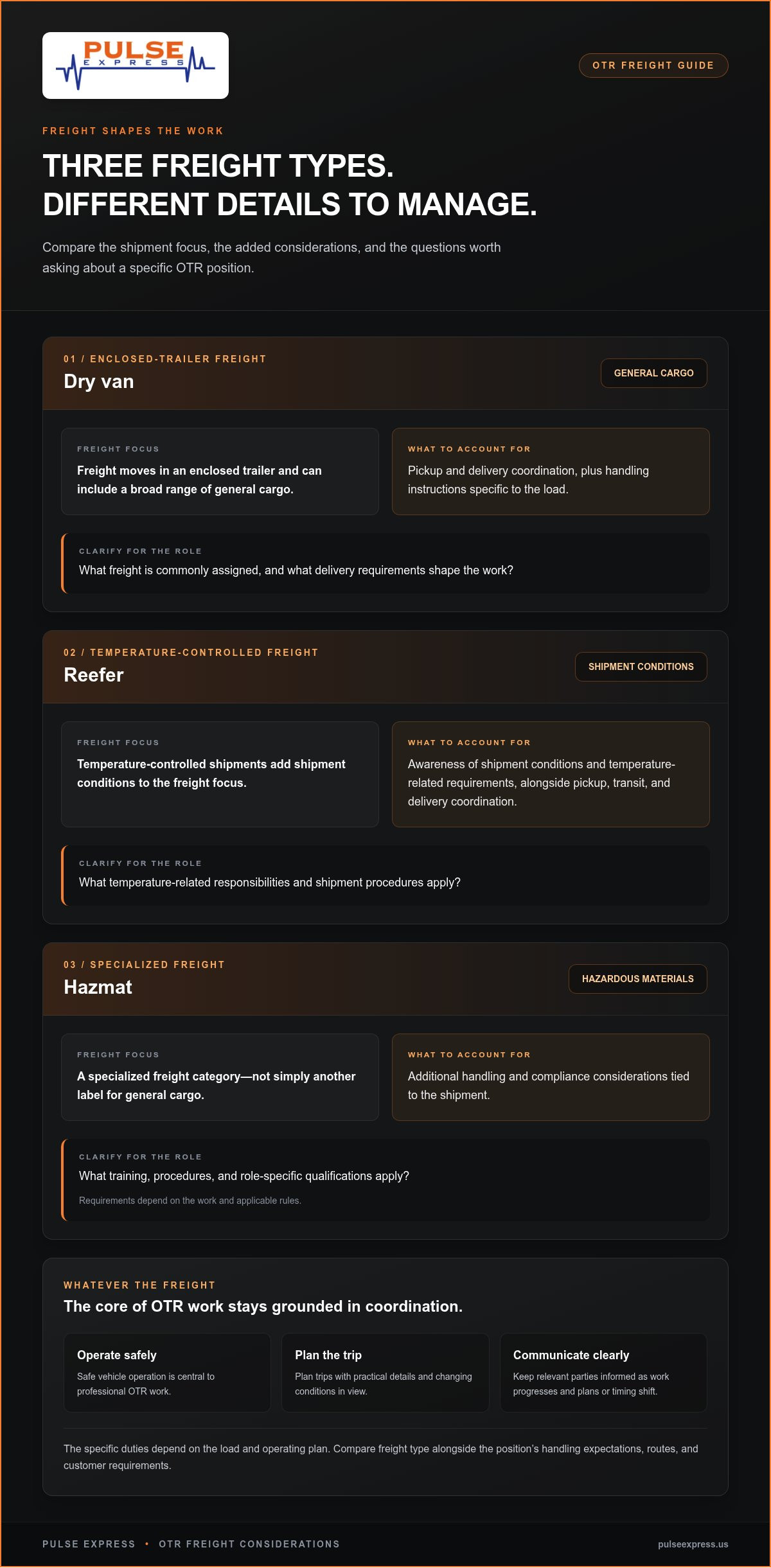
Freight affects what a driver needs to pay attention to during a trip. Dry van and reefer work differ in cargo type and shipment considerations, while hazardous materials add specialized handling and compliance factors. Understanding these differences helps you look beyond a job title and assess whether the work aligns with your experience and preferences.
Dry van and reefer OTR roles
Dry van freight travels in an enclosed trailer and can include a broad range of general cargo. Reefer freight is temperature-controlled, so shipment conditions are an added consideration alongside pickup, transit, and delivery coordination. Duties depend on the load and operating plan. For more context on temperature-sensitive freight, explore this cold chain logistics guide.
Neither freight type tells you exactly what a full workday or route will involve. Consider the cargo you’re comfortable handling and which shipment details will require your attention. These are useful points to discuss when learning about a specific opening.
| Freight type | Freight focus | Typical considerations | Questions to consider |
|---|---|---|---|
| Dry van | Enclosed-trailer freight, including general cargo | Pickup and delivery coordination; load-specific handling instructions | What freight is commonly assigned, and what delivery requirements shape the work? |
| Reefer | Temperature-controlled shipments | Awareness of shipment conditions and temperature-related requirements | What temperature-related responsibilities and shipment procedures apply to the role? |
| Hazmat | Hazardous materials freight | Specialized handling and compliance considerations tied to the shipment | What training, procedures, and role-specific qualifications apply? |
Where hazmat freight fits into OTR work
Hazmat is a specialized freight category, not simply another label for general cargo. The shipment can bring additional handling and compliance considerations, so drivers should understand the expectations associated with the specific position. Requirements depend on the work and applicable rules. The FMCSA’s Commercial Driver’s License (CDL) requirements provide an authoritative starting point for understanding commercial licensing.
For a closer look at long-haul work involving hazardous materials, the hazmat OTR driver jobs guide explores the category in more detail. Pulse Express transports general and hazardous freight using dry van and refrigerated equipment. Drivers exploring OTR opportunities with Pulse Express can consider freight type alongside their background and experience.
Use the shipment focus, handling considerations, and questions in the table to compare freight types. This makes broad labels more useful when you’re assessing the work.
How to compare professional OTR driving positions for fit
A job title can tell you that a role is over the road, but it can’t show whether its freight, routes, and expectations suit your priorities. Role fit is the match between the work a position requires and the experience, preferences, and personal commitments you bring to it. Compare practical details, not just the label.
Before reviewing individual openings, decide what matters most to you. The U.S. freight transportation system includes different types of cargo and movement, so freight preference is one useful starting point. Then consider which trade-offs you’re comfortable making across these areas:
- Freight: Identify the cargo categories you prefer and where you already have relevant experience, such as dry van, reefer, general freight, or hazardous materials.
- Routes: Consider the route patterns that could work for you and how much time away fits your circumstances.
- Operating expectations: Note the pickup, delivery, and freight-handling responsibilities that matter to you.
- Communication: Consider what information and coordination help you manage a load safely and keep operations organized.
- Life fit: Account for personal commitments, preferred time at home, and how long-haul work fits your broader plans.
Match freight and work expectations to your priorities
Start with your own background. If you’ve handled a particular freight category, note the experience and tasks you can describe accurately. Then rank your preferences: which freight types appeal to you, what route patterns suit your life, and which operating expectations are essential? Keep details stated for a specific opening separate from assumptions based on general industry norms.
This distinction matters. A broad OTR label doesn’t establish a particular schedule, route, or home-time arrangement. Base your comparison on the details provided for the role, and treat unclear points as questions rather than facts. A short priority list makes it easier to assess each opening consistently.
Assess communication and operational clarity
Clear pickup and delivery expectations help drivers plan each load. Freight-handling instructions matter as well, because requirements can differ by shipment. Look for a clear description of the position’s responsibilities, including how information is shared as plans progress.
Reliable communication supports safe, organized long-haul operations by helping drivers and others involved stay aligned. As you compare roles, consider whether the described coordination fits the way you work best. This is especially useful if you’re weighing different freight categories or have experience concentrated in one type of assignment.
Use your priorities as a practical filter, not a rigid formula. A role may align strongly with your freight experience but differ from your preferred route pattern. Knowing which factors are non-negotiable and which are flexible helps you make a considered choice among professional OTR driving positions.
How to prepare for an OTR driver application
A focused application starts with a clear record of your experience and an honest picture of the work you’re seeking. Before applying, organize your background, credentials, freight familiarity, and preferences. This makes it easier to describe your qualifications accurately and connect them to the position.
Use this preparation checklist in order:
- Review your background. Summarize your driving experience, work history, and the freight types you’ve handled. Be precise about your role and level of familiarity. Don’t imply experience you haven’t gained.
- Organize your credentials. Gather the current credential and work-history information relevant to the application. Keep details consistent across your materials and describe your qualifications accurately.
- Define your preferences. Write down the freight categories and operating expectations you’re interested in, along with practical priorities such as route patterns and time away.
- Apply with a clear picture of your fit. Review the position details, connect your experience to its stated expectations, and provide complete, accurate answers.
Organize your experience and preferences
Make your experience easy to understand. Distinguish between freight you’ve hauled directly and freight you’ve encountered in another role. Note relevant tasks and responsibilities without overstating them. If you’re newer to a freight category, say so plainly and focus on the experience you do bring.
Next, rank what you want from the position. You might prioritize dry van or reefer freight, a particular route pattern, or clearly described handling expectations. Preferences can guide your search, but they aren’t the same as qualifications. Don’t assume an endorsement or specific experience is required unless the particular opening says so.
Pulse Express hires Class A CDL drivers for long-haul OTR work. As you consider professional OTR driving positions, organize your experience and preferences so you can clearly explain how your background relates to the role.
Make the application conversation focused
Use the position information to prepare concise, relevant questions. Focus on details that help you understand the specific work, such as the freight involved, pickup and delivery expectations, and how freight-handling instructions are communicated. This keeps the conversation grounded in the actual role instead of assumptions about OTR jobs in general.
Before submitting, review your application for accuracy and consistency. Check that your work history, driving experience, and stated qualifications match what you can support. Clear, truthful information creates a sound basis for discussing role fit.
Once you’ve organized your background and preferences, explore Pulse Express OTR opportunities and take the next step toward a long-haul position that aligns with your experience.
Explore professional OTR driving positions with Pulse Express
Finding a long-haul role is easier when you connect the work to the freight behind it. Pulse Express is a freight carrier operating across the United States, transporting general and hazardous freight. The company hires Class A CDL drivers for over-the-road positions. Its freight operations offer a practical starting point as you consider which professional OTR driving positions may suit your experience and priorities.
Freight operations behind Pulse Express OTR work
Pulse Express transports freight using dry van and refrigerated equipment. Its operations cover general freight and hazardous materials, including dry freight hazmat and reefer hazmat transport. For drivers, freight category can shape what to learn about a position, from shipment handling expectations to the information needed to coordinate pickup and delivery.
This overview gives you context, not a promise about the details of a particular assignment. A freight category alone doesn’t establish a route, schedule, equipment specification, or home-time arrangement. Use it to focus your review of a position’s responsibilities and the experience you can bring to the work.
As you review OTR opportunities, consider how these operating areas connect with your background:
- Dry van freight and your familiarity with enclosed-trailer assignments.
- Reefer work and your experience or interest in temperature-controlled shipments.
- General freight and the shipment types you’ve handled.
- Hazardous freight and the specialized expectations described for a position.
Pulse Express’s OTR focus across the United States provides context for drivers considering long-haul work. The specific position remains central: its described freight and expectations are what help you assess whether it aligns with your qualifications and preferences.
Take the next step toward an OTR role
Before moving forward, revisit the fit factors you’ve identified: freight preference, operating expectations, relevant driving experience, and personal priorities. Consider which matter most and where you have flexibility. This helps you approach career information with a clear sense of what you’re looking for, rather than relying on the job title alone.
Review driver-opportunity information from Pulse Express to learn about the company’s OTR hiring focus and career details. Keep your application information accurate, and use the position description to understand how your background relates to the work. A thoughtful review gives you a practical next step without assuming every long-haul role offers the same terms or operating pattern.
To continue exploring, visit Pulse Express and review current driver opportunities.
Take the Next Step With Confidence
The right long-haul move starts with knowing what you need from the work and what you can contribute. As you consider professional OTR driving positions, use that clarity to focus your search: describe your experience accurately, consider the freight that interests you, and weigh each role against the priorities that matter in your life.
A thoughtful next step doesn’t require having every detail figured out. Use what you’ve learned to explore an opportunity with purpose. Review driver information from Pulse Express and consider how its OTR work aligns with your background and goals.
Explore professional OTR driving opportunities with Pulse Express and take a closer look at your next career move. Your experience has value, and a clear sense of fit can help you move forward with confidence.
Frequently Asked Questions
How often are OTR drivers home?
How often an OTR driver is home depends on the specific position, route plan, and operating schedule. There isn’t one home-time pattern that applies to every long-haul job. Review the role’s expected time away and operating plan, then consider how that pattern fits recurring commitments such as family responsibilities or appointments. Don’t rely on general expectations about OTR work.
Do OTR drivers sleep in their trucks?
Many OTR drivers sleep in their trucks during trips, often in a sleeper berth when the assigned vehicle has one. Arrangements depend on the position, vehicle, and route plan, so don’t assume every role has identical sleeping accommodations. If this affects your decision, review the position details and consider what you need to rest comfortably and prepare for the next driving day.
Is OTR driving a good fit for a newer truck driver?
OTR work may suit a newer driver if they meet the position’s stated qualifications and feel ready for long-distance responsibilities. Consider your comfort with extended time on the road, trip planning, and communicating about changing conditions. Be straightforward about your driving history and freight experience. Requirements differ by opening, so use the role description rather than assuming every employer has the same standards.
Can weather affect an OTR driving schedule?
Yes, weather can affect travel conditions and timing. Heavy rain, snow, ice, high winds, or reduced visibility may require a driver to slow down, pause, or adjust a trip plan based on conditions and safety. A route that is manageable in clear weather may need extra planning during a storm. Keep communication clear if conditions affect progress, and don’t treat a planned arrival time as more important than safe operation.
Do OTR drivers handle loading and unloading freight?
Loading and unloading responsibilities vary by freight, facility, customer instructions, and position. Some shipments may involve drivers in handling or coordination tasks, while facility personnel handle others. The job title alone won’t explain what you’ll do at a pickup or delivery. Review the responsibilities described for the opening and pay attention to freight-specific instructions that affect how the load is managed.
What makes an OTR driver a professional?
A professional OTR driver combines safe decision-making with reliability, clear communication, and care for the assigned freight. That can mean planning ahead, following shipment instructions, keeping relevant parties informed about delays, and accurately describing experience and qualifications. Professionalism also shows in how a driver responds when plans change: assess the situation calmly, prioritize safe operation, and communicate next steps clearly.


