

By December 31, 2026, fleet owners operating in California must reach a 60% zero-emission threshold for their truck refrigeration units or risk severe operational fines. You understand that maintaining 100% cargo integrity is no longer just a goal; it's a survival requirement in a shifting regulatory landscape. Managing temperature controlled freight transport US involves navigating a complex web of CARB mandates, FSMA documentation, and strict DOT protocols for sensitive industrial goods. It's a high-stakes environment where precision, safety, and reliability are the only metrics that matter.
It's stressful to worry about equipment failure or the lack of real-time visibility that leads to cargo spoilage. You deserve a partner who treats your sensitive US cargo with the same care you do. This reference guide will help you master the complexities of climate-stable logistics and secure a reliable OTR partner for your most demanding routes. We'll examine the latest 2026 compliance standards, the transition to automated in-cab telematics, and the specialized requirements for high-risk reefer hazmat transport.
Key Takeaways
- Understand the evolving standards of temperature controlled freight transport US to ensure 100% cargo integrity across pharma, food, and chemical sectors.
- Discover how modern telematics and multi-temp trailer configurations provide the real-time visibility necessary for 2026 regulatory compliance.
- Learn the critical distinctions between standard refrigerated freight and specialized reefer hazmat transport to mitigate risks of thermal runaway or contamination.
- Gain a practical framework for vetting OTR carriers based on driver certifications, equipment maintenance protocols, and safety records.
- Identify the operational advantages of partnering with an asset-based fleet to secure reliable capacity and expert care for sensitive long-haul shipments.
Navigating the 2026 US Temperature Controlled Freight Landscape
Temperature controlled freight transport US relies on sophisticated refrigeration units, often called reefers, to maintain precise climate conditions. These specialized trailers protect cargo from external heat or freezing temperatures during every mile of the journey. Cold chain logistics is a continuous, temperature-monitored supply chain that ensures goods remain within specified ranges from origin to destination. The stakes are exceptionally high for the pharmaceutical, food, and chemical industries. A single equipment failure can compromise life-saving medications, spoil perishable food, or trigger dangerous reactions in volatile chemical compounds. Shippers now face a market where capacity is tight, with reefer load-to-truck ratios reaching over 20 loads per truck in late 2026. This creates a high demand for asset-based carriers who provide stability, expert drivers, and consistent performance.
The Critical Role of Cold Chain Integrity
Cargo integrity determines the success of every shipment. Even minor temperature fluctuations significantly reduce the shelf life of fresh produce or the efficacy of pharmaceutical life-savers. When a shipment arrives outside of its required range, receivers often issue a total cargo rejection. This leads to immediate financial losses, wasted inventory, and potential insurance disputes. You also face the risk of vendor chargebacks if your logistics partner fails to meet retailer-specific handling standards. Beyond the balance sheet, transit failures in the food or chemical sectors pose serious public health risks. Stability is the foundation of trust between shippers and their OTR partners. Achieving this requires a combination of high-spec equipment, experienced operators, and meticulous attention to detail.
2026 Regulatory Standards: FSMA and Beyond
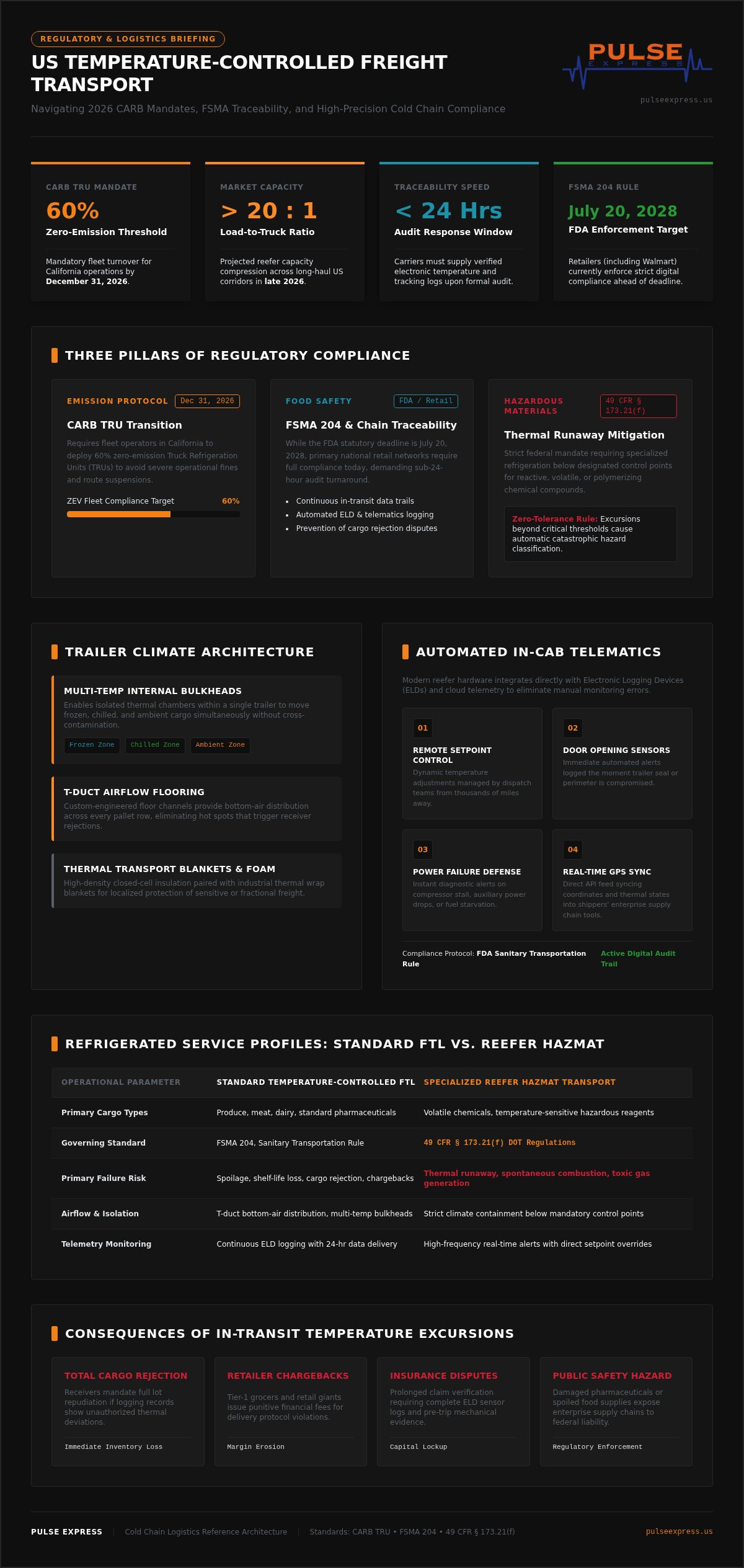
Compliance requirements have become more stringent and data-driven. While the FDA extended the FSMA 204 enforcement deadline to July 20, 2028, major retailers like Walmart already enforce strict traceability mandates. Carriers must now provide electronic traceability data within 24 hours of an audit. Modern reefer units integrate Electronic Logging Devices (ELDs) directly with telematics systems. This allows for continuous monitoring, automated alerts, and detailed compliance reporting. California’s CARB mandates also require a 60% zero-emission truck TRU fleet turnover by December 31, 2026. For those moving sensitive industrial goods, documentation for temperature controlled freight transport US must comply with 49 CFR § 173.21(f). This requires carriers to maintain temperatures below a specific control point or face catastrophic thermal runaway risks. Selecting a partner that understands these technical and legal nuances is essential for long-term operational excellence.
Essential Equipment and Tech for Climate-Stable OTR Logistics
High-performance temperature controlled freight transport US relies on more than just a cooling unit. It requires a synergy of high-spec trailers, advanced insulation, and precision airflow. Single-temp trailers maintain one consistent climate for full truckloads, while multi-temp units use internal bulkheads to create separate zones. This allows for frozen, chilled, and ambient products to travel in one trip without risk. Modern trailers feature high-density foam insulation and T-duct flooring. These floors are specifically designed to maximize bottom-air delivery. This design ensures even cooling across every pallet, preventing the hot spots that often lead to cargo rejection. It's this focus on the physical asset that separates a basic carrier from a specialized partner.
Telematics and Real-Time Monitoring
Telematics provide 24/7 remote monitoring for shippers. This technology allows operators to adjust setpoints from thousands of miles away, ensuring the environment remains stable. It also generates instant alerts for door openings, power failures, or temperature excursions. These systems ensure compliance with the FDA Sanitary Transportation rule by providing a digital paper trail of the entire journey. GPS tracking adds another layer of security, which is vital for high-value sensitive cargo. Modern platforms integrate this data into your supply chain management software, giving you a clear window into your logistics operations. You don't have to guess the status of your cargo; you can see it in real-time.
The Use of Thermal Transport Blankets
Protecting smaller shipments requires specialized solutions. Thermal blankets provide an extra layer of insulation for LTL shipments housed within a larger trailer. They're also essential for extreme weather routes where external temperatures fluctuate wildly. You can read more about the uses of thermal transport blankets to see how they enhance security. These blankets prevent localized freezing or overheating near the trailer walls. They work by reflecting radiant heat, trapping a stable micro-climate, and preventing temperature spikes. This secondary protection is a hallmark of a carrier that values precision, safety, and operational excellence. It shows a level of care that protects your brand reputation.
Selecting a partner with modern, asset-based equipment ensures your freight stays stable across every mile. If you need a reliable fleet that prioritizes tech-forward logistics, consider the solutions at Pulse Express.
Comparing Refrigerated Freight Solutions: FTL vs. Hazmat Reefer
Standard full truckload (FTL) refrigerated service remains the gold standard for shippers requiring maximum speed and stability. When you secure a dedicated trailer, your cargo moves directly from point A to point B without the delays or temperature fluctuations associated with multi-stop routes. This is especially critical for temperature controlled freight transport US where long-haul distances test the limits of climate-stable logistics. Asset-based carriers offer a distinct advantage over broker-only models in this space. They provide guaranteed equipment availability, direct communication with drivers, and consistent maintenance standards. Brokers often lack this granular control, which can lead to equipment mismatches or communication gaps during critical transit windows.
The Complexity of Reefer Hazmat Transport
Transporting hazardous materials under climate control represents the highest level of logistical difficulty. This specialized niche requires adherence to the Federal Hazardous Materials Regulations to ensure safety and legal compliance. Unlike standard food reefer, reefer hazmat involves strict segregation rules to prevent dangerous chemical reactions. Drivers must hold valid hazmat endorsements and undergo rigorous training to handle self-reactive materials or organic peroxides. Under 49 CFR § 173.21(f), operators must monitor temperatures at intervals not exceeding 2 hours or use audible in-cab sensors. A failure here isn't just about spoilage; it's a matter of public safety. Specialized reefer hazmat freight often carries a 20% to 30% premium over standard rates because it requires precision, safety, and specialized equipment cleaning.
Choosing Between FTL and LTL for Sensitive Cargo
Deciding between FTL and less-than-truckload (LTL) requires a careful risk assessment. LTL networks often involve cross-docking, where your goods are moved between trailers at various terminals. Each touchpoint increases the risk of temperature excursions, physical damage, or contamination. For sensitive cargo, the cost-benefit analysis usually favors FTL or long-haul OTR solutions. Dedicated trailers minimize handling, maintain a steady internal environment, and provide a faster route to market. In temperature controlled freight transport US, the security of a sealed, asset-based trailer provides the peace of mind that LTL simply cannot match. It ensures cargo integrity, supports regulatory documentation, and fosters a more reliable partnership. By prioritizing dedicated capacity, you protect your inventory and your reputation.
How to Evaluate Temperature Controlled Carriers for Compliance
Selecting a partner for temperature controlled freight transport US requires a vetting process that looks far beyond the initial quote. You need a partner that demonstrates precision, safety, and operational excellence at every level. Start by verifying driver certifications and safety records. Look for Class A CDL holders who possess the necessary endorsements and a history of clean inspections. High-value climate cargo also demands robust insurance coverage that specifically addresses temperature excursions and equipment failure. A reliable carrier will proactively share their maintenance schedules and trailer cleaning logs. These documents prove they prioritize hygiene, equipment uptime, and cargo protection. It's this commitment to transparency that builds a sense of established reliability.
Carrier Safety and Compliance Checklist
Your evaluation should follow a methodical approach to verify regulatory standing and technical capability. Verification of active DOT authority and specialized hazmat permits is the first step in ensuring legal compliance. Review the carrier’s CSA (Compliance, Safety, Accountability) scores to gauge their historical performance on the road. You should also assess their emergency response protocols for equipment failure. A seasoned guide in this industry always has a plan for 2:00 AM breakdowns or unexpected weather delays. Nationwide specialized hazmat logistics expertise is a significant indicator of a carrier’s technical depth. If they can handle the strict requirements of temperature-sensitive hazardous materials, they possess the discipline to manage your sensitive general cargo with ease.
Communication and Transparency Standards
Stability in logistics is rooted in clear, consistent communication. You deserve 24/7 dispatch support and a partner who is personally invested in your success. Ask about the frequency of automated temperature reports and how they are delivered. Modern telematics should provide you with a digital paper trail that satisfies both internal audits and 2026 regulatory requirements. Ease of integration with your existing TMS (Transportation Management System) is another vital factor. Seamless data sharing reduces manual errors, improves efficiency, and provides the real-time visibility you need to manage your supply chain effectively. This level of technical integration reflects a carrier’s focus on streamlined operations and timely execution.
When you prioritize compliance and safety, you secure the future of your cargo. If you are ready to partner with an asset-based carrier that values precision and care, connect with the experts at Pulse Express today.
Pulse Express: Precision Cold Chain and Specialized Hazmat Transport
Pulse Express operates as a dedicated asset-based carrier, which means we own and maintain the trucks that carry your cargo. This direct ownership allows us to maintain absolute control over every aspect of temperature controlled freight transport US. We prioritize safety, precision, and operational excellence in every shipment we handle. Unlike brokerage-only models, we offer guaranteed equipment availability and a direct line of communication to our operators. Our nationwide reach ensures that your sensitive industrial and general cargo arrives on time and within the specified temperature range. We act as a seasoned guide, navigating the complex logistics of the 2026 market with a commitment to your success. We're personally invested in the integrity of your freight.
Our Professional OTR Fleet
Our fleet consists of high-spec reefer and dry van units designed for maximum reliability, stability, and safety. We follow rigorous maintenance schedules to prevent en-route failures that could compromise your cargo's integrity or your delivery timeline. Every trailer is equipped with advanced telematics to provide the real-time visibility and regulatory documentation you require. We focus on long-haul stability, providing the care and attention to detail that sensitive shipments deserve. Our asset-based model ensures that our equipment is always clean, compliant, and ready for service. This methodical approach reflects our dedication to streamlined operations and timely execution across the entire US network.
The Pulse Express Driver Advantage
The success of a climate-stable route depends on the professional behind the wheel. We take great pride in hiring elite CDL A long haul drivers who possess specialized hazmat endorsements. Our team undergoes continuous training to stay current on the best practices for temperature-sensitive handling and 2026 compliance standards. We foster a culture of safety, precision, and protective cargo management. This ensures that every load, whether it is standard food grade or complex reefer hazmat, is handled with the highest level of care. By supporting our drivers with quality equipment and a supportive team environment, we provide a superior level of service to our shippers. It's a partnership built on mutual growth and established reliability.
We understand that your cargo represents your brand's reputation and your bottom line. Our specialized focus on nationwide reefer hazmat transport makes us a rare and valuable partner in the logistics space. We combine the confidence of an established leader with the approachability of a service-oriented business. When you choose Pulse Express, you're choosing a partner that values precision, customization, and safety as much as you do. We're ready to help you secure your supply chain and master the complexities of modern climate-stable logistics.
Securing Your Supply Chain for 2026 and Beyond
The 2026 logistics market demands a higher level of precision and accountability than ever before. You've seen how modern telematics, specialized equipment, and strict compliance vetting form the foundation of a successful cold chain. Whether you're moving standard food grade items or complex hazardous materials, your choice of carrier determines your cargo's safety and your brand's reputation. Mastering temperature controlled freight transport US isn't just about cooling; it's about a deep commitment to operational excellence and meticulous regulatory documentation.
Securing a reliable partnership allows you to focus on growth while we handle the complexities of the road. We provide specialized hazmat and reefer expertise, asset-based OTR fleet reliability, and a professional CDL A driver network. This combination ensures your sensitive cargo remains stable, secure, and compliant across every mile of its journey. We're here to serve as your trusted expert partner and guide.
Partner with Pulse Express for Secure Temperature Controlled Transport and gain the peace of mind that comes with established reliability. We look forward to supporting your long-haul success and mutual growth.
Frequently Asked Questions
What is the difference between refrigerated and temperature-controlled transport?
Refrigerated transport primarily refers to cooling goods to prevent spoilage, while temperature-controlled transport encompasses a broader range of climate settings, including heating. For temperature controlled freight transport US, this means maintaining a precise environment regardless of external weather. High-value cargo like specialty chemicals or biologics requires this level of precision. While standard reefers focus on food safety, temperature-controlled solutions provide the stability needed for industrial goods that must stay within a very narrow thermal window.
Can hazardous materials be shipped in a refrigerated trailer?
Yes, hazardous materials can and often must be shipped in refrigerated trailers. This specialized service, known as reefer hazmat transport, is essential for self-reactive chemicals and organic peroxides that require climate stability. Drivers must hold valid hazmat endorsements and follow strict DOT segregation rules. Specialized equipment is required to monitor temperatures continuously, as a failure in these loads could lead to thermal runaway or other dangerous reactions during transit.
How do carriers monitor temperatures during long-haul OTR transit?
Modern carriers use integrated IoT telematics to provide 24/7 remote monitoring for every shipment. These systems transmit real-time data from the trailer to both the driver's in-cab display and the shipper's management platform. In 2026, these tools are essential for meeting 49 CFR § 173.21(f) requirements. They provide automated alerts for any temperature excursions or equipment issues, ensuring that the cold chain remains unbroken from the point of origin to the final destination.
What happens if a reefer unit fails while on the road?
If a reefer unit fails, the driver and dispatch team must execute established emergency response protocols immediately. Drivers are trained to identify the fault and attempt a restart while notifying 24/7 support. Asset-based carriers leverage their maintenance networks to facilitate rapid repairs or equipment swaps. The priority is to maintain cargo integrity before it reaches its critical "Emergency Temperature." Meticulous documentation of the event is then provided to ensure full transparency and regulatory compliance.
Are there specific regulations for shipping pharmaceuticals in the US?
Pharmaceutical shipments in the US must comply with FDA Good Distribution Practices and the FSMA Sanitary Transportation Rule. These regulations mandate 100% temperature visibility, validated equipment, and detailed recordkeeping. Carriers must provide evidence that the cargo remained within its specified range for the entire journey. This requires high-spec trailers and drivers who understand the high stakes of pharmaceutical logistics. Meticulous documentation is essential for satisfying both federal audits and internal quality assurance standards.
What is the benefit of using an asset-based carrier for cold chain logistics?
Using an asset-based carrier ensures you have direct control over equipment quality and driver performance. Pulse Express owns its fleet and hires its drivers directly, which leads to higher reliability and better communication. Unlike broker-only models, asset-based fleets offer guaranteed capacity and consistent maintenance schedules. This established reliability is vital for cold chain logistics, where a single communication gap or equipment failure can result in significant financial loss and cargo rejection.
How does Pulse Express handle temperature-sensitive hazmat freight?
Pulse Express handles temperature-sensitive hazmat freight through a combination of specialized equipment and elite driver expertise. We utilize an asset-based fleet of high-spec reefer units and hire CDL A drivers with hazmat endorsements. Every shipment is monitored via real-time telematics to ensure strict adherence to DOT safety protocols. Our team focuses on precision and care, providing the meticulous documentation and safety measures required for high-risk industrial cargo across the nationwide OTR network.
What should I look for in a 2026 reefer freight contract?
Your 2026 reefer freight contract should prioritize clear service level agreements for temperature stability and excursion reporting. It's essential to include requirements for compliance with the latest CARB zero-emission mandates and FSMA 204 traceability rules. Ensure the contract specifies the use of asset-based capacity for your temperature controlled freight transport US needs. This protects you from the risks of uncommitted spot capacity and ensures your logistics partner is personally invested in your cargo's security.


