

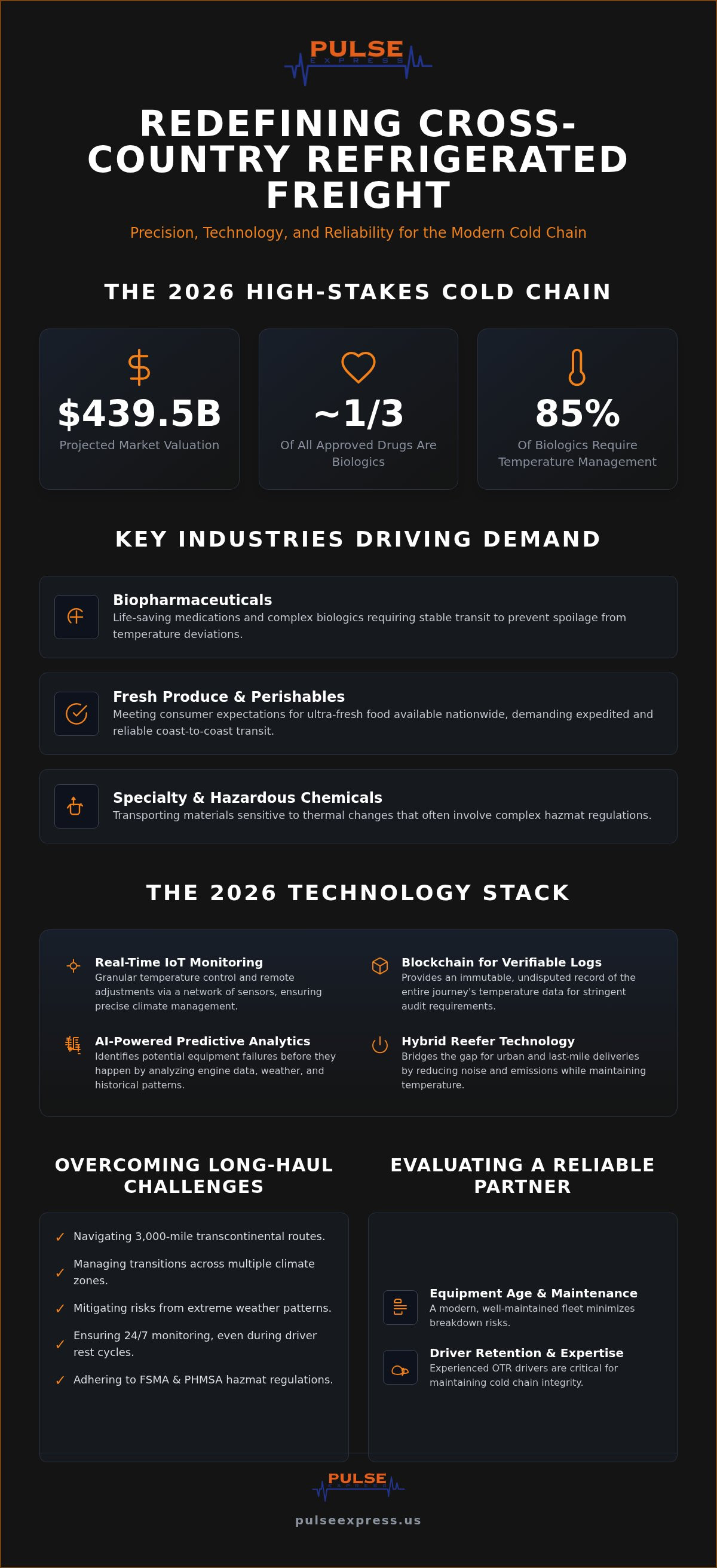
Did you know that nearly one-third of all approved drugs are now biologics, with an estimated 85% requiring strict temperature management? This shift has transformed cross country refrigerated freight from a standard transport service into a high-precision operation where every degree matters. In a market projected to reach a $439.5 billion valuation this year, the margin for error has effectively disappeared.
Maintaining cargo integrity over a 3,000-mile haul is a complex balancing act. You likely feel the constant pressure of temperature fluctuations, evolving regulatory compliance, and the difficulty of finding dependable OTR reefer capacity. It's a high-stakes environment where you need a partner that is protective, efficient, and deeply committed to excellence. Discover how technological shifts and specialized handling are redefining long-haul refrigerated logistics in 2026 to ensure zero-loss transit and predictable nationwide delivery timelines. We will explore the integration of predictive AI monitoring, the impact of new hazmat regulations for refrigerating machines, and the essential strategies for a seamless cold chain.
Key Takeaways
- Learn how real-time IoT monitoring and AI-driven predictive analytics are eliminating equipment failure risks on long-haul routes.
- Understand the complex regulatory landscape of cross country refrigerated freight when handling sensitive hazmat cargo in 2026.
- Discover why professional OTR drivers remain the critical factor in maintaining cold chain integrity across thousands of miles.
- Identify the specific metrics, such as equipment age and driver retention, that define a reliable nationwide logistics partner.
- Explore the latest FSMA and PHMSA updates that impact the safe transportation of temperature-controlled hazardous materials.
The Evolution of Cross Country Refrigerated Freight in 2026
In the current logistics landscape, cross country refrigerated freight is the heartbeat of national commerce. It ensures that life-saving medications and fresh produce reach their destinations across 3,000 miles without compromise. This sector has transitioned from a standard transport service into a precision-engineered environment where every degree is accounted for. Long-haul OTR reefer remains the backbone of the US supply chain because it provides the flexibility and reach that rail or air cannot match for high-volume, temperature-sensitive goods.
We've seen a definitive shift from passive shipping to active cold chain logistics management. In the past, carriers might have relied on the insulation of the trailer and basic thermostat settings. Today, the industry demands constant monitoring, rapid intervention, and detailed data logging. This evolution is driven by the high stakes of the cargo involved. Three primary industries are fueling this demand: biopharmaceuticals, where 85% of biologics require strict temperature management; perishables, which require expedited coast-to-coast transit; and specialty chemicals, which often involve hazardous materials that are sensitive to thermal changes.
Market Drivers for 2026 Nationwide Logistics
Consumer expectations have reached a point where ultra-fresh perishables must be available in every state, regardless of the season. This has forced a reconfiguration of traditional OTR reefer routes to prioritize speed and reliability. The biopharmaceutical sector is also expanding rapidly, requiring stable transit for complex drugs that can be ruined by a single hour of temperature deviation. Additionally, the rise of e-commerce has shifted the focus toward micro-fulfillment centers, making the long-haul leg of the journey even more critical for keeping these local hubs stocked with viable inventory.
Addressing the Challenges of Long-Haul Stability
Transcontinental routes present unique obstacles, as a single shipment might cross three different climate zones in 48 hours. Navigating extreme weather patterns, from desert heat to mountain blizzards, requires advanced equipment and expert handling. Utilizing specialized temperature controlled trucking services is the most effective way to mitigate these risks. Professional drivers must also manage their mandatory rest cycles carefully. It's essential that the reefer units remain fully operational and monitored even when the truck is stationary, ensuring that cargo integrity is never sacrificed for the sake of the schedule. This level of care provides the reassurance and stability that modern shippers require.
Technological Shifts: Real-Time Monitoring and AI in Long-Haul Transit
Modern cross country refrigerated freight relies on a sophisticated digital infrastructure that has moved from reactive cooling to predictive climate management. It's no longer sufficient to simply set a thermostat and hope for the best. IoT-enabled reefer units now provide granular temperature control, allowing dispatchers to adjust settings remotely with incredible precision. These units use a network of sensors to ensure that every corner of the trailer maintains the exact environment required for sensitive cargo.
Predictive analytics represent a major leap forward in operational reliability. AI algorithms now analyze thousands of data points, including engine performance, ambient weather conditions, and historical cooling patterns, to identify potential equipment failures before they happen. This proactive approach ensures stability, minimizes downtime, and protects high-value shipments from unexpected mechanical issues. By shifting to a maintenance model based on actual component health rather than just mileage, carriers can offer a higher level of reassurance to their partners.
Beyond the cooling unit itself, blockchain technology is becoming the standard for maintaining immutable temperature logs. This provides an undisputed record of the entire journey, which is essential for meeting federal refrigerated transport regulations and satisfying the most stringent audit requirements. While the long-haul segment remains focused on traditional power, the transition to hybrid reefer technology is also gaining momentum. These units help bridge the gap for urban deliveries, reducing noise and emissions during the final miles of a transcontinental route.
The Standard for 2026 Telematics
Telematics in 2026 reefer freight refers to the integrated use of telecommunications and informatics to monitor and manage temperature-controlled assets in real-time. We've moved far beyond basic GPS tracking to a comprehensive monitoring suite. Modern systems provide data on several critical factors:
- Humidity Levels: Essential for preventing spoilage in specific produce and pharmaceutical categories.
- Light Exposure: Sensors detect unauthorized door openings to ensure security and cargo integrity.
- Vibration and Shock: Monitoring for rough handling helps protect fragile medical equipment and specialty chemicals.
Instant alert systems now notify both the carrier and the shipper the moment a deviation is detected. This immediate visibility allows for rapid intervention, often resolving issues before the cargo is compromised. It creates a sense of organized momentum, where information flows as smoothly as the freight itself.
Automated Compliance Reporting
Digital FSMA-compliant logs have largely replaced manual paperwork, reducing human error and streamlining the inspection process. Real-time data sharing between carriers and 3PL partners ensures that everyone involved in the supply chain has access to the same verified information. This transparency is a cornerstone of sensitive freight transportation services, where documentation is just as important as the physical delivery. Partnering with a fleet that prioritizes these systems allows you to scale your operations with confidence and maintain a competitive edge in a demanding market.
The Intersection of Hazmat and Refrigerated Transport
Refrigerated hazmat represents the most demanding intersection in the transport industry. It requires the precision of climate control and the rigorous safety protocols of hazardous materials handling. Managing these dual requirements over thousands of miles makes it a complex niche that few carriers can execute reliably. As of September 3, 2026, new PHMSA regulations have updated the requirements for transporting refrigerating machines and specific low-flammability refrigerants. Staying ahead of these legal shifts is a cornerstone of our operational excellence. We provide the stability and reassurance you need when moving high-stakes cargo across state lines.
Pulse Express bridges the gap between technical safety and logistical stability. We don't just move freight; we manage a high-stakes environment where safety and precision are non-negotiable. This commitment ensures that our partners can scale their supply chains without worrying about regulatory hurdles or cargo integrity issues. Our OTR fleet is specifically focused on these nationwide routes, providing a stable and predictable service that instills confidence. By integrating specialized driver training with advanced equipment, we ensure that every cross country refrigerated freight shipment meets the highest standards of safety and care.
Handling Sensitive Industrial Chemicals
Many industrial chemicals become volatile or lose their efficacy if they aren't kept within a narrow thermal range. Our reefer units act as a critical safety barrier, preventing chemical reactions that could lead to cargo loss or safety incidents. This level of risk management is why specialized hazmat OTR driver jobs are so essential. These professionals are trained in specialized loading protocols, emergency shut-off procedures, and the unique physics of liquid-sensitive freight. They provide the human expertise that complements our advanced telematics, ensuring that sensitive materials are handled with the care they deserve.
Risk Management for High-Value Cargo
Transporting hazmat across the country involves intricate liability and insurance considerations. Every mile of cross country refrigerated freight must be accounted for with comprehensive emergency response planning. We maintain detailed protocols for transcontinental transit, ensuring that drivers know exactly how to respond to any deviation in pressure or temperature. By prioritizing specialized hazmat logistics, we help shippers navigate these complexities with total peace of mind. Our approach is methodical, purposeful, and designed to ensure that even the most sensitive cargo arrives safely, compliantly, and on schedule.
Key Metrics for Evaluating Nationwide Cold Chain Partners
Selecting a partner for cross country refrigerated freight requires a rigorous evaluation of their operational DNA. In an industry where a single mechanical failure can result in a total loss of high-value cargo, the age and maintenance standards of the fleet are paramount. Top-tier carriers prioritize equipment that is less than three years old and utilize the predictive maintenance technologies we discussed earlier. This proactive approach ensures that the reefer unit remains stable during the long stretches of desert heat or mountain climbs that define transcontinental routes.
Driver retention is a critical indicator of cargo safety. Experienced OTR drivers have a deep understanding of the equipment and the specific needs of sensitive cargo. High turnover rates often lead to a lack of familiarity with specialized protocols, which increases the risk of human error. Finally, a clean compliance history with DOT and FSMA regulations is a non-negotiable requirement. A partner with a proven track record of safety and regulatory adherence provides the stability and reassurance you need for long-term growth.
The Shippers Evaluation Framework
When vetting potential partners, it's essential to distinguish between asset-based carriers and traditional 3PL brokers. Asset-based providers offer direct control over the equipment and the drivers, which translates to better visibility and accountability. You should also assess their data accessibility; you must be able to see real-time temperature logs at any moment. A carrier that invests in CDL A long haul driver careers tends to attract the elite professionals necessary for high-stakes logistics. These drivers aren't just operators; they're seasoned guides who take personal responsibility for the integrity of your freight.
Scalability and Surge Capacity
Your supply chain needs can change rapidly, especially during seasonal peaks in demand for perishables or pharmaceuticals. A reliable partner must offer nationwide coverage without regional hand-offs, as every transfer point introduces a new risk for temperature deviation. Finding a nationwide hazmat logistics partner that scales with your business allows you to maintain consistency across all lanes. This integrated approach simplifies your operations and ensures that your standards for safety and precision are met on every mile. If you're ready to secure a stable and efficient supply chain, partner with Pulse Express today for your long-haul reefer needs.
Scaling Your Supply Chain with Pulse Express Logistics
Pulse Express Logistics understands that scaling a nationwide supply chain requires more than just trucks; it requires a deep commitment to precision. We specialize in the high-stakes world of cross country refrigerated freight, where the margin for error is non-existent. By integrating seasoned OTR expertise with specialized hazmat handling, we offer a level of stability that traditional carriers simply cannot match. Our approach is built on three core pillars: reliability, safety, and operational excellence. This foundation allows our partners to focus on their growth while we manage the complexities of their most sensitive cargo.
As the logistics landscape of 2026 continues to evolve, the need for a trusted expert partner becomes even more critical. We position ourselves as a seasoned guide that is both highly capable and personally invested in your success. Our team manages the technical requirements of the cold chain with a focus on precision, customization, and safety. This ensures that your products, whether they are life-saving biologics or sensitive industrial chemicals, are protected at every stage of the journey. We don't just move freight; we provide the reassurance and stability your business needs to thrive.
Our Asset-Based Approach to Safety
We maintain a modern fleet of reefer and dry van units designed to meet the rigorous demands of transcontinental transit. Each vehicle is equipped with the advanced telematics and predictive monitoring discussed earlier in this guide, ensuring that equipment health is never left to chance. We prioritize driver safety and professional development because we know that the person behind the wheel is the ultimate guardian of your cargo. We focus on hiring CDL A reefer drivers who demonstrate the technical skill and personal dedication required for high-value OTR careers. This investment in our people directly translates to the safety and integrity of every cross country refrigerated freight load we carry.
Ready to Move Your Sensitive Freight?
Onboarding with Pulse Express is designed to be streamlined, supportive, and efficient. We don't believe in one-size-fits-all logistics. Instead, we create customized solutions for complex reefer-hazmat needs that account for specific thermal requirements and regulatory hurdles. Our team acts as a dedicated partner, navigating the intricacies of nationwide transit to ensure your cargo arrives on time and in perfect condition. We invite you to contact Pulse Express for a specialized freight consultation. Let's discuss how our asset-based fleet and specialized expertise can support your long-term growth in the 2026 market.
Securing the Future of Your Nationwide Supply Chain
Success in the 2026 logistics landscape depends on three critical factors: technological precision, specialized driver expertise, and asset-based reliability. We've seen how real-time telematics and predictive AI are moving the industry from reactive cooling to proactive climate management. These tools, combined with a deep understanding of evolving hazmat regulations, ensure that your sensitive cargo remains stable across every climate zone. Maintaining the integrity of cross country refrigerated freight is a high-stakes responsibility that requires a partner committed to operational excellence at every mile.
Pulse Express provides the reassurance and stability you need to scale your operations with confidence. Our modern OTR fleet features advanced real-time monitoring, and our specialized hazmat and reefer certifications set the standard for safety in long-haul transport. We act as a seasoned guide, personally invested in the success of your shipments and the long-term growth of your business. Partner with Pulse Express for your nationwide refrigerated logistics needs today. We look forward to building a safer, more efficient, and more predictable supply chain alongside you.
Frequently Asked Questions
What is the difference between reefer and cold chain logistics?
Reefer refers specifically to the refrigerated trailer used for transport, while cold chain logistics encompasses the entire temperature-controlled supply chain from production to final delivery. A reefer unit is a critical tool within the broader cold chain system. Pulse Express provides the specialized reefer equipment and OTR expertise necessary to maintain the integrity of this chain across long-haul nationwide routes.
How does cross country refrigerated freight handle extreme temperature shifts?
Carriers utilize advanced insulation and high-output cooling units that automatically adjust to external ambient conditions. This is essential for cross country refrigerated freight moving through diverse climates, such as the Mojave Desert and the Rocky Mountains. Integrated sensors monitor outside temperatures in real-time, allowing the system to compensate for thermal gain and maintain a stable internal environment for sensitive cargo.
Can hazardous materials be shipped in a refrigerated truck?
Yes, hazardous materials can be shipped in temperature-controlled environments, a service known as Reefer Hazmat Transport. Pulse Express specializes in this complex niche, which is vital for industrial chemicals that become volatile or lose efficacy if exposed to heat. These loads require dual-endorsed drivers and specialized safety protocols to manage both the chemical risks and the thermal requirements of the shipment.
What are the FSMA requirements for refrigerated carriers in 2026?
The Food Safety Modernization Act (FSMA) requires carriers to maintain rigorous temperature logs and written procedures for cargo handling. In 2026, the focus has shifted toward digital, real-time documentation that ensures a transparent chain of custody. Carriers must prove that the equipment was properly pre-cooled and that the temperature remained within the specified range throughout the entire transcontinental journey to remain compliant.
How do I track my refrigerated shipment across the country?
Modern shipments are tracked through integrated IoT sensors and telematics platforms that provide real-time visibility. Shippers can access digital dashboards to monitor the exact location of the truck and the current temperature inside the trailer. This level of transparency allows for immediate intervention if any deviations occur, ensuring that you always have a clear window into your supply chain operations.
What happens if a reefer unit fails during a cross-country trip?
If a mechanical failure occurs, instant alert systems notify the dispatcher and the driver immediately. Most modern units utilize predictive AI to flag potential issues before they cause a shutdown. If a failure is confirmed, Pulse Express drivers follow established emergency protocols, which may include manual unit resets, immediate routing to a repair facility, or transferring the cargo to a backup unit.
Why is driver experience so critical for refrigerated freight?
OTR drivers are the primary guardians of your cargo and must possess the technical skill to manage complex reefer systems. Professional Class A CDL drivers understand how to monitor airflow, manage fuel levels for the cooling unit, and troubleshoot equipment issues on the road. This human expertise is what prevents minor technical glitches from turning into significant cargo losses during high-stakes long-haul transit.
How much does cross country refrigerated freight cost on average?
The cost of long-haul refrigerated transport depends on several market factors, including fuel prices and the national load-to-truck ratio. In August 2026, the reefer market saw a ratio of approximately 18.08 loads per truck, which influences capacity availability. Shippers should also account for specialized requirements, such as hazmat endorsements or expedited timelines, which can impact the final service rate for a specific lane.


