

What if the most significant threat to your cargo isn't a mechanical failure, but a missing sanitation log from three weeks ago? In the modern cold chain, food grade reefer transport is a discipline of sanitation and data, not just a temperature setting. You likely understand the stress of navigating complex FSMA documentation and the constant worry that a previous non-food load might compromise your current shipment. It's a high-stakes environment where precision, safety, and transparency are the foundations of success.
This 2026 guide is designed to help you master these complexities and ensure your food-grade cargo arrives safely. You'll learn how to maintain 100% compliance with FDA standards, leverage advanced monitoring technology, and reduce insurance liability through better telematics. We'll examine the critical importance of verifiable sanitation logs, the necessity of precise pre-cooling protocols, and the value of a dedicated OTR partner. By the end of this article, you'll have a clear roadmap for maintaining a pristine cold chain that protects your brand, builds trust, and supports your growth.
Key Takeaways
- Master the critical differences between standard temperature control and the rigorous sanitation requirements for food grade reefer transport.
- Navigate 2026 FSMA regulations with clear documentation and defined liability to protect your cargo from rejection.
- Leverage real-time telematics and automated alerts to gain total visibility and prevent spoilage on long-haul routes.
- Establish strict cleaning protocols and load segregation to maintain safety and prevent cross-contamination in OTR fleets.
- Identify the advantages of asset-based partners who provide verifiable sanitation logs and consistent operational excellence.
What Defines Food Grade Reefer Transport in 2026?
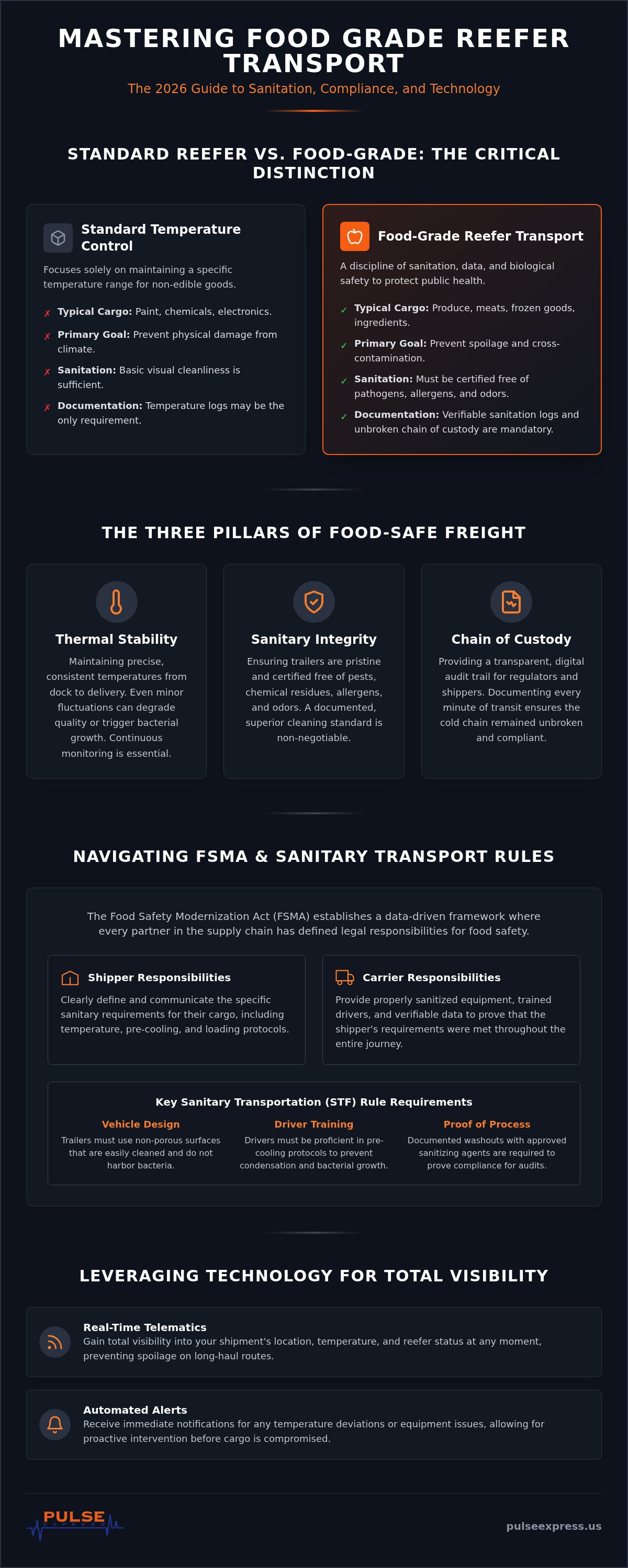
Food grade reefer transport is a specialized logistics category that utilizes refrigerated trailers to meet precise FDA sanitation and temperature standards. While many carriers offer basic temperature control, food-grade service adds layers of complexity regarding biological safety and documented hygiene. In 2026, this isn't just about keeping products cold; it's about protecting public health through meticulous environmental management. It requires a commitment to precision that goes far beyond the capabilities of standard dry or refrigerated freight.
The difference between 'temperature-controlled' and 'food-grade' logistics is significant. A standard reefer might carry paint, chemicals, or electronics that require specific climates to prevent damage. A food-grade trailer, however, must be free of pathogens, allergens, and odors that could compromise edible cargo. This distinction is the backbone of the modern US supply chain. It ensures that the food on grocery shelves is both fresh and safe for consumption, regardless of how many miles it has traveled.
The Three Pillars of Food-Safe Freight
Reliable food grade reefer transport rests on three essential foundations that ensure cargo integrity during long-haul OTR routes. These pillars provide the framework for a secure and compliant cold chain.
- Thermal Stability: This involves maintaining consistent temperatures from the initial loading dock to the final delivery point. Fluctuations, even within a few degrees, can trigger bacterial growth or degrade product quality. Consistent monitoring is the only way to guarantee this stability.
- Sanitary Integrity: Trailers must be pristine. This means they're certified free of pests, chemical residues, and lingering odors. Our background in handling sensitive materials informs our superior cleaning standards, ensuring every trailer is food-safe before it ever reaches your dock.
- Chain of Custody: In 2026, digital logs are the standard for regulatory compliance. Documenting every minute of the transit ensures a transparent audit trail for regulators and shippers alike. This data provides the peace of mind that the cold chain remained unbroken.
Common Food Categories Requiring Reefer OTR
Different commodities demand specific environmental profiles during long-haul transport. A one-size-fits-all approach doesn't work for high-value food shipments that must travel across the country.
- Perishable produce and fresh meats: These require high-moisture control and precise ventilation to prevent wilting, dehydration, or premature spoilage.
- Frozen goods: These loads need 'deep freeze' stability to maintain structural integrity over thousands of miles. Any thawing during transit can lead to immediate cargo rejection.
- Processed foods and ingredients: Items like specialty flours or cocoa are sensitive to ambient humidity and can be ruined by improper airflow or moisture ingress.
FSMA Compliance and Sanitary Transportation Rules
FSMA compliance is the legal foundation of modern cold chain logistics. By 2026, the FDA has moved beyond simple spot checks to a data-driven enforcement model. This means every stakeholder in the supply chain has defined roles. Shippers are responsible for setting the sanitary requirements for their specific products. Carriers are responsible for providing the sanitized equipment, trained drivers, and verifiable data to prove those requirements were met throughout the journey.
The distinction between general refrigerated freight and food grade reefer transport lies in the proof of process. Maintaining a high standard of food grade reefer transport means every trailer is certified and ready for inspection at a moment's notice. A standard reefer might be clean to the eye, but food-grade standards require documented washouts using approved sanitizing agents. This process removes microscopic residues and allergens that could trigger a cargo rejection or a public health incident. We prioritize these high-level sanitation protocols because we understand that a clean trailer is the first step in a successful delivery.
Sanitary Transportation of Human and Animal Food (STF) Rule
The STF rule provides the technical framework for vehicle maintenance and driver behavior. It requires that trailers are designed with non-porous surfaces that don't harbor bacteria. Beyond the equipment, driver training is a critical component. OTR drivers must be proficient in pre-cooling protocols to ensure the trailer reaches the target temperature before the first pallet is loaded. Loading into a warm environment can cause surface condensation on products, which leads to mold or bacterial growth during transit.
The Audit Trail: Preparing for Inspections
During a regulatory audit, documentation is your only defense. FDA inspectors focus on three key areas: maintenance history, sanitation records, and digital temperature logs. They look for a 'Clean Trailer Certificate' for every load, which serves as a formal declaration that the unit was inspected and sanitized. Paper logs are increasingly viewed with skepticism; digital, tamper-proof records are the only way to provide the transparency required in 2026. Partnering with a reliable OTR partner allows you to focus on your business while we handle the complexities of regulatory documentation. FSMA compliance is a non-negotiable standard for 2026 logistics that protects both the consumer and your bottom line.
Advanced Reefer Technology: Beyond Temperature Control
Technology has fundamentally changed how we approach food grade reefer transport. It's not just about the cooling unit; it's about the data it generates. Modern reefers act as sophisticated sensors that track temperature, humidity, and location in real-time. This level of oversight ensures that every pallet is monitored from the moment the doors close until they open at the destination. This technology provides precision, transparency, and reliability for every shipment.
Real-time telematics integrate directly with dispatch systems. Automated alerts notify the driver and the home office if the temperature deviates by even a fraction of a degree. This immediate response capability is what separates professional food grade reefer transport from standard refrigerated shipping. It allows for corrections to be made long before cargo is at risk. It's an essential part of contemporary Cold Chain Logistics that supports diverse product lines in a single OTR move.
Multi-temp units offer specialized compartments within a single trailer. This allows for the simultaneous transport of frozen and chilled goods, maximizing trailer utility without risking cross-contamination or temperature bleeding. These units use movable bulkheads to maintain distinct environments for different food categories. This flexibility helps shippers consolidate loads while maintaining strict product requirements.
Telematics and the Internet of Things (IoT) in Trucking
By 2026, the Internet of Things (IoT) has replaced manual logs with 24/7 automated data streams. These systems communicate directly with dispatch centers to provide a tamper-proof record of the journey. Shippers use this data to prove 'no-break' integrity to receivers, which streamlines the unloading process and reduces the risk of rejection. This shift from manual checks to automated streams ensures that the cold chain remains visible and verifiable at every mile.
Fuel Efficiency and Sustainability in Refrigerated OTR
Sustainability is a growing priority in long-haul OTR. Electric reefer units and high-performance insulation materials are reducing the fuel needed to maintain deep-freeze temperatures. These innovations help shippers meet their carbon reduction goals while maintaining the strict thermal stability required for food-grade cargo. We focus on safety, efficiency, and environmental responsibility to support a modern supply chain. We believe that efficiency and safety must go hand-in-hand to ensure long-term success.
Preventing Cross-Contamination in Diversified OTR Fleets
Carriers that manage both food and specialized hazmat logistics face a unique set of challenges. While hazmat transport focuses on containment and external safety, food grade reefer transport demands internal purity. It's a discipline of rigorous cleaning, strict segregation, and professional oversight. A trailer used for food must never haul certain hazmat classes, even if it's cleaned between loads. We maintain these firm boundaries to ensure your cargo remains untainted by previous industrial shipments.
The science of odor transfer is a frequent cause of cargo rejection. 'Ghost scents' are lingering odors from previous loads that migrate into sensitive food items. Flour, chocolate, and dairy are particularly susceptible to absorbing smells from onions, coffee, or industrial chemicals. Even a faint scent can trigger a total loss at the receiving dock. Professional driver training ensures our teams recognize the critical differences between hazmat safety and food-grade integrity. This expertise protects your brand from the hidden risks of a diversified fleet.
Certified Washout Protocols
A simple 'sweep out' is never sufficient for food-grade compliance. True sanitation requires a high-pressure chemical washout performed at a certified facility. These facilities use approved detergents to neutralize bacteria and remove residues. Shippers should always request a TTI (Trailer Tracking & Inspection) report before loading. This document identifies previous loads and verifies that the necessary sanitation steps were taken. We identify high-risk previous loads, such as raw poultry or strong-smelling aromatics, that require extra sanitation cycles to ensure a pristine environment for the next shipment.
Managing Sensitive Industrial Goods
Food-grade standards often overlap with pharmaceutical shipping requirements. Both industries demand precision cooling, sanitized environments, and detailed documentation. Dedicated reefer units are the best solution for high-value sensitive cargo that cannot risk any exposure to contaminants. This level of care requires a specific type of professional. You can see the caliber of expertise we demand by looking at our Hazmat OTR Driver Jobs, where we recruit drivers capable of handling complex, dual-discipline routes. If you need a partner who understands the nuance of safe hauling, connect with our logistics team today.
Selecting an OTR Partner for Food-Safe Freight
Choosing a partner for food grade reefer transport is a decision that impacts your brand’s reputation and your bottom line. Asset-based carriers provide a level of control that freight brokers simply cannot match. When you work directly with the fleet owner, you have a direct line to the equipment and the personnel handling your cargo. This transparency is vital for maintaining the integrity of the cold chain over long OTR routes. It ensures that the standards you set at the loading dock are the standards maintained until the final delivery.
Evaluating a carrier’s safety rating and compliance history is a mandatory step in your due diligence. You should look for a partner with a proven track record of clean inspections and consistent regulatory adherence. A carrier that manages its own fleet can guarantee that every trailer meets the high standards required for food-grade loads. This reliability reduces your insurance liability and ensures your products arrive in pristine condition. In the world of food grade reefer transport, verifiable performance is the only metric that matters.
The quality of the person behind the wheel is just as important as the technology in the trailer. We focus on hiring CDL drivers who specialize in reefer operations and understand the nuances of food safety. These professionals are trained to monitor temperature settings, manage pre-cooling protocols, and oversee trailer sanitation. Their expertise is your best defense against cargo rejection and spoilage. They don't just drive; they act as the final line of defense for your cargo’s integrity.
Key Questions for Your Potential Reefer Carrier
Before committing to a logistics partner, you must understand how they handle the unexpected. Ask these specific questions to gauge their readiness and commitment to your freight:
- How do you handle reefer unit breakdowns in remote OTR locations?
- Can you provide real-time temperature logs upon request?
- What are your specific protocols for trailer sanitation between loads?
The Pulse Express Advantage in 2026
Pulse Express has provided over 25 years of stability in long-distance freight transportation. Our commitment to rhythmic operational excellence is built on three pillars: Precision, Safety, and Reliability. Our OTR fleet is specifically tailored for the most demanding food-grade requirements, ensuring that your cargo is protected every mile of the way. We treat every shipment with the care it deserves, acting as a true compliance partner in your supply chain. Partner with Pulse Express for your next food-grade shipment and experience the confidence that comes with established expertise.
Securing the Future of Your Cold Chain
Success in 2026 requires a shift from simple temperature control to a comprehensive strategy of sanitation and data integrity. By mastering FSMA compliance and adopting advanced telematics, you protect your brand from the risks of cargo rejection and spoilage. A reliable cold chain is built on transparent documentation, rigorous washout protocols, and professional driver expertise. These elements ensure that your food grade reefer transport remains safe and compliant throughout the journey.
Pulse Express brings over 25 years of OTR expertise to every shipment. Founded in 2000, we operate an asset-based OTR fleet that specializes in both cold chain and specialized hazmat logistics. This dual expertise ensures that our sanitation standards are among the highest in the industry. We're ready to act as your dedicated compliance partner and guide. Request a custom quote for your food-grade reefer needs from Pulse Express today. We look forward to supporting your operational excellence and long-term growth.
Frequently Asked Questions
What is the difference between reefer and food grade reefer?
Standard refrigerated trailers focus solely on maintaining a set temperature for diverse cargo like electronics or floral arrangements. Food grade reefer transport adds rigorous layers of sanitation and regulatory oversight to this process. These trailers must be free of pathogens, chemical residues, and lingering odors that could compromise edible products. It's a specialized discipline where hygiene is just as critical as the cooling unit's performance during long-haul OTR routes.
How often should a food-grade reefer trailer be washed out?
A food-grade trailer must undergo a certified washout before every new load of food products. This ensures that any biological or chemical traces from previous shipments are completely neutralized. High-risk loads, such as raw poultry or strongly scented aromatics, require intensive high-pressure chemical washouts. This frequent cleaning schedule is a non-negotiable part of maintaining a safe cold chain and protecting your cargo from cross-contamination or rejection at the receiver's dock.
What are the FSMA requirements for refrigerated transport in 2026?
By 2026, FSMA requirements focus heavily on digital transparency and real-time data. Shippers are responsible for establishing specific sanitary standards, while carriers must provide verifiable proof that these conditions were met. This includes tamper-proof digital temperature logs and documented sanitation history for the equipment. Automated monitoring systems are now the industry standard, replacing manual checks to ensure that the cold chain remains unbroken and fully visible to all stakeholders.
Can you haul food and hazardous materials in the same trailer?
You cannot haul food and hazardous materials in the same trailer at the same time. While a diversified fleet might manage both types of freight, strict segregation protocols are essential. Certain hazardous material classes leave persistent residues or odors that prohibit a trailer from ever returning to food-grade service. We maintain clear boundaries between these cargo types, utilizing professional cleaning and dedicated equipment to ensure the absolute integrity of your food shipments.
What happens if a reefer temperature fluctuates during OTR transit?
Modern reefer units use IoT sensors to trigger automated alerts the moment a temperature deviates from the target range. Dispatch centers and drivers receive immediate notifications to investigate mechanical issues or insulation leaks. If the fluctuation is significant or prolonged, the cargo may be rejected by the receiver to prevent public health risks. This real-time visibility allows for rapid intervention, which is the best way to prevent total loss and maintain safety.
Do food-grade drivers need special certifications?
While a standard Class A CDL is the baseline, food-grade drivers require specialized training in FSMA protocols and reefer technology. They must understand pre-cooling requirements, sanitation verification, and digital log management. At Pulse Express, we focus on recruiting professionals who can manage the complexities of sanitary transportation. These drivers act as compliance partners on the road, ensuring that every load meets the high standards required for modern food grade reefer transport.
How do I verify a carrier's sanitation logs?
You can verify a carrier's sanitation history by requesting Trailer Tracking & Inspection (TTI) reports or digital washout certificates. These documents provide a transparent record of when the trailer was cleaned and what sanitizing agents were used. Asset-based carriers typically offer more reliable logs because they have direct control over their maintenance facilities. Always look for a partner that provides these records proactively to demonstrate their commitment to safety and regulatory compliance.
What temperature ranges can a modern food-grade reefer maintain?
Modern reefer units are incredibly versatile, maintaining environments from deep freeze settings at -20°F to chilled ranges between 34°F and 40°F. Some units also support ambient settings for products sensitive to extreme cold. Multi-temp trailers can even maintain different temperature zones within the same shipment using insulated bulkheads. This precision allows for the safe transport of everything from frozen seafood to fresh produce and shelf-stable ingredients across nationwide OTR routes.


