

By 2026, a single missed regulatory update or a three-degree temperature shift can be the difference between a successful delivery and a total loss. You understand that moving specialized freight across state lines isn't just about the miles. It's about the precision, the safety, and the people behind the wheel. Choosing between various interstate trucking companies requires more than a look at their fleet size. It demands a partner that prioritizes compliance, maintains rigorous equipment standards, and values the professional drivers who keep the country moving.
You've likely felt the frustration of unreliable communication during long-haul routes or the stress of fluctuating state-specific hazmat regulations. These challenges shouldn't be the norm in a professional logistics partnership. This guide helps you identify the most reliable partners for specialized freight and high-value OTR driving careers. We'll show you how to find a carrier that offers stability, expertise, and a genuine commitment to operational excellence.
We will examine the 2026 FMCSA hazmat requirements, the latest innovations in cold chain transit, and the qualities of a safety-first workplace. Whether you're a shipper seeking a trusted expert or a driver looking for a long-term home, you'll find the roadmap to success here.
Key Takeaways
- Learn how updated 2026 FMCSA regulations impact the safety standards and operational compliance of modern interstate trucking companies.
- Discover the essential technical requirements for handling specialized reefer, hazmat, and high-value dry van freight across state lines.
- Access a professional checklist for evaluating carrier safety records and fleet maintenance to ensure reliable, on-time delivery.
- Explore how strategic route planning and 24/7 dispatch support improve driver safety and streamline long-haul logistics.
- Identify the key advantages of a long-term partnership built on a balance of established experience and 2026 logistics technology.
Understanding Interstate Trucking: More Than Just Crossing State Lines
Interstate trucking serves as the vital circulatory system for the trucking industry in the United States, facilitating the commercial movement of goods across state or national borders. This sector operates under the watchful eye of the Federal Motor Carrier Safety Administration (FMCSA), which sets the standard for all over-the-road (OTR) activities. Because the risks of long-haul transit are inherently higher, interstate trucking companies are required to carry significantly more insurance coverage and submit to rigorous safety audits. In 2026, the regulatory environment has tightened, introducing sophisticated electronic logging device (ELD) standards that offer real-time data on driver rest and vehicle health. These measures aren't just hurdles; they're the safeguards that ensure every shipment arrives safely, regardless of the distance traveled or the complexity of the cargo.
The FMCSA's role is not just about rules; it's about creating a unified safety culture across the entire network. By 2026, the focus has shifted toward proactive maintenance and real-time monitoring. Carriers that invest in these technologies prove they're committed to more than just the minimum requirements. They're building a foundation of reliability that protects both the driver and the freight. This level of oversight is why interstate hauling is often considered the gold standard of professional driving.
Interstate vs. Intrastate: Why the Distinction Matters
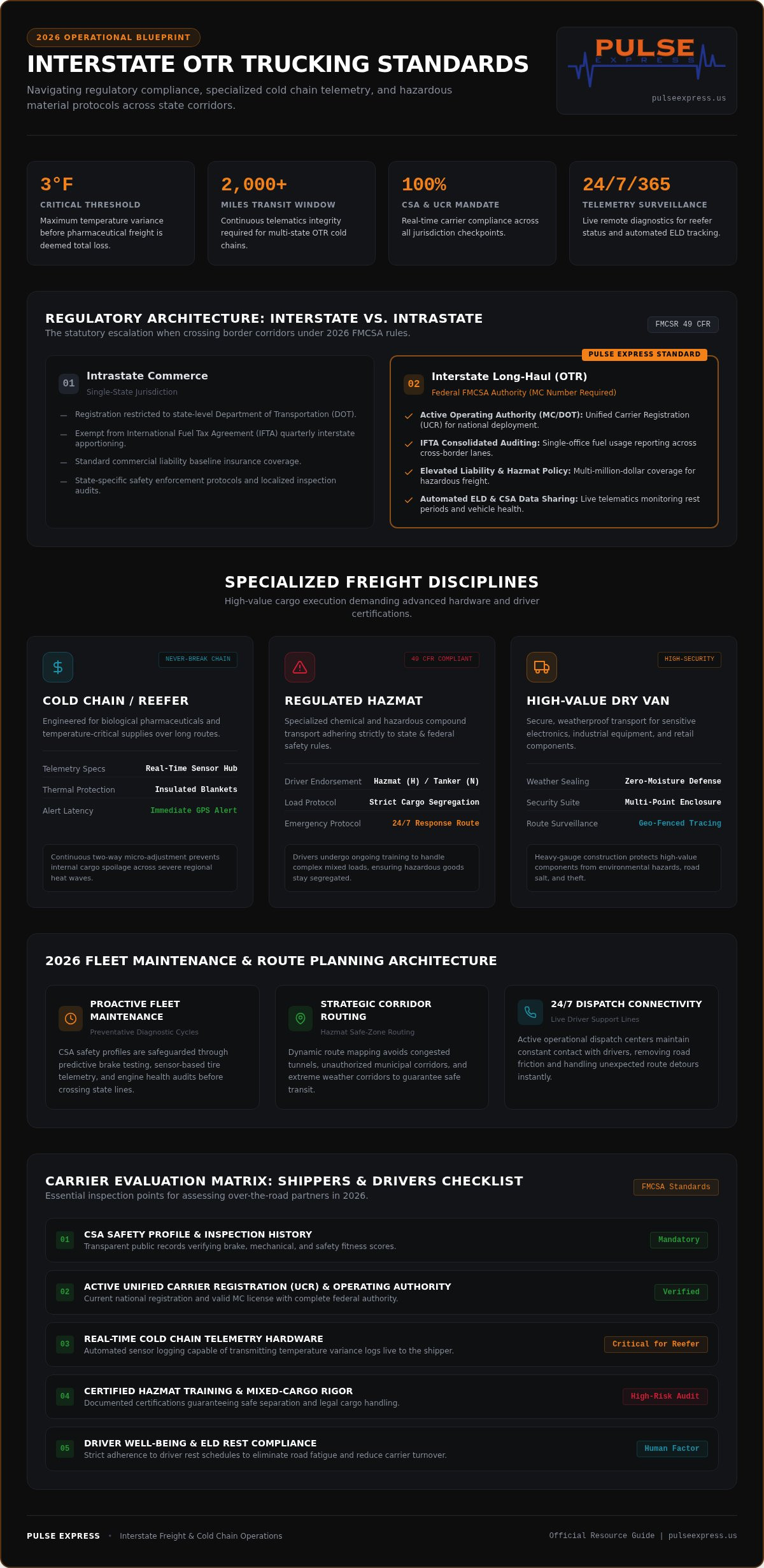
Crossing a state line, especially with hazardous materials, changes the entire regulatory profile of a shipment. While an intrastate carrier might only deal with state-level registration, an interstate partner must secure an Operating Authority, or MC number. This distinction also impacts tax handling through the International Fuel Tax Agreement (IFTA). This agreement lets carriers report fuel use across multiple jurisdictions through one office, keeping long-haul logistics efficient and legally sound.
Federal Compliance and Safety Standards in 2026
Compliance in 2026 is driven by data. The CSA portal provides a window into a carrier's safety record, tracking brake inspections and driver fitness. Evaluating interstate trucking companies requires checking these scores to ensure they meet safety expectations. Top-tier carriers also maintain their Unified Carrier Registration (UCR) to operate nationwide. This creates a culture of accountability across the supply chain. Full FMCSR compliance serves as the essential baseline for any reputable interstate partner.
Specialized OTR Solutions: Reefer, Hazmat, and Dry Van Excellence
High-value freight requires more than a standard trailer and a basic route. Reliable interstate trucking companies distinguish themselves by mastering the intersection of temperature control and hazardous material handling. This expertise is vital for the pharmaceutical and chemical sectors, where the demand for specialized reefer hazmat solutions continues to grow. Shippers in these industries require three core pillars from their logistics partners: precision, safety, and transparency.
Modern reefer units in 2026 utilize integrated telematics to bridge the gap between the road and the home office. This technology provides shippers with real-time temperature data, precise GPS location, and equipment health alerts. For industrial goods that don't need cooling, dry van solutions offer secure, weatherproof transit that protects against moisture, debris, and theft. Whether the cargo includes sensitive biologicals, industrial chemicals, or high-value electronics, the equipment must be maintained to the highest standard. Drivers also undergo rigorous training to manage mixed loads, ensuring that general freight and hazardous materials are separated and secured according to federal law.
Cold Chain Precision: Reefer Transport for Pharmaceuticals
Maintaining a strict "never-break" cold chain is essential when moving life-saving medications across routes exceeding 2,000 miles. Fleets now employ advanced insulation and thermal transport blankets to mitigate the risks of external temperature fluctuations during transit. These tools ensure that sensitive biologicals remain within their required range from the moment they leave the warehouse. You can learn more about the technical depth of these operations in our guide on temperature controlled trucking services.
Hazmat Security: Navigating Dangerous Goods Regulations
Transporting Class 1 through Class 9 hazardous materials involves complex compliance hurdles and strict route planning. Drivers must navigate restricted metropolitan interstate corridors while adhering to FMCSA interstate commerce registration requirements for every mile. This level of detail prevents accidents and ensures public safety. We prioritize specialized hazmat logistics to keep your shipments moving without legal or physical delays. If you need a partner committed to these high standards, explore how our nationwide freight services can support your logistics goals.
Evaluating Top-Tier Carriers: A Checklist for Shippers and Drivers
Evaluating a carrier requires looking beneath the surface of a polished website. For shippers and drivers alike, the most reliable interstate trucking companies are those that maintain transparent safety records and invest in modern infrastructure. You can verify a carrier's accident frequency and inspection history through the FMCSA’s Safety Management System (SMS) portal. A low score in categories like vehicle maintenance and driver fitness indicates a company that prioritizes long-term stability over short-term shortcuts. This data-driven approach ensures that you're partnering with an entity that values protection, precision, and performance.
Equipment age also plays a critical role in service delivery. A younger fleet generally leads to fewer mechanical breakdowns, better fuel efficiency, and consistent on-time performance. When carriers integrate real-time GPS tracking and automated status updates, they provide the visibility needed for complex supply chains. High driver retention rates further signal professional management and a culture of mutual respect. Companies that keep their drivers happy tend to keep their customers happy, creating a cycle of reliability that benefits everyone involved.
What Shippers Should Look For in an OTR Partner
Shippers moving sensitive cargo must verify active hazmat endorsements and specialized insurance riders. It's not enough to have a truck; you need a partner that offers dedicated services for high-priority freight. This ensures your cargo isn't mixed with incompatible goods or delayed by multiple stops. Scalability is also essential for maintaining a smooth supply chain. Leading interstate trucking companies should have the capacity to handle seasonal surges in nationwide dry van transport without sacrificing safety or communication. Look for providers that offer precision, flexibility, and documented compliance to ensure your goods are handled with the highest level of care.
What Drivers Should Seek in an Interstate Employer
Professional drivers deserve an environment that values their skill and their safety. When reviewing the BLS commercial truck driving career outlook, it's clear that the demand for qualified Class A operators remains high. However, the best employers offer more than just a paycheck. They provide a balance of competitive pay, predictable home time, and modern equipment. We are actively hiring CDL drivers who want to work for a company that respects the "right to refuse" unsafe loads. A true safety culture means the driver’s judgment is always the final word on whether a load is safe to pull. This commitment to driver well-being leads to safer roads and more reliable service for every client.
The Logistics of Long-Haul: Planning for Precision and Safety
Long-haul logistics isn't just about driving; it's a calculated orchestration of timing, technology, and human expertise. Elite interstate trucking companies treat every mile as a data point to be optimized. This meticulous planning ensures that high-value freight moves without interruption across the continental United States. By moving beyond simple point-to-point delivery, carriers can anticipate roadblocks before they occur, protecting the cargo and the driver's schedule.
By 2026, AI-driven dispatching has become the industry standard for top-tier fleets. These systems analyze traffic patterns, weather forecasts, and construction zones in real-time. This allow drivers to bypass congestion, reduce idle time, and lower fuel consumption. When transit involves interfaces with ports or rail heads, the logistics team must coordinate the "hand-off" with extreme precision to avoid costly detention fees or equipment delays. It's this level of detail that keeps the nationwide supply chain moving efficiently.
Support must be constant for a long-haul route to be successful. Drivers often navigate three or four time zones in a single trip, making 24/7 dispatch support a necessity rather than a luxury. Whether it's a midnight re-route due to an unexpected road closure or a technical question about an ELD, the driver is never alone. This constant connection fosters a sense of security and ensures that any challenge is met with an immediate, professional solution.
What happens when the unexpected occurs? Leading carriers maintain a robust network of vetted repair shops and backup power units to handle equipment failures mid-route. Contingency planning is the hallmark of a seasoned logistics partner. If a weather event threatens a specific corridor, the dispatch team can proactively re-route the truck to a safer path. This proactive stance minimizes risk and maintains the reliability that shippers expect from a professional carrier.
Route Optimization and Fuel Efficiency
Utilizing AI-driven dispatching helps minimize empty miles and maximize a driver's legal hours of service. Aerodynamic fairings and low-rolling-resistance tires also play a major role in lowering the overall cost of interstate shipping. Precision routing ensures that nationwide hazmat logistics stay on schedule by avoiding high-risk areas during peak hours.
Emergency Response and Cargo Security
Implementing high-security protocols is essential for dry van hazmat carriers, often involving geofencing and real-time sensor monitoring. If a temperature deviation occurs in a reefer unit, immediate response procedures allow for instant corrective action. Driver training remains the most critical factor in mitigating roadside emergencies and ensuring cargo remains secure from departure to arrival. If you're ready to experience a higher standard of OTR transport, you should partner with our logistics experts today.
Why Pulse Express is Your Strategic Interstate Partner
Pulse Express stands at the intersection of established heritage and forward-looking innovation. Since our founding in 2000, we've spent over 25 years refining the art of nationwide logistics. We understand that choosing between interstate trucking companies involves finding a partner that values your cargo as much as you do. By integrating 2026 logistics technology with a deep-rooted commitment to safety, we provide the precision, safety, and reliability required for complex hazmat and refrigerated freight.
Our approach is built on three pillars: operational excellence, transparent communication, and mutual growth. We don't just move trailers; we manage the intricate details that keep your supply chain resilient. Whether you're shipping sensitive pharmaceuticals or high-value industrial components, our team provides the specialized care and attention to detail your brand deserves. This solution-focused mindset ensures that every delivery reinforces your reputation for reliability and stability.
We pride ourselves on being a seasoned guide in an ever-changing industry. Our leadership maintains the confidence of an established global entity while keeping the approachability of a service-oriented partner. This unique blend allows us to offer the resources of a large fleet with the personalized attention of a close-knit logistics team. We're personally invested in the success of our clients and the safety of our drivers, creating a persona that is protective, efficient, and deeply committed to excellence.
Partnering with Shippers for Nationwide Success
We provide customized logistics solutions for both refrigerated and dry van freight. Our operational excellence is designed to protect your brand's reputation through consistent, on-time delivery and meticulous compliance. We believe in an 'expert partner' approach rather than a simple vendor relationship. This level of investment leads to higher efficiency, lower risk, and a more streamlined transport experience for every shipper we serve. We focus on the details so you can focus on your business.
Joining the Pulse Express Fleet: A Career for the Long Haul
We recognize that the heart of our success is our professional driver fleet. We've built a culture that empowers Class A CDL drivers to succeed in a demanding industry by providing the tools and support they need. Driving for Pulse Express means specializing in high-value, hazmat-endorsed freight with the support of a team that prioritizes your safety and career longevity. If you're looking for professional respect and stable miles, explore our CDL A long haul driver careers today. You can join our elite OTR fleet today and become part of a legacy built on trust and operational excellence.
Driving Excellence into the Future of Nationwide Freight
Mastering the complexities of 2026 regulations and specialized equipment is essential for any successful OTR operation. You've seen how top-tier interstate trucking companies leverage technology to ensure safety, compliance, and on-time delivery. Whether you're managing a sensitive cold chain or transporting hazardous materials, the right partner brings precision to every mile. It's about more than just the hardware; it's about the people, the expertise, and the protocols that keep the supply chain moving.
Pulse Express has been a trusted leader since 2000, combining specialized hazmat and reefer expertise with modern 2026 fleet technology. We offer the stability and care you need for a long-term logistics partnership. If you're ready to elevate your transport standards, it's time to Partner with Pulse Express for your nationwide freight needs. We are committed to your operational excellence and look forward to moving your business forward with confidence.
Frequently Asked Questions
What is the difference between interstate and intrastate trucking companies?
Interstate trucking involves the commercial transport of goods across state or national borders, requiring federal oversight from the FMCSA. Intrastate trucking stays strictly within the boundaries of a single state. Because they cross jurisdictions, interstate trucking companies must maintain a USDOT number and an active Operating Authority. They also face higher insurance minimums and more rigorous safety audits to account for the increased complexity of long-haul logistics.
How do I verify if an interstate trucking company is legally authorized to haul hazmat?
You can verify authorization by accessing the FMCSA Safety Management System (SMS) portal using the carrier's USDOT number. Look for an active "Hazardous Materials" registration and check their insurance filings for the required environmental restoration coverage. Professional carriers will also provide a copy of their Hazardous Materials Safety Permit (HMSP) upon request. This transparency ensures your sensitive cargo is handled by a legally compliant and safety-focused partner.
What are the most common safety regulations for interstate carriers in 2026?
In 2026, the industry focuses on real-time data and driver wellness. Key regulations include advanced Electronic Logging Device (ELD) standards for precise hours-of-service tracking and mandatory speed limiter use for heavy-duty trucks. Carriers must also adhere to the latest FMCSA Drug and Alcohol Clearinghouse requirements. These rules are designed to reduce fatigue, prevent accidents, and maintain a high standard of safety across the nationwide freight network.
Can interstate trucking companies handle both refrigerated and dry van freight?
Many versatile carriers maintain a diverse fleet to support different supply chain needs. Companies like Pulse Express offer both dry van and refrigerated (reefer) transport, allowing them to haul general freight alongside temperature-sensitive goods. This flexibility is especially valuable for shippers who require specialized reefer hazmat transport for pharmaceuticals or chemicals. Operating both equipment types requires a high level of maintenance expertise and driver training to ensure cargo integrity.
What requirements must a driver meet to work for an interstate trucking company?
Professional drivers must hold a valid Class A CDL and pass a comprehensive DOT medical examination. Most top-tier carriers require at least one year of verifiable over-the-road experience and a clean motor vehicle record. If the role involves specialized freight, the driver must also obtain a Hazmat endorsement. We focus on hiring drivers who demonstrate a commitment to safety, professionalism, and the operational excellence required for long-distance hauling.
How does route planning differ for interstate hazmat shipments?
Hazmat route planning is significantly more restrictive than standard freight logistics. Planners must utilize the National Hazardous Materials Route Registry to bypass restricted tunnels, bridges, and densely populated metropolitan areas. This process involves coordinating with local jurisdictions to ensure compliance with varying state-level regulations. Precision routing for these loads is essential to minimize risk and ensure that high-value, sensitive cargo arrives at its destination without legal or physical delays.
What should I look for in an interstate carrier's safety rating?
You should prioritize carriers with a "Satisfactory" safety rating and low percentiles in the FMCSA’s BASIC categories. Specifically, look at their scores for Unsafe Driving, Hours-of-Service Compliance, and Vehicle Maintenance. A carrier that consistently performs well in these areas demonstrates a proactive approach to safety and equipment health. These metrics are a reliable indicator of how a company will protect your cargo and manage its professional drivers on the road.
Why is driver retention important when choosing an interstate trucking partner?
High driver retention is a strong signal of a stable and well-managed company. When drivers stay with a carrier for the long haul, they become experts in that company's safety protocols and specialized equipment. This experience leads to fewer accidents, fewer cargo claims, and more reliable delivery schedules. Choosing a partner that values its workforce ensures your freight is in the hands of a seasoned professional who is personally invested in a successful delivery.


