

A single degree of temperature deviation during a 2,000-mile journey is more than a minor error. It's a potential catastrophe that can lead to total cargo rejection, lost revenue, and damaged reputations. Most logistics professionals recognize that successful long haul refrigerated shipping requires more than just a set-and-forget thermostat. It's a high-stakes environment where the fear of equipment failure or a regulatory oversight keeps even the most experienced managers awake at night.
We're here to provide the stability and expertise you need to ensure every load arrives in pristine condition. By focusing on precision, safety, and meticulous planning, you can transform your logistics operations from a source of stress into a reliable competitive advantage. This guide breaks down the essential steps for securing your freight over thousands of miles. We'll examine advanced equipment standards, the latest compliance updates for 2026, and the specific requirements for handling sensitive reefer Hazmat loads.
Key Takeaways
- Modern reefer technology uses advanced telematics and specialized airflow to maintain precise temperature zones. These systems provide the real-time data needed to protect your cargo from multi-day environmental shifts.
- Successful long haul refrigerated shipping begins with the proper pre-cooling of both the product and the trailer. This critical preparation prevents thermal shock and ensures temperature stability from the very first mile.
- Navigating 2026 FSMA compliance and Hazmat regulations is essential for high-stakes pharmaceutical and food logistics. You'll learn the documentation and safety standards required for legal, damage-free transit.
- Partnering with experienced Class A CDL drivers ensures your freight is managed by professionals who understand the nuances of sensitive cargo. Expert handling provides the reliability, precision, and safety needed for nationwide delivery.
Understanding the Mechanics of Long Haul Refrigerated Shipping
Long haul refrigerated shipping involves the multi-day, interstate transit of goods that require active climate control to maintain their integrity. It's a complex logistical commitment where a specialized Refrigerator truck serves as a mobile, climate-controlled warehouse. This process relies on the concept of the "Cold Chain," which is a continuous, unbroken sequence of refrigerated production, storage, and distribution. If this chain breaks for even a brief window, the safety, quality, and value of the cargo are immediately at risk.
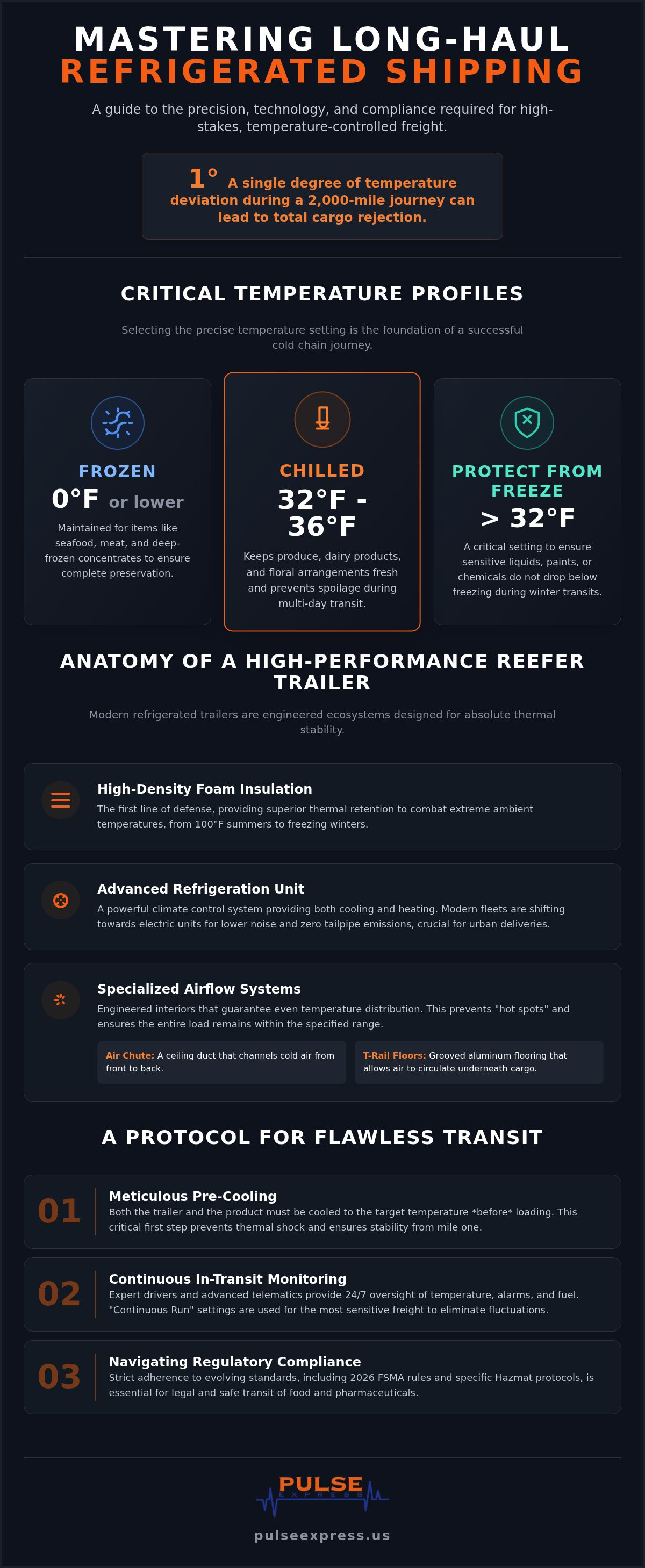
The success of the journey depends on selecting the precise temperature profile for the specific cargo. Logistics managers typically choose from three primary settings:
- Frozen: Usually maintained at 0°F or lower to preserve items like seafood, meat, and deep-frozen concentrates.
- Chilled: Kept between 32°F and 36°F to maintain the freshness of produce, dairy, and floral arrangements.
- Protect from Freeze: A setting used to ensure sensitive liquids, paints, or chemicals don't drop below 32°F during winter transits.
Professional Over-the-Road (OTR) drivers serve as the primary guardians of these settings. They don't just drive; they monitor the refrigeration unit 24/7 to check for mechanical alarms, ensure adequate fuel levels, and verify proper airflow throughout the trailer. Their expertise ensures the cargo remains stable, safe, and compliant from origin to destination.
The Challenges of Multi-Day OTR Transit
A typical long-haul route can cross several distinct climate zones. A driver might depart from the humid Midwest and arrive in the arid Southwest three days later. These drastic shifts in ambient temperature and humidity levels put significant stress on the refrigeration unit, increasing fuel consumption and requiring constant vigilance. Managing long haul refrigerated shipping across these distances requires a deep understanding of how external factors influence internal trailer conditions. For the most sensitive loads, we prioritize "continuous run" settings over "start/stop" cycles to eliminate even minor temperature fluctuations. This level of technical precision is why temperature controlled trucking services demand specialized driver training and a focused commitment to cargo security.
Reefer vs. Dry Van: When Is It Necessary?
Deciding between a reefer and a dry van involves assessing whether your cargo needs active or passive protection. While dry vans provide a basic barrier against the elements, they can't adjust to external heatwaves or cold snaps. Reefer units offer active cooling and heating, which is often required for "hidden" temperature-sensitive freight. This includes high-value electronics that can warp in extreme heat, medical equipment with sensitive calibration, and industrial chemicals that require stability to prevent volatile reactions. Reefer transport is a precision-controlled environment designed to protect sensitive cargo from external environmental threats.
Essential Equipment and Technology for Cold Chain Stability
Reliable long haul refrigerated shipping depends on more than just a running engine. It requires a high-performance trailer engineered specifically for thermal retention and precision cooling. A modern reefer consists of three critical components: high-density foam insulation, a powerful refrigeration unit, and a specialized interior designed for maximum airflow. These physical safeguards are the first line of defense in meeting the requirements of the Sanitary Transportation of Human and Animal Food rule. By 2026, we've seen a significant shift toward electric reefer units. These advanced systems provide the same cooling power as traditional diesel engines but with significantly lower noise levels and zero tailpipe emissions, making them ideal for sensitive urban delivery zones.
Advanced Airflow and Insulation
Inside the trailer, the "air chute" plays a vital role by distributing cold air evenly from the front to the very back. Without this flexible ceiling duct, the pallets closest to the cooling unit might freeze while those at the rear rise to dangerous levels. To complement this, "T-rail" aluminum floors allow air to circulate freely under the cargo, preventing hot spots from forming at the base of the load. During 100-degree summers, high-spec insulation is essential for maintaining "deep frozen" temperatures over long distances. For extra sensitive loads, many shippers now utilize thermal transport blankets to provide an additional layer of thermal resistance against external heat spikes.
Monitoring and Telematics in 2026
Modern logistics relies heavily on the marriage of hardware and software. The industry has moved toward 5G-enabled sensors that provide instant excursion alerts directly to the driver and the dispatch office. If a door is left open too long or a temperature fluctuates by even a fraction of a degree, the system triggers a notification. This remote monitoring capability allows carriers to adjust reefer settings mid-transit, ensuring that human error or mechanical hiccups don't compromise the load. This visibility is a game-changer for long haul refrigerated shipping, where a lot can happen over several days on the road.
Shippers find the most peace of mind when they work with over the road reefer transport providers who invest in their own asset-based technology. This commitment to equipment excellence is what separates a standard delivery from a truly secure partnership. If you're looking for this level of precision, Pulse Express offers the specialized reefer services your high-value freight deserves.
Step-by-Step: Preparing Freight for Long-Haul Transit
Successful long haul refrigerated shipping is a collaborative effort that begins hours before the trailer arrives at your loading dock. While the carrier provides the climate-controlled environment, the shipper is responsible for ensuring the cargo is ready for its multi-day journey. A common misconception is that a reefer unit can lower the temperature of warm cargo during transit. In reality, these units are designed to maintain the existing temperature of the product. If goods are loaded even a few degrees above their target, the refrigeration system may struggle to reach the set point, leading to potential excursions and cargo rejection.
The most critical step in this preparation is pre-cooling both the product and the trailer. Shippers should use temperature pulp thermometers to verify that the internal core of the product matches the manifest requirements. Simultaneously, the trailer must be pre-cooled to the target temperature to remove latent heat from the walls, floor, and ceiling. This prevents a "thermal shock" when the product enters the trailer. Following industry standards from the Global Cold Chain Alliance helps ensure that your loading protocols align with global safety benchmarks for high-stakes logistics.
Pre-Loading Checklist for Shippers
Precision at the dock saves thousands of dollars in potential claims. Before loading begins, verify these three essential factors:
- Product Temperature: Confirm the core temperature of every pallet using a calibrated pulping tool.
- Pallet Integrity: Use pallets in excellent condition to ensure that the floor rails can facilitate bottom-up airflow without obstruction.
- Packaging Resilience: Choose moisture-resistant packaging. High-humidity environments inside a reefer can cause standard cardboard to soften and collapse, which eventually blocks vital air paths.
Optimizing the Trailer Space
How you arrange the freight is just as important as the temperature setting itself. We recommend the "center-loading" technique, which involves keeping the pallets away from the trailer walls to minimize heat transfer from the outside environment. Additionally, shippers must leave at least 12 inches of unobstructed space at the rear of the trailer. This gap allows for a proper air return, ensuring the cooling cycle remains efficient throughout the entire 53-foot space. Avoid "chimney loading," where gaps between pallets allow air to bypass the cargo and return to the unit too quickly, creating hot spots in the center of the load. Correct airflow is the #1 factor in preventing long-haul spoilage.
Managing Compliance: Hazmat and Pharmaceutical Standards
Compliance in long haul refrigerated shipping extends far beyond the thermostat. When you transport food or pharmaceuticals across state lines, you enter a rigorous regulatory environment governed by the Food Safety Modernization Act (FSMA). These rules mandate that carriers maintain sanitary conditions and provide documented proof of temperature stability throughout the journey. Failing to meet these standards doesn't just risk a cargo claim; it can lead to heavy federal penalties and the rejection of your entire shipment. Shippers must partner with carriers who understand the gravity of these requirements and possess the specific Hazmat endorsements and reefer expertise necessary for high-stakes transit.
The Complexity of Temperature-Controlled Hazmat
Combining hazardous materials with refrigeration adds a layer of technical complexity that many standard carriers avoid. Certain industrial chemicals are inherently unstable and require "protect from heat" protocols to prevent volatile chemical reactions. This specialized niche requires reefer hazmat transport services that go beyond basic cooling. Drivers must be prepared to manage several critical elements during the trip:
- Specific placarding and hazardous material identification for the trailer exterior.
- Detailed dangerous goods documentation and safety data sheets (SDS) within the cab.
- Strict emergency response and spill containment protocols tailored for refrigerated units.
At Pulse Express, we ensure every load of sensitive industrial material is handled with the precision and safety required by federal law. Our drivers are trained to monitor these volatile loads constantly, ensuring stability across every mile.
Meeting Pharmaceutical Cold Chain Rigor
The pharmaceutical industry demands an even higher level of "Chain of Custody" protocols to protect public health. Shippers must distinguish between "Validated" and "Non-Validated" equipment. Validated units have undergone rigorous testing to prove they can maintain precise temperatures even when external conditions fluctuate wildly. Meeting FDA audit requirements often hinges on redundant temperature logging, where multiple sensors verify the primary reefer data. For these high-value medical shipments, full truckload reefer services are generally preferred. This approach minimizes the number of times trailer doors are opened, which is vital for long haul refrigerated shipping success.
Meeting these complex standards requires a partner who treats your compliance as their own. If you need a carrier that prioritizes safety and regulatory excellence, contact Pulse Express today to discuss your specialized shipping needs.
Partnering with Pulse Express for Nationwide Logistics
Pulse Express stands as a premier OTR partner for businesses that cannot afford a single failure in their cold chain. We understand that long haul refrigerated shipping is not just about moving freight from point A to point B; it is about protecting the integrity of your brand over thousands of miles. Our commitment to rhythmic operational excellence is built on three foundational pillars: Reliable performance, Secure handling, and On-Time delivery. By leveraging our nationwide network, you gain access to consistent long-haul capacity that adapts to your seasonal demands and specific cargo requirements.
Why Our Drivers Make the Difference
The success of a 2,000-mile transit rests largely on the shoulders of the professional behind the wheel. Pulse Express focuses on hiring CDL drivers who view their roles as career professionals rather than just operators. This distinction is vital for cargo safety on 48-hour cross-country runs where the driver must act as a technician, monitor, and safety officer. Our fleet undergoes specialized training protocols specifically designed for temperature-sensitive Hazmat and high-value pharmaceuticals. This experience ensures that your freight is managed by an expert who knows exactly how to respond to mechanical alerts or environmental shifts without compromising the load.
Customized Logistics for Your Unique Needs
We recognize that every shipment carries its own set of challenges and requirements. Whether you are moving general freight or specialized industrial chemicals, we tailor our high-spec equipment to meet the specific demands of your load. Our co-managed solutions bridge the gap between technology and physical assets. We provide the transparency of a digital platform while maintaining the accountability and reliability of an asset-based carrier. This hybrid approach ensures you have real-time visibility into your cold chain without the risks associated with unvetted third-party capacity.
We invite you to contact Pulse Express today for a professional consultation on your 2026 cold chain strategy. Our team is ready to help you navigate the complexities of long haul refrigerated shipping with the care and attention to detail your business deserves. Let us show you how a stable, service-oriented partnership can streamline your operations and drive mutual growth.
Secure Your Cold Chain for the Long Haul
Successful shipping across thousands of miles requires a blend of advanced technology, rigorous compliance, and professional driver expertise. You now understand how meticulous pre-cooling, strategic loading, and real-time monitoring work together to eliminate temperature excursions. Mastering long haul refrigerated shipping is a complex process, but it becomes a reliable engine for your business growth when managed with precision and care.
Pulse Express brings over 25 years of OTR expertise to every load. We utilize a specialized Hazmat-endorsed reefer fleet and provide real-time telematics on every journey to ensure your cargo remains safe, secure, and stable. Our team is dedicated to providing the stability you need to navigate the most demanding routes with ease.
Ready to protect your high-value freight? Request a Quote for Your Next Long-Haul Refrigerated Shipment to see how our tailored solutions can streamline your logistics. We look forward to being the trusted partner that helps your business reach new destinations with confidence.
Frequently Asked Questions
What is the difference between a reefer and a refrigerated container?
A reefer usually refers to a 53-foot refrigerated trailer permanently attached to a chassis for over-the-road use. A refrigerated container, or reefer container, is an intermodal unit designed for ocean freight or rail transport. Containers are typically 20 or 40 feet long and lack the integrated aerodynamics of a standard OTR trailer. Trailers offer more internal volume and are optimized for rapid highway transit across the country.
How long can a reefer trailer maintain its temperature without the engine running?
Temperature retention depends heavily on the insulation quality, external ambient conditions, and the cargo's initial thermal mass. High-spec trailers can often hold safe temperatures for several hours if the doors remain sealed and the product was properly pre-cooled. However, for sensitive long haul refrigerated shipping, we never rely on passive insulation. Continuous power is necessary to combat external heat spikes and ensure the cold chain remains unbroken throughout the trip.
Can you ship hazardous materials in a refrigerated truck?
Yes, you can ship hazardous materials in a reefer if the carrier possesses the proper endorsements and equipment. Pulse Express specializes in this niche, providing specialized reefer units for chemicals that require strict temperature control to stay stable. This service requires drivers with Class A CDL Hazmat endorsements who understand how to manage both the cooling unit and the regulatory requirements for dangerous goods simultaneously. We prioritize safety, compliance, and precision.
What is the "danger zone" for food temperatures during shipping?
The danger zone for food safety is generally defined as the temperature range between 40°F and 140°F. Within this window, bacteria can grow rapidly, potentially leading to spoilage or health risks. Maintaining temperatures below 40°F for chilled goods or below 0°F for frozen items is critical. Our drivers use real-time monitoring to ensure your cargo never enters this zone, protecting the integrity of your food shipments and ensuring consumer safety.
How do I track the temperature of my freight in real-time?
Shippers track freight temperatures using advanced telematics systems integrated into the refrigeration unit. These 5G-enabled sensors transmit live data regarding internal temperature, humidity levels, and GPS location to a centralized dashboard. This technology provides instant alerts if a deviation occurs, allowing for immediate intervention. Pulse Express includes this level of transparency on every load, giving you full visibility into the health of your cold chain at all times. It is efficient, secure, and reliable.
What happens if the reefer unit fails during a long-haul trip?
If a unit fails, the driver receives an immediate mechanical alarm and follows a strict contingency protocol. This typically involves identifying the nearest authorized repair facility or arranging for a cross-dock to a functional trailer. Because Pulse Express employs professional OTR drivers, they are trained to detect early warning signs and act quickly. Rapid communication with the dispatch team ensures that the cargo is protected, the delay is minimized, and the load remains safe.
Is refrigerated shipping more expensive than dry van shipping?
Refrigerated shipping generally carries a higher cost than dry van transport due to several factors. These include higher equipment purchase prices, increased fuel consumption for the cooling unit, and more intensive maintenance requirements. Additionally, the specialized training required for long haul refrigerated shipping drivers adds to the operational investment. While the cost is higher, the value lies in the precise climate control and protection provided for sensitive, high-value freight. It ensures quality, safety, and reliability.
What documents are required for long-haul refrigerated Hazmat shipping?
Transporting refrigerated Hazmat requires a comprehensive set of documents to ensure safety and legal compliance. You must provide a straight bill of lading, a detailed hazardous materials manifest, and the relevant Safety Data Sheets (SDS). Additionally, the driver must carry emergency response information and the proper placards must be displayed on the trailer. Our team helps you verify that all documentation is accurate, complete, and fully compliant before the truck leaves the dock.


