

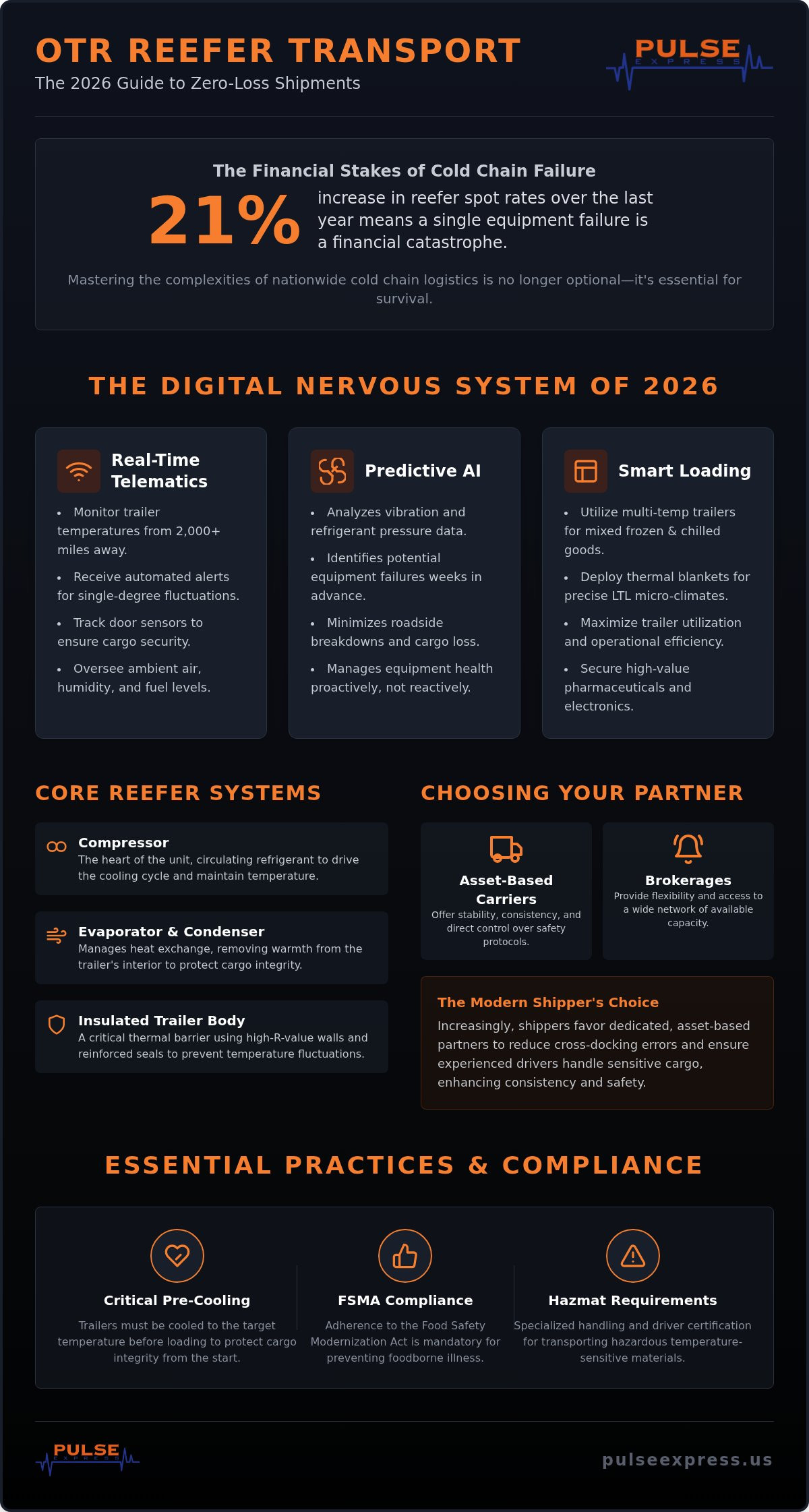
With reefer spot rates climbing 21% over the last year, a single equipment failure on a long-haul route isn't just a delay; it's a financial catastrophe. Managing over the road reefer transport in 2026 requires more than just a cold trailer. It demands precision, specialized equipment, and drivers who understand the nuances of sensitive cargo. You've likely felt the stress of cargo spoilage risks or the frustration of losing visibility once a truck hits the open highway. Finding carriers who can handle both temperature-sensitive goods and Hazmat requirements has become a significant hurdle for modern logistics managers.
We understand that your reputation travels with every pallet. Our goal is to help you master the complexities of nationwide cold chain logistics so you can secure your most sensitive freight with confidence. You'll learn how to achieve zero-loss shipments while maintaining full FSMA and Hazmat compliance. This guide explores the latest equipment standards, the shift toward continuous thermal monitoring, and the essential criteria for choosing a stable, long-term logistics partner that treats your business with the care it deserves.
Key Takeaways
- Identify the critical roles of pre-cooling and airflow management in protecting your cargo from the moment it is loaded.
- Utilize 2026 telematics and predictive AI to gain real-time visibility and prevent refrigeration failures on long-haul routes.
- Compare the stability of asset-based carriers against the flexibility of brokerages to find the ideal partner for your specific logistics needs.
- Secure your most sensitive freight by mastering the complexities of over the road reefer transport and prioritizing elite driver standards.
What is Over the Road Reefer Transport?
Over the road reefer transport involves the long-distance hauling of temperature-controlled freight across state lines. This specialized sector of the logistics industry ensures that products requiring specific thermal environments arrive at their destination without degradation. OTR reefer transport serves as the backbone of the nationwide pharmaceutical and food supply chains. Unlike local distribution, these routes often span thousands of miles, crossing multiple climate zones and requiring rigorous attention to detail.
The cold chain ecosystem is a precise sequence of events. It begins with pre-cooling the trailer to the target temperature before any cargo is loaded. Once the doors close, the unit must maintain that set point through transit, during driver rest periods, and until final delivery staging. This continuous cycle prevents the growth of bacteria in food and maintains the chemical stability of medical supplies. Every link in this chain must remain unbroken to ensure the safety and efficacy of the cargo.
Choosing OTR over regional transport requires a shift in equipment standards. Long-haul routes demand superior insulation and fuel-independent cooling units. While a regional truck might rely on shorter run times, an OTR unit must withstand days of operation in extreme heat or freezing cold. High-R-value walls and reinforced door seals become critical investments for protecting high-value shipments over long distances. These features provide the stability needed to manage external environmental shifts without compromising the internal climate.
The Core Components of a Reefer Unit
A reliable refrigerated trailer relies on three primary mechanical systems. The compressor acts as the heart of the unit, circulating refrigerant to drive the cooling cycle. The evaporator and condenser manage the vital heat exchange process, removing warmth from the trailer interior even in harsh climates. Finally, the insulated trailer body provides the necessary thermal barrier. High-quality trailers use advanced composite materials to ensure the interior remains sealed against external temperature fluctuations, protecting the integrity of the freight.
Why Shippers are Moving Toward Dedicated OTR Carriers
Modern shippers increasingly favor dedicated partners to manage their temperature controlled trucking services. This preference stems from three core advantages: consistency, stability, and safety. Dedicated carriers reduce the risk of cross-docking errors by keeping freight on a single trailer from origin to destination. They provide stable, experienced drivers who understand the specific requirements of sensitive cargo. Most importantly, they offer better control over safety protocols, ensuring that every shipment meets strict FSMA and Hazmat standards through every mile of the journey.
Advanced Equipment and Technology in 2026
Modern over the road reefer transport relies on a digital nervous system that provides unprecedented visibility. Real-time telematics allow dispatchers to monitor trailer temperatures from 2,000 miles away with pinpoint accuracy. This technology doesn't just track location; it monitors door sensors, ambient outside air, and fuel levels. If a temperature fluctuates by even a single degree, automated systems notify both the driver and the home office. This level of oversight ensures that your most sensitive freight remains within its specified range from coast to coast.
Artificial intelligence has transformed how we approach equipment uptime. Predictive maintenance software now analyzes vibration data and refrigerant pressure to identify potential failures before they happen. Instead of waiting for a unit to break down in the middle of a desert crossing, AI flags a weakening compressor weeks in advance. This proactive strategy minimizes the risk of roadside cargo loss. It creates a more stable, reliable supply chain where equipment health is managed through data rather than guesswork.
Efficiency in 2026 also comes from smart loading configurations. Multi-temp trailers allow shippers to haul frozen and chilled goods in a single OTR load, maximizing trailer utilization. When protecting LTL shipments or creating specific micro-climates, the use of thermal transport blankets provides an extra layer of security. These specialized tools help maintain precise zones for pharmaceuticals or high-end electronics. If you're looking to upgrade your logistics strategy, a partner like Pulse Express can help you implement these advanced technical solutions.
The Shift to Electric and Hybrid Reefer Units
The industry is rapidly adopting all-electric transport refrigeration units, such as the Vector 8200 launched in 2026. These units significantly reduce the carbon footprint of long-haul shipping while offering near-silent operation. Noise reduction is particularly beneficial for urban delivery staging where local ordinances are strict. Because these systems can operate independently of the truck engine, they provide a reliable safety net for cargo during mandated driver rest periods or long border crossings.
Continuous Thermal Logging for Compliance
Meeting FSMA (Food Safety Modernization Act) requirements in 2026 requires more than just manual logs. Shippers now demand digital "proof of temperature" that provides a minute-by-minute account of the environment during transit. These records are essential for pharmaceutical audits and legal compliance. Current regulations require carriers to provide these thermal records to the FDA within 24 hours of a request. Automated alerts ensure that any deviation is addressed immediately, preventing a minor glitch from becoming a total loss.
Evaluating Reefer Providers: Asset-Based vs. Brokerage
Choosing the right partner for over the road reefer transport starts with understanding their operational model. Asset-based carriers own and operate their entire fleet, which provides a direct line of accountability for maintenance and safety. You aren't just hiring a truck; you're hiring a company's internal standards. In contrast, brokerage networks provide scalability by tapping into thousands of independent owners. While this flexibility helps during peak seasons, it often sacrifices the granular control required for highly sensitive shipments. For shippers prioritizing stability, the asset-based model offers a level of reassurance that third-party networks struggle to match.
Stability is the foundation of a successful logistics partnership. High driver tenure is a primary indicator of quality. Drivers who stay with a carrier for years develop deep expertise in handling complex cooling systems and securing fragile freight. This experience leads to fewer cargo claims, more consistent delivery windows, and better communication. When a carrier invests in its people, it's actually investing in the safety of your products. A seasoned driver knows how to react to a temperature alarm at two in the morning, protecting your cargo from potential loss.
Hazmat certifications serve as the ultimate litmus test for a high-quality carrier. Handling hazardous materials requires a culture of precision and a commitment to safety that goes beyond standard freight. If a company can successfully manage the rigorous documentation and safety protocols of hazmat, they're likely to excel at standard temperature-controlled loads as well. This level of certification demonstrates that the carrier has the training, equipment, and insurance necessary to handle the most complex over the road reefer transport challenges.
Specialized Reefer Hazmat Transport
Certain industrial chemicals and pharmaceutical precursors require the rare combination of temperature control and hazardous material handling. These reefer hazmat transport services demand drivers with specialized endorsements and rigorous training. It isn't enough to keep the load cold; the driver must understand the specific risks associated with the chemical properties of the cargo. This specialized niche requires an expert partner who prioritizes risk mitigation, regulatory compliance, and meticulous attention to detail.
Key Performance Indicators (KPIs) for Shippers
To measure the effectiveness of your transport partner, you must track specific data points. Start with on-time delivery rates for full truckload reefer services. A rate below 98% suggests systemic issues in dispatch or equipment reliability. Additionally, monitor the claims ratio and the carrier's average response time. A transparent provider will offer 24/7 operations support and immediate updates during transit. These metrics provide a clear picture of whether a carrier is truly committed to operational excellence and your long-term growth.
Best Practices for Successful Long-Haul Reefer Shipping
Successful over the road reefer transport begins long before the driver pulls away from the loading dock. Shippers must prioritize pre-cooling the trailer to the exact target temperature before any freight is loaded. Refrigeration units are designed to maintain the existing temperature of the cargo, not to lower the temperature of a warm trailer or product. Loading goods into a hot trailer creates immediate thermal stress, which often results in surface spoilage or "top-freezing" as the unit works overtime to compensate. This simple step protects the integrity of your freight, ensures compliance with safety standards, and reduces the risk of total loss.
Proper airflow management is equally vital for long-haul success. Most modern trailers utilize a "T-rail" floor designed to allow cold air to circulate freely under the pallets. If cargo is loaded directly onto the floor or pushed too tightly against the walls, it creates "hot spots" where air cannot reach. Shippers should ensure at least two to three inches of space between the cargo and the trailer walls. Additionally, using moisture-resistant packaging materials is essential. The humid environment inside a refrigerated trailer can soften standard cardboard, leading to pallet instability and potential damage during transit. Clear documentation remains the final piece of the puzzle. Carriers must maintain temperature logs and sanitation records for at least 12 months, ensuring they are available for FDA review within 24 hours of a request.
Loading and Staging Strategies
Efficient staging prevents temperature fluctuations during multi-stop routes. Utilizing the 'Last In, First Out' (LIFO) method ensures that drivers spend less time with the doors open at each stop. It is also critical to avoid the 'short-cycle' effect, which occurs when cargo is stacked too high near the evaporator. This blocks the return air and tricks the unit into shutting down before the entire trailer is cooled. Secure your load with proper bracing to prevent thermal bridge contact. When cargo touches the trailer walls directly, it can absorb external heat even if the ambient air remains cold.
Communication with OTR Drivers
Clear communication is the final safeguard for your shipment. Drivers must receive precise temperature set-points in writing to avoid any ambiguity during the trip. For specialized loads, ensure the driver has all necessary Hazmat paperwork and digital temperature logs before they depart. A collaborative approach allows you to set expectations, verify documentation, and utilize driver feedback regarding route-specific climate challenges. If you need a partner who prioritizes these operational details, you can partner with Pulse Express to secure your nationwide cold chain.
Pulse Express: The Trusted Partner for OTR Reefer Excellence
Pulse Express has spent over two decades refining the art of nationwide logistics. Founded in 2000, we've built a reputation on stability, precision, and a deep commitment to operational excellence. Our team understands that over the road reefer transport is a high-stakes environment where every degree matters. By combining 25 years of experience with modern technology, we provide a protective shield for your most sensitive shipments. We manage the complexities of the long haul so you can focus on growing your business with total peace of mind.
Our "Driver-First" philosophy is the engine behind our reliability. We believe that the safety of your cargo is directly tied to the well-being and expertise of the person behind the wheel. Our rigorous process for hiring CDL drivers ensures that only elite Class A professionals manage your freight. This approach results in lower turnover, higher safety standards, and a level of care that third-party brokerages often struggle to replicate. When you work with us, you're partnering with a stable fleet of dedicated experts who take personal pride in every successful delivery.
Pulse Express leads the industry in Reefer Hazmat Transport. We specialize in the intersection of temperature control and hazardous material safety, providing a secure solution for pharmaceutical and industrial partners. Whether you're moving general freight or sensitive chemicals, our nationwide fleet is equipped to handle the complexities of the 2026 regulatory environment. Our commitment to safety is rooted in precision handling, meticulous documentation, and a culture of constant improvement.
Expertise in Sensitive Cargo Management
Managing high-value, temperature-sensitive industrial goods requires more than just a truck. It requires a customized logistics strategy tailored to your specific lane requirements. We offer a blend of professional authority and personal partnership, acting as a seasoned guide for your supply chain. Our team works closely with you to ensure that every pallet is monitored, every deadline is met, and every shipment arrives in pristine condition. This tailored approach ensures that your logistics remains a competitive advantage rather than a source of stress.
Join the Pulse Express Network
Stability in a volatile market is rare, but it's exactly what we provide. For shippers, we offer a reliable OTR partner capable of securing your 2026 supply chain against spoilage and delays. For drivers, we offer the opportunity to build a high-value career with an established leader in specialized transport. We invite you to experience the difference that 25 years of dedication can make for your operations. Please contact Pulse Express today to discuss your OTR reefer needs and discover how we can grow together.
Securing Your Cold Chain for the Road Ahead
Mastering over the road reefer transport requires a dedicated blend of advanced technology and operational discipline. You've seen how real-time telematics and predictive AI are setting new standards for visibility and reliability in 2026. Choosing an asset-based partner ensures that your cargo is handled by specialized professionals who prioritize safety and regulatory compliance at every mile. These strategic choices work together to eliminate the risks of spoilage and equipment failure on your most critical long-haul routes.
Pulse Express brings more than 25 years of OTR expertise to your logistics strategy. We maintain a Hazmat-certified reefer fleet and uphold elite Class A CDL driver recruitment standards to protect your most sensitive freight. Our team is committed to providing the stability and precision your business needs to thrive in a complex market. Request a custom OTR reefer transport quote from Pulse Express today to secure your nationwide shipments. We look forward to building a resilient, long-term partnership that supports your continued growth and success.
Frequently Asked Questions
What is the difference between a reefer and a heated trailer?
A reefer trailer is designed to maintain a specific temperature range by both cooling and heating the cargo area. In contrast, a heated trailer only provides warmth to prevent products from freezing. Reefer units are more complex and versatile, making them the preferred choice for sensitive over the road reefer transport. They use advanced insulation and independent fuel sources. It's the most reliable way to ensure climate stability across thousands of miles.
Can Pulse Express handle Hazmat materials in a refrigerated trailer?
Yes, Pulse Express specializes in Reefer Hazmat Transport for both industrial and pharmaceutical goods. Our fleet is equipped with the necessary safety features and certifications to handle hazardous materials under strict temperature control. This specialized service requires a high level of precision and regulatory knowledge. We ensure that every Hazmat shipment meets federal safety standards while maintaining the specific thermal environment required for the cargo's chemical stability.
How often are the reefer units inspected for long-haul OTR routes?
Every reefer unit undergoes a rigorous multi-point inspection before and after every trip. Our maintenance schedule follows strict industry standards. We ensure the compressor, evaporator, and condenser are in peak condition. In 2026, we also utilize AI-driven predictive maintenance to monitor equipment health in real time. This proactive approach identifies potential mechanical issues before they can cause a failure on the road, ensuring the total safety of your freight.
What happens if a reefer unit fails during a cross-country trip?
If a reefer unit experiences a deviation, our real-time telematics system immediately alerts our 24/7 dispatch team. We utilize a nationwide network of service partners to provide rapid roadside assistance or cargo transloading if necessary. Our drivers are trained to follow emergency protocols that protect the cargo's integrity. We don't take chances with your freight. Because we prioritize predictive maintenance, these events are rare occurrences within our specialized OTR operations.
Does Pulse Express offer full truckload (FTL) reefer services?
Pulse Express provides dedicated full truckload reefer services for general and hazardous freight. By focusing on FTL shipments, we minimize the risks associated with multiple stops and potential contamination. Your cargo stays on a single trailer from the point of origin to the final destination. This direct approach offers better temperature stability and faster transit times. It's the safest way to handle high-value or sensitive industrial products.
What industries benefit most from OTR reefer transport?
The pharmaceutical, food production, and chemical manufacturing industries rely most heavily on specialized refrigerated transport. These sectors require precise thermal environments to maintain product safety. Life-saving medications, fresh perishables, and volatile industrial precursors all depend on the reliability of over the road reefer transport. Our 25 years of experience allow us to provide the customized care that demanding industries require. We focus on successful nationwide distribution every single day.
How do you ensure compliance with the Food Safety Modernization Act (FSMA)?
We maintain full compliance with the Food Safety Modernization Act by implementing rigorous sanitary practices. Our trailers are cleaned and inspected regularly to prevent contamination. We store digital temperature logs for at least 12 months. These records are available for FDA review within 24 hours of a request. Our drivers receive specialized training on FSMA requirements to ensure that every shipment is handled with the highest level of care and professional attention.
What certifications should I look for in an OTR reefer driver?
You should prioritize drivers who hold a valid Class A CDL and have specific endorsements for hazardous materials. Beyond basic licensing, look for drivers with a history of low turnover and specialized training. At Pulse Express, our rigorous hiring standards focus on recruiting elite professionals who understand technical nuances. We don't settle for less than excellence. A certified driver is your first line of defense against cargo loss and regulatory non-compliance.


