

Booking the lowest rate on an open freight board often ends up being the most expensive decision a logistics manager can make. When high-value freight misses critical delivery appointments, encounters roadside inspection delays, or suffers from transit mismanagement, initial cost savings vanish instantly. Choosing dependable long haul transportation services isn't merely about securing an empty trailer. It's about protecting your business reputation, your product integrity, and your customer trust across thousands of miles of interstate transit.
You already understand the pressure of coordinating strict receiving windows, navigating complex DOT regulations, and preventing temperature excursions on sensitive loads. You shouldn't have to second-guess equipment maintenance or endure dispatch blind spots. In this 2026 guide, you'll discover how modern long haul transportation services safeguard sensitive cargo across nationwide supply chains with proven compliance and equipment reliability. We'll explore the essential standards, fleet capabilities, and driver qualifications that distinguish elite asset carriers from generic freight brokers, giving you predictable schedules from dispatch to delivery.
Key Takeaways
- Understand how dedicated long haul transportation services eliminate intermediate handling to protect cargo integrity and reduce transit delays.
- Learn how to audit carrier FMCSA safety scores and proactive fleet maintenance standards to prevent costly roadside breakdowns.
- Discover proven transit strategies for managing cross-country climate fluctuations and strict federal Hours of Service requirements.
- Master dockside loading and volume forecasting practices to secure reliable equipment capacity during peak freight cycles.
- Identify the core benefits of partnering with an experienced asset-based carrier equipped for dry van, refrigerated, and hazardous materials transport.
Understanding Long Haul Transportation Services in Modern Supply Chains
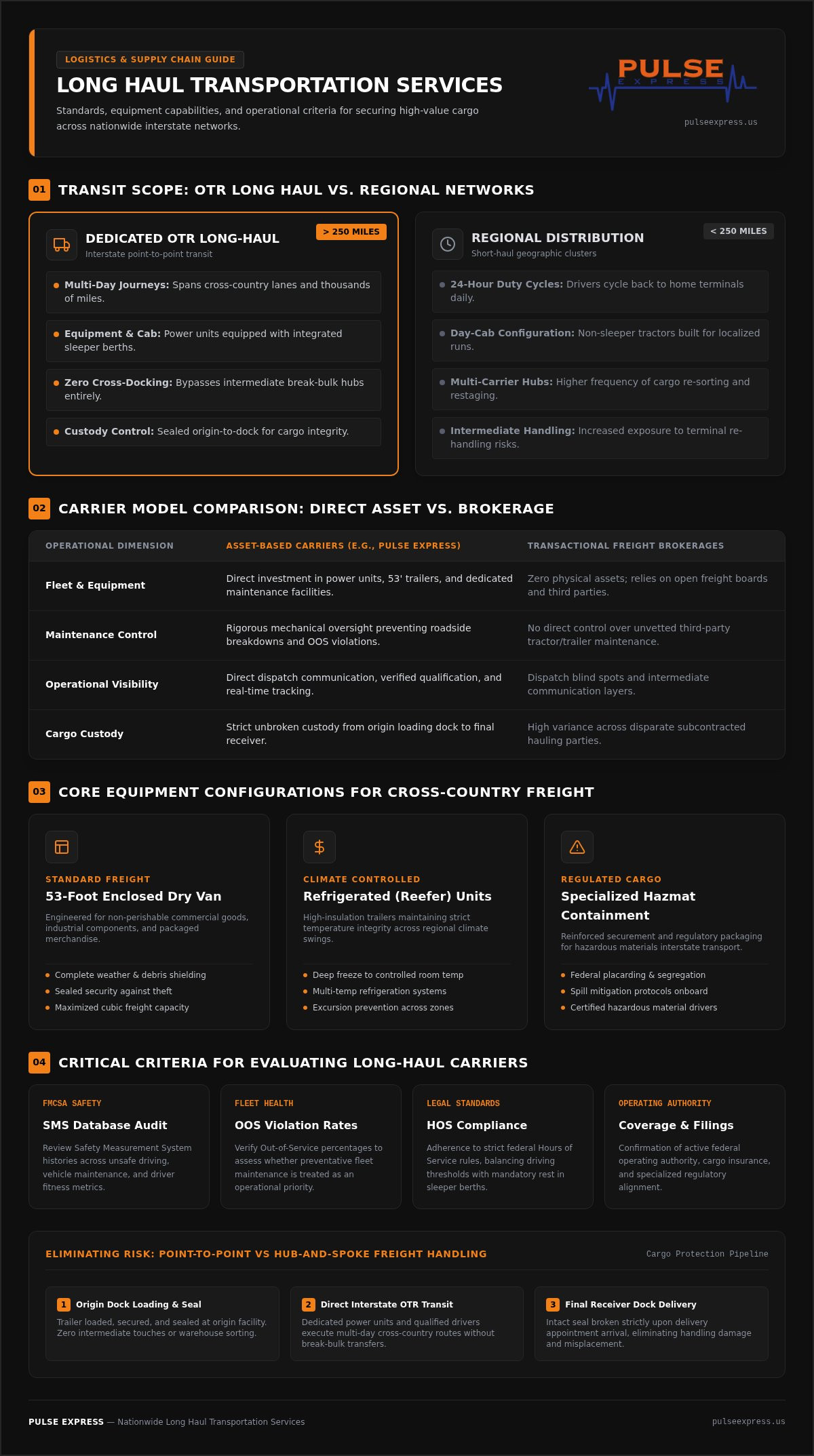
Interstate freight moves through an interconnected web of corridors that power the domestic economy. In standard freight logistics, over-the-road (OTR) long-haul transportation involves point-to-point shipments traveling beyond 250 miles, frequently crossing multiple state boundaries and spanning thousands of miles. Unlike regional networks that cycle drivers back to their home terminals within 24 hours, dedicated long haul transportation services deploy specialized equipment and drivers for continuous multi-day journeys across the country.
For shippers moving high-value commodities, dedicated full truckload transit eliminates the hazards inherent in hub-and-spoke networks. Every time freight is unloaded, re-sorted, and restaged at an intermediate cross-dock terminal, the risk of physical damage, misplacement, and handling delays multiplies. Direct OTR transport ensures that once your cargo is loaded and sealed at origin, it remains untouched until the trailer doors open at the receiver's dock.
This reliability depends entirely on carrier structure. Transactional digital freight brokerages match loads to unvetted third parties on public load boards, creating operational blind spots. True asset-based carriers invest directly in their power units, trailing assets, and professional drivers. As a central pillar of the modern trucking industry in the United States, asset-based fleets maintain rigorous mechanical oversight, keeping high-utilization equipment ready for uninterrupted coast-to-coast runs.
Defining OTR Long Haul vs Regional Freight Networks
Regional distribution operates within tight geographic clusters, typically handling runs under 250 miles with day-cab tractors. Long-haul OTR networks manage complex multi-day staging logistics spanning cross-country lanes. Drivers utilize integrated sleeper berths to remain compliant with strict Federal Motor Carrier Safety Administration (FMCSA) Hours of Service (HOS) rules, balancing driving limits with mandatory rest periods. By bypassing multi-carrier break-bulk hubs, dedicated long-haul routing delivers predictable schedules and maintains strict custody control.
Core Equipment Configurations: Dry Van, Reefer, and Hazmat
Executing long-haul freight across varied interstate routes requires specialized equipment configurations matched to cargo requirements:
- Dry Van Trailers: Standard 53-foot enclosed dry vans safeguard non-perishable commercial goods, industrial components, and packaged merchandise from severe weather, road debris, and theft during cross-country transits.
- Refrigerated (Reefer) Units: Advanced temperature-controlled trailers feature heavy insulation and precision multi-temp refrigeration units, maintaining stable setpoints from deep freeze to controlled room temperature across extreme regional climate shifts.
- Specialized Hazmat Containment: Hazardous freight transport requires reinforced securement systems, specialized placarding, spill mitigation tools, and strict adherence to federal packaging and segregation standards.
Critical Criteria for Evaluating Long Haul Freight Carriers
Selecting a transportation partner requires moving past basic rate sheets and marketing claims. A carrier's operational discipline directly dictates whether your freight arrives safely or ends up delayed at an inspection station. Auditing safety histories, equipment maintenance records, and driver qualification standards gives you complete control over your freight network when sourcing long haul transportation services.
Proactive fleet maintenance prevents unexpected mechanical failures during cross-country runs. Reviewing out-of-service (OOS) violation percentages through federal databases shows whether a fleet treats preventative maintenance seriously. Working with an experienced provider like Pulse Express ensures your freight moves on well-maintained equipment managed by skilled logistics professionals.
Regulatory Compliance and FMCSA Safety Standards
Check the FMCSA Safety Measurement System (SMS) database to review safety performance across key categories, including unsafe driving, vehicle maintenance, and driver fitness. Verify active operating authority, sufficient liability coverage, and strict compliance with the federal safety threshold. For regulated commodities, review the specialized protocols detailed in our guide to specialized hazmat logistics to confirm complete regulatory alignment.
Driver Vetting and Class A CDL Qualifications
Driver competency is your strongest safeguard against cargo loss and transit delays. Elite carriers maintain rigorous qualification pipelines, requiring multiple years of verifiable interstate experience, clean Motor Vehicle Records, and ongoing screening via the FMCSA Drug and Alcohol Clearinghouse. Meeting high operational standards, as explored in our overview of CDL A long haul driver careers, ensures drivers hold mandatory hazardous materials endorsements, pass security threat assessments, and maintain strict discipline under mandatory FMCSA Hours of Service regulations.
Cargo Monitoring and Transit Telematics
Modern freight visibility requires continuous digital oversight rather than intermittent manual check calls. Evaluate carriers based on their telematic infrastructure:
- Automated GPS Location Tracking: Continuous digital pings provide real-time location data, dynamic transit milestones, and precise arrival estimations.
- Refrigerated Telemetry Systems: Two-way environmental monitoring tracks internal temperatures, sends automated alerts for micro-variations, and provides verifiable return-air logs upon delivery.
- Dynamic Delay Management: Direct communication protocols between dispatch and drivers allow rapid rerouting around severe weather patterns, road closures, or traffic bottlenecks.
Verifying these technical benchmarks before tender release ensures your selected long haul transportation services deliver steady reliability across every cross-country lane.
Overcoming Operational Challenges in Cross-Country Freight Transit
Moving shipments thousands of miles across state lines exposes cargo to severe operational hurdles that regional routes never encounter. Cross-country journeys traverse varied elevations, dramatic weather shifts, and fragmented state-by-state regulatory corridors. Successfully navigating these hurdles requires proactive fleet management, strict operational protocols, and precision planning from dedicated long haul transportation services.
Modern fleets also balance these demanding operational requirements against ongoing environmental and fuel optimization targets. Shippers frequently look to carriers aligned with the EPA SmartWay program to benchmark emissions data and verify fuel-efficient fleet equipment. Merging environmental performance with reliable long-distance transit ensures stable cross-country logistics without sacrificing delivery timelines.
Protecting Cargo Across Varied Climate and Elevation Zones
A cross-country run from the Southwest desert to the Northeast during winter can see ambient temperature swings exceeding 60 degrees Fahrenheit. Severe exterior shifts place enormous strain on trailer refrigeration compressors, which must actively cycle between heavy cooling and defensive heating cycles to preserve internal climates. High-altitude mountain passes reduce air density, challenging diesel reefer unit efficiency and requiring reinforced trailer wall insulation.
Safeguarding temperature-sensitive shipments begins before loading. Rigorous pre-cooling cycles bring the entire trailer cavity down to the exact target temperature before pallets touch the deck floor, preventing heat transfer into pre-conditioned freight. Adhering to the continuous thermal monitoring practices outlined in cold chain logistics protocols guarantees documented product integrity throughout multi-day journeys.
Navigating Interstate Hazmat Routing and State Regulations
Transporting regulated materials nationwide introduces complex logistical barriers beyond standard freight management. Commercial hazardous shipments must follow strict federally designated hazardous material highway routes, which explicitly forbid travel through specific urban centers, water catchment areas, and low-clearance tunnels. Drivers must execute designated ring-road bypasses, adding necessary mileage that dispatchers must accurately factor into delivery timelines.
Interstate compliance demands continuous administrative precision. Every commercial power unit hauling hazardous cargo must carry:
- Accurate Shipping Papers: Clear documentation accessible within arm's reach of the driver, detailing proper UN identification numbers, hazard classes, and total packaging volumes.
- Mandatory Placarding: Weather-resistant diamond placards properly displayed on all four exterior faces of the trailer, indicating exact material classifications.
- Emergency Response Information: An active 24-hour emergency phone line and immediate cross-reference guides matching the North American Emergency Response Guidebook.
Strategic route planners apply the detailed methods highlighted in nationwide hazmat logistics planning. By addressing environmental strains and state transit restrictions before tires touch the asphalt, professional long haul transportation services maintain uninterrupted schedule stability across coast-to-coast supply chains.
How Shippers Optimize Long Haul Freight Logistics
Achieving consistent cross-country transit is a joint effort between shipper and carrier. Long-haul movements require disciplined dockside preparation to prevent costly downstream delays. Shippers who standardize packaging protocols, forecast lane volumes weeks ahead, and minimize dock friction unlock higher service levels and lower total operating friction from their long haul transportation services.
Proactive shippers also build predictable capacity by sharing rolling volume forecasts with core carriers. Reserving dedicated trailers well ahead of quarterly surges insulates your supply chain from sudden spot market volatility and tight regional equipment availability.
Cargo Staging, Packaging, and Weight Distribution
Packaging that survives local handling can easily fail under the continuous vibrations of a multi-day highway run. Wrap pallets securely down to the wooden base using heavy-gauge film, applying edge protectors and heavy banding to prevent lateral shifting. Verify load balance across steer, drive, and trailer tandem axles before the truck departs, ensuring compliance with federal gross weight regulations. Scheduling precise dock appointments eliminates trailer dwell times, protecting driver driving clocks for transit.
Establishing Seamless Carrier Communication Protocols
Clean transit execution depends on steady information flow between shipping docks, carrier dispatch, and receiving facilities. Provide drivers with detailed gate sheets before check-in, specifying facility access codes, dock assignments, on-site contact numbers, and personal protective equipment rules. Establish automated transit milestones for origin departure, daily location progress, and scheduled delivery arrival. Dedicated escalation channels let dispatchers resolve unexpected traffic diversions or mechanical hiccups without leaving receiving teams in the dark.
Streamlining Documentation and Chain of Custody
Unbroken custody control relies on administrative accuracy. Bills of lading must display verified piece counts, certified gross weights, seal numbers, and proper identification for hazardous cargo. Mandate driver signatures upon dock departure and conduct joint trailer inspections at final destination unloading. When managing high-compliance long haul transportation services, capturing electronic proof of delivery records streamlines freight auditing and billing resolution. To structure an efficient, high-reliability logistics workflow for your long-distance lanes, partner with Pulse Express for your OTR freight operations.
Partnering with Pulse Express for Dependable Nationwide Freight
Securing consistent interstate freight capacity requires moving beyond uncommitted broker networks. Founded in 2000 under the leadership of CEO Adelina Pavlov, Pulse Express operates as an established, asset-based motor carrier delivering high-compliance long haul transportation services across the continental United States. We combine modern tractor-trailer equipment with experienced driving professionals, giving shippers direct operational accountability and dependable scheduling on critical cross-country corridors.
Our operational model prioritizes equipment reliability, continuous load visibility, and customized freight handling. Rather than treating shipments as anonymous transactional freight, our team provides focused care for regular contract lanes and surge volume across major commercial networks.
Dedicated Fleet Capabilities: Dry Van and Temperature-Controlled Transport
Our late-model fleet features 53-foot dry vans and advanced refrigerated trailers designed for heavy-haul, multi-day routes. Pulse Express provides specialized general freight service for high-value dry commodities alongside refrigerated transport engineered to protect sensitive perishable goods. Using precision multi-temp cooling units, our temperature-controlled fleet maintains verifiable ambient setpoints through extreme elevation changes and cross-country climate transitions, ensuring your product integrity remains intact from initial seal to final receiver delivery.
Safety Culture and Elite Professional Driver Standards
Driver quality forms the backbone of safe long-distance transit. We actively hire vetted OTR Class A commercial drivers who undergo rigorous screening, comprehensive continuous training, and complete compliance verification through the FMCSA Drug and Alcohol Clearinghouse. Our professional drivers bring specialized expertise to complex hauling requirements, including:
- Dry Freight Hazmat Transport: Secure transport of non-temperature-dependent regulated chemicals adhering to strict DOT packaging, placarding, and route-containment mandates.
- Reefer Hazmat Transport: Specialized hauling of hazardous materials requiring active, uninterrupted temperature regulation throughout interstate transit corridors.
- Direct Communication Channels: Proactive account management pairing shippers directly with dedicated dispatchers, eliminating call-center runarounds and providing verified status updates.
When your supply chain demands reliable asset capacity, specialized hazardous handling, and unwavering regulatory compliance, align with an experienced carrier partner. Discover how our professional long haul transportation services strengthen nationwide shipping operations by requesting a direct freight quote through Pulse Express.
Elevate Your Cross-Country Freight Strategy
Navigating nationwide supply chains demands more than hoping for an available trailer. Achieving predictable transit schedules, eliminating cargo claims, and ensuring flawless regulatory compliance require an unwavering commitment to operational discipline. When you invest in dedicated asset capacity rather than transactional load boards, your shipments stay protected through every highway mile, mountain pass, and state border crossing.
At Pulse Express, we've delivered dependable long haul transportation services since our founding in 2000. Decades of proven operational excellence support our specialized capabilities in dry van, reefer, and hazardous materials transport. Backed by rigorous driver qualification standards ensuring elite safety performance, our professional team provides the continuous oversight and modern equipment your freight deserves. You don't have to navigate cross-country logistical challenges alone. Request a dedicated long haul freight solution from Pulse Express today and secure the stability your supply chain needs to thrive.
Frequently Asked Questions
What qualifies as a long haul transportation service in commercial freight?
In commercial freight, long haul transportation services refer to point-to-point interstate shipments traveling beyond 250 miles, often spanning thousands of miles across regional borders. Unlike local pick-up and delivery routes that return drivers home daily, long-haul movements require Class A sleeper berth tractors and multi-day scheduling. Cargo remains sealed inside dedicated dry van or refrigerated equipment from the initial pickup dock directly to the final consignee facility, avoiding intermediate hub transfers.
How does a dedicated full truckload carrier differ from a freight brokerage?
An asset-based carrier directly owns its trucks and trailers while employing professionally vetted drivers, ensuring direct operational oversight and equipment control. A freight brokerage operates as an intermediary, matching shipments to third-party trucking companies across transactional load boards. Shippers partnering directly with asset-based carriers gain greater accountability, reliable fleet maintenance standards, transparent communication, and consistent capacity without the risks of opaque subcontracting or unexpected broker handoffs.
What safety certifications are required to transport hazardous materials across state lines?
Transporting hazardous cargo across state boundaries requires commercial drivers to hold a Class A Commercial Driver's License with a designated hazardous materials endorsement and complete Transportation Security Administration threat assessments. Carriers must maintain active hazardous materials registration through the Pipeline and Hazardous Materials Safety Administration, secure federal safety permits, carry heightened liability insurance, and provide full emergency response documentation alongside mandatory exterior trailer placarding for every compliant shipment.
How do carriers maintain temperature integrity during cross-country reefer transport?
Carriers protect temperature-sensitive freight by enforcing thorough trailer pre-cooling procedures before cargo loading begins at the shipper's dock. Heavy polyurethane trailer wall insulation and advanced refrigeration units maintain continuous setpoints throughout diverse regional climates. Modern fleets deploy real-time telematics systems that continuously record internal temperatures, track ambient air conditions, and instantly notify dispatchers of any thermal anomalies before product integrity is compromised.
What factors determine the total transit time for coast-to-coast freight shipments?
Coast-to-coast transit times depend primarily on total highway mileage and federal Hours of Service limits, which restrict solo drivers to 11 hours of driving within a 14-hour window after 10 consecutive hours off duty. Mandatory rest breaks, severe seasonal weather, mountainous terrain, and required hazardous materials bypass routes also shape schedules. Minimizing loading dock dwell times ensures drivers maximize their legally available driving hours each day.
How does Pulse Express handle cargo monitoring and tracking during long-haul transit?
Pulse Express equips its fleet with automated GPS tracking and integrated telemetry systems to ensure total cargo visibility across nationwide routes. Our temperature-controlled units transmit continuous internal thermal readings to dispatch, verifying climate stability for sensitive reefer freight. By pairing digital tracking with direct account management, our team gives shippers clear milestone updates, proactive delay notifications, and responsive communication throughout all long haul transportation services.


