

Failures in transit temperature control cost the food industry over $2 billion annually in compromised shelf life and discarded products. For shippers moving sensitive pharmaceuticals, chemicals, or food products, regulated temperature freight shipping leaves zero room for error. A single undocumented temperature excursion does more than spoil inventory; it triggers severe regulatory penalties under FDA FSMA rules and compromises Good Distribution Practice standards.
You already know the stress of handing high-value cargo to a fragmented brokerage chain, only to receive delayed updates and questionable paper temperature logs after delivery. True cold chain integrity requires direct asset accountability, precise monitoring, and professional drivers who treat your compliance mandates as their own.
This guide gives you the blueprint to master regulatory compliance, avoid mid-transit temperature excursions, and choose the right carrier for sensitive cargo. We will break down current transportation regulations, provide an actionable carrier vetting checklist, and show you how to maintain an unbroken, audit-ready chain of custody across every mile.
Key Takeaways
- Regulated temperature freight shipping demands strict adherence to federal statutory frameworks like FSMA and Good Distribution Practice to eliminate excursion risks and protect brand integrity.
- Different sensitive cargo categories, from perishable foods to regulated hazmat materials, require specific thermal parameters, airflow management, and verified cross-contamination safeguards.
- Direct asset carriers provide continuous chain-of-custody accountability and digital telemetry that fragmented freight broker networks often fail to deliver.
- A reliable carrier vetting checklist should audit equipment maintenance records, pre-cooling verification procedures, and driver compliance training before loading.
- Asset-backed fleets with experienced Class A CDL drivers and modern reefer monitoring give shippers audit-ready documentation and dependable transit stability.
What Is Regulated Temperature Freight Shipping?
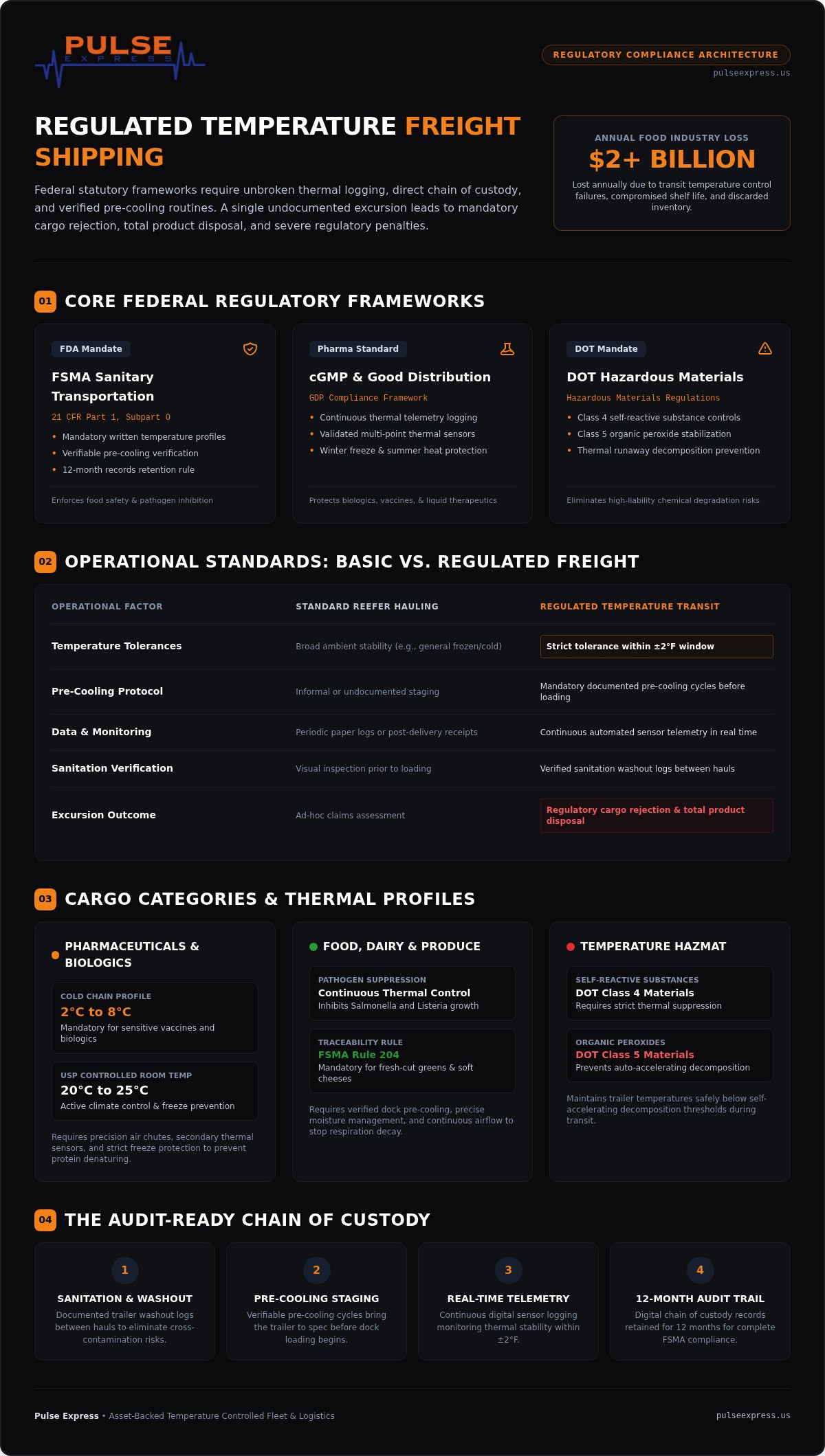
Regulated temperature freight shipping is the legally governed transport of temperature-sensitive cargo under documented thermal conditions defined by federal agencies like the FDA and DOT. Unlike basic refrigerated trucking, this specialized operational standard protects perishable foods, pharmaceuticals, biologics, and hazardous chemicals throughout the commercial cold chain network. Federal statutory rules require continuous environmental monitoring and verifiable digital audit trails. If a transit excursion occurs and documented thresholds are breached, the outcome isn't flexible; receivers face a regulatory requirement for cargo rejection and total product disposal.
Key Regulatory Frameworks: FSMA, cGMP, and DOT Mandates
Federal oversight establishes clear operational benchmarks across specific cargo categories:
- FDA FSMA Sanitary Transportation Rule (21 CFR Part 1, Subpart O): Requires written temperature profiles, verifiable pre-cooling routines, and 12-month records retention for human and animal food transit.
- cGMP and Good Distribution Practice (GDP): Enforces continuous thermal logging and validated environmental controls for pharmaceuticals and biologics, such as maintaining strict 2°C to 8°C cold chains for sensitive vaccines.
- DOT Hazardous Materials Regulations: Mandates precise thermal suppression for self-reactive substances, polymerizing materials, and organic peroxides to eliminate the risk of thermal runaway and hazardous decomposition during long-haul transit.
Standard Reefer Hauling vs. Regulated Temperature Transit
Standard refrigerated transport focuses primarily on delivering broad ambient stability, such as keeping bulk produce cool or frozen food solid. Regulated temperature freight shipping operates under far stricter tolerances, frequently holding freight within an exact window of plus-or-minus two degrees Fahrenheit. Compliance requires three critical steps: documented pre-cooling cycles before trailer loading, constant automated sensor telemetry during transit, and verified sanitation washout logs between hauls. This protocol transforms refrigerated transit into an audit-ready chain of custody that withstands rigorous regulatory inspection.
Critical Cargo Types Requiring Temperature Compliance
Every commodity moving through the cold chain introduces distinct biological or chemical risks. Successful regulated temperature freight shipping hinges on matching precise cargo thermal tolerances with certified equipment and documented operating procedures. Shippers face distinct liability profiles across three core sectors: pharmaceuticals, perishable food products, and temperature-sensitive chemicals.
Pharmaceuticals, Biologics, and Healthcare Products
Biopharmaceuticals, vaccines, and active pharmaceutical ingredients require zero variance across long-haul transit. Standard guidelines like USP Controlled Room Temperature (20°C to 25°C) require active climate control just as strictly as refrigerated 2°C to 8°C profiles. Winter freeze protection is just as critical as summer cooling, as freezing can permanently denature proteins and ruin liquid therapeutics. Selecting validated temperature controlled trucking services ensures your medicinal freight moves with precision air chutes, secondary thermal sensors, and verified multi-point temperature data.
Perishable Food, Dairy, and Sensitive Produce
Food safety protocols demand continuous thermal suppression to inhibit microbial pathogens like Salmonella and Listeria. Complying with official FDA sanitary transportation guidance requires shippers to verify trailer pre-cooling before dock staging. Produce loads also require precise trailer airflow and moisture management to prevent respiration decay. Under FSMA Rule 204, high-risk items like fresh-cut greens and soft cheeses carry mandatory traceability requirements, making continuous telemetry indispensable for preserving food safety.
Temperature-Sensitive Hazardous Materials (Hazmat)
Regulated temperature freight shipping extends beyond consumables into high-liability industrial chemistry. Certain Class 4 self-reactive materials and Class 5 organic peroxides destabilize rapidly if ambient trailer temperatures rise above their self-accelerating decomposition temperature. Specialized reefer units hauling these compounds do not just preserve product quality; they actively prevent runaway exothermic reactions, dangerous off-gassing, and vehicle fires. Review our detailed guide on specialized hazmat logistics to evaluate regulatory requirements for chemical transport, or partner with Pulse Express for dedicated asset transportation tailored to sensitive industrial freight.
Asset Carriers vs. Freight Brokers in Regulated Cold Chains
Managing regulated temperature freight shipping requires an unbroken line of accountability. When sensitive loads transfer between multiple intermediaries, visibility breaks down. Shippers often assume a digital freight broker provides the same operational control as an asset carrier, but digital dashboards cannot fix mechanical defects on a distant highway. Without direct control over the physical tractor, trailer, and driver, compliance risks multiply across long-haul lanes.
The Hidden Risks of Third-Party Capacity in Cold Chains
Brokered networks rely heavily on spot-market owner-operators whose maintenance histories and operating habits remain largely unknown. In temperature-controlled logistics, unauthorized re-brokering can place high-value freight into the hands of unvetted drivers who lack formal training in sanitary food or hazmat handling. When refrigeration alarms activate mid-route, fragmented communication between brokers, dispatchers, and third-party drivers delays corrective action. Industry analysis of the FDA's Food Hauling Rules emphasizes that while shippers establish strict transport specifications, relying on disconnected intermediaries makes consistent field enforcement nearly impossible. Irregular equipment calibration, compromised trailer door seals, and neglected compressor servicing all elevate the likelihood of in-transit failures.
Why Asset-Based Fleets Provide Superior Compliance
Asset-based carriers eliminate intermediary blind spots by owning their equipment and managing their fleets directly. This operational model delivers three decisive compliance safeguards: rigorous preventive maintenance routines, synchronized digital telemetry across every unit, and direct driver accountability. Asset fleets invest in late-model reefer units equipped with continuous sensor logging, ensuring audit-ready data reaches compliance teams in real time rather than weeks after delivery.
Equally important, asset operations bridge the execution gap through comprehensive workforce preparation. Regulated temperature freight shipping requires professional Class A CDL drivers who know how to verify setpoints, conduct pre-trip inspections, and manage continuous reefer run modes during severe ambient weather. Partnering directly with an asset-backed transportation carrier establishes clear custody, protects product efficacy, and keeps your compliance program defensible.
How to Vet a Regulated Temperature Freight Carrier: Compliance Checklist
Vetting a transportation partner for regulated temperature freight shipping requires looking past sales decks and auditing physical operations. Shippers need verifiable proof covering mechanical maintenance, sensor calibration, and emergency breakdown protocols before dispatching freight. Establishing a standardized carrier qualification checklist ensures your shipments remain compliant, secure, and fully audit-ready from dock to dock.
Step 1: Inspect Trailer Sanitation and Pre-Cooling Records
Trailer readiness begins long before loading starts. Require documented washout receipts that confirm systematic sanitization between hauls, eliminating the risk of biological pathogens or chemical cross-contamination. Next, verify that the carrier enforces mandatory pre-cooling cycles down to the specified setpoint prior to cargo staging. Finally, inspect the trailer for ceiling-mounted air chutes. These flexible ducts ensure uninterrupted circulation of conditioned air from the nose to the rear doors, preventing warm pockets near trailer walls.
Step 2: Validate Real-Time Telematics and Remote Monitoring
Regulatory compliance demands active visibility rather than passive post-trip reports. Insist on two-way telematics platforms that record cargo space temperatures at least once every fifteen minutes throughout long-haul transit. Modern monitoring systems must support remote setpoint management and issue automated alerts to dispatch teams the moment a thermal variation occurs. Instant visibility enables immediate mechanical intervention on the highway, resolving minor fluctuations before they turn into costly cargo claims.
Step 3: Confirm Driver Training and Hazmat Endorsements
Even the most advanced telematics cannot replace a prepared operator in the cab. Verify that the carrier deploys professional Class A CDL drivers with active Hazmat endorsements when moving regulated chemical compounds. Fleet drivers should complete routine training on cycle-sentry modes, continuous run settings, and manual physical checks during scheduled transit breaks. When you need dependable capacity with experienced drivers, consult our specialists at Pulse Express to protect your high-value cargo with dedicated reefer freight services.
Protecting Sensitive Cargo with Pulse Express
Pulse Express provides dependable long-haul over-the-road freight services across the nation, giving shippers an asset-backed partner they can rely on. Successfully executing regulated temperature freight shipping requires three non-negotiable standards: mechanical precision, driver professionalism, and total operational visibility. By combining modern refrigeration technology with an experienced team, we deliver consistent environmental stability that gives your quality and compliance teams genuine peace of mind.
Dedicated Fleet Capabilities for Critical Shipments
Safeguarding high-value, sensitive freight demands equipment built for uninterrupted thermal performance. Our dedicated fleet features late-model reefer trailers equipped with advanced multi-zone climate control, continuous airflow ducting, and real-time remote sensors. Because we operate dedicated full truckloads, your cargo avoids the handling damage, dock delays, and contamination risks typical of multi-stop freight networks.
Our operations bridge standard refrigerated shipping and complex, high-consequence freight. As an asset carrier with certified capabilities in both general freight and Reefer Hazmat Transport, we maintain tight setpoint tolerances for sensitive consumables, medical supplies, and temperature-controlled chemicals alike across thousands of highway miles.
A Trusted Long-Haul Transportation Partner
Founded in 2000, Pulse Express brings over two decades of operational stability to nationwide long-haul logistics. Our professional Class A CDL drivers receive rigorous training in pre-cooling protocols, continuous run settings, and manual sensor verifications during every transit break. When unexpected road conditions occur, our drivers know exactly how to protect trailer temperatures and communicate proactively.
We believe dependable logistics stems from personal, direct relationships. Shippers communicate directly with experienced dispatchers who understand their strict compliance parameters, eliminating the runaround of third-party call centers. Regulated temperature freight shipping should protect your bottom line, not introduce avoidable risks. Explore dedicated OTR transportation solutions with Pulse Express today to secure your cold chain operations.
Secure Your Supply Chain with Audit-Ready Temperature Transit
Protecting sensitive cargo against excursions requires moving beyond fragmented broker networks to embrace direct asset accountability. As regulatory mandates tighten across food and chemical industries, maintaining an unbroken chain of custody, verified pre-cooling protocols, and continuous sensor telemetry is non-negotiable. Regulated temperature freight shipping succeeds when precision equipment meets disciplined operational oversight.
Pulse Express delivers the stability and care your logistics program demands. With over two decades of established freight experience since 2000, our asset-backed OTR reefer fleet provides dedicated Hazmat capabilities alongside general refrigerated service. Our professional Class A CDL long-haul drivers are trained in cold chain security, keeping your cargo within exact thermal tolerances across every highway mile. Partner with Pulse Express for Compliant Temperature-Controlled Freight and transport your most critical loads with total confidence.
Frequently Asked Questions
What is the difference between cold chain logistics and regulated temperature shipping?
Cold chain logistics describes the broad commercial distribution of temperature-sensitive items across storage and transit. Regulated temperature freight shipping refers specifically to legally mandated transport under statutory frameworks like FDA FSMA and DOT hazardous materials rules. It requires strict adherence to written temperature specifications, continuous sensor data logging, certified trailer sanitation, and audit-ready records that carriers must retain for regulatory review.
How do FDA FSMA regulations impact over-the-road freight carriers?
The FDA Sanitary Transportation Rule requires carriers to establish written sanitary operating procedures, verify pre-cooling protocols, and maintain strict environmental control during transit. Carriers must demonstrate that their refrigeration units function properly and retain continuous temperature records for at least 12 months. Fleet personnel and drivers must also complete documented training on preventing biological, chemical, and physical food contamination during transport.
Can hazardous materials be transported in temperature-controlled reefer trailers?
Yes. Certain industrial chemicals, self-reactive substances, and organic peroxides require continuous climate suppression to prevent thermal runaway, hazardous gas release, or spontaneous combustion. Moving these loads requires specialized Reefer Hazmat Transport services. Carriers must deploy trained Class A CDL drivers holding active Hazmat endorsements who understand both chemical safety mandates and precision temperature monitoring across long-haul highway routes.
What happens if a temperature excursion occurs during long-haul transit?
If trailer temperatures deviate from specified limits, telematics systems generate immediate alerts for the driver and dispatch team. Upon arrival, the receiver inspects the electronic data logs against the bill of lading specifications. If the excursion exceeds allowable safety tolerances defined by FDA or pharmaceutical quality rules, the receiver legally rejects the shipment, resulting in cargo disposal and formal claims processing.
How often should temperature data be recorded during cold chain transit?
Most regulatory compliance programs and Good Distribution Practice guidelines require automated data logging at intervals of ten to fifteen minutes. Modern telematics capture continuous readings from supply air, return air, and cargo space probes. This granular frequency provides an unbroken digital trail, proving to quality assurance auditors that freight remained safely within designated thermal thresholds across the entire trip.
Why is pre-cooling a trailer required before loading temperature-regulated cargo?
Transport refrigeration units are designed to maintain cargo temperature, not pull heat out of warm products. If freight is loaded into an uncooled trailer, residual heat trapped in the walls, floor, and ceiling absorbs directly into the cargo, causing thermal shock and rapid surface warming. Pre-cooling removes ambient heat beforehand, ensuring the cargo stays within compliant limits from dock to destination.
What certifications should shippers look for when hiring an OTR reefer carrier?
Shippers managing regulated temperature freight shipping should verify satisfactory DOT safety ratings, active operating authority, and certified Hazmat transport capabilities where applicable. Shippers should partner with asset carriers deploying professional Class A CDL drivers trained in FSMA compliance, proper airflow management, and proactive sensor verification. Documented equipment maintenance schedules and verified telematics capabilities are equally essential for compliance assurance.


