

Booking long-haul freight capacity means very little if your carrier lacks the specialized equipment and seasoned drivers to back it up. Every logistics manager knows the frustration of unpredictable transit schedules, cargo damage from temperature fluctuations, and silence from dispatch during multi-day hauls. When you coordinate shipments across thousands of miles, relying on unvetted cross country trucking services leaves your operational schedule vulnerable to costly delays and compliance penalties.
You deserve an established logistics partner who approaches every load with safety, precision, and open communication. In this guide, discover how to choose reliable cross country trucking services that protect sensitive freight, reduce transit delays, and optimize nationwide supply chains. We walk through critical carrier vetting criteria, strict hazmat compliance standards, and temperature-controlled freight practices so you can secure dependable long-haul capacity with lasting confidence.
Key Takeaways
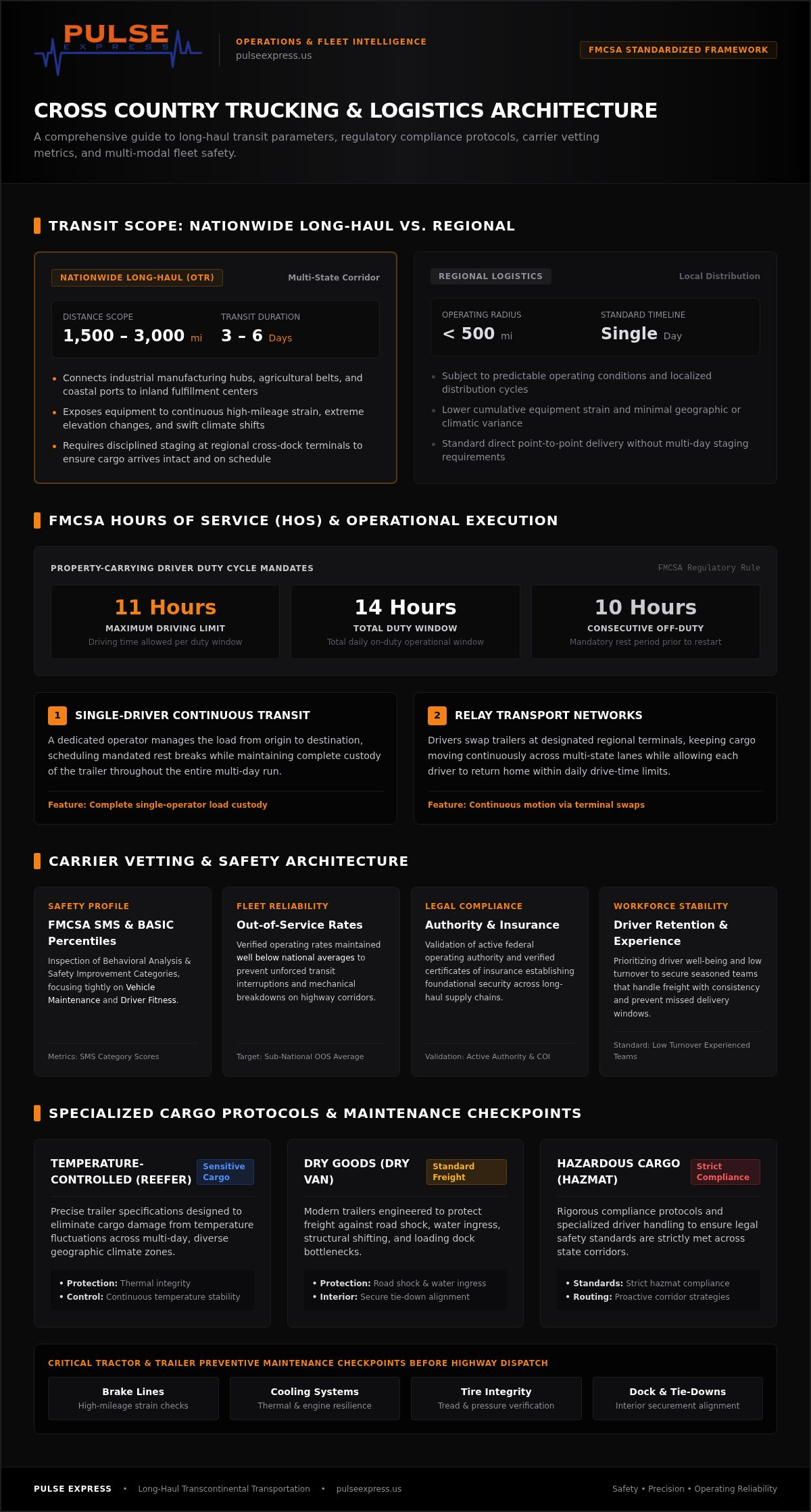
- Understand how multi-day freight transit spanning 1,500 to 3,000 miles requires specialized planning compared to regional hauling.
- Learn the essential safety ratings, active operating authorities, and driver vetting criteria needed to evaluate cross country trucking services.
- Discover precise trailer specifications and compliance protocols for temperature-controlled freight, dry goods, and hazardous cargo.
- Identify proactive corridor strategies and dynamic routing measures that eliminate transit variance across diverse geographical regions.
- Find out how partnering with an established over-the-road carrier protects freight integrity, driver reliability, and nationwide delivery schedules.
What Are Cross Country Trucking Services and Why Do They Matter?
Cross country trucking services refer to long-haul over-the-road freight transportation that moves goods across multiple geographic regions, typically covering distances between 1,500 and 3,000 miles. These transcontinental routes connect industrial manufacturing hubs, agricultural belts, and coastal ports to inland fulfillment centers. Because modern supply chains run on tight distribution schedules, coast-to-coast long-haul trucking provides the direct connectivity needed to keep shelves stocked and production lines operating without costly interruptions.
Moving goods over thousands of miles introduces variables that local distribution never encounters. Partnering with seasoned carriers eliminates unnecessary warehouse dwell times and shields sensitive loads from systemic handling errors. As documented by the foundational structure of the Trucking industry in the United States, interstate commerce depends on synchronized driver management, reliable equipment specifications, and strict adherence to federal safety protocols.
The Mechanics of Over-the-Road (OTR) Freight Transit
Standard transcontinental shipments typically require three to six days depending on routing, terrain, and operational structure. The Federal Motor Carrier Safety Administration enforces strict Hours of Service (HOS) rules, limiting property-carrying drivers to 11 hours of driving within a 14-hour duty window following 10 consecutive hours off duty. To balance these safety mandates against strict delivery windows, carriers use two distinct operational models:
- Single-driver continuous transit: A dedicated operator manages the load from origin to destination, scheduling mandated rest breaks while maintaining complete custody of the trailer.
- Relay transport networks: Drivers swap trailers at designated regional terminals, keeping the cargo moving continuously while allowing each driver to return home within daily drive-time limits.
Regional Logistics vs. Nationwide Long-Haul Transportation
Regional runs rarely exceed a single day or a 500-mile radius, which subjects tractors and trailers to relatively predictable operating conditions. In contrast, nationwide long-haul transit exposes equipment to continuous high-mileage strain, extreme elevation changes across mountain passes, and swift climate shifts from humid coasts to arid plains. These transcontinental journeys require rigorous equipment maintenance checks, precise cargo securement, and disciplined staging at regional cross-dock terminals to ensure freight arrives intact and on schedule.
Key Criteria for Selecting Cross Country Trucking Providers
Selecting the right carrier for long-haul freight requires looking past rate sheets and examining verified operational performance. When you evaluate cross country trucking services, reviewing active operating authority, certificates of insurance, and federal safety ratings establishes baseline security for your supply chain. Driver retention is equally vital. High turnover frequently leads to missed delivery windows, whereas carriers that prioritize driver well-being maintain experienced teams that handle loads with exceptional care and consistency.
Safety Ratings and Federal Regulatory Compliance
Shippers should inspect carrier safety profiles on the FMCSA Safety Measurement System (SMS) before awarding multi-lane freight contracts. Focus closely on Behavioral Analysis and Safety Improvement Categories (BASIC) percentiles, especially Vehicle Maintenance and Driver Fitness. Carriers maintaining out-of-service rates well below national averages demonstrate disciplined operational safety across multi-state routes. Strict adherence to federal Hours of Service (HOS) regulations ensures that drivers remain alert and transit schedules stay legally compliant without unforced transit interruptions.
Fleet Equipment Diversity and Maintenance Protocols
Mechanical breakdowns on transcontinental highway corridors cause cascading supply chain delays. Reputable long-haul providers execute structured preventive maintenance schedules, inspecting brake lines, cooling systems, and tire integrity long before a tractor hits the highway. Utilizing modern, well-maintained trailers protects cargo against road shock, water ingress, and structural shifting. Aligning trailer specifications, interior tie-down systems, and dock height requirements to your cargo profile prevents unexpected loading bottlenecks at the receiving facility.
Communication Transparency and Tracking Infrastructure
Shippers cannot afford operational blind spots across multi-day hauls. Modern GPS telematics provide automated milestone updates, geofencing notifications, and round-the-clock shipment visibility from origin to destination. Beyond digital tracking tools, responsive dispatchers play a crucial role by managing route exceptions and providing clear communication. To understand how structured transit protocols safeguard extended highway routes, read our guide on long distance freight transportation. When you need dependable long-haul capacity supported by seasoned professionals, partnering with an established provider like Pulse Express keeps your nationwide shipments secure and precisely on schedule.
Specialized Cargo Handling: Reefer, Dry Van, and Hazmat Transit
A shipment's physical characteristics dictate trailer selection, loading procedures, and in-transit monitoring. When booking cross country trucking services, shippers must distinguish between the specific operational demands of standard dry goods, temperature-sensitive inventory, and regulated hazardous cargo. Understanding these distinct types of freight trucking ensures your products travel in properly certified equipment without risking contamination, thermal deviation, or structural damage.
Refrigerated Transport for Perishables and Pharmaceuticals
Maintaining thermal stability over thousands of miles requires mechanical precision and constant vigilance. Temperature-controlled trailers must run continuously through shifting climate zones, handling everything from desert heat to freezing mountain passes. Verified best practices include mandatory pre-cooling of trailers prior to staging, recording pulp temperatures at dock handoff, and deploying automated telematics that log trailer temperatures in real time. For shipments that require both climate regulation and hazardous classification, carriers must deploy specialized reefer units operated by certified drivers. To protect sensitive freight nationwide, review our framework on cold chain logistics.
Secure Dry Van Freight for High-Value Shipments
Dry van transport serves as the backbone of transcontinental distribution, yet extended highway hauls demand disciplined cargo protection. Long-distance transit subjects palletized freight to constant highway vibration, making heavy-duty load locks, straps, and air pillows essential to prevent shifting. In addition, tamper-evident bolt seals and rigorous chain-of-custody logs safeguard cargo integrity during mandatory driver rest stops. Clean, weather-sealed trailers protect industrial components, retail inventory, and electronics against exterior moisture and road grime.
Compliant Hazmat Transport Across Interstate Corridors
Moving regulated materials across state lines introduces strict federal oversight and safety liabilities. Drivers must hold valid commercial hazardous material endorsements, carry exact emergency response paperwork in the cab, and maintain proper trailer placarding on all four sides. Extended transit also demands rigid cargo segregation rules to prevent cross-contamination or chemical reactions. Navigating designated hazmat corridors requires active route verification to ensure continuous compliance. Shippers can explore our detailed operational framework on specialized hazmat logistics to maintain total safety across nationwide lanes.
Mitigating Risks and Managing Transit Times Across Major Corridors
Delivering freight across thousands of highway miles requires active corridor management, not passive hope. Long-haul shipments encounter shifting weather patterns, urban bottlenecks, and fluctuating regional capacity. Professional cross country trucking services mitigate these disruptions through structured operational protocols that maintain consistent delivery schedules:
- Corridor assessment: Dispatchers evaluate real-time weather feeds, state department of transportation advisories, and mountain pass conditions before assigning lanes.
- Dynamic rerouting: When winter storms or highway closures threaten key arteries like I-80 or I-70, operations teams pivot freight to alternate southern routes such as I-40 or I-10.
- Receiver alignment: Dispatch contacts receiving facilities immediately whenever unforeseen highway closures create delivery variance, adjusting unloading windows proactively.
Seasonal surges add another operational hurdle. Spring produce harvests and late-autumn retail peak cycles absorb immense trailer capacity nationwide. Shippers who align with experienced carriers secure predictable capacity and protect transit timelines during peak demand.
Navigating Mountain Passes, Seasonal Storms, and Climate Shifts
Transcontinental routes through the Rockies, Cascades, and Sierra Nevada present unique operational demands. Winter transit mandates carrier compliance with commercial chain laws, proper tire ratings, and experienced mountain driving techniques. Aside from traction, severe cold requires active thermal protection. Northern corridors demand specialized trailer heating protocols or temperature-controlled units to prevent water-based liquids, paints, and sensitive chemical compounds from freezing in transit.
Optimizing Hours of Service (HOS) for Continuous Movement
Predictable schedules rely on intelligent trip planning rather than driver fatigue. Electronic Logging Devices (ELDs) ensure drivers operate within legal parameters, but transit efficiency depends on where those duty hours are spent. Savvy dispatchers time corridor transit so drivers bypass major metropolitan choke points during morning and evening rush hours. Scheduling mandatory rest periods at designated, secure parking plazas along the route prevents wasted duty time and keeps trailers rolling forward steadily. If your distribution network needs reliable long-haul execution across any corridor, request a freight quote with Pulse Express to secure dependable transit today.
Partnering with Pulse Express for Reliable Nationwide Freight
Operating across nationwide corridors since 2000 under the leadership of CEO Adelina Pavlov, Pulse Express provides lasting stability for complex supply chains. Securing dependable cross country trucking services requires more than just locating available equipment; it demands a dedicated partner committed to freight protection, operational compliance, and responsive communication. Pulse Express brings over two decades of over-the-road freight experience to every load, supporting general freight, refrigerated goods, and hazardous cargo across transcontinental lanes.
A Modern Fleet Built for Diverse Shipping Requirements
Managing nationwide distribution means adapting to distinct commodity requirements without juggling multiple carriers. Our dedicated fleet pairs clean dry vans with advanced refrigerated trailers to protect standard palletized cargo, sensitive pharmaceuticals, and perishable foods across long transit corridors. We also hold certified capabilities for both dry freight hazmat transport and reefer hazmat transit, ensuring strict containment and regulatory adherence for regulated goods. Structured preventive maintenance schedules keep every tractor and trailer running smoothly, shielding your high-value cargo from roadside disruptions.
Professional Drivers Dedicated to Highway Safety and Precision
Long-haul freight execution depends directly on the professional behind the wheel. Pulse Express maintains selective hiring practices, staffing our dedicated fleet exclusively with rigorously vetted Class A CDL operators. Each driver undergoes comprehensive safety training in defensive driving techniques, cargo securement, and hazardous materials protocols. Prioritizing driver retention ensures that seasoned, safety-conscious professionals manage your loads through every mountain pass and urban corridor. Learn how we support our driving team in our guide on hiring CDL drivers.
Initiating Your Cross Country Freight Partnership
Securing nationwide capacity should feel straightforward, reliable, and collaborative. Our team combines consultative lane analysis with streamlined freight onboarding, customizing transit schedules to meet your manufacturing deadlines and delivery appointments. Direct communication with experienced dispatchers keeps you informed with accurate updates from pickup through delivery. To strengthen your long-haul supply chain with an established logistics partner, visit Pulse Express Freight Services and discuss your nationwide freight requirements with our team today.
Build a Resilient Nationwide Supply Chain
Managing long-haul freight successfully comes down to three core commitments: thorough carrier vetting, precision equipment selection, and active corridor oversight. When your business chooses verified cross country trucking services backed by transparent communication and disciplined maintenance, you eliminate the risks of unexpected transit variance. Reliable shipping protects your bottom line, satisfies critical delivery deadlines, and preserves cargo integrity from coast to coast.
Building a dependable supply chain starts with an experienced carrier partner you can trust. Founded in 2000, Pulse Express has delivered over two decades of dependable over-the-road freight solutions across major interstate lanes. We provide full-service freight solutions covering dry van, temperature-controlled reefer, and hazardous materials. Our rigorous driver qualification standards ensure that seasoned Class A professionals safeguard your shipments every mile of the journey. When you are ready to stabilize your long-distance freight operations, request a customized freight consultation with Pulse Express to secure the dependable capacity your business deserves.
Frequently Asked Questions
How long do cross country trucking services typically take from coast to coast?
Coast-to-coast cross country trucking services typically take between three to six days to complete. Total transit time depends heavily on the specific lane, mileage spanning 1,500 to 3,000 miles, and whether the carrier deploys a single driver or a team relay. Mandatory rest periods, weather delays across mountain passes, and urban traffic around major freight hubs also influence final arrival appointments. Experienced dispatchers account for these variables when setting realistic dock delivery windows.
What is the difference between dry van and refrigerated cross country transport?
Dry van trailers carry non-perishable freight in an ambient, enclosed space, whereas refrigerated trailers utilize powered cooling units to maintain strict internal temperatures. Dry vans protect boxed retail goods, machinery, and non-sensitive inventory from road debris and weather. In contrast, reefer units provide continuous thermal regulation and airflow. This active climate control shields pharmaceuticals, fresh produce, and sensitive chemical goods from ambient temperature swings across varying climate zones.
Can hazardous materials be transported via cross country trucking services?
Yes, hazardous materials can move across state lines when handled by properly licensed carriers with qualified drivers. Carriers offering hazmat cross country trucking services must hold active federal safety permits, carry proper insurance limits, and display certified placards. Long-haul drivers must maintain a commercial driver's license with a hazardous materials endorsement, carry mandatory emergency response documentation in the cab, and adhere strictly to designated federal and state hazmat transport corridors.
How do federal Hours of Service (HOS) regulations affect long-haul delivery schedules?
Federal HOS regulations strictly cap property-carrying drivers at 11 hours of driving within a 14-hour window following 10 consecutive hours off duty. These safety mandates establish clear operational boundaries for daily transit mileage. Rather than pushing drivers to fatigue, reliable logistics planners build rest stops, fueling windows, and pre-trip vehicle inspections directly into the schedule. This structured planning ensures steady transit progress while remaining fully compliant with Department of Transportation safety laws.
What safety certifications should a cross country trucking carrier maintain?
Shippers should verify that a carrier maintains an active interstate operating authority and a satisfactory safety rating on federal databases. Beyond baseline registration, carriers handling sensitive or hazardous freight need specialized safety permits, clean roadside inspection records, and comprehensive liability insurance. Top-tier providers also conduct regular internal safety audits, verify ongoing driver medical certifications, and maintain documented preventive maintenance programs across their entire fleet of tractors and trailers.
How is freight protected against extreme temperature changes during winter transit?
Carriers safeguard temperature-sensitive freight during winter transit through insulated trailers equipped with automated heating and cooling modes. Even products that don't require cold temperatures, like water-based liquids or chemicals, can freeze in unheated dry vans across northern mountain corridors. Deploying climate-controlled trailers with active monitoring systems maintains an even internal temperature regardless of sub-zero exterior conditions, protecting valuable cargo from severe freezing damage.
What tracking capabilities should shippers expect during multi-day cross country transit?
Shippers should expect continuous GPS telematics, geofenced milestone notifications, and proactive communication from dedicated dispatchers. Modern visibility platforms provide automated location updates at regular intervals, letting logistics teams verify progress across multi-state routes. For refrigerated loads, telematics should also supply continuous temperature logs. Just as importantly, shippers need access to responsive dispatch personnel who provide immediate notification and rerouting solutions if severe weather or highway closures arise.


